Tantur Ecumenical Institute | Incontro in Terra Santa
Di John Paul, SJ | Direttore del Tantur Ecumenical Institute (TEI)
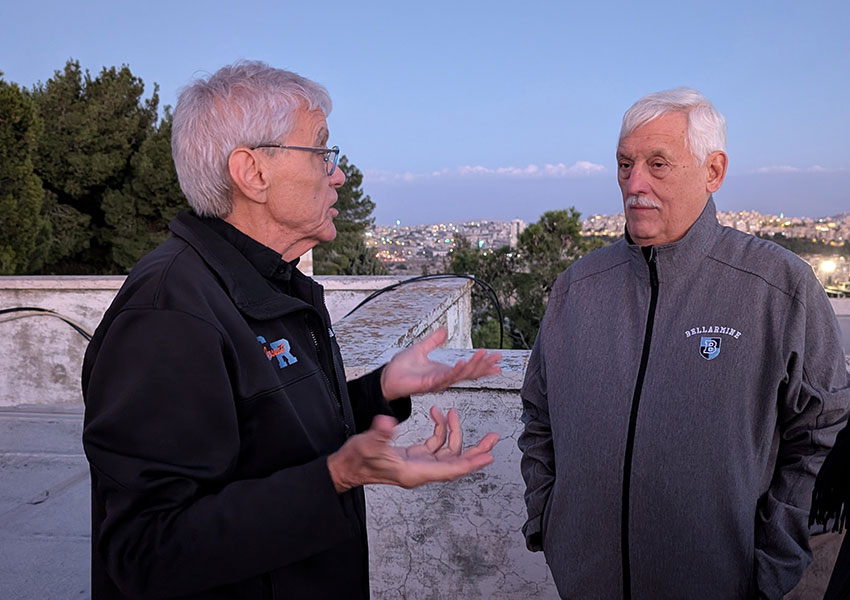
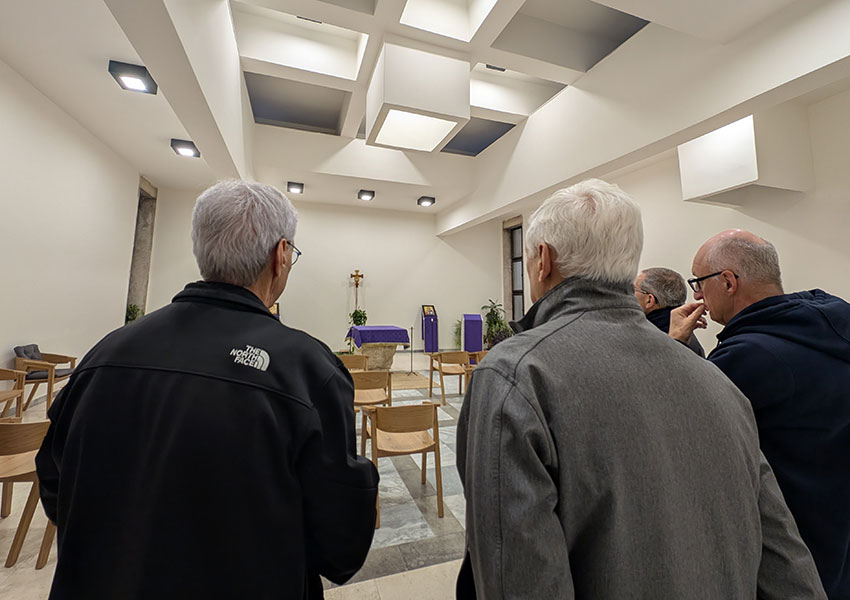
La visita del Padre Generale Arturo Sosa alle opere della Compagnia in Terra Santa lo ha portato al Tantur Ecumenical Institute (TEI – Istituto Ecumenico Tantur). La sua presenza significa molto per il personale e i partecipanti dell’Istituto, ma è importante ricordare che quando ha messo piede nel campus non è entrato semplicemente a contatto con un’opera o con la sua storia, ma in un luogo di incontro continuo.
In un incontro tenutosi a Gerusalemme nel 1964, durante i tumulti del Concilio Vaticano II, Sua Santità Papa Paolo VI e Sua Beatitudine il Patriarca Ecumenico Athenagoras si trovarono d’accordo sul fatto che Gerusalemme dovesse essere la sede di un centro teologico dedicato allo studio, alla ricerca e al dialogo per costruire una maggiore comprensione e connessione tra le chiese d’Occidente e d’Oriente. Nacque così l’Istituto Ecumenico di Tantur. Sotto la supervisione della Commissione Internazionale per l’Educazione Cattolica e con la gestione dell’Università di Nôtre Dame, il Tantur aprì i battenti nel 1972. I primi rettori furono teologi e studiosi protestanti che avevano prestato servizio in qualità di “consulenti” al Concilio Vaticano II, collaborando alla stesura del documento sull’ecumenismo.
Over the coming years the mission of the Ecumenical Institute would grow to support continuing education and sabbatical programs for priests, pastors, religious and lay people from all Christian denominations who sought spiritual renewal, pilgrimage, and immersion into ecumenical experiences in the Holy Land. These programs would tap into the rich diversity of local Christian traditions: Greek Orthodox, Latins, Greek Catholic, Armenian, Coptic, Syriac, Ethiopian, Anglican and Protestant. Participants have come from the US, Great Britain, France, Australia, New Zealand, China, the Philippines, Korea and India and are Catholics, Anglicans, Protestants, Evangelicals, Coptics, Syro-Malabars and agnostics.
The Tantur experience is very much one of “Encounter”. Participants come from diverse backgrounds and faith traditions to participate in programs of two weeks to three months. Every lecture, meal, informal conversation, guided tour, and weekly group “Examen” is an opportunity for the participants to share who they are, what they believe, how they believe, and how they worship. Simultaneously they listen, learn, and seek to understand the “other” – both in difference and in common. This is not an easy experience, especially if a participant has limited exposure to “non-Western” religious traditions, cultures or ethnicities (such as the Orthodox, Armenian, Syriac, Coptic or Ethiopians).
I recall one such difficult encounter that involved a young evangelical seminarian who had never been in an Orthodox or Catholic church. He was quite upset with icons and statues – not understanding their significance beyond his evangelical training which labelled those things as “blasphemous”. That roadblock almost ended his encounter in the Holy Land. Thankfully, with the help of the other participants and the variety of experiences in the program, he gradually experienced a transformation that let him see those icons through the eyes of the others in his Tantur “family”: from “blasphemy” to “reverent symbol of grace”. Not just a moment of personal growth, his experience at Tantur made him an “agent of change” upon his return. He brought an encounter to lead other encounters in ecumenical and inter-religious experiences.
Tantur programs rely on biblical geography, biblical studies, the roots of Christianity in Judaism/Islam, and Ecumenism. Additionally, an “immersion” into the complexity of life in the Holy Land, especially given the ongoing Israeli/Palestinian, Jewish/Muslim/Christian tensions, is essential for Encounter and unique in the Holy Land. One of the most disturbing, shocking, and emotionally challenging experiences for participants occurs during orientation when they are escorted a short distance from Tantur’s hilltop location to the “Separation”/”Security” Wall between Israel and Palestine.
Prior to 1967, Tantur was in an area of East Jerusalem under Jordanian jurisdiction. After 1967 and the two Intifadas, the area around Tantur was annexed by Israel (illegally according to international law) and “The Wall” was built on the edge of Bethlehem. Participants pass through the narrow corridors of Checkpoint 300 into Bethlehem and see the “other side” of the wall. Covered with graffiti and artwork made by Palestinians that expresses oppression, dehumanization, mistreatment by the Israeli government and hopelessness, the “other side” of the wall leads participants into the neighbourhoods and streets of Bethlehem before returning them to the Checkpoint back into Israel. They must pass through narrow corridors and “cattle style” turnstiles, through x-ray security checks and iron security grates with guards looking at them from above, into another turnstile where armed military personnel behind thick bomb-proof glass check papers.
Most participants emerge from this experience quite shaken and disturbed by what they label as a “dehumanizing” experience. Yet they also feel “graced” with a sense of “solidarity” with those Palestinians who pass through these checkpoints every day – often treated with contempt.
These are the experiences that Father General himself witnessed. These are the conversions that were shared with Father General as he moved through Tantur. This is the encounter we hope and pray that Father General’s visit will bring to the Church and Society.
Notizie correlate
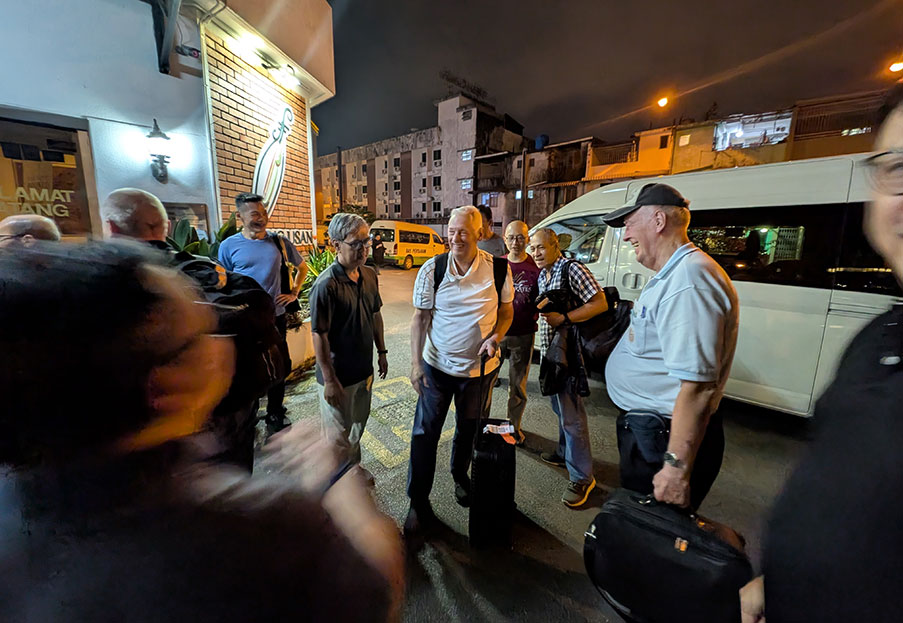
Padre Arturo Sosa, SJ, è giunto a Kuching, in Malesia, per dare inizio alla sua quinta visita apostolica alla Conferenza dei gesuiti dell’Asia-Pacifico (JCAP). Con un fitto programma di incontri e spostamenti tra i diversi ministeri e comunità della Compagnia in Malesia, Thailandia e Indonesia...
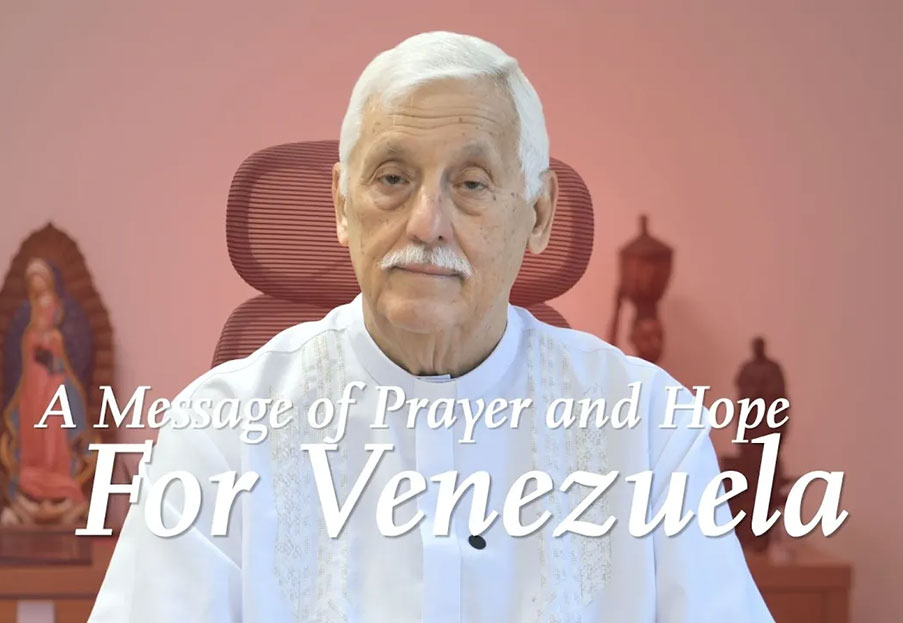
Mentre il Venezuela affronta il difficile compito di riprendersi dopo due forti terremoti che hanno causato vittime, numerosi dispersi e distruzione su vasta scala, il Padre Generale Arturo Sosa ha inviato un messaggio di vicinanza e speranza al popolo venezuelano.
Mentre la Compagnia di Gesù si prepara al II Congresso JESEDU-Montreal 2027, è attualmente in corso un processo globale di valutazione, discernimento e riflessione prospettica. Questa iniziativa mira a valutare come la visione condivisa dell’educazione gesuita sia stata attuata all’interno della rete mondiale...

“Da quando abbiamo ricevuto la terza Preferenza Apostolica Universale, ho dedicato del tempo a discernere come la Curia Generalizia possa contribuire a portarla avanti. Non volevo creare una struttura pesante. Non pensavo fosse necessario un Segretariato qui in Curia. Alla fine, ho optato per una leggera struttura...”

Il Consiglio Allargato ha riunito i Segretari dei settori apostolici, i Consiglieri Generali, l’Economo Generale, i Presidenti delle Conferenze e altri responsabili della Curia per esaminare una questione centrale: come aumentare e approfondire la collaborazione tra i settori...
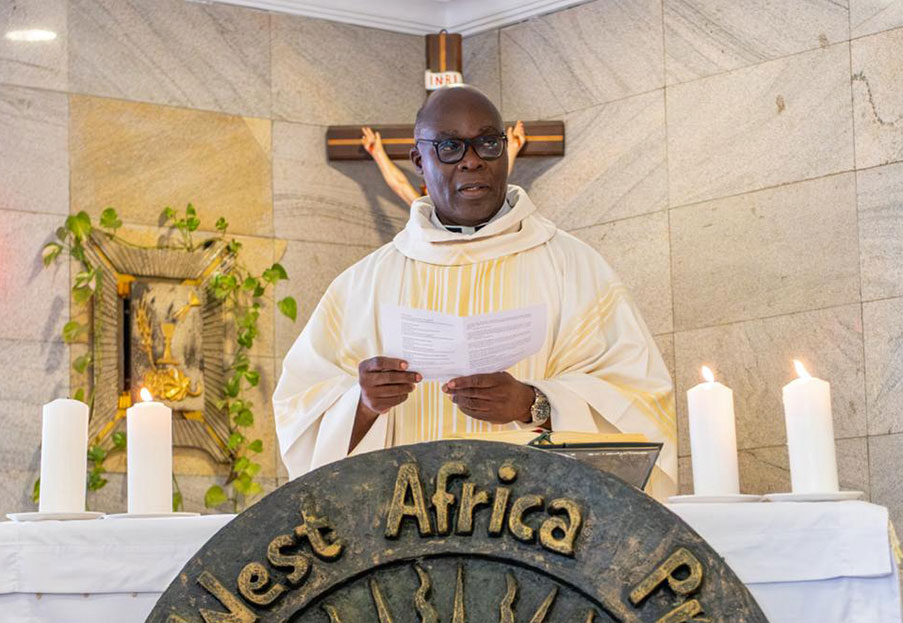
Il Padre Generale Arturo Sosa ha nominato padre John Kobina Ghansah nuovo Assistente Regionale per l’Africa e il Madagascar e Consigliere Generale. Padre Ghansah, attualmente Provinciale della Provincia dell’Africa Nord-Occidentale (ANW), assumerà il suo nuovo incarico...