Tantur Ecumenical Institute | Encounter in the Holy Land
By John Paul, SJ | Director, Tantur Ecumenical Institute (TEI)
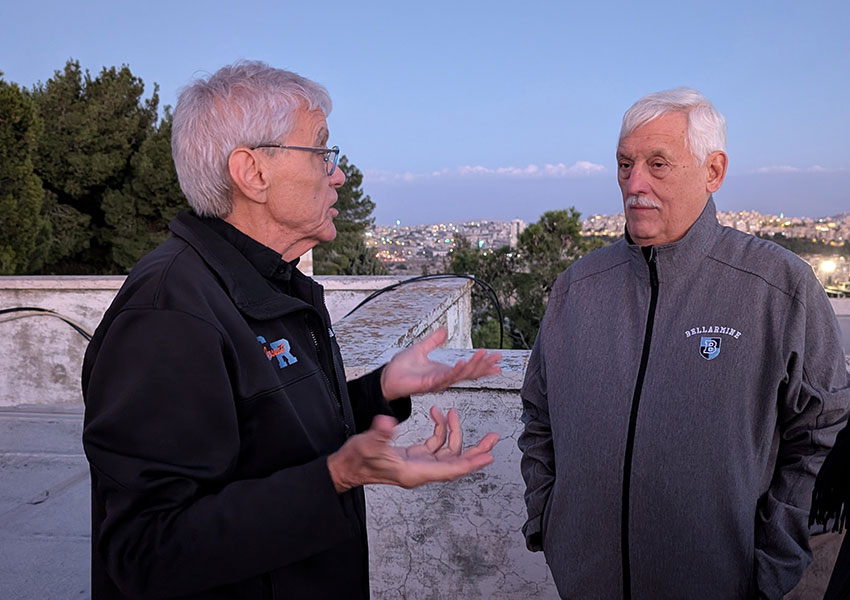
Fr General Arturo Sosa’s visitation of Jesuit works in the Holy Land led him to the Tantur Ecumenical Institute (TEI). His presence means much to the staff and participants of the Institute, but it is important to remember than when he stepped onto the campus he was not merely stepping into a work, or its history, but into an ongoing encounter.
At a 1964 meeting in Jerusalem, during the upheaval of Vatican II, His Holiness Pope Paul VI and His Beatitude the Ecumenical Patriarch Athenagoras, both agreed that Jerusalem should be the home for a theological centre dedicated to study, research, and dialog for building greater understanding and connections between the churches of the West and the East. Thus was born the Tantur Ecumenical Institute. Overseen by the International Commission of Catholic Education, and stewarded by the University of Notre Dame, the doors of Tantur opened in 1972. The first Rectors were protestant theologians and scholars who served as “Consultants” at Vatican II, assisting in drafting the document on Ecumenism.
Over the coming years the mission of the Ecumenical Institute would grow to support continuing education and sabbatical programs for priests, pastors, religious and lay people from all Christian denominations who sought spiritual renewal, pilgrimage, and immersion into ecumenical experiences in the Holy Land. These programs would tap into the rich diversity of local Christian traditions: Greek Orthodox, Latins, Greek Catholic, Armenian, Coptic, Syriac, Ethiopian, Anglican and Protestant. Participants have come from the US, Great Britain, France, Australia, New Zealand, China, the Philippines, Korea and India and are Catholics, Anglicans, Protestants, Evangelicals, Coptics, Syro-Malabars and agnostics.
The Tantur experience is very much one of “Encounter”. Participants come from diverse backgrounds and faith traditions to participate in programs of two weeks to three months. Every lecture, meal, informal conversation, guided tour, and weekly group “Examen” is an opportunity for the participants to share who they are, what they believe, how they believe, and how they worship. Simultaneously they listen, learn, and seek to understand the “other” – both in difference and in common. This is not an easy experience, especially if a participant has limited exposure to “non-Western” religious traditions, cultures or ethnicities (such as the Orthodox, Armenian, Syriac, Coptic or Ethiopians).
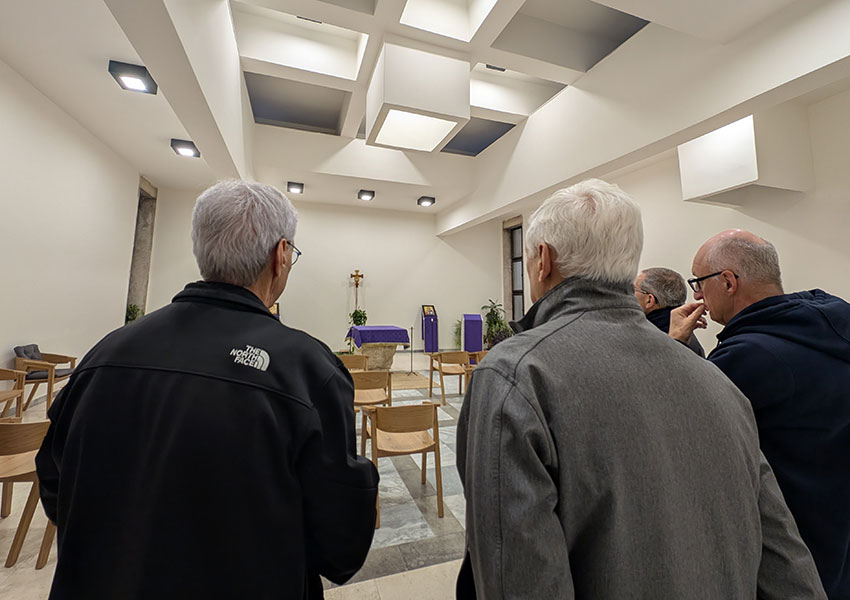
I recall one such difficult encounter that involved a young evangelical seminarian who had never been in an Orthodox or Catholic church. He was quite upset with icons and statues – not understanding their significance beyond his evangelical training which labelled those things as “blasphemous”. That roadblock almost ended his encounter in the Holy Land. Thankfully, with the help of the other participants and the variety of experiences in the program, he gradually experienced a transformation that let him see those icons through the eyes of the others in his Tantur “family”: from “blasphemy” to “reverent symbol of grace”. Not just a moment of personal growth, his experience at Tantur made him an “agent of change” upon his return. He brought an encounter to lead other encounters in ecumenical and inter-religious experiences.
Tantur programs rely on biblical geography, biblical studies, the roots of Christianity in Judaism/Islam, and Ecumenism. Additionally, an “immersion” into the complexity of life in the Holy Land, especially given the ongoing Israeli/Palestinian, Jewish/Muslim/Christian tensions, is essential for Encounter and unique in the Holy Land. One of the most disturbing, shocking, and emotionally challenging experiences for participants occurs during orientation when they are escorted a short distance from Tantur’s hilltop location to the “Separation”/”Security” Wall between Israel and Palestine.
Prior to 1967, Tantur was in an area of East Jerusalem under Jordanian jurisdiction. After 1967 and the two Intifadas, the area around Tantur was annexed by Israel (illegally according to international law) and “The Wall” was built on the edge of Bethlehem. Participants pass through the narrow corridors of Checkpoint 300 into Bethlehem and see the “other side” of the wall. Covered with graffiti and artwork made by Palestinians that expresses oppression, dehumanization, mistreatment by the Israeli government and hopelessness, the “other side” of the wall leads participants into the neighbourhoods and streets of Bethlehem before returning them to the Checkpoint back into Israel. They must pass through narrow corridors and “cattle style” turnstiles, through x-ray security checks and iron security grates with guards looking at them from above, into another turnstile where armed military personnel behind thick bomb-proof glass check papers.
Most participants emerge from this experience quite shaken and disturbed by what they label as a “dehumanizing” experience. Yet they also feel “graced” with a sense of “solidarity” with those Palestinians who pass through these checkpoints every day – often treated with contempt.
These are the experiences that Father General himself witnessed. These are the conversions that were shared with Father General as he moved through Tantur. This is the encounter we hope and pray that Father General’s visit will bring to the Church and Society.
Related Posts:
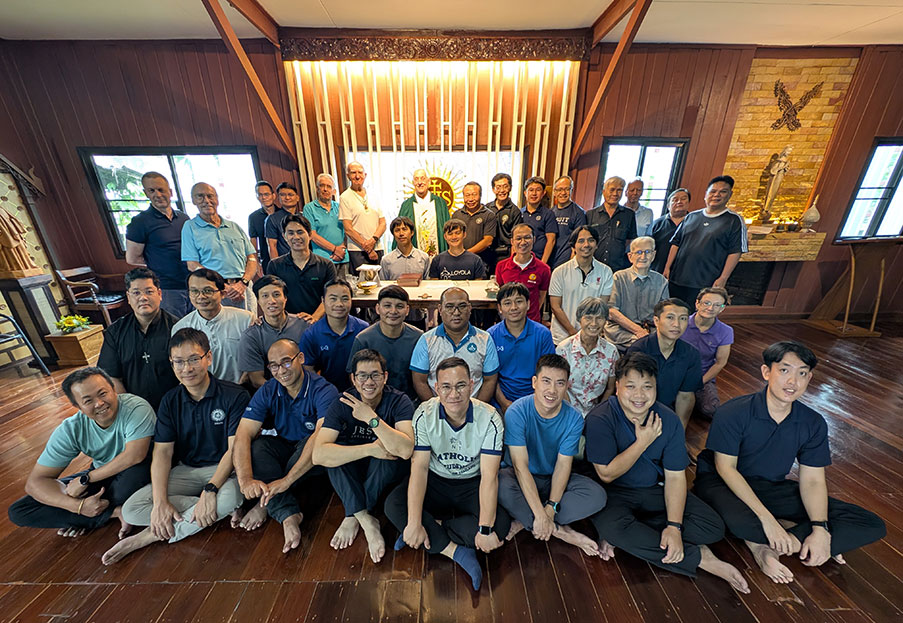
The Society of Jesus in Thailand is relatively small, with 37 Jesuits concentrated in three communities serving four cities, but the history of the Jesuits in Thailand goes back centuries, to the time of Saint Francis Xavier and the first missions of the Society of Jesus to what was then called...
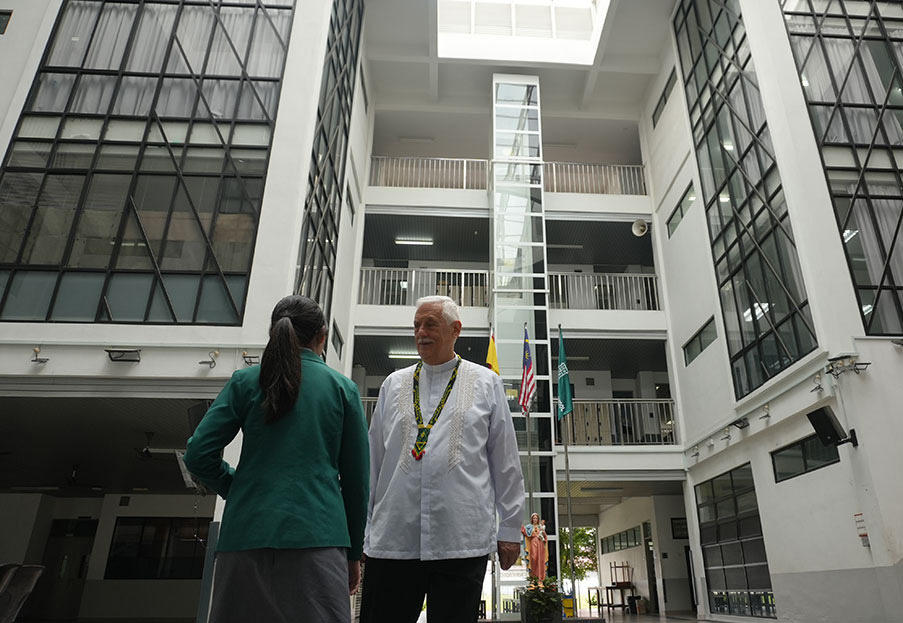
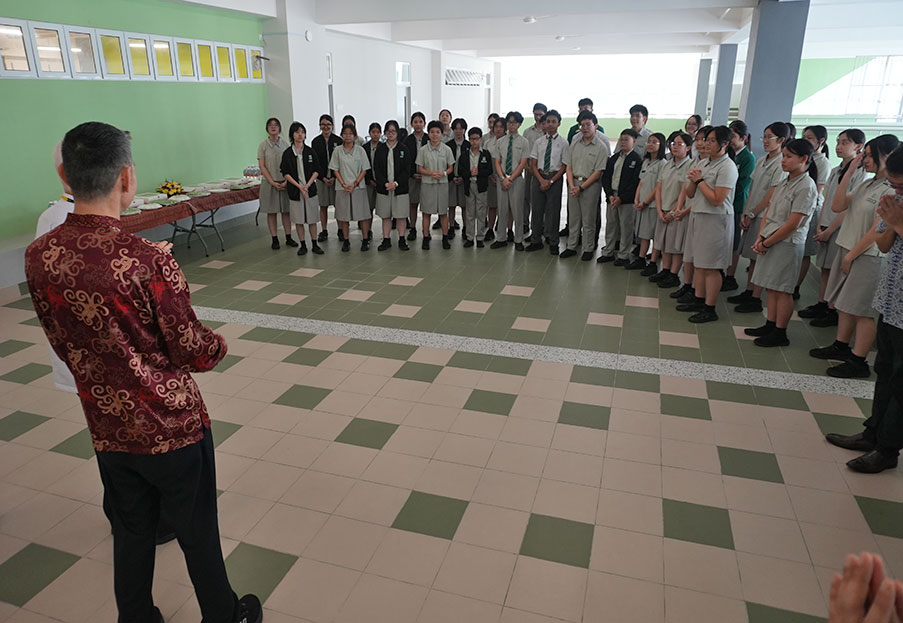
On a sunny mid-week day in Kuching, Fr General Sosa visited St. Joseph’s Private Secondary School (SJPS) where the Jesuits of the Malaysia-Singapore Region work as teachers and administrators. Currently, Fr Stanley Goh is the Rector, while Fr Francis Lim served as the first...
“Malaysia and Singapore are two nations with shared histories but divergent trajectories. While both countries are multicultural and multireligious, their distinct socio-political climates – Malaysia’s constitutional Islam and Singapore’s pragmatic secularism – shape the struggles...”
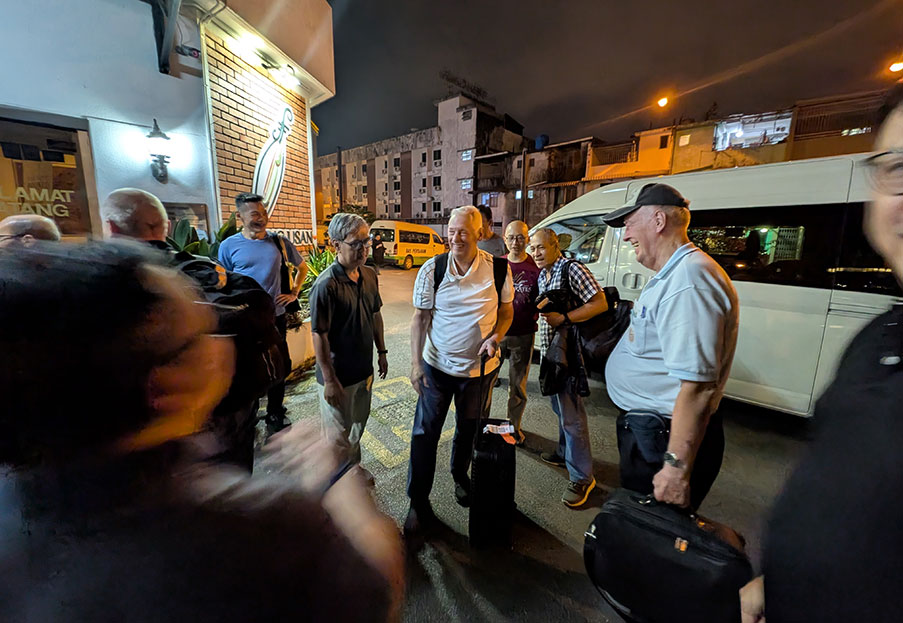
Fr Arturo Sosa, SJ, arrived in Kuching, Malaysia to begin his 5th apostolic visitation of the Jesuit Conference of Asia Pacific (JCAP). With a full schedule of meetings and travel between different Jesuit ministries and communities in Malaysia, Thailand and Indonesia...
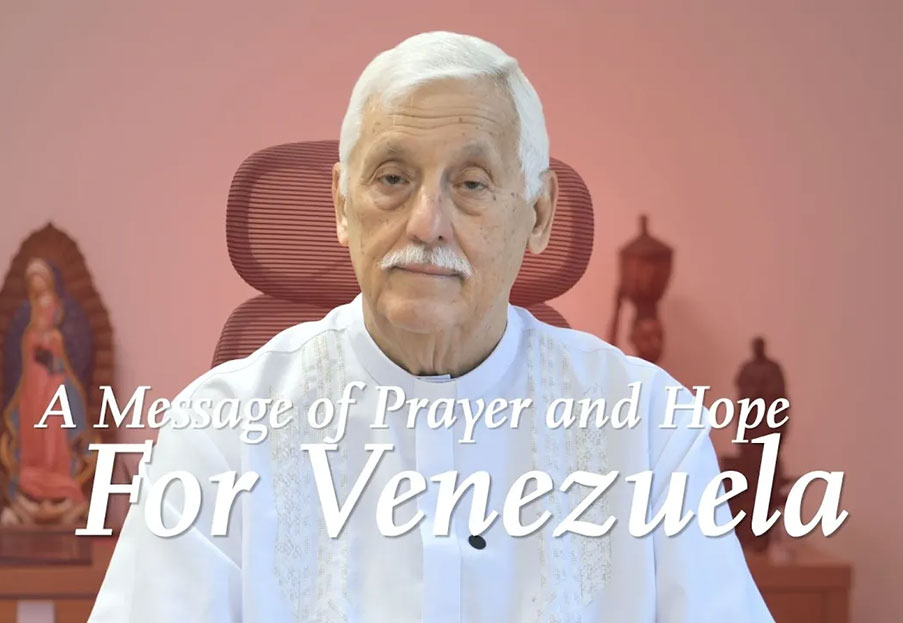
As Venezuela begins the difficult task of recovering after two strong earthquakes that claimed lives, left many missing and caused widespread destruction, Father General Arturo Sosa has sent a message of closeness and hope to the Venezuelan people.
As the Society of Jesus prepares for the II Congress JESEDU-Montreal 2027, a global process of review, discernment, and foresight is now underway. This initiative seeks to evaluate how the shared vision for Jesuit education has been implemented across the worldwide network of...