Father Antonio Spadaro: “Pope Francis, a Contemplative in Action”
By Antonio Spadaro, SJ
A flame is perhaps the image that best conveys the essence of Francis’ inspiration. “We Jesuits”, wrote Fr Jorge Mario Bergoglio as a young man, “know well that the fire of God’s greater glory pervades us, enveloping us in an inner flame that concentrates and expands us, enlarges and diminishes us.” Sometimes his own body, when he could, experienced a twisting that made him stretch out, turn outward, toward what for him has always been “the People of God on the move”. This is why Francis became immersed in history, in world events, twisting himself, inflaming himself, sometimes causing despair in those who tended to want to make him “normal”. There is a flame that has always moved him from within: the “peace of restlessness”, which is the oxymoron par excellence of the Jesuits, the fruit of “discernment”. This is the Ignatian password par excellence, which means to grasp God’s voice inwardly, to recognize instinctively His presence in the world, even where everything tells us that He should be elsewhere. It is typically Jesuit not to consider anything human as alien to the divine: “seek and find God in all things” was St Ignatius’ motto. This made Pope Francis open, curious, dialectical.
And so Pope Francis did not just open, but flung open the doors of the Church to todos, todos, todos. Not so that people would stay inside, as he has said many times, but so that the Lord could go out, walking the streets. And the street – another strongly Jesuit image, and one used by Ignatius himself, who called himself “the pilgrim” – has always been bumpy for Bergoglio. He has never contemplated smooth roads. For him, it is better to fall and even get hurt than to stand still, sheltered, balconear, watching life from the balcony.
In this sense, he has always had an “apostolic” vision and not simply a “pastoral” one. The Jesuit knows that his task is not to graze the flock, shear the sheep, and comb them, but to go in search of the lost sheep. With Bergoglio’s realistic clarification that there is now only one sheep left in the pen, while it seems that the other ninety-nine have left. His, therefore, has always been a Church that goes forth.
This is why he has preached an inclusive Church; this is why he has communicated more with journalists from secular newspapers than with those from religious ones; this is why he has wanted to talk to anyone, even people and leaders whom others have always kept at a distance. Politicians and religious leaders: from Min Aung Hlaing, head of the Myanmar army, responsible for operations against his beloved Rohingya, to Russian Patriarch Kirill, whom he did not spare harsh criticism, but to whom he always kept the door open. This is why Pope Francis has postulated an open yet “incomplete” way of thinking. We must break out of the mold (Yalta was one of these for him), out of rigid logical reasoning. We need to debordar,step outside the boundaries, “overflow”, driven by the genius of the spirit and not by the rigidity of ideas. As a young Jesuit, he wrote that we must not look at history “with a scientific detachment marked by curiosity about things that have happened, or eager to impose a predefined ideology”. He was talking about the history of the Jesuits, but the same applies to history in general.
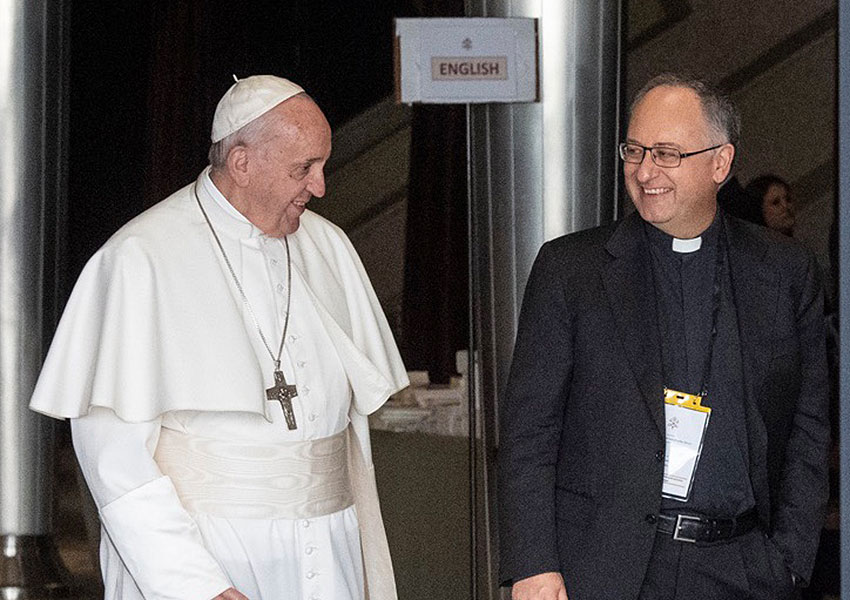
Francis never wanted to make five-year plans inspired by ideas or ideologies, nor did he want to give in to utopias. He was committed from an organizational point of view, of course, but always ready to improvise because he was driven by his prayer and by “consolation”, that is, by the perception of God’s will that gives peace to the soul. Like when, for example, he bent down to kiss the shoes of the leaders of South Sudan who had come to the Vatican to seek peace. He told me that as soon as he entered the room where they were, he felt a very strong inner urge to do so. It is only one example, but it is very indicative of his way of acting. His model is Peter Faber, one of the first companions of Ignatius of Loyola, who remained blessed for centuries and whom Pope Francis made a saint. He was much loved by Michel de Certeau, a great Jesuit who was “anomalous” in his own way.
The anomaly was another form of Francis’ Jesuit nature. His relationship with the order in the past was complicated, anomalous. His writings, which essentially say what he is saying today in his pontificate, were even burned in bonfires. His pastoral style was misunderstood or opposed. It is thanks to the wisdom of a Father General such as Adolfo Nicolás that the deep ties between Bergoglio and his order were reconnected. And in this, La Civiltà Cattolica has played a clear role for several years. During the Jesuit General Congregation, after Fr Adolfo Nicolás’s resignation, there appeared a certain unease within the order in the face of Bergoglio’s prophecy, but also a desire to seek a correct posture, in accordance with the spirit of its Constitutions. Bergoglio has always remained, in one way or another, a hot potato. And he has never missed an opportunity to declare himself a son of the Society of Jesus and to cultivate a deep dialogue with the Jesuits, which has found unique expression in private conversations during his apostolic journeys. Their transcription – which the Pope has allowed me to publish from time to time – composes a sort of backstage of the pontificate.
Francis’ path has also been the whole world. Francis has traveled far and wide, even though he has never loved traveling. But he felt he had to do it, to confirm the faith of the Catholic people, but also to touch the open wounds of this world. Just think of the Central African Republic and Iraq, to give just two examples. You don’t touch with your thoughts, but with your hands. The Church is “a field hospital after a battle”, he told me in my first interview with him in 2013, just three months after his election. Like a mother, he did not go to visit his children in a “glass case”, imposing himself when they wanted to force him into a closed or even armored Popemobile. He traveled as a Jesuit, who proverbially considers the plane or train ticket as the real key to his home.
As a young man, Bergoglio wrote that the Jesuit’s gaze “travels through courtyards, glimpsing prairies, looking at fragments but contemplating forms”. From his small study in Santa Marta, he had a view of the whole world, and from there he always observed the fragments, connecting them in order to understand the shapes, as in the case of the “world war in pieces”, already bitterly prophesied in 2014. He always hated the term “geopolitics”, which reminded him of Risk, but he always loved “diplomacy”. And he added: “of the knees”. Because he believed that political dialogue (and especially multilateral dialogue) was necessary and, for a believer, a kind of sacred place of prayer and contemplation. In this, he was inspired by the Jesuit motto contemplativus in actione. This was Pope Francis, in fact, a contemplative in action.
Related Posts:
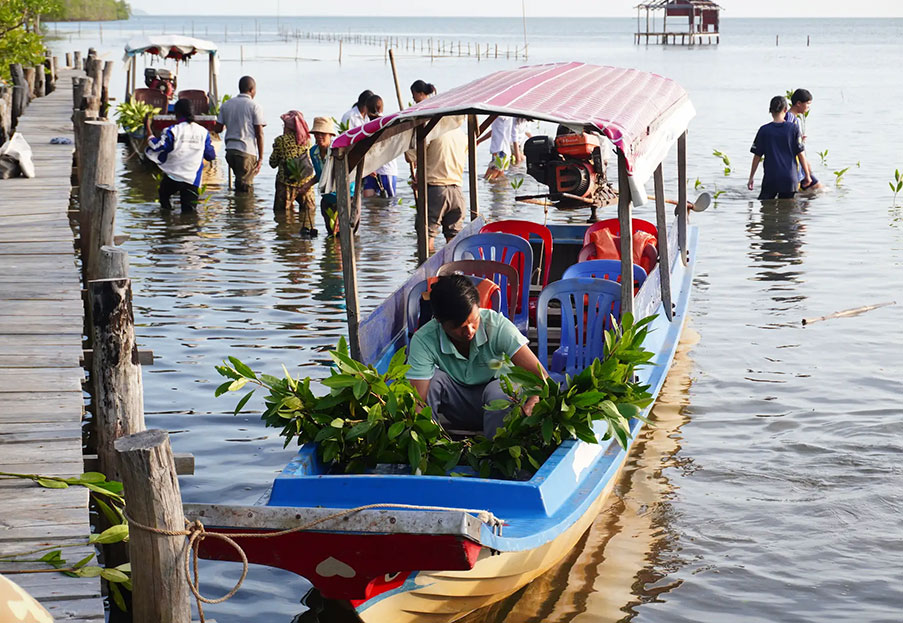
The Caring for Community and Creation (CCC) project was initiated by the Jesuit Conference of Asia Pacific (JCAP) in 2022 to address poverty and ecology as identified in the JCAP apostolic plan. The project has three specific objectives, one of which is strengthening communities through...
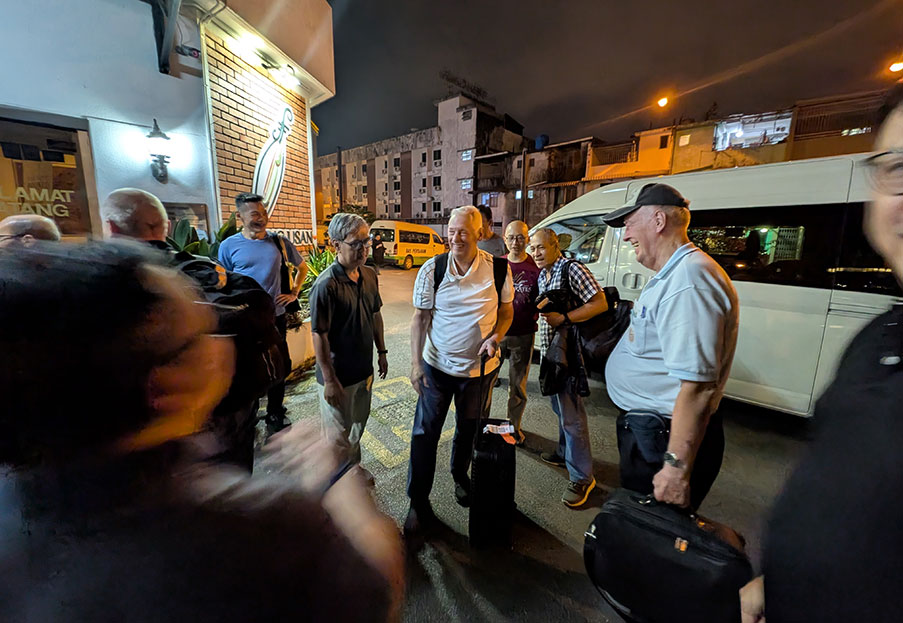
Fr Arturo Sosa, SJ, arrived in Kuching, Malaysia to begin his 5th apostolic visitation of the Jesuit Conference of Asia Pacific (JCAP). With a full schedule of meetings and travel between different Jesuit ministries and communities in Malaysia, Thailand and Indonesia...
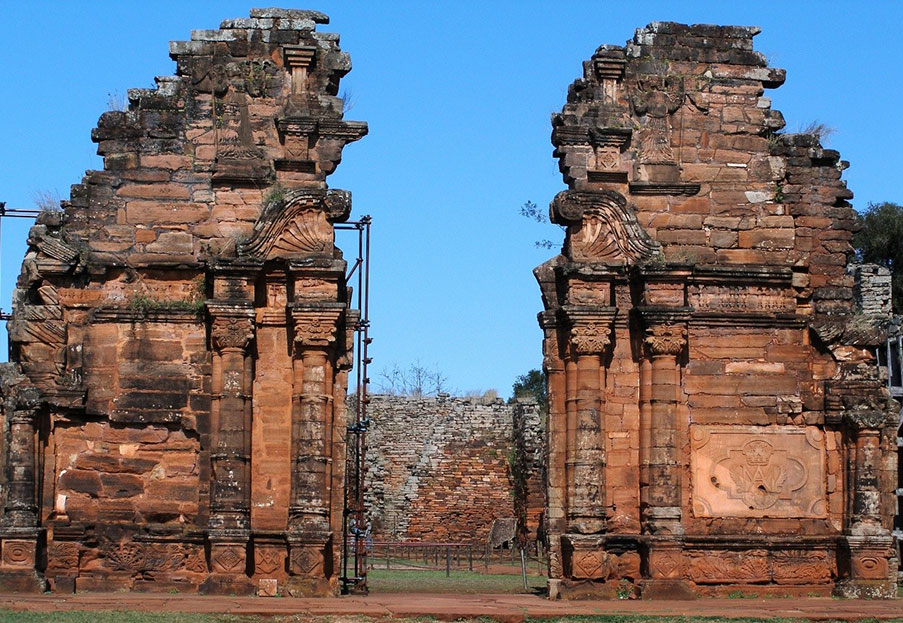
The Paraquarensis Province was separated from that of Peru in 1604. It comprised the territories of the present-day states of Paraguay, Argentina, Uruguay, part of Bolivia, and, temporarily, Chile. One of the most notable ministries in this Province was the Guaraní reductions...
Launched at the 2018 IAJU Assembly, Magis Exchange offers students the chance to study across borders, cultures and academic contexts. It is more than an academic mobility program: it embodies a shared commitment to forming young people ready to engage thoughtfully...
The Society of Jesus has designated Loyola University Chicago as the new home for the Discerning Leadership Program (DLP) which provides leadership formation, accompaniment and resources for senior Church leaders. Loyola University Chicago will henceforth steward...
When nearly one hundred facilitators of discernment gathered in Salamanca in late 2025, something more than a meeting took place. Convened at the desire of Fr Arturo Sosa, Superior General of the Society of Jesus, the Ignite the Way gathering set out to form facilitators for processes of communal discernment...