The Jesuit Spirituality of Pope Francis: A Legacy of Humility, Magis, and Companionship
By Midhun J Francis Kochukallanvila, SJ
Introduction
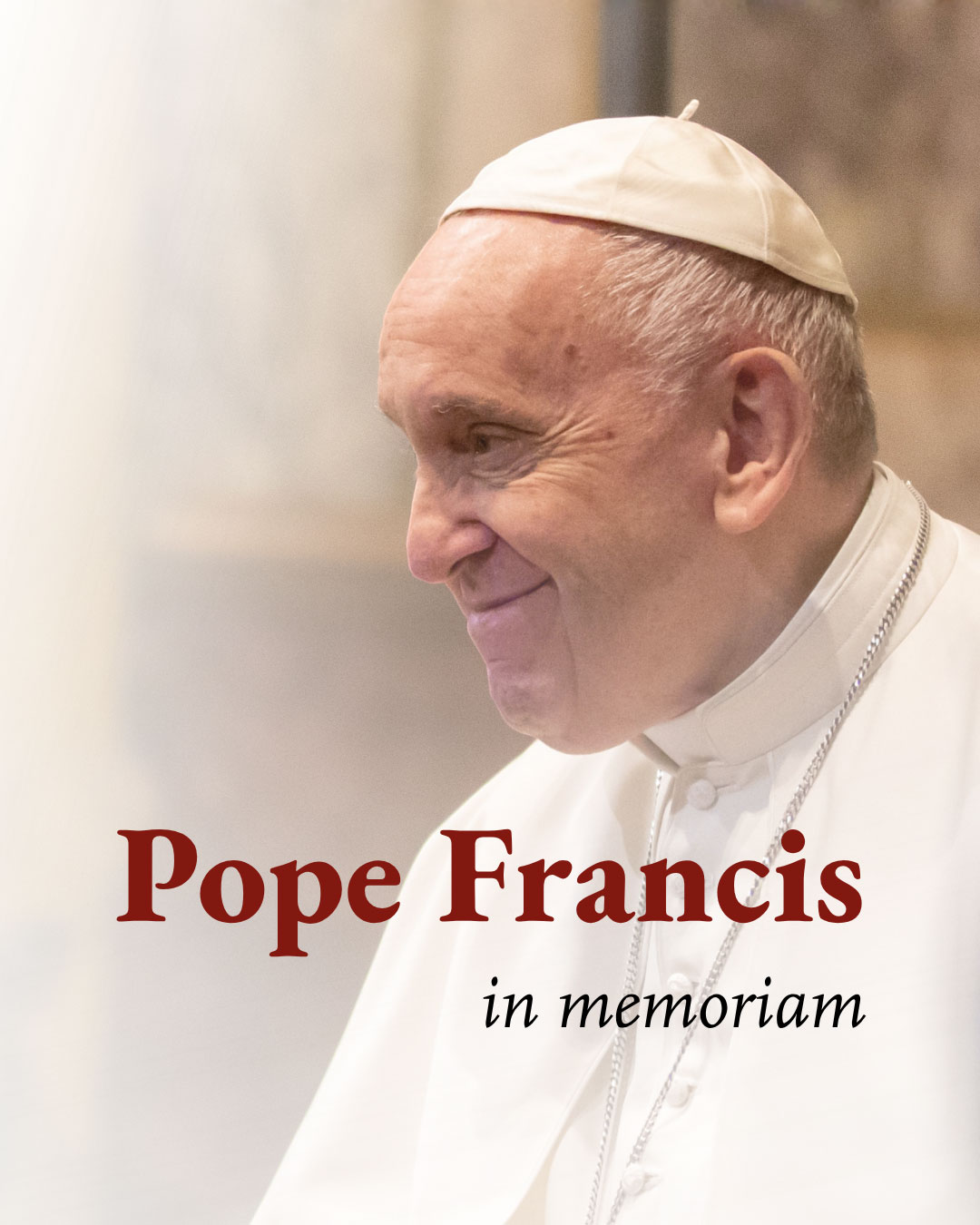
On 21 April 2025, the world bid farewell to Pope Francis as he left this world to be with our Heavenly Father. He was a transformative figure in the world in many radical ways and his papacy was deeply rooted in the Ignatian charism of Jesuit spirituality. From his election on 13 March 2013 to his final Easter blessing, Pope Francis embodied the Jesuit ideals of the magis (the greater good). His radical humility and his actions ad maiorem Dei gloriam (“for the greater glory of God”) were seen throughout his papacy. His journey is marked by a profound acknowledgement of his sinfulness and a commitment to companionship with Christ. It resonated with the universal Church and Jesuits like myself, who witnessed his papacy as a personal and communal grace and with surprise.
Magis: The Pursuit of the greater glory of God
Central to Jesuit spirituality is the magis. It is the restless pursuit of God’s will through discernment and service. Pope Francis lived this ideal unflinchingly. He carried out his entire mission as the head of the universal Church in discernment, focusing on the marginalised, environmental stewardship (Laudato si’), and interfaith dialogue. This exemplified a vision of the Church “going forth” to the peripheries as the risen Christ enjoined His disciples, “go back to Galilee”. For many Jesuits, this was no surprise. On the night of his election, as my community at the De Nobili College (DNC – Pune, India) rushed to the TV, we soon learned that Cardinal Bergoglio, a Jesuit, had become Pope. The shock was palpable – no Jesuit had ever been Pope – but the choice reflected magisin action.
An all-night research into Bergoglio’s past on the day of his election to the chair of Peter revealed a complex figure. Criticized for his leadership as Jesuit Provincial in Argentina, he later acknowledged his errors, calling himself a “sinner.” However, this vulnerability became a strength. His papacy mirrored Ignatius’s call to “find God in all things,” even in imperfection. For my part, pursuing a PhD in Jesus in Islam became my magis. It became a response to Francis’s challenge to build bridges. When I met him, his thumbs-up and “bravo” affirmed this path – a small but profound encouragement to seek the greater good.
“I Am a Sinner, Yet Called to be the companion of Jesus”: The Humility of Companionship
Pope Francis’s first words from St Peter’s balcony set the tone: “Before the Bishop blesses his people, I ask you to pray to the Lord that he will bless me.” This humility, central to Jesuit identity, disarmed the world. Jesuits are formed to see themselves as “sinners, yet called to be the companions of Jesus”, unworthy yet chosen to walk with Christ. Pope Francis embodied this paradox. His apology for the Church’s failures, washing prisoners’ feet, and simple lifestyle revealed a man at peace with his fragility.

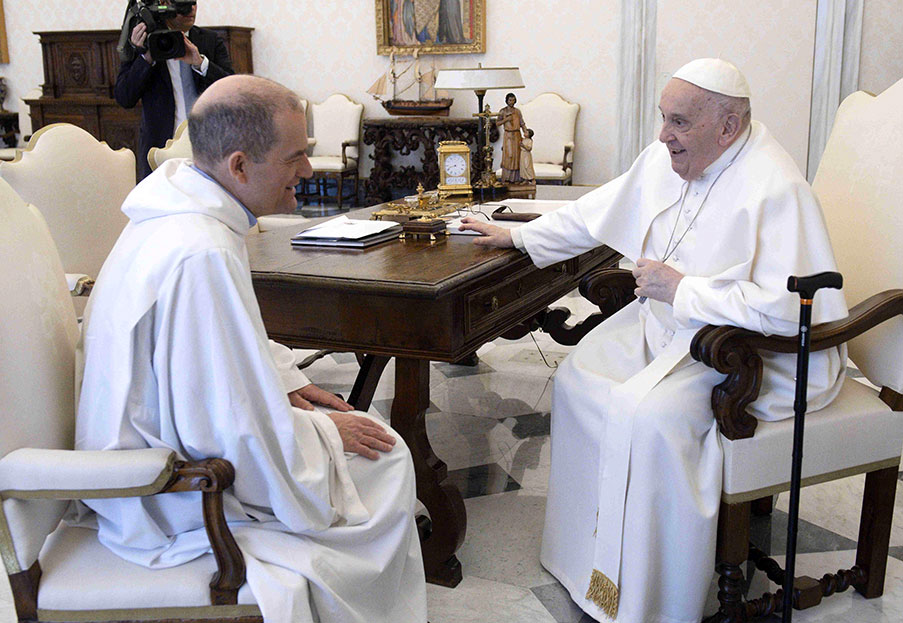
In 2013, as we celebrated the Jesuit Restoration Jubilee, Pope Francis’ election as the bishop of Rome felt providential. When I introduced myself to him as a Jesuit for the first time when I met him at the General Audience on 14 December 2022, his joyful smile spoke of kinship. He blessed my friend’s ordination stole, a sacramental reminder that God’s grace works even in weakness. Francis’s spirituality taught us that to be a companion of Jesus is not to be perfect but to trust in mercy – a lesson I carry into my vocation.
Ad Maiorem Dei Gloriam: Everything for God’s Glory
The Jesuit motto ad maiorem Dei gloriam (AMDG) permeated Francis’s papacy. Whether reforming the Vatican bureaucracy or embracing refugees, his actions sought God’s glory, not worldly approval. His 2013 prayer request, “Pray for me”, echoes Ignatius’s insistence that all labour begins and ends in God.
For Jesuits, this ethos is vocational. The Jesuits’s jubilee year of restoration, coinciding with Francis’s election, underscored our renewed mission: to serve where the need is greatest. When I asked the Pope to bless the stole, it was not just for my friend but for all those he would serve – a symbol of offering one’s life ad maiorem Dei gloriam. Francis’s Easter blessing, a day before his death, encapsulated this. It was a final act of entrusting the world to God because Francis was a good shepherd who always recognized the smell of the sheep.
Conclusion: A Legacy of Surprise and Grace
Pope Francis’s papacy was a gift of “holy surprise.” It challenged the Church to embrace mercy, dialogue, and renewal. His death leaves a void, but his Jesuit spirituality – rooted in the magis, humility, and AMDG – endures. As he once said, “Grace is not afraid of frailty”. Meeting him was a moment of grace, a reminder that even sinners are called to companionship with Christ.
Today, as we mourn his departure from our midst, we also thank the Father for such a wonderful gift to the Church. Pope Francis, the Jesuit Pope, showed us how to walk as pilgrims. He showed us to trust God, who writes straight with crooked lines. May his legacy inspire us to live ad maiorem Dei gloriam until we meet the Father. Pray for us, Holy Father, as we pray for you.
Related Posts:
“On 15 January 2023, after the Angelus – I was travelling to Rome and we watched from the train – Pope Francis announced officially the ecumenical prayer vigil for 30 September of that year. He said that the path to Christian unity and the Church’s synodal conversion are linked...”
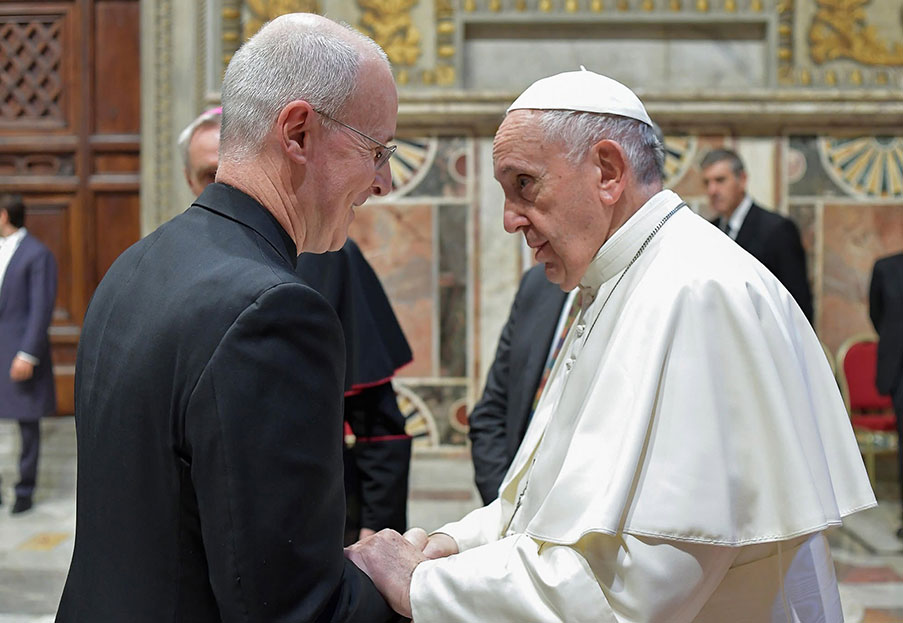
“I did not know Pope Francis as well as many others did. Certainly not as well as some mutual friends who had known him since his days as the Archbishop of Buenos Aires. Nor did I know him as well as the cardinals, bishops, priests and religious men and women who worked with him...”

“How many times did you hear Pope Francis ask: “Please, pray for me!”? Those words were never a mere courtesy – they expressed a deep conviction: Francis believed wholeheartedly in the fruitfulness of prayer...”

When, in March 2013, a Jesuit appeared on the balcony of St Peter’s Basilica, Clara Sayans could not have imagined how profoundly his pontificate would transform her faith and her life’s work. In this deeply personal reflection, she traces her journey from a university common room in Madrid...

On the first anniversary of his death, we remember our Pope, our brother in the Society of Jesus, with gratitude. In loving memory of him, we are launching a living memorial: a space where testimonies and reflections will be gathered over time, offering a fuller picture of his life, his ministry, and the Ignatian spirit that shaped his service.

“July 31st, the feast day of St Ignatius of Loyola, is always a special day for Jesuits and Jesuit apostolates around the world. Not just a celebration of our founder, July 31st tends to be a time for Jesuits to gather, to give thanks, to reminisce, and to recommit ourselves...”