The Digital Culture: A New Frontier for Ignatian Mission with Young Adults
To learn more about the Magis Think In gathering that took place in early January in Rome, read our article “Lift Off for MAGIS: Young Adults Answering the Call”.
When Msgr Lucio Ruiz, Secretary of the Dicastery for Communication at the Holy See, addressed Jesuits and lay collaborators on 3 December – the feast of St Francis Xavier – he issued a challenge that resonates deeply with the MAGIS Think In gathering that took place in the first days of January at the General Curia in Rome. Just as Xavier crossed oceans to meet people where they were, today’s missionaries must learn to navigate a different kind of territory: the digital space where millions of young people live, search, and make meaning of their lives.
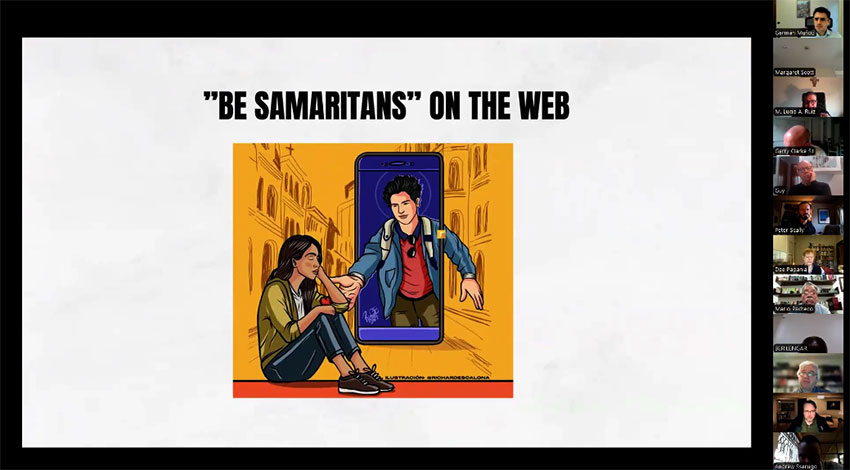
If you missed Msgr Lucio address, you can watch the recording here.
“To evangelize is not just about using digital tools well or improving pastoral methods”, Msgr Lucio insisted during the webinar. “It’s allowing the Word to dwell in the culture of our time.”
Some participants in the online seminar share their experiences with us:
From Appearance to Presence
For Guilherme Freitas, Communications Coordinator for Rede Inaciana de Juventude – MAGIS Brasil (Ignatian Youth Network), the webinar was challenging. “I felt deeply struck by the insistence that digital mission is not sustained by the logic of metrics and algorithms, but by the logic of encounter”, he reflects. “Incarnation is presence, closeness, listening, being understood, and accompanying real people in their real questions.”

This perspective is transforming his work: “I feel called to communicate less as ‘appearance’ and more as hospitality, to create processes that prioritize listening and accompaniment, and to help young people move from the ‘post’ to the ‘come and see’.”
Juan Carlos Manso, Director of SJDigital in Spain and a participant in the Rome gathering, puts it directly: “When Msgr Lucio spoke about the Incarnation, I felt he had hit the bullseye. Jesus wasn’t ‘with’ us from the outside – he became one of us. And perhaps the great step in the digital realm is precisely this: to stop using the internet only to tell what we do, and to start seeing it as a place where we are.”
Eric Clayton, Deputy Director for Communications at the Jesuit Conference of Canada and the United States and member of Jesuit Media Lab, found in Msgr Lucio’s words a profound affirmation. “How energizing to be reminded once again that Christ dwells here among the People of God – even when the People of God are splintered across digital space!”, he reflects. “We are called to seek out Christ who necessarily walks among us, who is truly present where two or three are gathered – be they in a chapel or in a chat room.”
Challenges on the Ground
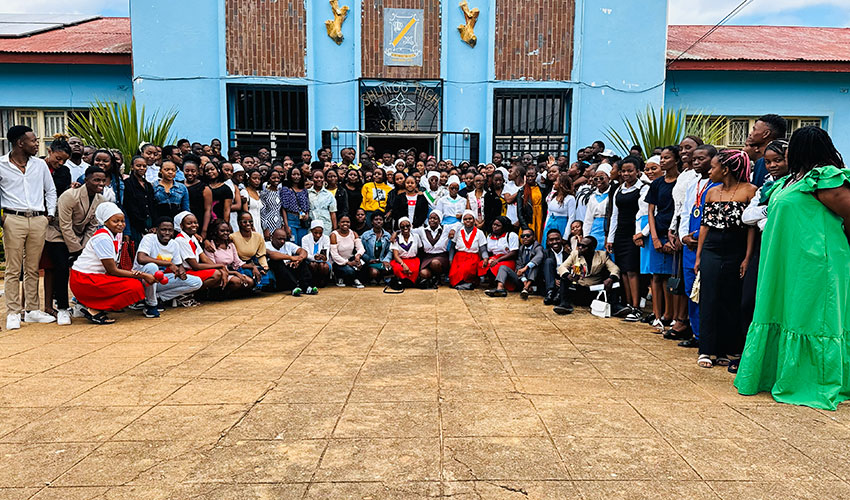
Yet the digital mission is not without its obstacles. Fr Peter Banda, SJ, Province Youth Delegate for the Jesuit Province of Southern Africa, works with young people who face harsh realities. “The challenge is that many of our young people, especially the weakest and most vulnerable, do not have the resources that would allow them to benefit from new digital forms of evangelization”, he notes. “Data is expensive and connectivity is unstable.”
Still, Fr Banda sees the webinar as a confirmation of his vocation: “In the digital age of artificial intelligence, we must understand the ‘fast and furious’ content produced every day. Some of this content is degrading and can damage young people’s mental health. My mission is to ensure that young people are guided by content that fosters moral values and promotes human dignity.”
Building Bridges, Not Just Platforms
As young adult coordinators from all six Jesuit Conferences gathered in Rome, the question of digital culture took centre stage. How can Ignatian spirituality – rooted in personal encounter and accompaniment – find authentic expression in digital spaces?

Neoma Jencyroy and Shelton Raj, from the Magis Digital Home team in South Asia and participating in the Rome gathering, see digital space as fundamentally relational. “What struck me most in Msgr Lucio’s talk was his insistence that we are not creating content for an audience, but building bridges to real people who are searching”, she reflects. “The digital world is not a substitute for human connection – it is an invitation to it.”
Digital culture is, ultimately, the context in which all mission with young adults unfolds today. It is not an optional add-on, but the air that new generations breathe. Learning to inhabit it with Ignatian authenticity is one of the great challenges that participants in the Rome gathering will carry with them as they return to their respective regions.

Related Posts:

Excitement is building for MAGIS Korea 2027, the international gathering that will bring young people from across the Ignatian family to Korea ahead of World Youth Day in Seoul. A recent online information session, led by Fr Hakjoon Lorenzo, SJ, General coordinator of MAGIS Korea...

“Since the third Universal Apostolic Preference was given to us, I have spent time discerning how the General Curia can help to move it forward. I didn’t want to set up a heavy structure. I didn’t think a Secretariat here in the Curia was needed. In the end, I opted for a light network structure...”

Leading a retreat for young people should be easy. It’s usually just two or three days. But... where should I start? What should the theme be? Where do I get help? The good news is that help is at hand with a new platform called Magisresources.org...
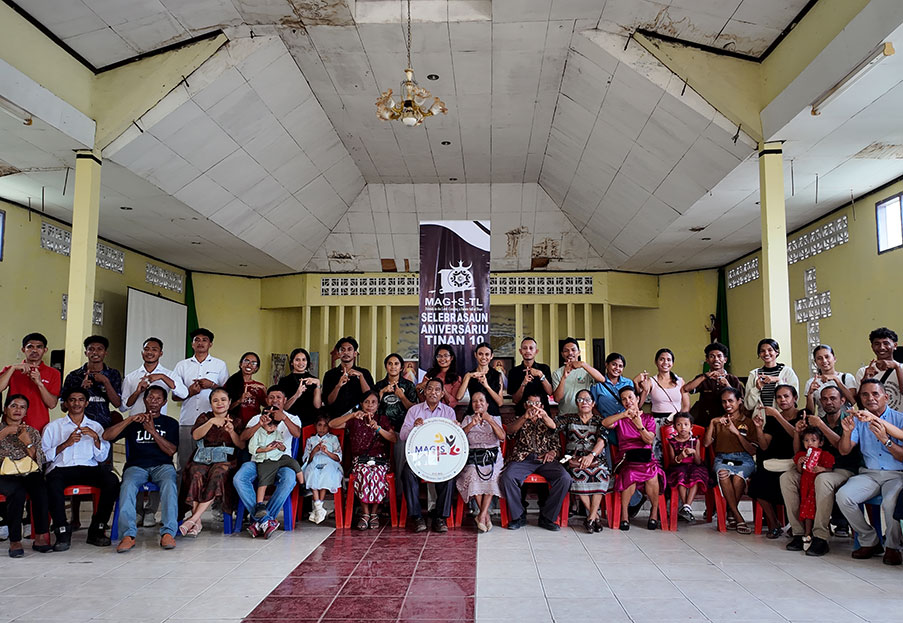
For ten years, MAG+S Timor-Leste has been quietly accompanying young people. In our small community shaped by friendship, prayer, and service, many young people have encountered the richness of Ignatian spirituality and discovered a deeper relationship with God...

Rwanda’s youthful population holds great potential, yet nearly one in four young people are not in employment, education, or training, according to the 2025 Labour Force Survey. In response to this situation, the Jesuit Urumuri Centre (JUC), a social initiative of the Jesuit Rwanda-Burundi Province...

In a special letter to Jesuit Major Superiors released for Pentecost 2026, Father General Sosa calls for a “new intensity, coherence, and depth” in Jesuit work with young adults. “Our apostolates are privileged spaces of encounter with the young”, says Fr Sosa...