From Waste to Opportunity: How Jesuit Urumuri Centre Is Empowering Rwanda’s Youth
Rwanda’s youthful population holds great potential, yet nearly one in four young people are not in employment, education, or training, according to the 2025 Labour Force Survey. In response to this situation, the Jesuit Urumuri Centre (JUC), a social initiative of the Jesuit Rwanda-Burundi Province, guided by the Universal Apostolic Preferences (2019–2029), empowers youth through programs in entrepreneurship, health, environment, and social development. Since 2019, the centre has trained over 150 young entrepreneurs including Celine Umutesi, 28-year-old, who transforms fabric waste into artworks.
Celinebegan her artistic journey with almost no resources and no means to buy paint, so she had to become creative. She soaked pieces of chalk that children used for homework in water, crushed them, and separated the colours she could find – red and blue – and when she needed black, she used charcoal because black chalk does not exist. She shared her drawings online, where people’s curiosity boosted her confidence. Known for her creativity even in school, she later realized after graduating in 2019 that art could become a livelihood, and despite lacking resources, she chose to work with what was available rather than wait for perfect conditions.
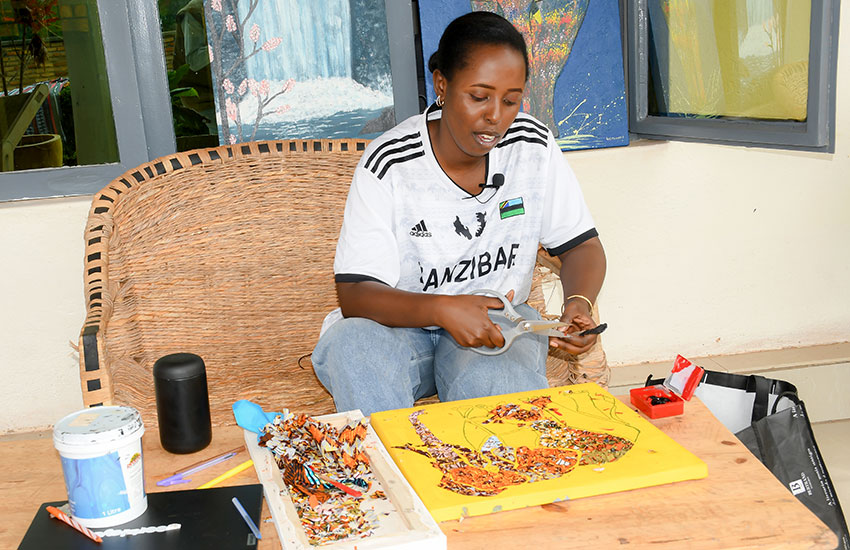
Her perspective deepened while studying forestry and environmental management at the Integrated Polytechnic Regional College (IPRC) Kitabi, where she noticed discarded fabric waste from tailors. Seeing opportunity where others saw waste, she began transforming these materials into artwork, eventually founding Cado House of Art. Starting with small savings from her student allowance of about $30, she set aside about a third of her allowance to buy her first paint. She began by charging a little amount to decorate phone covers, gradually increasing the amount over time, then expanding to repaint shoes. Eventually she progressed to selling her first framed artwork for a more substantial amount.
However, her business initially lacked structure until she attended the youth empowerment program at the Jesuit Urumuri Centre. There, she gained essential skills in financial management, branding, and customer outreach, helping her organize and expand her business. A breakthrough came when she secured a significant contract to make head caps for medical doctors which enabled her to invest enough to buy a machine and to cover costs for materials and labour, extensively increasing her production capacity.
Today, her enterprise collaborates with skilled workers and serves a diverse clientele, producing a wide range of creative and functional products like customized T-shirts, phone covers, paintings made from different materials. She now earns enough to cover her bills every month, and her business has increased in its value, a remarkable rise from her initial investment of about $15.
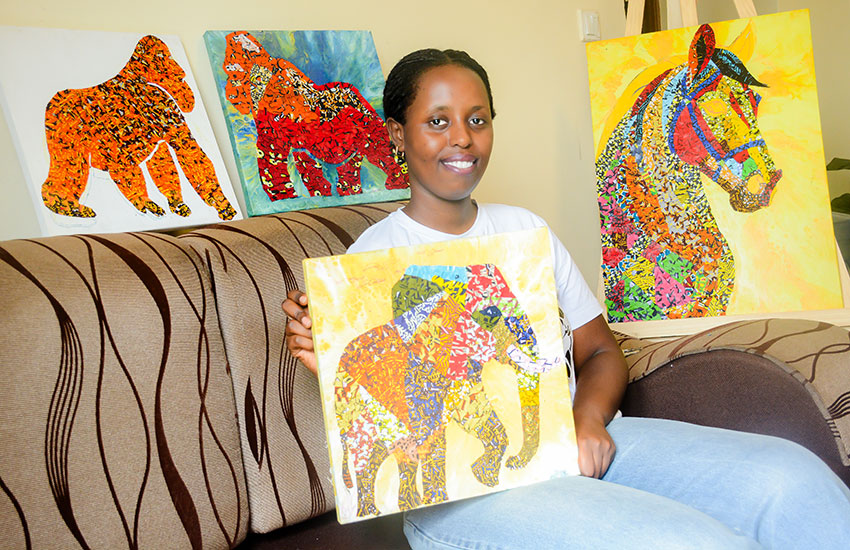
“I have now partnered with galleries, which increased customer access and strengthened my confidence in the future of the business” she explained.
Despite ongoing challenges like inadequate marketing, raw materials, her journey reflects resilience, innovation, and environmental responsibility, grounded in a simple belief: start with what you have and transform it into opportunity.
The Jesuit Urumuri Centre continues to equip youth with the skills, confidence, and vision to build sustainable futures. Stories like that of Celine Umutesi remind us that when young people are empowered, they do not only overcome challenge, but they also become creators of opportunity, stewards of their environment, and drivers of lasting change in their communities.
This is the link to the documentary which contains Celine’s story.

Related Posts:

Excitement is building for MAGIS Korea 2027, the international gathering that will bring young people from across the Ignatian family to Korea ahead of World Youth Day in Seoul. A recent online information session, led by Fr Hakjoon Lorenzo, SJ, General coordinator of MAGIS Korea...
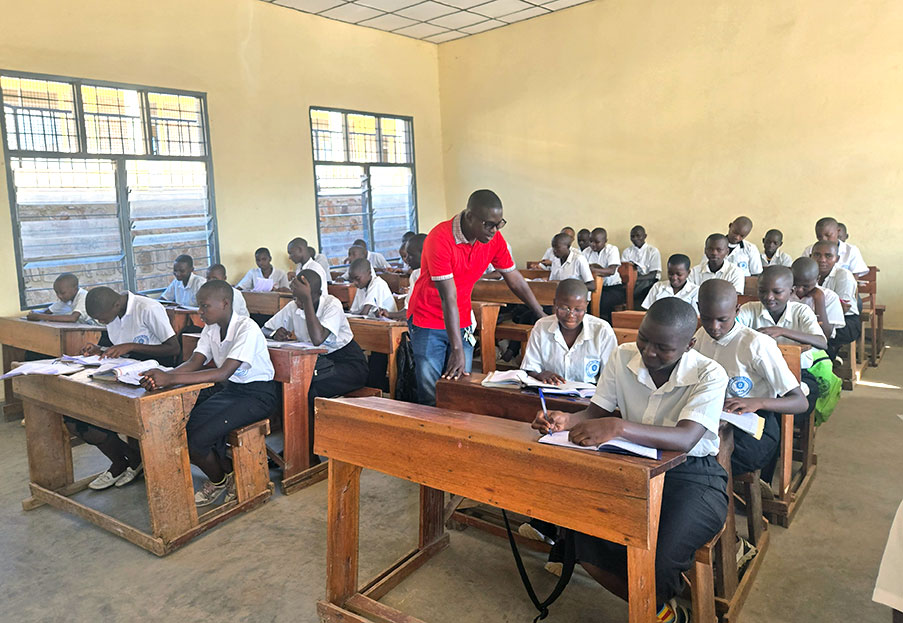
École Fondamentale Saint Louis de Gonzague was built to give every child space to be included, to live and learn alongside others, and to recognize their dignity as human beings. When the Jesuits founded the school in September 2004, in a region greatly affected by...
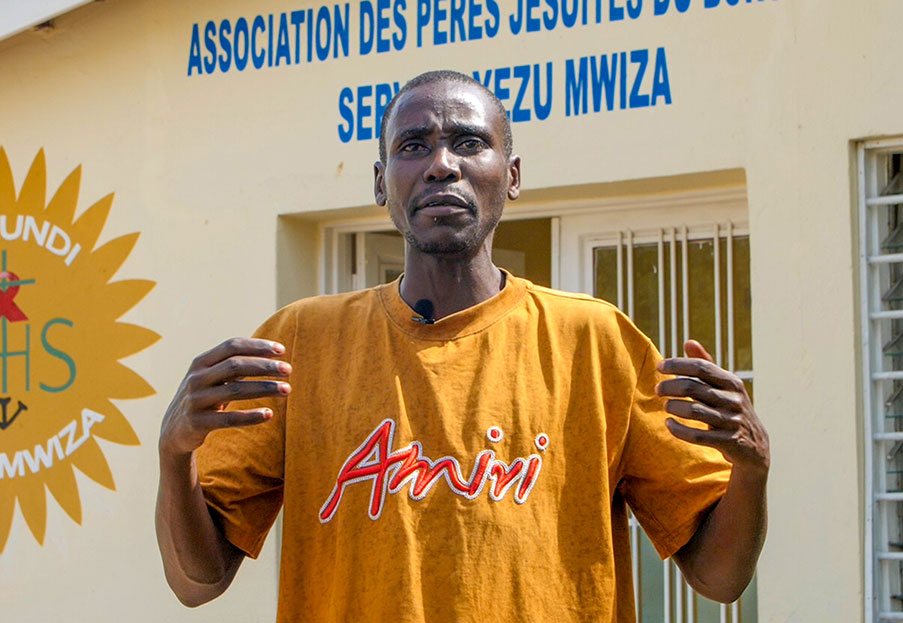
Service Yezu Mwiza (SYM) is a Christian, socio-medical organization dedicated to fighting HIV/AIDS, tuberculosis, and malaria, while promoting holistic healthcare and social justice. Founded in 2008, it operates as a prominent reference centre under the care of the Jesuits in Burundi...

“Since the third Universal Apostolic Preference was given to us, I have spent time discerning how the General Curia can help to move it forward. I didn’t want to set up a heavy structure. I didn’t think a Secretariat here in the Curia was needed. In the end, I opted for a light network structure...”

Leading a retreat for young people should be easy. It’s usually just two or three days. But... where should I start? What should the theme be? Where do I get help? The good news is that help is at hand with a new platform called Magisresources.org...
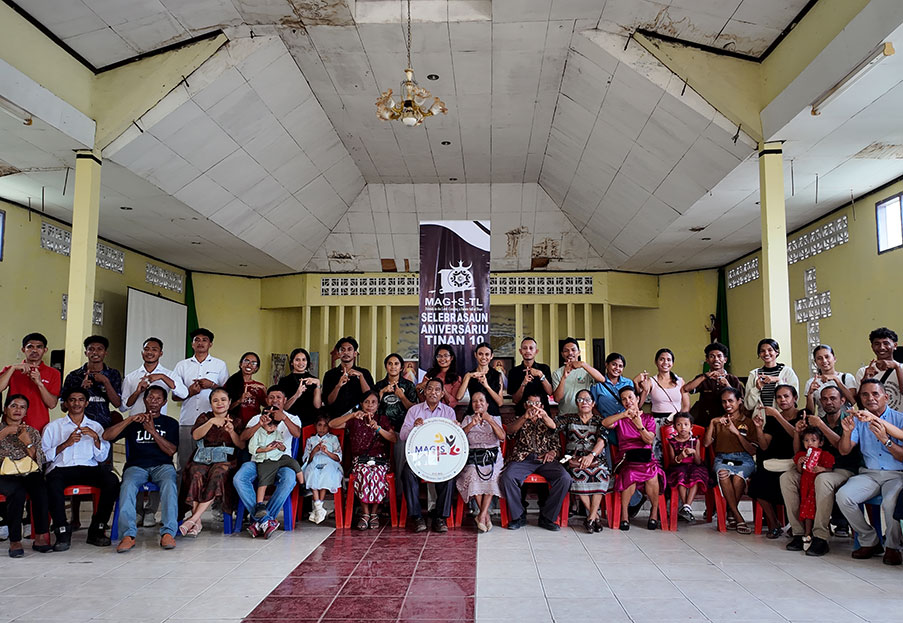
For ten years, MAG+S Timor-Leste has been quietly accompanying young people. In our small community shaped by friendship, prayer, and service, many young people have encountered the richness of Ignatian spirituality and discovered a deeper relationship with God...