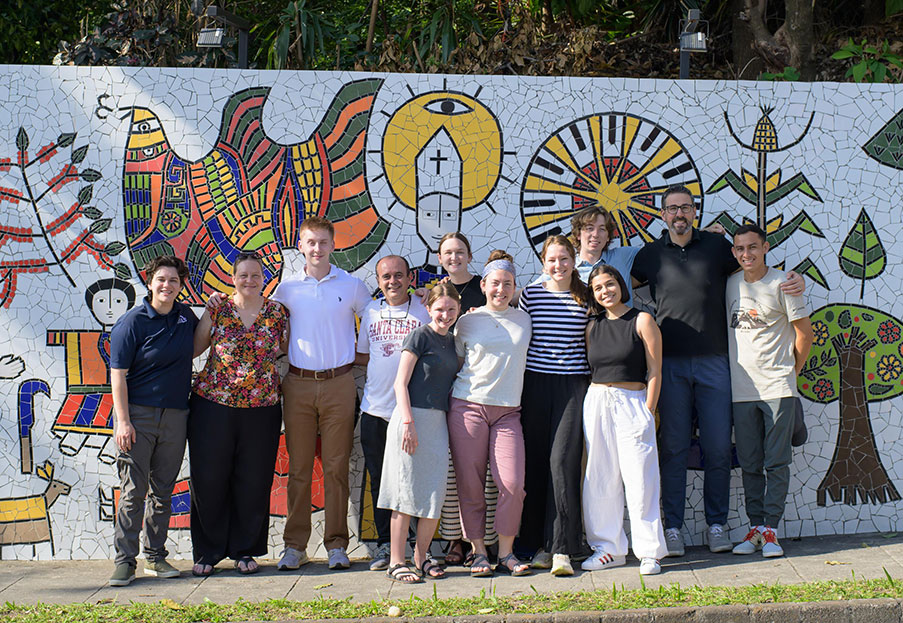
Concretizing Arrupe’s vision in Ghana
The Story of North-West Africa Province’s social justice centre
The Arrupe Jesuit Institute (AJI) began in Accra, Ghana’s capital, in November 2018 with meagre resources. Housed in a rented apartment in Kwabenya, a suburb of Accra, the centre started with no office furniture or equipment, no vehicle, and hardly any funds. The starting capital for the centre’s operations came from a generous donation from a kind parishioner of the Jesuit Church of the Sacred Heart in Edinburgh, Scotland. However, the centre that represented the long-held, yet equally long-deferred dreams of the Jesuits of the North-West Africa (ANW) Province had a vital resource: the vision of Fr Pedro Arrupe.
From its inception, the AJI always had before its eyes the objective of seeking to fulfil the vision of Don Pedro, expressed in its mission statement, which reads: “A centre for research, formation and social action, inspired by Christian faith and the quest for social justice, according to the vision of Jesuit Father, Pedro Arrupe”. Six years later, the AJI has been making a significant impact in and beyond Ghana, a testament to the institute’s unwavering commitment to social justice and the realisation of Arrupe’s vision.
Even before the AJI’s establishment, a perceptive observer noted the tremendous value of establishing a Social Justice Centre in Accra, the headquarters of the secretariat of the Symposium of Episcopal Conferences of Africa and Madagascar (SECAM). While aspiring to become the lead Jesuit institution providing support for this continental ecclesial body, the AJI has already begun offering practical assistance to the local church in Ghana, particularly the Catholic Archdiocese of Accra. These include organising and facilitating workshops, training programmes, and lectures on Catholic social teaching for groups such as corporate professionals and church organisations. The AJI’s “Faith in the Public Sphere” series, which has run since 2019, has tackled such issues as Christian Ethics in the Financial Sector, Communicating for the Common Good, and Combating the Virus of Corruption. The AJI plans to continue forming target audiences such as religious sisters, seminarians, and business people, particularly on emerging issues of the Church’s social doctrine, such as integral ecology and social friendship.
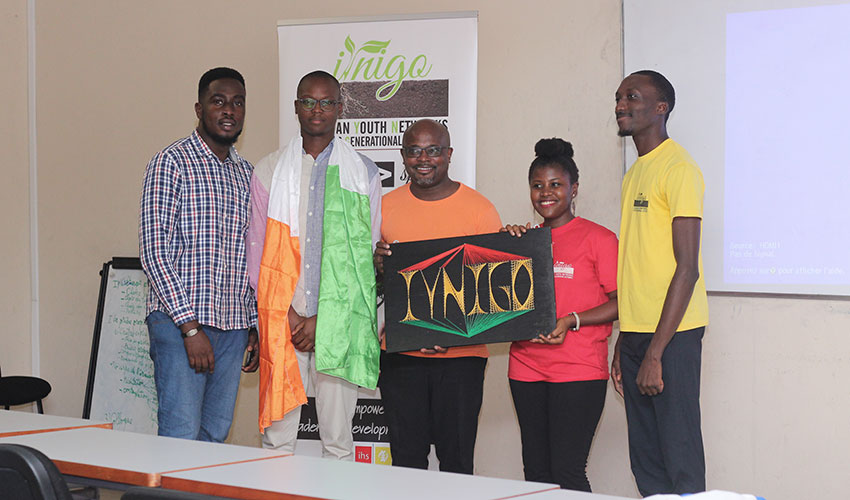
As a centre immortalising an outstanding Jesuit Superior General, the AJI should advance issues central to the Society that Pedro Arrupe loved so dearly. The Jesuit roadmap is sketched out in the Universal Apostolic Preferences (UAPs), and the AJI has fully embraced these four orientations. Within a year of its foundation, the AJI developed a youth scheme, IYNIGO, an acronym for Ignatian Youth Networks Initiating Generational Outcomes. Its principal objective is to empower young adults through leadership, entrepreneurship, mentorship, opportunities, networking, service and spirituality. IYNIGO currently interfaces with MAG+S and thus fosters many young people’s encounter with God, combining the UAPs of showing the way to God and journeying with youth.
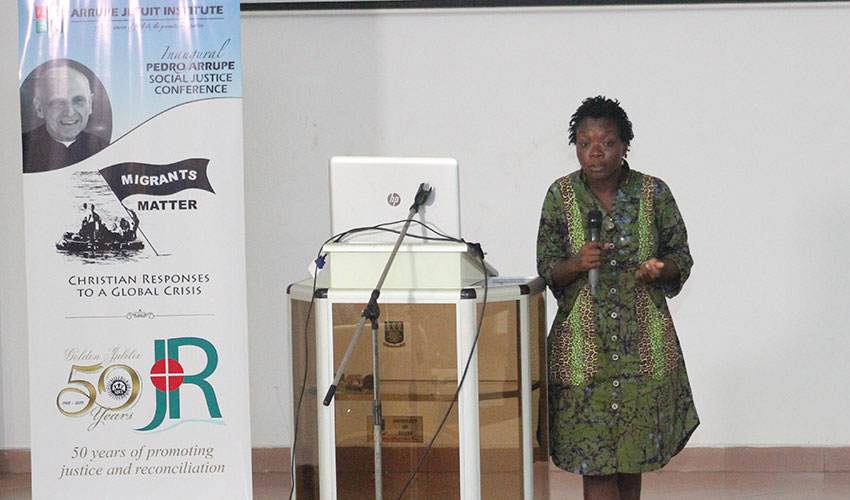
The AJI’s walking with the excluded has entailed raising awareness and advocacy; for instance, the inaugural Pedro Arrupe Social Justice Conference addressed the issue of irregular migration. Yet, it equally comprises work with poor, vulnerable, and marginalised persons through direct pastoral outreach and the Centre’s involvement in the “Talitha Kum” network that seeks an end to human trafficking. Finally, the AJI actively promotes public concern for protecting and renewing God’s creation. The Centre does this by undertaking tree-planting campaigns and engaging in ecological advocacy, often in collaboration with partner organisations. An environmental policy dialogue event in March this year advanced the centre’s 2024 thematic focus, namely growing Ghana’s green generation.
Scholarship on inculturation is incomplete if it fails to reference Pedro Arrupe. His 1978 letter to the Society on the topic evidences his interest in the subject matter. Conscious of how Arrupe’s interests and those of African theologians dovetail, the AJI has evolved in such a way as to promote scholarship on inculturation. It constitutes a key study area of the AJI as a research centre. The AJI’s flagship research event on inculturation is the Sarpong Theological Lecture, named to recognise the legacy of a Ghanaian forerunner of African theology, Most Reverend Peter Sarpong, emeritus Archbishop of Kumasi.
Today, AJI operates from the scenic Atomic Hills, which overlooks a large swathe of Ghana’s bustling capital. This movement from a rented residence to a permanent site owned by the Society constitutes an integral part of the AJI’s growth. Notwithstanding its challenges, the brick-and-mortar work this has involved has proved invaluable since it has assured the AJI’s long-term. Plans at the 2-acre site include constructing a sports arena to enhance youth engagement and foster their talents and a house of studies. The latter will hold the AJI’s documentation centre, library, seminar rooms and an auditorium.
At six years old, a child has ceased being an infant, crossed the years of high mortality, and is on the cusp of the age of reason. As the AJI prepares to celebrate its sixth anniversary in November, it provides all indications of robust health and more vital signs of its growth potential. Arrupe’s vision has shaped the AJI in its earliest years and will continue to give direction to this institute in the years ahead.

Related Posts:

The Social Justice and Ecology Secretariat (SJES) of the Society of Jesus has released its 2025 Annual Report, “The Promotion of Justice is Fueled by Hope”. The report details regional milestones at the conference level, the results of global advocacy, and its commitment to the mission of...

In the context of the First Conference on Transitioning Away from Fossil Fuels, which will be held in Santa Marta, Colombia, from 24 to 29 April 2026, the Jesuits for Climate Justice Campaign is presenting its Statement for COP31...

“Dear friends, brothers and sisters, as we observe the Jubilee of the Poor, I write to you from Belém do Pará, Brazil, where COP30 is currently underway. The Social Justice and Ecology Secretariat (SJES), alongside over 30 partners and collaborators, has been actively...”
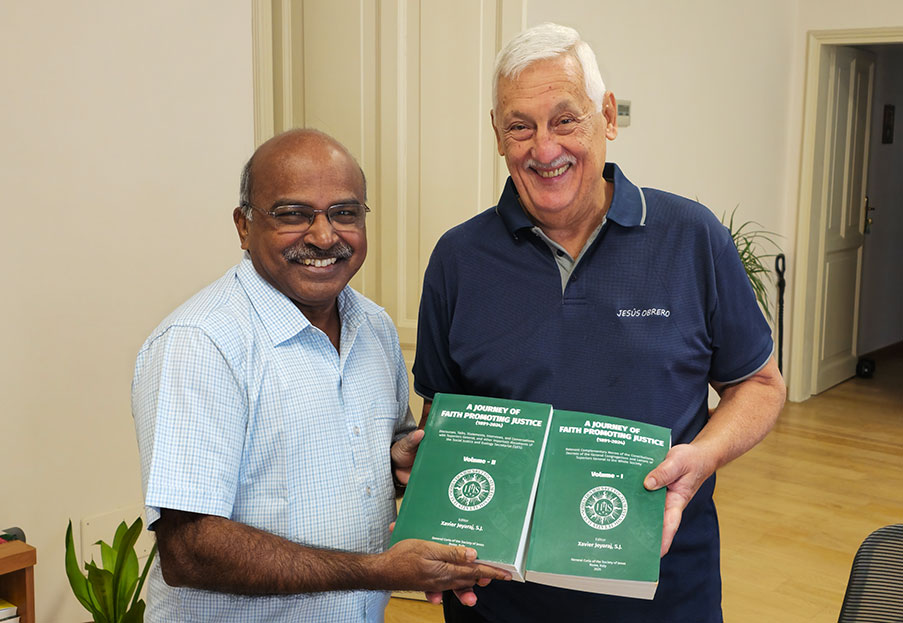
Faith and Justice: Fr Jeyaraj brings together over 130 years of Jesuit involvement in social justice
When Fr Xavier Jeyaraj, the former Secretary for Social Justice and Ecology, set out to compile a volume that detailed the commitment of the Society of Jesus to social justice, his aim was simple: gather some key documents that showed how the Jesuits responded...

As part of the “Jesuits for Climate Justice: Faith in Action at COP30” campaign, we would like to present the Faith and Ecology Podcast, a nine-episode series inspired by the 4th Universal Apostolic Preference and the 10th anniversaries of the Laudato si’ Encyclical and the Paris Agreement...
COP30 is an opportunity we must not miss. For the first time, we are showcasing the global presence of the Society of Jesus – Jesuits and their institutions – in a single campaign called Jesuits for Climate Justice Campaign (JCJC)...