Borders, Bridges, and Belonging: A Faith Shaped by Pope Francis
Introduction by Carla Bellone | Assistant to the Secretary for the Service of Faith
When, in March 2013, a Jesuit appeared on the balcony of St Peter’s Basilica, Clara Sayans could not have imagined how profoundly his pontificate would transform her faith and her life’s work. In this deeply personal reflection, she traces her journey from a university common room in Madrid to the front lines of supporting refugees in the United States. Drawing on the teaching and witness of Pope Francis – from Lampedusa to Fratelli tutti – she explores how the Church’s call to the peripheries has become not an abstract ideal, but a lived vocation. A testimony to the power of encounter and to a Gospel that takes flesh only when lived out in the deepest fractures of the world.
By Clara Sayans | Outreach Manager at Jesuit Refugee Service/USA
The day Pope Francis was elected, I was studying at Centro Arrupe in Madrid, a university pastoral centre run by the Society of Jesus. It was a space where we studied, gathered, prayed, and built friendships – it felt like a second home. That afternoon, the television was on. We watched live as a new Pope appeared on the balcony of St Peter’s, and suddenly we realised that a Jesuit had been elected Bishop of Rome.
At the time, I could not have imagined how profoundly that moment would shape my faith, my vocation, and my understanding of the Church.
In my personal story with God and with the Church, Catholic Social Teaching had never occupied a central place. I had grown up hearing about the importance of the dialogue between faith and justice, about being contemplatives in action, about being men and women for others, about loving and serving in all things. I was surrounded by promoters of Catholic social thought. And yet, somehow, there had never been space – neither in my faith education nor in my spiritual imagination – for Catholic Social Teaching to truly become mine. I could not reconcile my longing for justice with the institutional Church, which I experienced as a slow-moving mastodon, distant from social transformation.
Everything changed with Pope Francis.
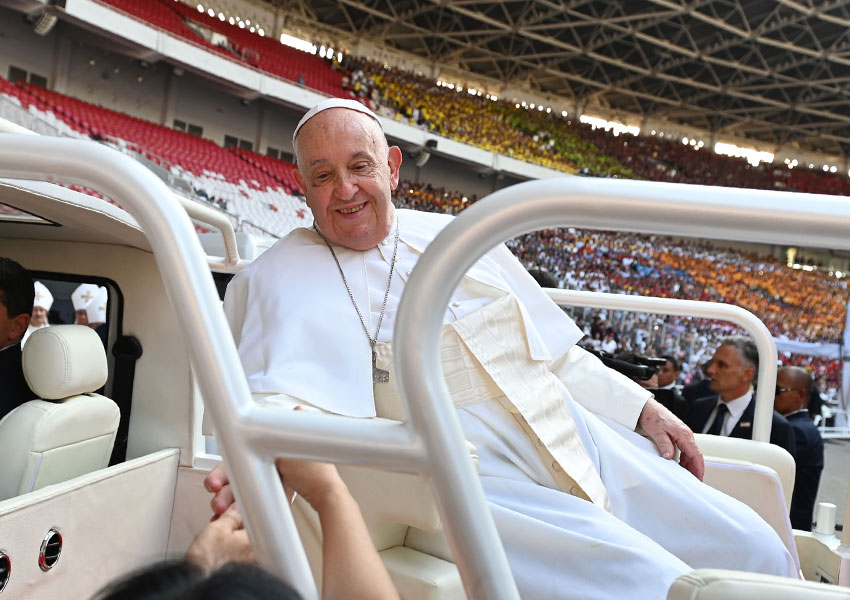
© Jesuit.Media, photo by Iwan Jayadi.
Suddenly, something that had never quite aligned began to fall into place. The language, gestures, and teachings of Francis allowed me to rediscover a Church in which my way of seeing the world had a home and a framework. I began to realise that the Church’s own words, teachings, and tradition could be used – not to soften demands – but to defend the most daring commitments to justice, dignity, and the rights of my brothers and sisters. This realisation widened my gaze and freed me. It allowed me to love the Church without splitting my conscience.
Pope Francis not only guided the Church through texts that will endure; he embodied them through concrete actions. I remember vividly his first pastoral journey to Lampedusa. Across Europe, we watched with a heavy heart as the tragedy of migration continued to receive politicised, callous responses. His presence there was an unmistakable choice: to confront indifference with encounter. By standing on that shore, Francis forced the world to look at vulnerability, refusing to let suffering become invisible or normalised.
From the very beginning of his pontificate, Evangelii Gaudium called us to a culture of encounter and to become an “Iglesia en salida”, a Church that goes forth. His language was simple, his gestures direct, and his insistence unwavering: the Gospel demands closeness to the peripheries.
He returned to this vision powerfully in Fratelli tutti (FT), reminding us that “the stories of migrants are always stories of an encounter between individuals and between cultures” (FT, 133) and that migrants, when welcomed and accompanied, become “a blessing, a source of enrichment and new gift that encourages a society to grow” (FT, 135). Migration, in Francis’s vision, is not only a social challenge; it is a theological place where humanity is revealed.
In his final years, Francis emphasised that people should be free to choose whether to migrate or to stay. This conviction brought together many strands of his teaching: care for our common home, resistance to extractive and exclusionary economies, and the responsibility of the Global North for systems that force displacement. Climate change, economic injustice, and unrestrained consumption continue to uproot communities while presenting migration as voluntary. Francis defended, with clarity and courage, an intersectional vision of migration and reminded us of our local responsibility for global change.
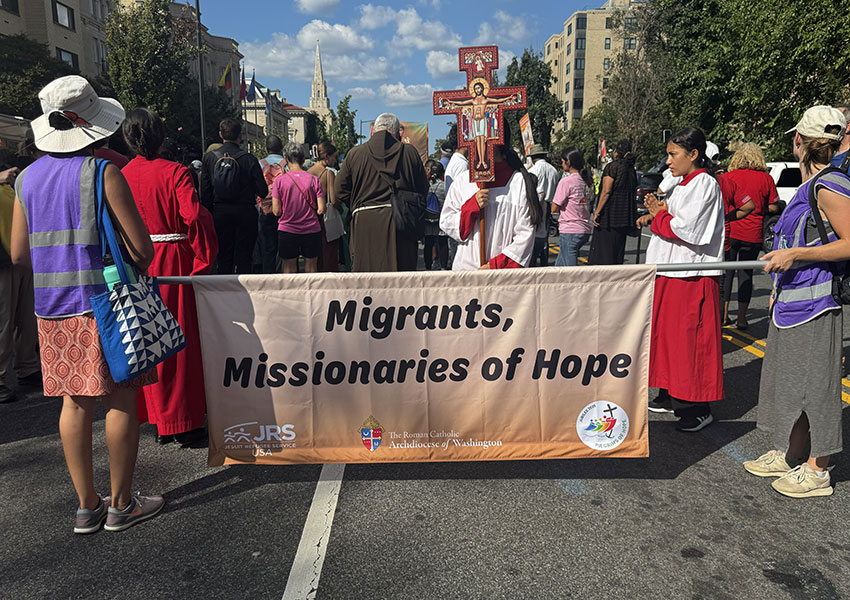
Through my work, I have come to believe deeply in this truth. I see my vocation as opening paths of encounter – bringing the lived realities of migrants closer to those of us who are often insulated from suffering, shaking hardened narratives, and creating spaces where hearts and minds can soften. This feels especially urgent in a historical moment marked by fear, polarisation, and exhaustion.
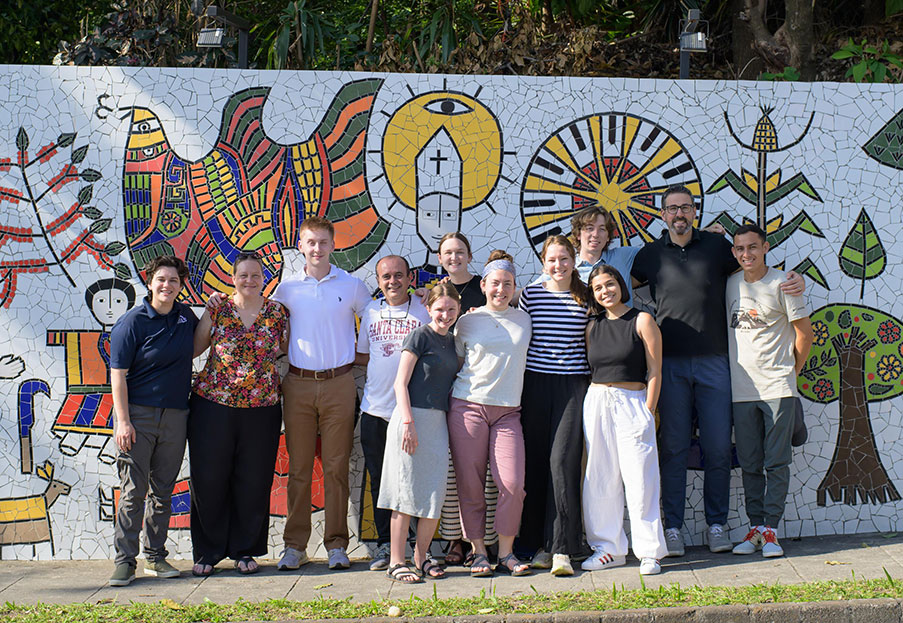
This sense of encounter became tangible for me during a time of discernment, when I travelled to Peru to work with Fe y Alegría, a Jesuit initiative bringing education to communities often forgotten. Living and working in rural areas helped me understand, in a very concrete way, how presence, patience, and shared learning can become sources of strength and hope.
From that experience onward, my path began to take shape through accompaniment – walking alongside others, paying attention to reality, and allowing relationships to change both sides. I have since moved through many spaces and contexts, but what has remained constant is the conviction that real change begins when people meet each other as equals, as children of God.
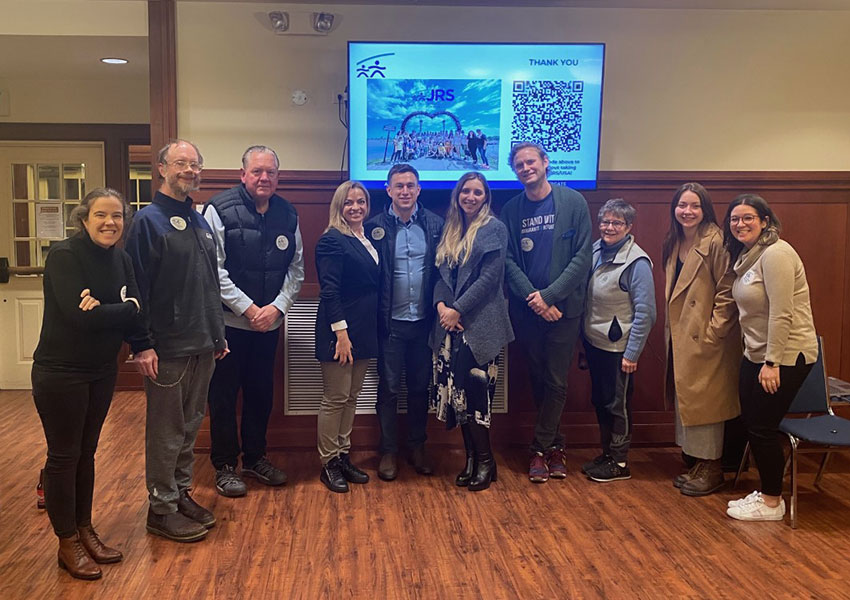
Today, in my work at Jesuit Refugee Service, I am not primarily accompanying migrants and refugees themselves, but rather the communities around them. I work to create spaces where people can learn about the realities of migration and forced displacement, reflect critically on their root causes, and take concrete action. My role is to build bridges – between refugees and migrants and the societies that often remain distant from their stories.
Through education, dialogue, and collective engagement, I witness how perspectives shift when people are invited into encounter. These processes challenge indifference, unsettle fear, and open paths toward responsibility and solidarity. Accompanying communities in this way has reshaped how I understand faith, justice, and commitment. It reminds me that transformation does not begin with answers, but with the willingness to see, listen, and respond.
Looking back, I understand more clearly why that afternoon at Centro Arrupe marked a turning point. The election of Pope Francis did not give me new convictions; it gave me a language, a horizon, and a Church capable of holding what I already carried. Through his pontificate, Catholic Social Teaching ceased to be abstract or distant and became something alive – a lens through which I could read the world and my responsibility within it.
Francis helped me recognise that the Gospel is not lived on the margins of reality but within its deepest fractures. He showed that migration, displacement, and exclusion are not secondary issues, but privileged places of encounter where faith becomes concrete. Through his teaching and gestures, I came to trust that working for justice, building bridges, and challenging indifference were not addons to the Christian life, but expressions of it.
Today, as I engage communities in reflection, learning, and action around forced displacement, I do so shaped by this vision. Francis altered my understanding of the Church – not as a distant institution, but as a people capable of question, conversion, and hospitality. His legacy continues to accompany me, inviting me to remain attentive to the peripheries and faithful to a Gospel that only takes flesh when it is lived in encounter.
[Featured photo for the article in the home page by Stefania Casellato]
Related Posts:
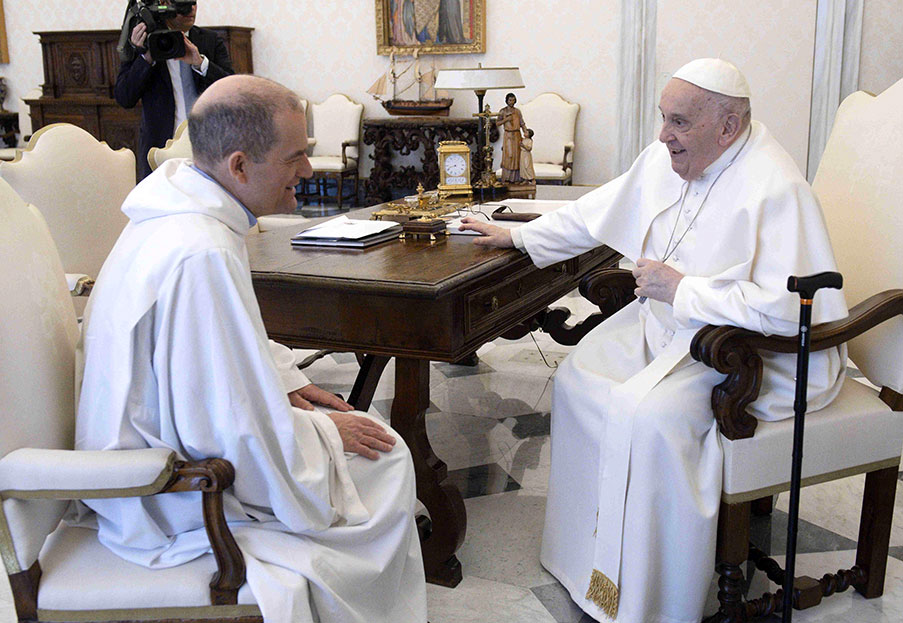
“On 15 January 2023, after the Angelus – I was travelling to Rome and we watched from the train – Pope Francis announced officially the ecumenical prayer vigil for 30 September of that year. He said that the path to Christian unity and the Church’s synodal conversion are linked...”
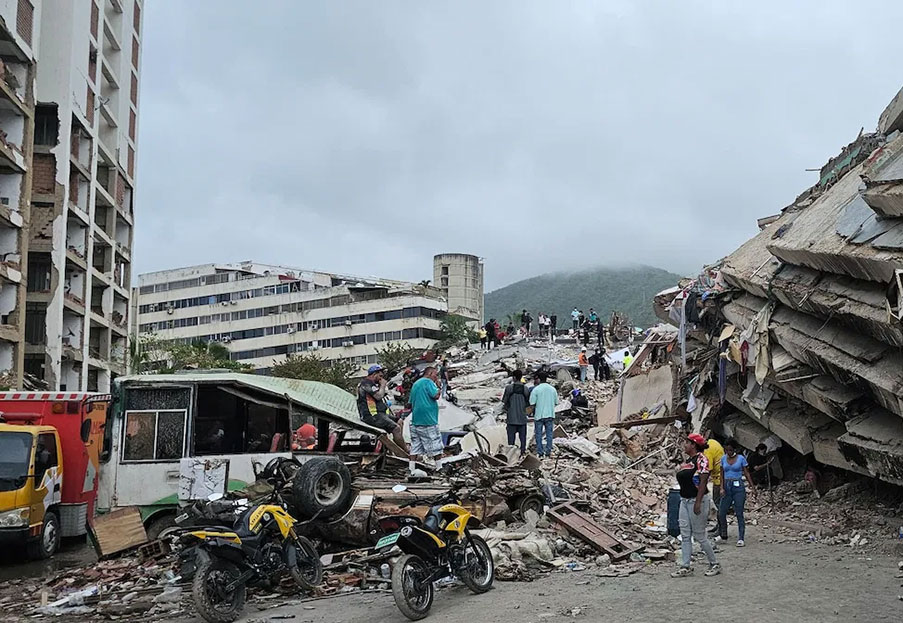
A series of powerful earthquakes have struck Venezuela on 24 June, causing widespread destruction across affected communities and leaving thousands of people in urgent need of assistance...
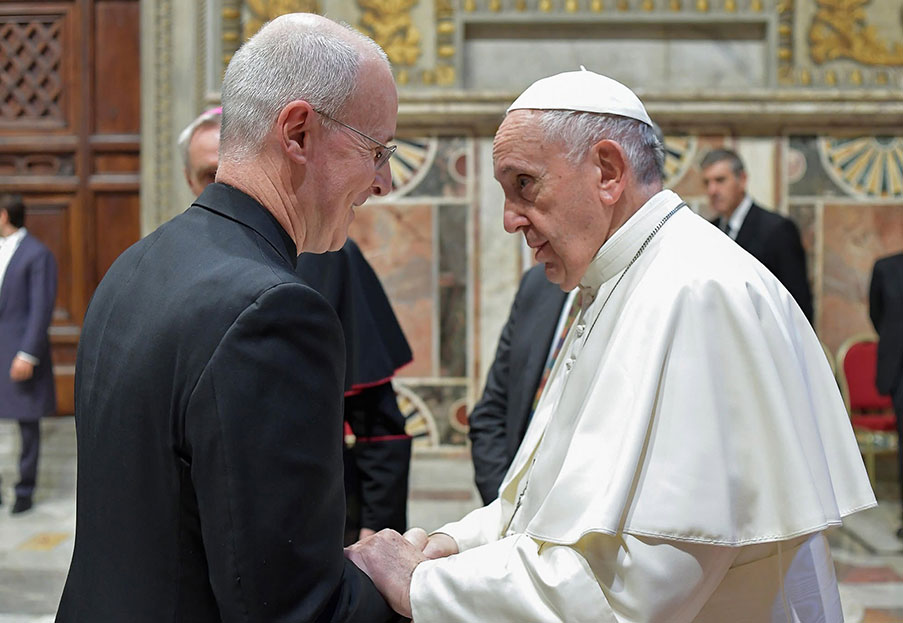
“I did not know Pope Francis as well as many others did. Certainly not as well as some mutual friends who had known him since his days as the Archbishop of Buenos Aires. Nor did I know him as well as the cardinals, bishops, priests and religious men and women who worked with him...”

World Refugee Day is celebrated every year on 20 June. This international day was designated by the United Nations to honour refugees around the globe, shine a light on their plight, and work together to find long-term solutions to displacement.

“How many times did you hear Pope Francis ask: “Please, pray for me!”? Those words were never a mere courtesy – they expressed a deep conviction: Francis believed wholeheartedly in the fruitfulness of prayer...”

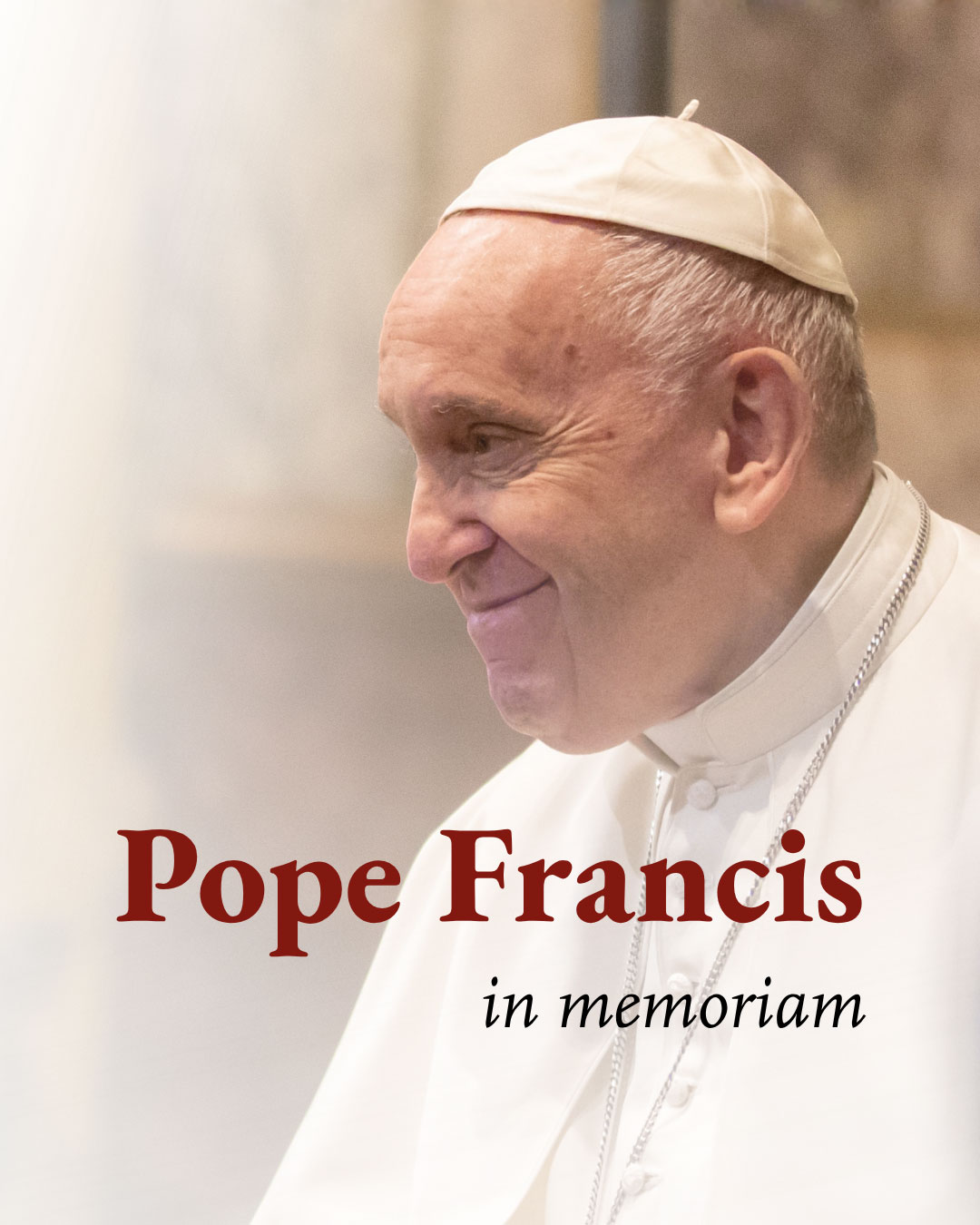
On the first anniversary of his death, we remember our Pope, our brother in the Society of Jesus, with gratitude. In loving memory of him, we are launching a living memorial: a space where testimonies and reflections will be gathered over time, offering a fuller picture of his life, his ministry, and the Ignatian spirit that shaped his service.