Living sustainably and encouraging others to do the same
The Jesuit Ukama Centre in Nuremberg is a courageous commitment to the poor and to creation
“Ukama” – a word from the African Shona language – can be translated as everything is connected to everything. It’s also the name of the Jesuit centre in Nuremberg, Germany, which is dedicated to socio-ecological transformation. During his visit to Germany, Father General Arturo Sosa stops by to learn what Jesuits in the Central European Province (ECE) are doing for social justice and care for creation – and how they are also challenging themselves in the process.
In 2022, the Jesuits of the ECE Province defined one of their key priorities: “As Jesuits and through our ministries, we want to work together with others for socio-ecological transformation.” This commitment calls for concrete action. That same year, they founded the Ukama Centre. “We want to inspire people to engage in socio-ecological change and work with them to find ways to make it happen”, says Fr Fabian Moos, who has been living and working at the centre for two years.
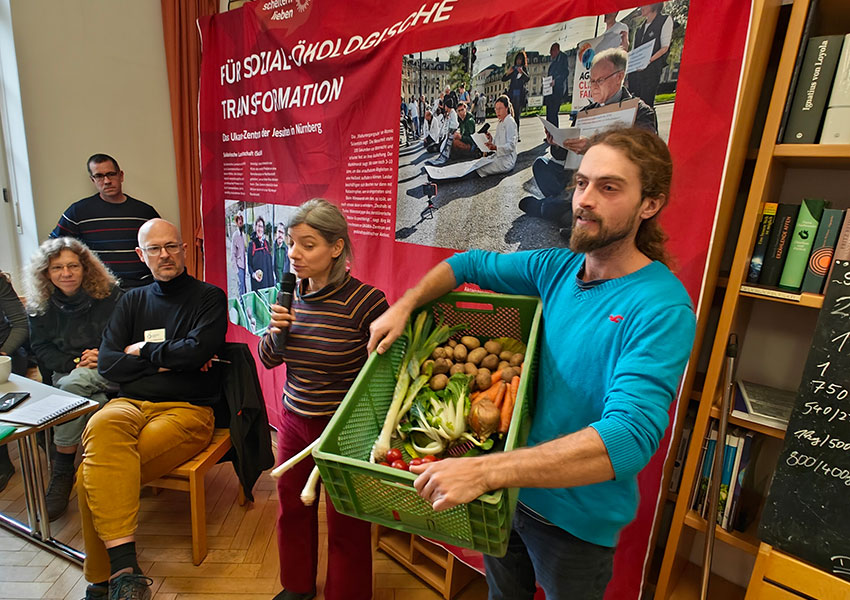
Ukama Centre.
What happens at the Ukama Centre? The Jesuits bring together people who are committed to environmental causes, tap into spirituality as a source of strength for climate action, and advocate for urgent change in society and politics. They also take a stand through civil disobedience and resistance. Why? Because despite decades of traditional climate advocacy, too little has changed. “We need different approaches to get things moving in society”, explains Fr Moos. “Jesus also prophetically challenged the powerful. That was part of his commitment to the Kingdom of God – and a consequence of his option for the poor.”
Change starts with us
The Jesuits of the ECE Province have taken on another challenge: “In our communities, ministries, and as individual Jesuits, we strive to live sustainably and encourage others to do the same.” That’s why the Ukama Centre has developed a 15-month action plan with concrete steps for the Province itself. “The Jesuit order is committed to socio-ecological transformation worldwide, and every context is different”, says Fr Moos. As the “Laudato si’ representative”, he works together with Judit Bartel within the ECE Province to promote greater sustainability. “A lot is already happening here locally, and we hope to strengthen, expand, and make our efforts more visible.”
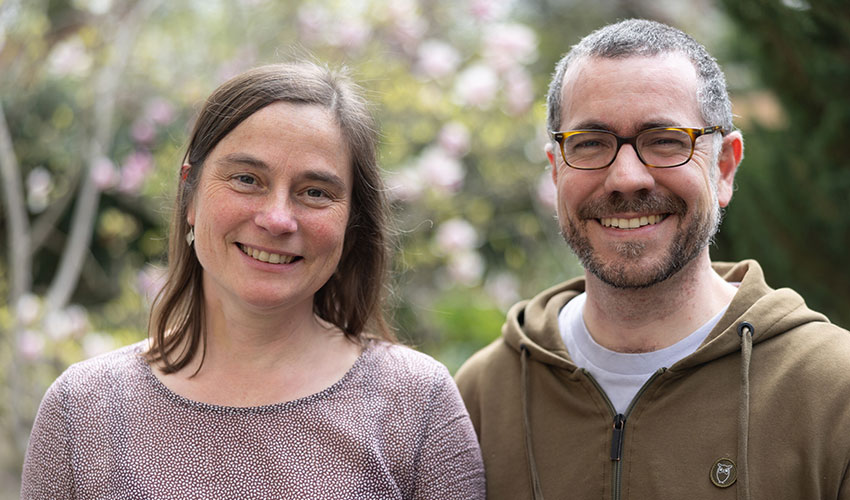
Judit Bartel and Fr Fabian Moos, SJ.
The transformation focuses on three key questions: What can Ignatian spirituality contribute to socio-ecological change? With whom – within the Province and in society – can Jesuits collaborate for greater environmental protection? And how can Jesuits, both individually and as communities, live in ways that don’t diminish life opportunities, but increase them?
Facing systemic challenges with spiritual depth
“As long as we live in a system where sustainable or ‘grandchild-friendly’ lifestyles are practically impossible and only achievable with extreme effort, it’s hard to motivate ourselves or others”, says Fr Moos. “It feels like being Sisyphus.” But without personal commitment, socio-ecological transformation won’t happen. “That’s why we focus on supporting structural change”, he explains. “And we emphasize the spiritual depth dimension. Because this isn’t about moral perfectionism – it’s about living a fulfilled life rooted in the Gospel. And that means courageous commitment to the poor and to creation.”
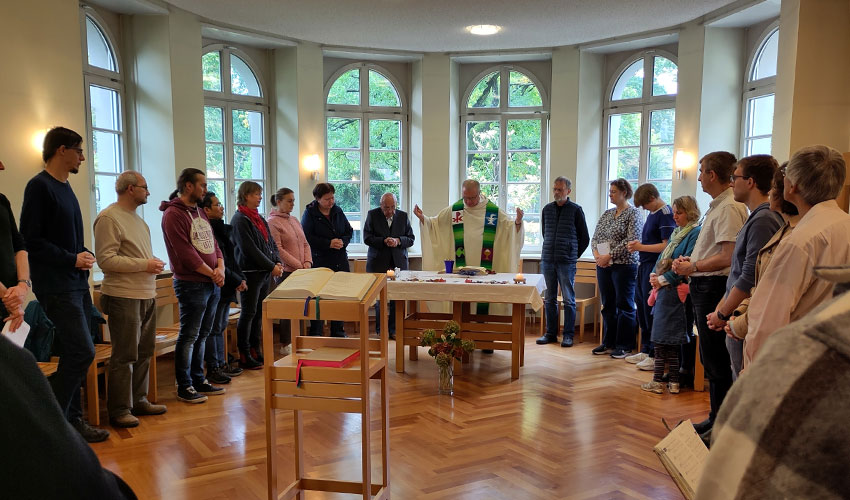
Mass at Ukama Centre.

Related Posts:
As Venezuela begins the difficult task of recovering after two strong earthquakes that claimed lives, left many missing and caused widespread destruction, Father General Arturo Sosa has sent a message of closeness and hope to the Venezuelan people.
As the Society of Jesus prepares for the II Congress JESEDU-Montreal 2027, a global process of review, discernment, and foresight is now underway. This initiative seeks to evaluate how the shared vision for Jesuit education has been implemented across the worldwide network of...
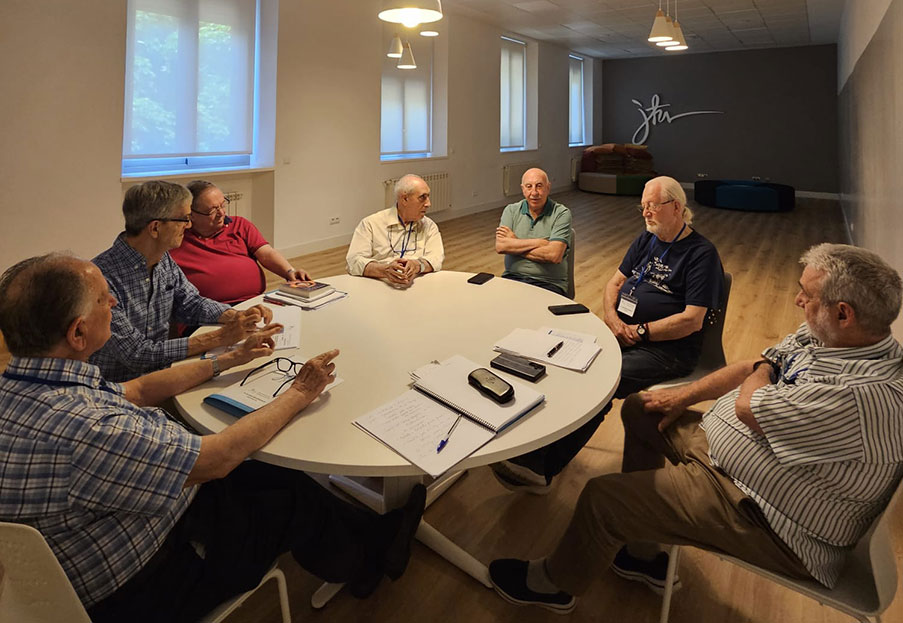
From 23 – 31 May, the Delegation for the Elderly of the Spanish Province organised the third edition of the formation course for elderly Jesuits at the Jesuit House in Salamanca. The program brought together 24 Jesuits aged between 70 and 85, with one or two participants in their 90s...

“Since the third Universal Apostolic Preference was given to us, I have spent time discerning how the General Curia can help to move it forward. I didn’t want to set up a heavy structure. I didn’t think a Secretariat here in the Curia was needed. In the end, I opted for a light network structure...”

Pope Francis raised climate change to global consciousness as the defining moral issue of our time. As a result, the Church has become a global voice urging political accountability and personal responsibility for healing the planet. Building on his legacy, Pope Leo vigorously calls for urgent climate action...

The Enlarged Council brought together the Secretaries of the Apostolic Sectors, General Counsellors, General Treasurer, Presidents of Conferences, and other officials at the Curia to examine a central question: How to increase and deepen collaboration across apostolic...