Andhra Province: Our Green Campuses and Environment-Caring Endeavours
In our Jesuit schools
On the campus of several of our schools, we have created nurseries and herbal gardens. These gardens, complete with rows of medicinal plants, provide a calm environment in which students can take nature walks to increase their awareness of complex ecosystems and their care. In addition, our schools organize field trips to nearby Botanical Gardens and sometimes to wild life sanctuaries, that our students may learn about the flora and fauna of our region and country.
Our Socially Useful Productive Works (SUPW) program teaches students first how to reduce their waste, then trains them in reusing waste materials though hands-on activities. These activities help students to develop practical skills, social responsibility and community involvement.
Our schools are promoting cleanliness and greenery on campus, encouraging students to maintain a litter-free environment while also caring for the plants and trees growing on school grounds. All of our schools are enthusiastically engaged in Clean and Green Campus Initiatives which, in addition to being better for the environment, have produced much fruit for the well-being of students, staff and parents. Our schools regularly schedule tree-planting drives which allow our students to care for the vegetation they themselves have planted.
To make sure that these and other related activities are carried out regularly, our schools encourage a student-led environmental club (Eco-Club) that actively engages in eco-friendly initiatives like waste management, composting and creating awareness in caring for the Earth.
In our Jesuit colleges
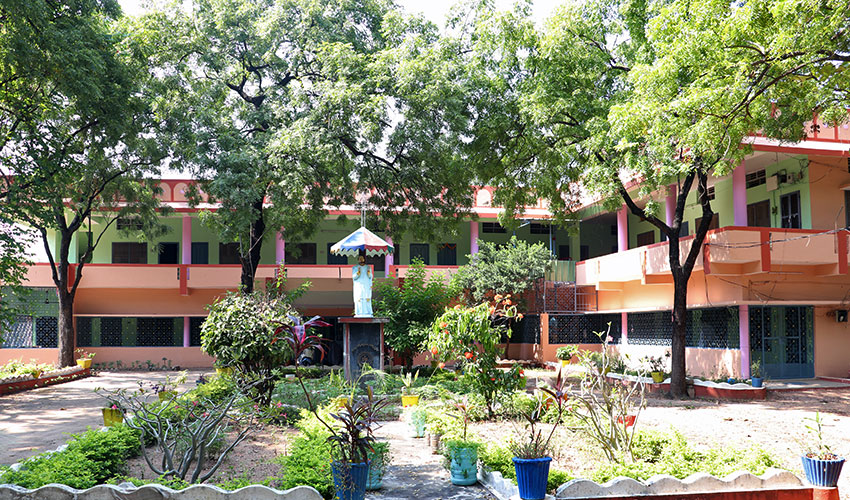
Formerly barren hills and lands on our campuses, with consistent effort over the past few decades, have been transformed into lush mini-forests. Each year, and on each campus, 150 plants are added to the work of generations past, continuing the “greenification” of our campuses. Through university college Green Clubs, students are made aware of the importance and uses of plants. We have fostered a continual exchange of insights on medicinal and aromatic plants, which in-turn has acquainted students with the various practical applications of those plants.
Our colleges have also made use of modern advances in power generation and use. Many of our colleges have switched to LED lights to reduce power consumption, while also deploying solar power generation in an attempt to render our campuses eco-friendly. Each year sees more progress in our march towards power self-sufficiency.
Some institutions have signed Memorandum of Understanding with industrial companies for the recycling of paper and e-waste. We have deployed a sewage treatment plant that supplies treated water to the fields of our B.Sc. Agriculture students. Talks are ongoing between one of our colleges and a “Banka Bio” – a company that manufactures a Bio-Digester Tank systems which will efficiently dispose of human waste in an environmentally friendly manner. It is hoped that the installation of their system on campus will safely dispose of human waste in a large-scale process that will return water and compost.
Essay and Poetry competition on “Green Themes”, seminars on Environmental awareness, painting and designing competitions are held. Through Eco-Designing, an opportunity is given to them to design sustainable environment charts and craft from waste to design colourful posters promoting sustainable environment.
In recognition, by the government and other institutions, of the environmental efforts made, our institutions of higher education are awarded ‘Green Champion Award’, and ‘District Green Champion Certificate’.

Related Posts:

Pope Francis raised climate change to global consciousness as the defining moral issue of our time. As a result, the Church has become a global voice urging political accountability and personal responsibility for healing the planet. Building on his legacy, Pope Leo vigorously calls for urgent climate action...
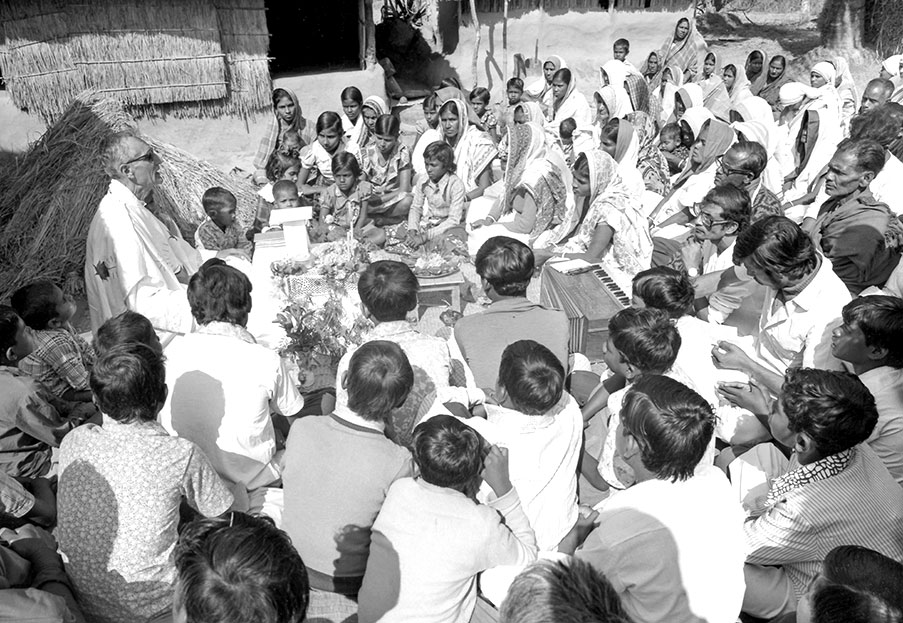
A Croatian Jesuit who crossed half the world to serve the poorest communities of Bengal, Fr Ante Gabrić spent five extraordinary decades building up the Church in the Sundarbans – one school, one clinic, one family at a time. His cause for beatification is now before the Church...

The annual meeting of Eco-Jesuit delegates in South Asia, held at Inigo Bhawan in Matigara, Darjeeling, became much more than a routine gathering. Set against the fragile ecology of the Eastern Himalayas, the meeting turned into a moment of discernment on the future...

The Social Justice and Ecology Secretariat (SJES) of the Society of Jesus has released its 2025 Annual Report, “The Promotion of Justice is Fueled by Hope”. The report details regional milestones at the conference level, the results of global advocacy, and its commitment to the mission of...

On the morning of 24 March 1964, Fr Herman Rasschaert celebrated Mass in his remote parish of Kutungia, 240 kilometres from Ranchi on the Orissa border. He knew what was happening in nearby Gerda village. Word had spread: a frenzied mob was attacking Muslims trapped...

What began as a simple encounter between urban students and forgotten hamlets has evolved into a profound Jesuit mission of accompaniment. For eight years, St. Xavier’s University Kolkata has answered the Society of Jesus’ call to “walk with the excluded” through its transformative...