The Priest Who Cycled Into Death: Fr Herman Rasschaert’s Last Stand for Peace
By Kulwant Minj, SJ | Pontificia Università Gregoriana (PUG), Rome
The Choice That Defined Everything
On the morning of 24 March 1964, Fr Herman Rasschaert celebrated Mass in his remote parish of Kutungia, 240 kilometres from Ranchi on the Orissa border. He knew what was happening in nearby Gerda village. Word had spread: a frenzied mob was attacking Muslims trapped in their mosque. People were dying.
The 42-year-old Belgian Jesuit had a choice. Stay safe in his parish. Let the violence run its course. Wait for the police who might come. After all, he was a foreign missionary – this wasn’t even his country, let alone his fight.
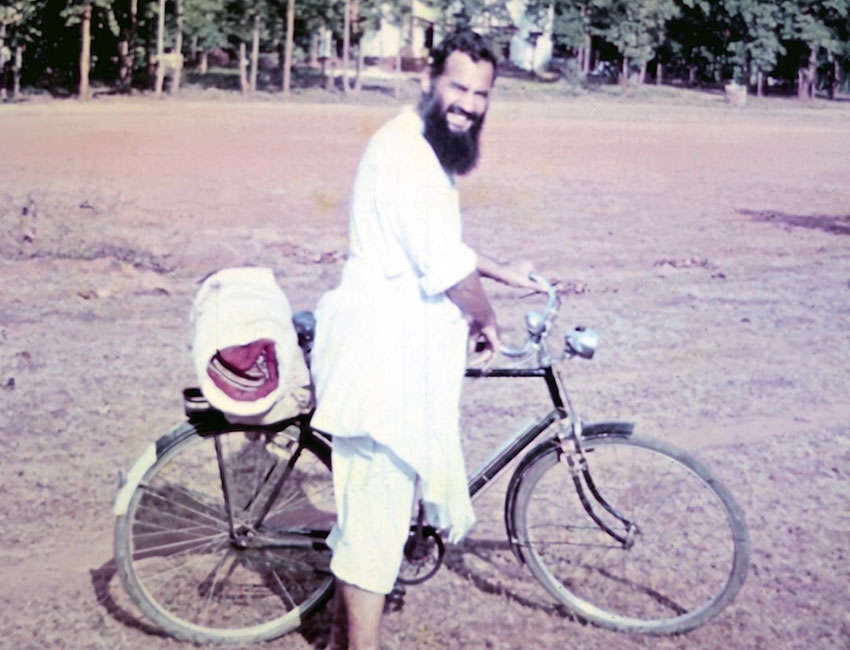
Instead, Fr Herman got on his bicycle and pedalled toward the killing. What happened next would shock a nation, shame a state government, and create a martyr whose witness still challenges comfortable Christianity today.
A Man Always Moving Forward
Herman Rasschaert was born in the Netherlands on 13 September 1922. At 19, he entered the Jesuit novitiate in Drongen, already dreaming of missionary service in India. That dream became reality on 6 August 1947, when he received his official appointment to the Ranchi Mission. By December, he’d arrived in a land vastly different from anything he’d known.
After ordination at Kurseong on 21 November 1953, Fr Herman began what would become his pattern: constant movement, constant service, constant engagement with new challenges. Assistant Parish Priest in Khunti. Then Torpa. Then Parish Priest at Karra, where he won hearts so completely that parishioners vehemently opposed his transfer.
But Herman was “a man on the move”. When assigned to Kutungia in January 1961, he embraced one of the most isolated places imaginable. No assistant. No conveniences. Just pastoral work, a school, a cooperative credit society, and villages scattered across difficult terrain. He took it all in stride – the loneliness, the workload, the distance from support systems. It was as if he was preparing for something bigger.

The Day Violence Came
18 March 1964. Communal riots exploded in Rourkela, a nearby industrial city located in the northern district Sundargarh of Odisha, India, where religious tensions had been simmering. What began as heated rhetoric quickly became bloodshed. Schools closed. Violence spread like wildfire into rural areas.
On Monday, 23 March, Fr Herman was administering last rites in a distant village when news reached him: Muslims had taken refuge in the Gerda mosque, and a mob was converging to kill them. He knew the geography. He knew the people. He knew that by the time police arrived – if they arrived – it would be too late.
That night, he must have wrestled with the decision. Going meant abandoning safety. It meant inserting himself into religious violence as an outsider, a Christian priest defending Muslims from Hindu attackers. It meant risking everything for people who weren’t his parishioners, his religion, or even his countrymen.
But Fr Herman had spent 17 years in India learning one fundamental truth: faith that doesn’t risk everything isn’t faith at all.
The Last Ride
Tuesday morning, 24 March 1964. Fr Herman celebrated Mass, climbed onto his bicycle, and set out for Gerda. Alone. Unarmed. Pedalling toward a mob drunk on violence and religious fury.
When he arrived, the scene was chaos. Men wielding weapons. Terrified Muslims trapped inside. Blood already spilled. The fever-pitch of violence that makes reason impossible. Fr Herman didn’t hesitate. He confronted the mob directly: “Killing people is a grave sin. Stop this madness.”
For a brief moment, silence. Perhaps shame flickered across some faces. Perhaps the absurdity of the situation – a lone priest on a bicycle challenging armed men – created a pause. Then a stone flew. It struck Fr Herman’s face with sickening force. He fell to his knees.
The mob rushed forward. Sharp weapons descended. Fr Herman Rasschaert died instantly, murdered for being a peacemaker, killed for choosing solidarity over safety. “Blessed are the peacemakers, for they shall be called children of God.” (Matthew 5:9)
The Body They Found
The next morning, 25 March, the Sisters of St Anne from Kutungia, along with the catechist and teachers, made the grim journey to Gerda to retrieve Fr Herman’s body. What they found was horrific: his face badly wounded, all his teeth knocked out, evidence of brutal violence in his final moments.
That evening, Fr Bossuyt and Fr Joseph Tigga offered a burial Mass. They laid Fr Herman to rest in the local graveyard – a Belgian missionary who’d given everything for people who weren’t supposed to be his responsibility.
A Nation’s Reckoning
Fr Herman’s death sent shockwaves through Bihar and beyond. The sacrifice of this foreign priest – who had no political agenda, no sectarian loyalties, only a conviction that human life was sacred – became a mirror forcing people to confront what they’d become.
The Chief Minister of Bihar travelled to Ranchi to meet church leaders. His words to Archbishop Pius Kerketta were telling: “Fr Herman Rasschaert will go down in history as a true martyr of charity.”
One year later, at a commemoration ceremony in Delhi, Dr Ashok Mehta offered a phrase that has endured: “Fr Herman was a Man of Humanity, a Man of God.” Not a hero. Not a saint (yet). Simply a man who lived his humanity and divinity so completely that when violence threatened, he couldn’t do anything except ride toward it.
What Martyrdom Really Means
Fr Herman’s story asks uncomfortable questions of every Christian who claims to follow Christ.
We talk about loving our neighbours. Would we cycle into a mob to save them? We celebrate peacemakers. Would we position ourselves between killers and victims? We profess faith in Jesus. Would we die for people of another religion, knowing they might never acknowledge our sacrifice?
Fr Herman didn’t die preaching the Gospel in the conventional sense. He died living it – demonstrating that the Kingdom of God has no room for religious violence, that every human life bears infinite worth, that true discipleship costs everything.
His martyrdom was for faith in Jesus Christ, yes – but a faith so radical that it manifested as defence of Muslims from Hindu attackers, performed by a Christian priest from Europe. It exploded every comfortable boundary we draw around who deserves our protection.
A Growing Legacy
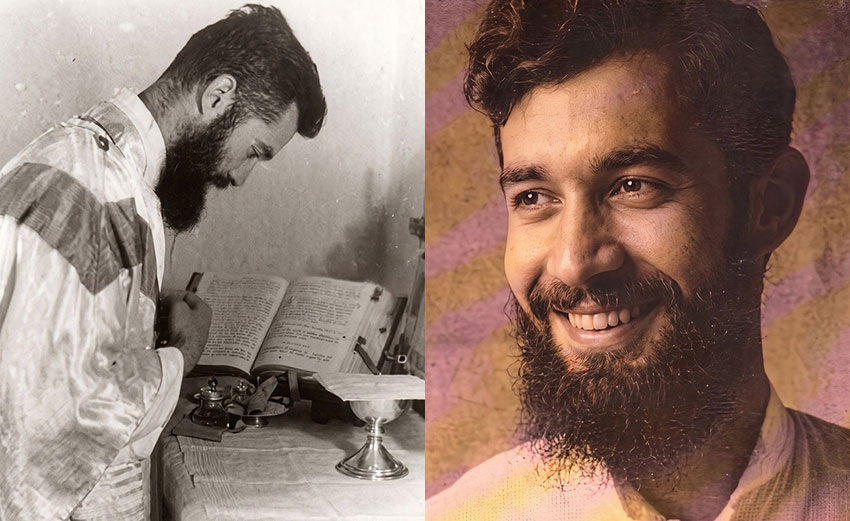
Today, Fr Herman’s reputation as a martyr continues growing. The faithful report graces and favours received through his intercession. His witness inspires new generations grappling with religious violence, sectarianism, and the question of what Christianity demands in pluralistic societies.
The Society of Jesus has initiated the process for his beatification and canonization. He carries the title “Servant of God” – recognition that his life and death embodied holiness in action. If the process continues – and many believe it will – Fr Herman Rasschaert will become a Saint, a martyr whose feast day reminds us that peacemaking isn’t passive or safe, that interfaith solidarity isn’t optional for Christians, that the Gospel sometimes requires getting on a bicycle and riding toward violence because people are dying and somebody has to try to stop it.
The Fire He Lit Still Burns
In a world increasingly torn by religious conflict, ethnic rivalry, and tribal hatred, Fr. Herman’s sacrifice speaks with prophetic urgency. He demonstrated that Christianity at its truest is radically other-centred, willing to sacrifice self for neighbour regardless of religion, nationality, or tribe.
His martyrdom asks today’s Church: Are we willing to risk our comfort, our safety, our lives for peace? Or do we practice a domesticated faith that blesses our tribe and demonizes others?
On 24 March1964, a Belgian Jesuit on a bicycle answered those questions definitively. He rode into death because people were dying and faith demanded he try to save them. That’s not just martyrdom. It’s the Gospel made flesh. It’s what happens when someone takes Jesus seriously enough to lose everything.
Fr Herman Rasschaert was a man of humanity, a man of God. May his witness strengthen our faith, deepen our courage, and remind us that following Christ is never, ever safe.
Related Posts:
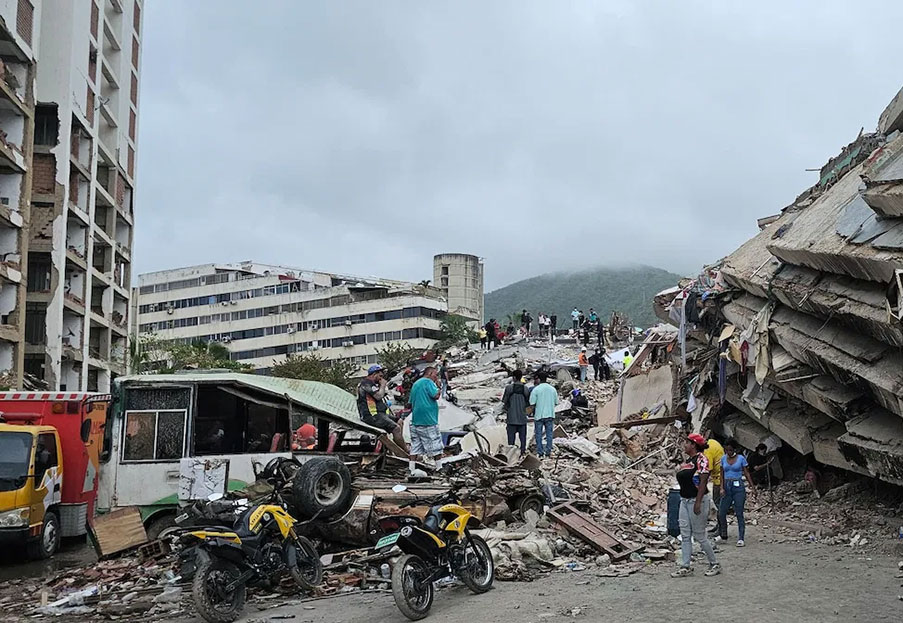
A series of powerful earthquakes have struck Venezuela on 24 June, causing widespread destruction across affected communities and leaving thousands of people in urgent need of assistance...
Service Yezu Mwiza (SYM) is a Christian, socio-medical organization dedicated to fighting HIV/AIDS, tuberculosis, and malaria, while promoting holistic healthcare and social justice. Founded in 2008, it operates as a prominent reference centre under the care of the Jesuits in Burundi...
For eight decades, the Hogar Virgen de los Dolores (HVD) has served Venezuela’s most vulnerable children, building a legacy rooted in the Jesuit commitment to education and social justice. What began as an apostolic initiative has now evolved into a model of education...
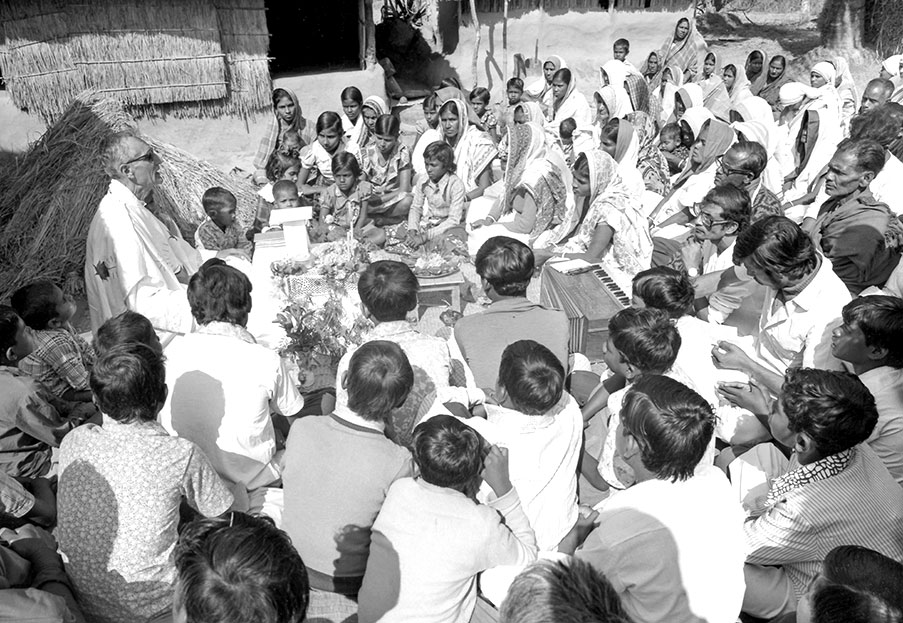
A Croatian Jesuit who crossed half the world to serve the poorest communities of Bengal, Fr Ante Gabrić spent five extraordinary decades building up the Church in the Sundarbans – one school, one clinic, one family at a time. His cause for beatification is now before the Church...

The annual meeting of Eco-Jesuit delegates in South Asia, held at Inigo Bhawan in Matigara, Darjeeling, became much more than a routine gathering. Set against the fragile ecology of the Eastern Himalayas, the meeting turned into a moment of discernment on the future...

One of the Universal Apostolic Preferences promulgated by Father General in 2019 invites the Apostolic Body of the Society of Jesus to “Walk with the poor, the outcasts of the world, those whose dignity has been violated, in a mission of reconciliation and justice”...