The Catholic Church in Laos: A Journey of Faith in the Heart of the Land of a Million Elephants
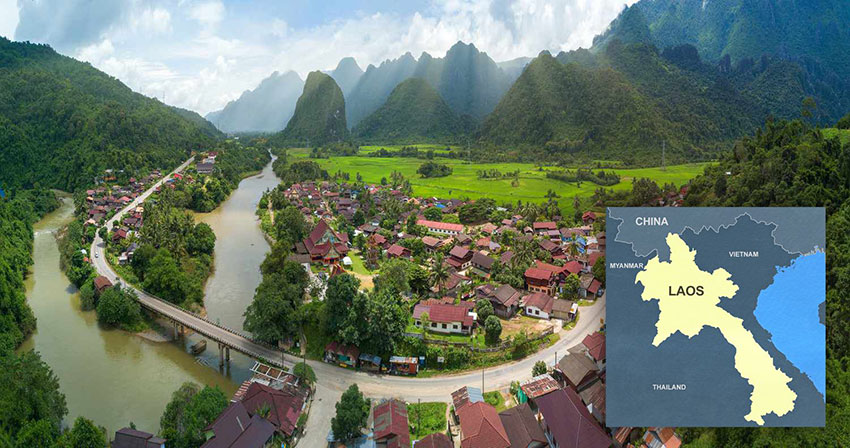
Laos, a nation situated in the heart of Southeast Asia, is a land of rolling hills, pristine forests, and the Mekong River, which flows through its entire territory and serves as a symbol deeply intertwined with the local culture. The population of Laos is approximately 7.8 million, comprising three main groups: the Lao Loum (68%), the Lao Theung (22%), and the Lao Soung (9%), along with more than 49 ethnic minorities. Theravada Buddhism, introduced in the 14th century, is practiced by over 67% of the population and is profoundly embedded in the spiritual life of the Lao people. Alongside Buddhism, Christianity – encompassing both Catholicism and Protestantism – accounts for about 1.5% of the population, coexisting with Islam and various indigenous beliefs to create a religiously diverse society.
The Seed of the Gospel Sprouts in the Land of Laos
The Christian faith first took root in Laos in 1879, when Father Fiot of the Paris Foreign Missions Society (MEP) arrived in the village of Naham in the Sam Neua province. The seed of the Gospel was nurtured by the blood and steadfast fidelity of witnesses to the faith during times of persecution. Among them, 17 martyrs of Laos were beatified on December 11, 2016. After nearly two centuries, the Catholic Church in Laos now numbers around 51,000 faithful, organized into four Apostolic Vicariates: Vientiane, Thakhek (Khammouane), Pakse, and Luang Prabang. Each vicariate consists of numerous parishes and faith communities, spreading the faith to the most remote villages.
Though modest in size, the Church in Laos is served by 1 Cardinal, 3 Bishops, over 30 priests, 19 major seminarians, and 40 minor seminarians. There is also one local religious congregation and 12 international congregations with nearly 150 religious men and women. Together, they build a close-knit family of faith, continually proclaiming the Gospel and actively engaging in social works such as healthcare, education, and community development projects. These efforts contribute to improving the lives of the people, especially in disadvantaged areas, demonstrating the Church’s tangible concern for society.
Cultural Inculturation and the Development of Local Vocations
From its beginnings, the Church has chosen a path of deep inculturation within Lao society, flexibly adapting liturgical rites to harmonize with local customs. Traditional indigenous practices are celebrated within the Church with a renewed sacred meaning. For example, the Sou Khwan (or Baci) ceremony is used to ask for God’s blessings during significant events such as funerals and weddings. Bun Jaek is a rite to remember the deceased three years after their passing, praying for God’s mercy and the salvation of their souls. It is also an occasion for the family to perform acts of merit, make offerings to the church, help the poor, and live out a spirit of compassion and sharing with the community.
Many terms borrowed from Buddhism are used to bring the Catholic faith closer to the hearts of the people in a natural and simple way that suits their modest and unpretentious lives. For instance, titles traditionally reserved for monks are also used to refer to priests and bishops (Phra Song, Sangkarat, Nak Buat).
The formation of local vocations is considered a top priority. Initially, Lao seminarians were sent for training in Thailand, Vietnam, and other countries. It was not until 1998 that the first National Major Seminary was established since the events of 1975, becoming the cradle for training priests for the Laotian Church. The priestly formation process follows three stages: a minor seminary for high school students, an intermediate seminary for two years, and a major seminary to complete the training. In parallel, religious congregations have also developed, combining local formation with training abroad, thereby helping to diversify the service missions within the Church.
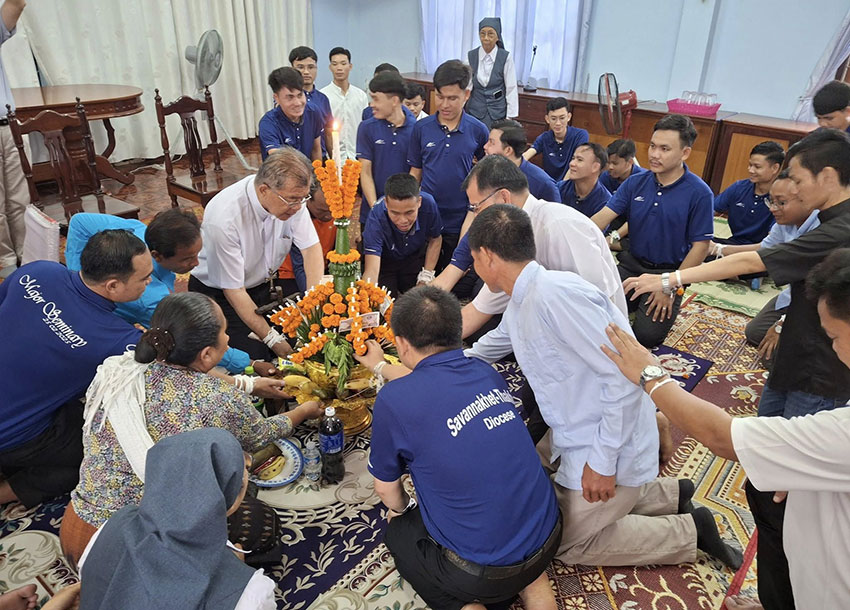
The Sou Khwan ceremony during the end-of-year celebration at Thakhek Seminary.
Progress in Relations with the Government
In recent years, the Church’s physical infrastructure has improved significantly, with many new permanent churches and pastoral and retreat centers being built. The Church has also received acceptance and support from local authorities. Since Catholicism was officially recognized in 1979 by the current government and freedom of religion was protected by the 1991 Constitution, the relationship between the Church and the state has progressed positively. Both sides maintain regular dialogue and cooperation on social projects and cultural festivals, contributing to greater mutual understanding and trust. Although some restrictions remain, the pastoral and social activities of the Church are increasingly welcomed and facilitated, especially in central regions.
Accompanying and Serving the Community
The Church places great emphasis on training local catechists to compensate for the shortage of priests and to sustain the life of faith in remote and rural areas. With their advantage in local language and culture, these catechists serve as effective bridges for transmitting doctrine and leading communities in the absence of priests. Furthermore, the celebration of Catholic feasts and rites, delicately blended with Lao culture at the village level, has helped strengthen unity and cohesion within the faith community.
Alongside its religious activities, the Church implements many practical social charity programs, such as building homes for the needy, schools, vocational training centers, and boarding houses for students. It also runs projects to provide clean water, protect the environment, deliver healthcare, and promote community education. These efforts not only improve material living conditions but also help foster a foundation for sustainable community development, manifesting the Church’s spirit of love and close companionship with the Lao people.
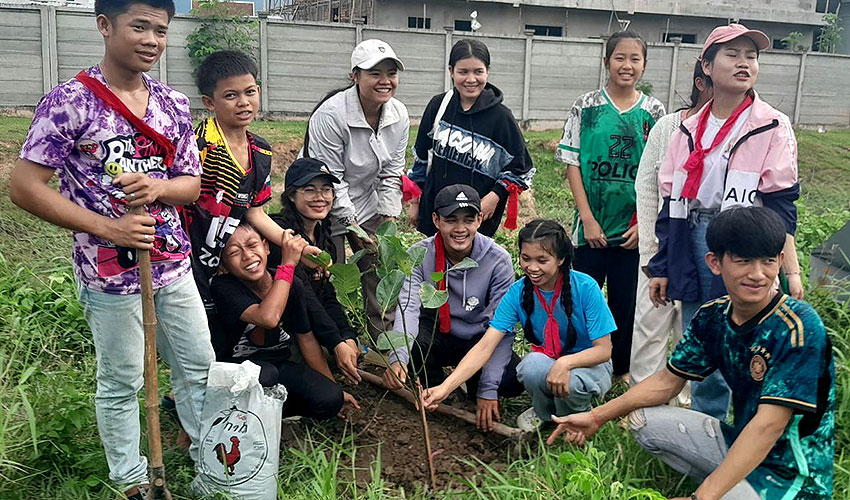
Tree planting program for environmental protection.
Challenges and Future Vision
Despite its many achievements, the Catholic Church in Laos still faces numerous challenges. The limited number of priests makes pastoral care difficult, leaving many churches without a weekly Sunday Mass and preventing the consistent practice of the faith. Priestly formation requires not only theological knowledge but also a deep harmony with the local culture, posing a significant challenge for those in charge of formation. Furthermore, the pressures of secularism, especially the allure of materialism and pleasure for the youth, have led to a decline in priestly vocations and made formation more difficult.
Buddhism is deeply ingrained in the psyche of the people, requiring the Church to be patient and subtle in its proclamation of the Gospel. The role of interreligious dialogue has not yet been strongly developed due to a lack of personnel committed to this field. The relaxed and free-spirited lifestyle of the Lao people can also make the serious application of certain religious rules challenging. Moreover, impacts from social issues such as poverty, divorce, addiction, school dropouts, and unemployment cause people to prioritize solving personal and family difficulties, leading to neglect in their participation in the life of faith.
Despite these challenges, the Catholic Church in Laos remains steadfast in its mission to accompany the nation in a spirit of synodality and mutual support. The Church continually works to strengthen the life of faith, drawing on sacred bonds and grace as a source of strength to overcome hardships. At the same time, the Church actively trains future personnel by sending priests and religious sisters to study abroad, broadening their knowledge and vision to better meet the administrative and pastoral needs of the Church. Through its pastoral, educational, and social charity work, the Church ceaselessly proclaims the Gospel of true freedom, salvation, and eternal happiness in Christ. These efforts help to illuminate God’s love and cultivate a more just and compassionate society in the Land of a Million Elephants.
Related Posts:
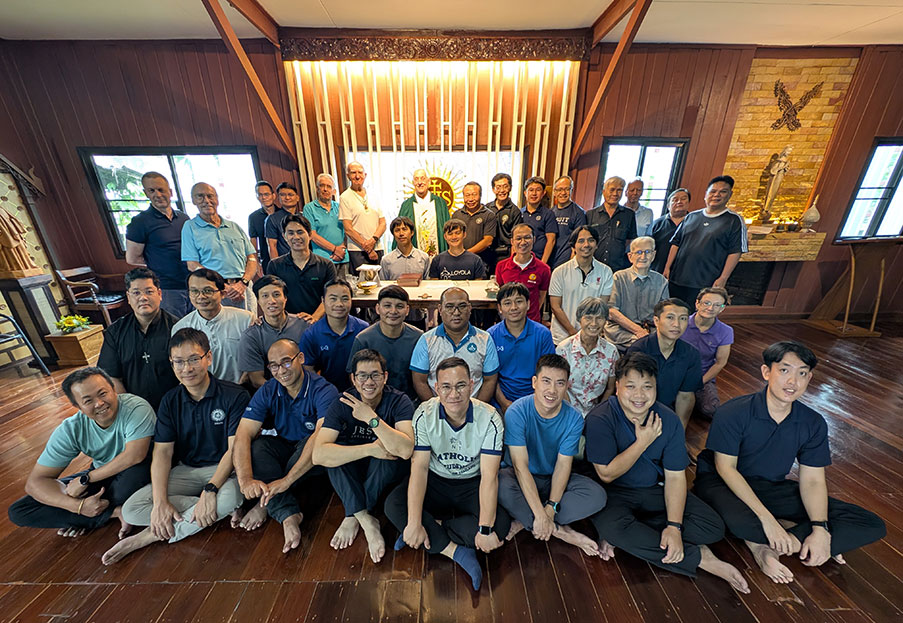
The Society of Jesus in Thailand is relatively small, with 37 Jesuits concentrated in three communities serving four cities, but the history of the Jesuits in Thailand goes back centuries, to the time of Saint Francis Xavier and the first missions of the Society of Jesus to what was then called...
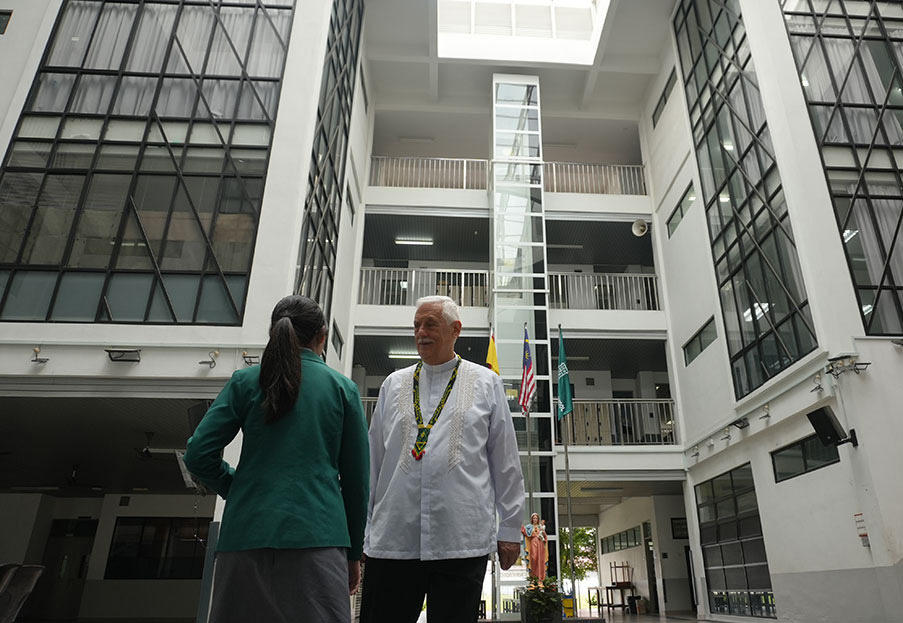
On a sunny mid-week day in Kuching, Fr General Sosa visited St. Joseph’s Private Secondary School (SJPS) where the Jesuits of the Malaysia-Singapore Region work as teachers and administrators. Currently, Fr Stanley Goh is the Rector, while Fr Francis Lim served as the first...
“Malaysia and Singapore are two nations with shared histories but divergent trajectories. While both countries are multicultural and multireligious, their distinct socio-political climates – Malaysia’s constitutional Islam and Singapore’s pragmatic secularism – shape the struggles...”
The Caring for Community and Creation (CCC) project was initiated by the Jesuit Conference of Asia Pacific (JCAP) in 2022 to address poverty and ecology as identified in the JCAP apostolic plan. The project has three specific objectives, one of which is strengthening communities through...
Fr Arturo Sosa, SJ, arrived in Kuching, Malaysia to begin his 5th apostolic visitation of the Jesuit Conference of Asia Pacific (JCAP). With a full schedule of meetings and travel between different Jesuit ministries and communities in Malaysia, Thailand and Indonesia...
The Paraquarensis Province was separated from that of Peru in 1604. It comprised the territories of the present-day states of Paraguay, Argentina, Uruguay, part of Bolivia, and, temporarily, Chile. One of the most notable ministries in this Province was the Guaraní reductions...