Fr General arrives in Thailand
Apostolic visitation of the “Land of Smiles”
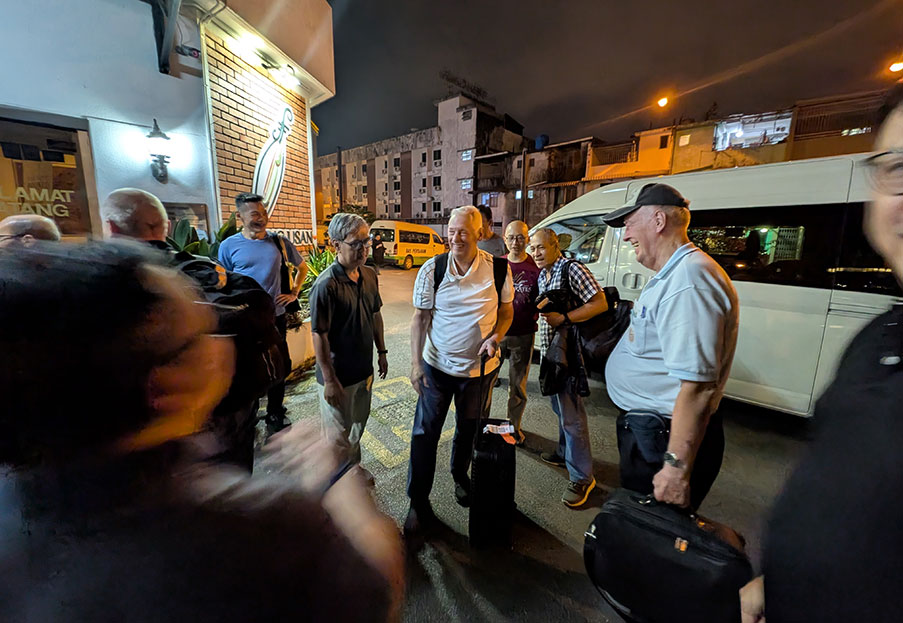
After completing his apostolic visitation of the Society of Jesus in Malaysia, Fr General Arturo Sosa has travelled up the peninsula to begin his visitation of the Jesuits in Thailand.
The Society of Jesus in Thailand is relatively small, with 37 Jesuits concentrated in three communities serving four cities, but the history of the Jesuits in Thailand goes back centuries, to the time of Saint Francis Xavier and the first missions of the Society of Jesus to what was then called the Kingdom of Siam. Fr Balthasar Sequeira, SJ, was the first Jesuit known to have entered Siam, arriving in December 1607. He was soon followed by more Jesuits who founded local communities and developed a relationship with the royal court of the King of Siam. As in Malaysia, Jesuits showed a willingness to learn local cultures and customs – a trait that did well to encourage dialogue between Christianity and Siamese society.
From 1656 to 1688, during the reign of King Narai the Great, the Society of Jesus was invited to bring their knowledge and expertise to the Kingdom. Among the first Jesuits to answer that invitation were Frs Giovanni Battista Valguarnera, SJ – a Jesuit engineer who brought his expertise in construction – and Guy Tachard, SJ – a Jesuit diplomat who acted as a liaison between Siam and France. Because of their proficiency in learning the language, their respect for local customs, as well as their ability to bring new knowledge into the country, Jesuits served not only as priests but also as scientists, architects, mathematicians, and advisers at the royal court.
One of the most remarkable contributions of the Jesuits in seventeenth-century Siam was in the field of astronomy. King Narai, who had a keen interest in astronomy, called for Jesuit astronomers to build an observatory near the royal palace in Lopburi. Along with their knowledge of the scientific method, they brought modern celestial instruments, greatly advancing the understanding of the stars in the Kingdom. Today the remains of the observatory near San Paolo Church continue to remind visitors of this unique chapter in Thailand’s scientific and religious history.
The more than 100 years of Jesuit work in Siam came to an end with the death of King Narai and the fall of the Kingdom to Burmese forces in 1767. Many missionaries fled or were forced out of the country, and the Society of Jesus would be absent for almost two centuries. It wasn’t until the 17th November 1954 when Italian Jesuit Fr Pietro Cerutti, SJ, returned to the country at the invitation of Bishop Louis Chorin, that the Society of Jesus would officially be reborn in Thailand. As with the return of the Society of Jesus to Malaysia, that first Jesuit was soon joined by others from Europe, North America, and Asia – all of whom dedicated themselves to learning the language and culture.
The Society of Jesus in Thailand today is a direct extension of the ministries created during the reintroduction of Jesuits to the country. While their works started with higher education and retreat work, they expanded across Thailand as opportunities arose. They became active in theological education at Saeng Tham Seminary, took on university chaplaincies, engaged parish ministry, supported spiritual retreats, and promoted Ignatian spirituality. They also developed ministries among refugees, migrants, ethnic minority communities, and young adults, reflecting the Society’s commitment to a faith that promotes justice and one that cares for the common home. Educational initiatives, interreligious dialogue – particularly with Buddhism – and pastoral accompaniment have become defining characteristics of Jesuit service in Thailand.
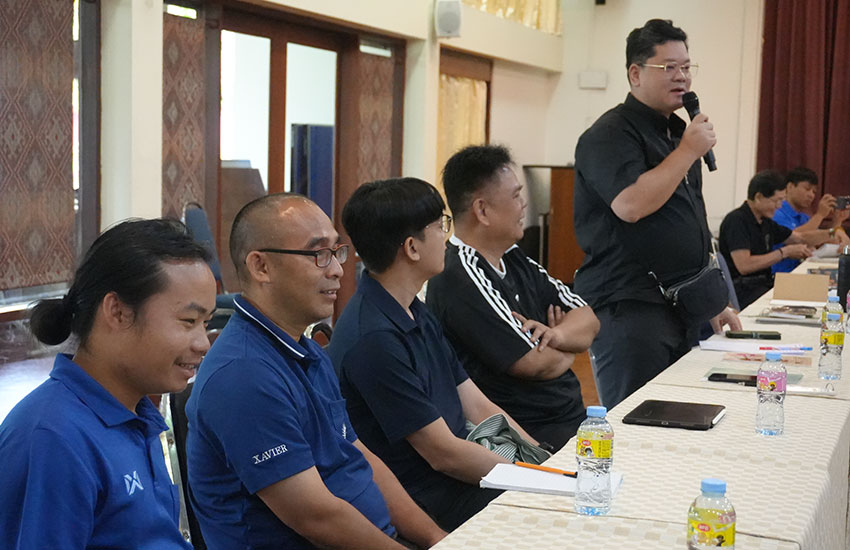
As Fr General tours Jesuit ministries in Thailand, he will see the good works of the Society of Jesus in Thailand, along with the challenges faced by modern-day Jesuits. Catholics account for approximately 0.6% of the Thai population, just over 400,000 of 71.5 million. The vast majority of Thais identify as Buddhist and there are subtle cultural and political barriers to establishing the interreligious dialogue that Jesuits typically use to encourage collaboration between people of good will. Additionally, the region is resource-constrained, relying on their relationship with the Indonesia Province of the Society of Jesus for logistical support, manpower and financial resources for formation.
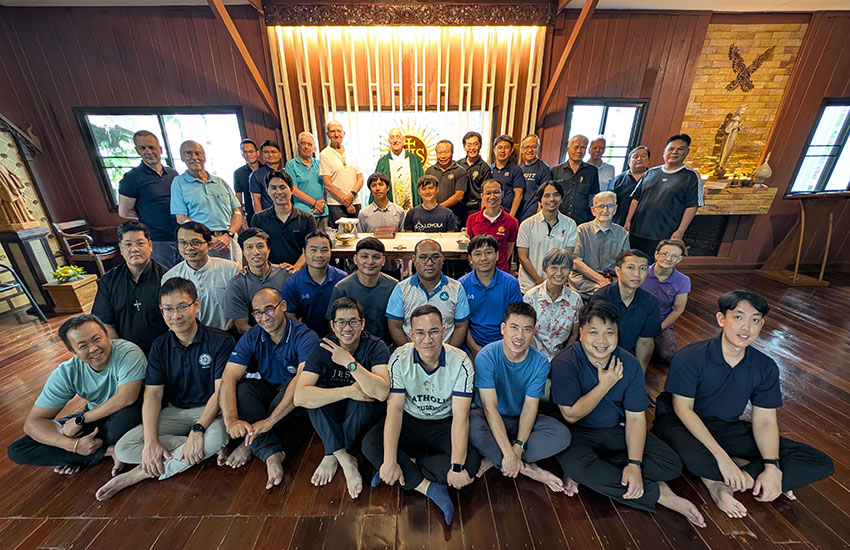
Even though the Society of Jesus in Thailand may face many challenges, Fr. General will also see the dedicated spirit of the Jesuits and lay colleagues who work the region. He will visit our communities in Bangkok, Chiang Mai, and Chiang Rai. He will visit Xavier Hall in Bangkok, the Seven Fountains Retreat Centerin Chiang Mai, the Xavier Learning Communityin Chiang Rai, and the Jesuit Candidacy Housefor vocational formation. He will learn about the network of “Wellness Centers” that the Society of Jesus has started to support young Thai students who seek education while giving them opportunities for spiritual and leadership formation. He will hear about the “Emmaus” program that provides outreach to formerly incarcerated and/or drug addicted people on the margins of Society.
The Jesuits in Thailand represent the lineage of some of the best work of the first companions, and they continue to innovate and dream of what could-be. As Fr General moves through the region and experiences what a small group of Jesuits and their supporters have created, he will receive a fine example of what prayer, perseverance, discernment and dedicated ministry can do in the Land of Smiles.

Related Posts:
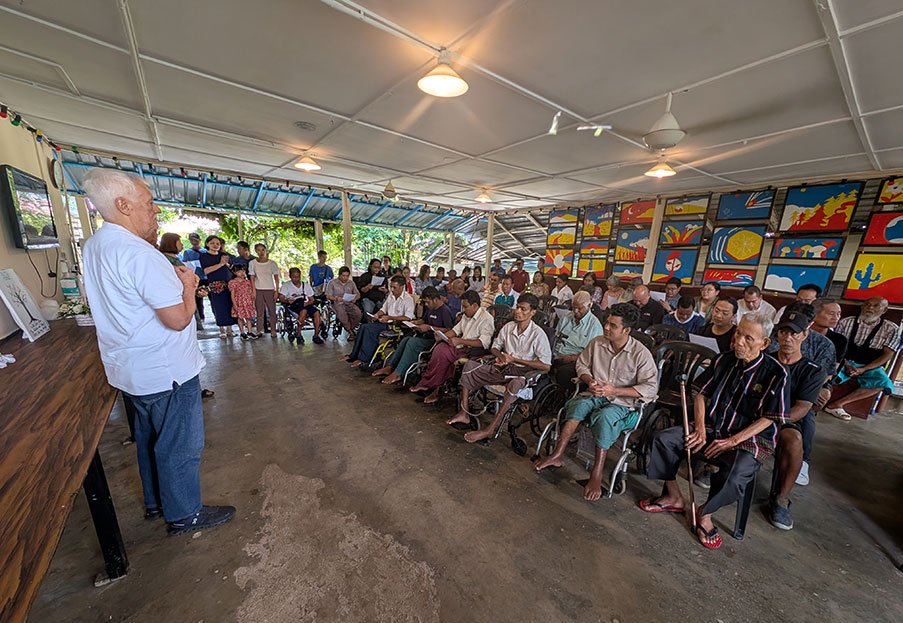
“Only by being a man or woman for others does one become fully human” (Fr Pedro Arrupe, SJ, 1973). With that simple phrase Fr Pedro Arrupe, SJ, set the tone for how future generations of Jesuits, and those who value Ignatian Spirituality, see a life of ministry...
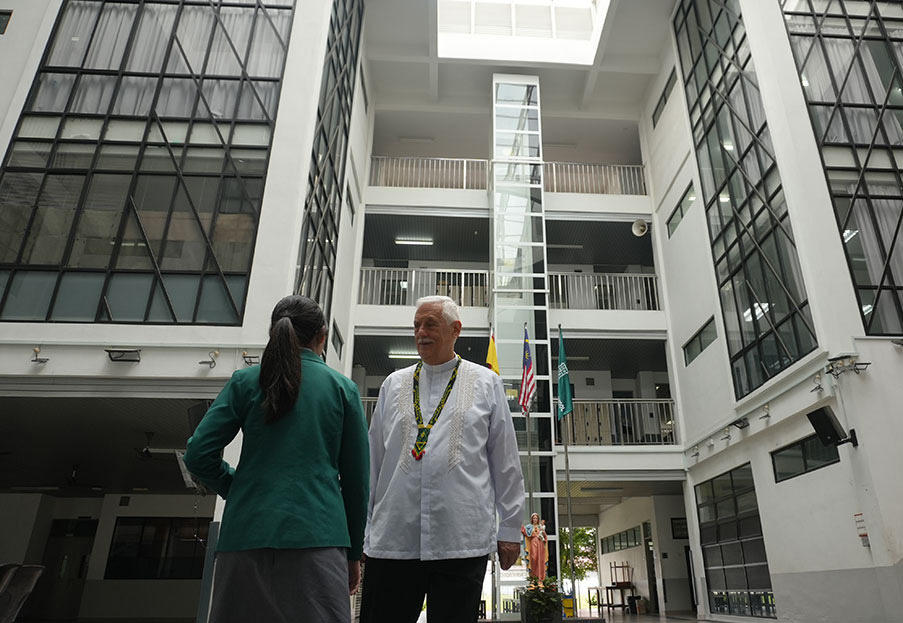
On a sunny mid-week day in Kuching, Fr General Sosa visited St. Joseph’s Private Secondary School (SJPS) where the Jesuits of the Malaysia-Singapore Region work as teachers and administrators. Currently, Fr Stanley Goh is the Rector, while Fr Francis Lim served as the first...
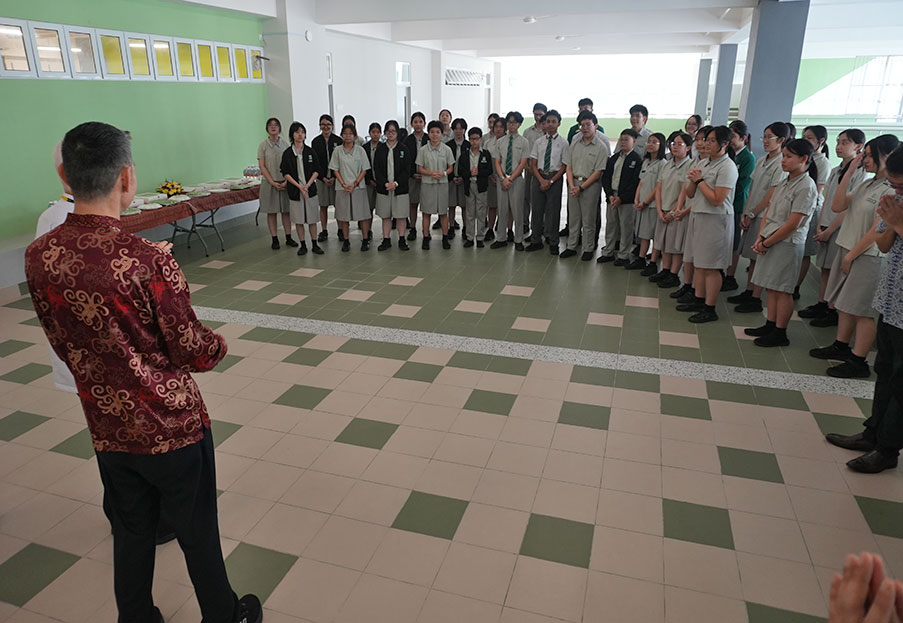
“Malaysia and Singapore are two nations with shared histories but divergent trajectories. While both countries are multicultural and multireligious, their distinct socio-political climates – Malaysia’s constitutional Islam and Singapore’s pragmatic secularism – shape the struggles...”
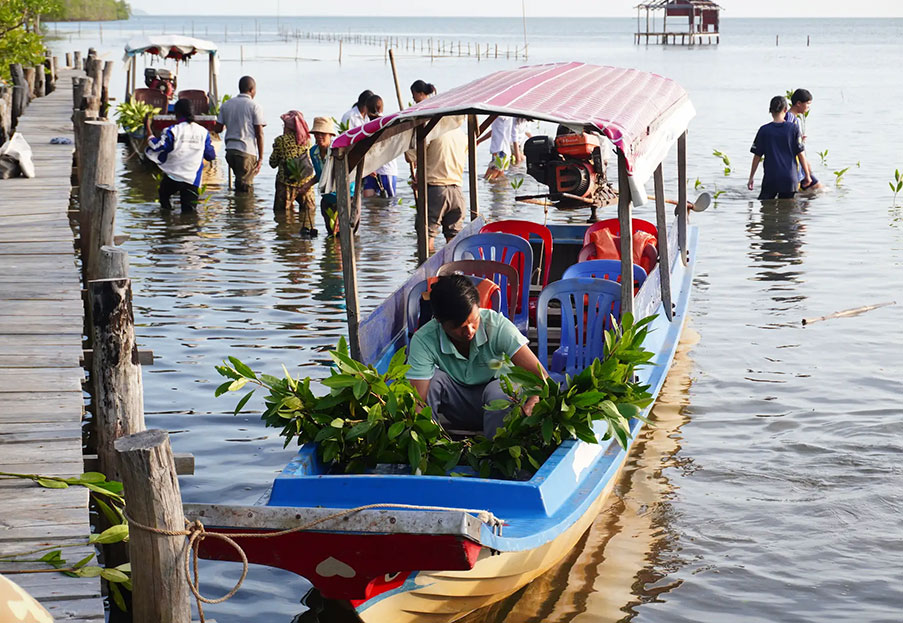
The Caring for Community and Creation (CCC) project was initiated by the Jesuit Conference of Asia Pacific (JCAP) in 2022 to address poverty and ecology as identified in the JCAP apostolic plan. The project has three specific objectives, one of which is strengthening communities through...
Fr Arturo Sosa, SJ, arrived in Kuching, Malaysia to begin his 5th apostolic visitation of the Jesuit Conference of Asia Pacific (JCAP). With a full schedule of meetings and travel between different Jesuit ministries and communities in Malaysia, Thailand and Indonesia...
As Venezuela begins the difficult task of recovering after two strong earthquakes that claimed lives, left many missing and caused widespread destruction, Father General Arturo Sosa has sent a message of closeness and hope to the Venezuelan people.