Workers for the Harvest – The Local Church of Malaysia and Singapore
In December of 2022, Fr Francis Lim, SJ, became the Regional Superior of Malaysia and Singapore (MAS). Before then, he spent years ministering in Malaysia – including a decade as the first principal of St Joseph’s Private Secondary School in Kuching. Below is his personal reflection on the challenges facing the Society of Jesus as it continues the mission in Malaysia.
By Francis Lim, SJ | Regional Superior of the Malaysia-Singapore Region of the Society of Jesus
The MAS Jesuits are small in number with few vocations. Two thirds of them are in Malaysia, with the other third in Singapore. They are dedicated to serving God’s mission in the local church with fervour and flexibility, navigating a complex environment of faith, culture, and politics.
Malaysia and Singapore are two nations with shared histories but divergent trajectories. While both countries are multicultural and multireligious, their distinct socio-political climates – Malaysia’s constitutional Islam and Singapore’s pragmatic secularism – shape the struggles of their respective Catholic communities. The Church faces many challenges that test its resilience and adaptability.
For the Church in Malaysia, the most pervasive challenge is the country’s strong Islamisation and the resultant religious polarisation. As a federation that defines Islam as the official religion, Malaysia has seen a subtle but persistent political, cultural and legal incursion into the lives of its non-Muslim citizens. For example, there was recently a long and contentious legal debate over the use of the word “Allah”, with some Muslims wanting to outlaw the use of the word by non-Muslims. There was also a legal battle over the jurisdictional line between civil and Sharia courts concerning religious conversion.
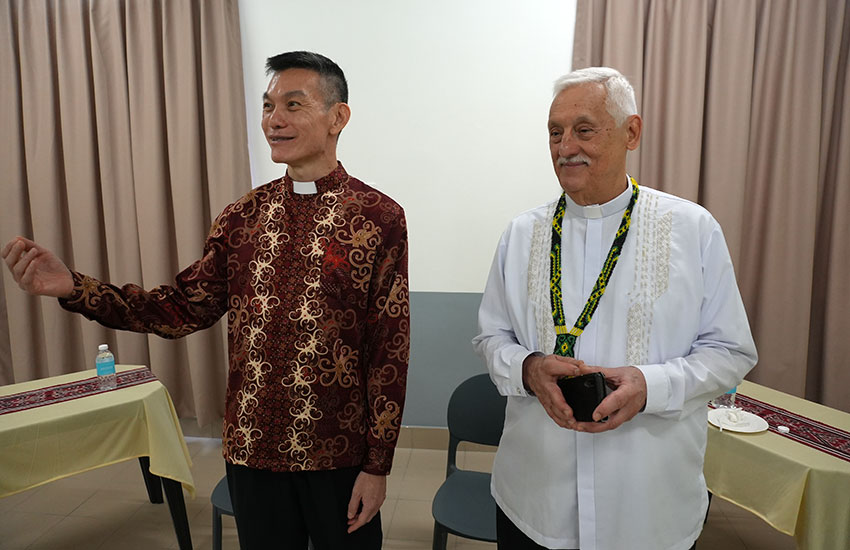
Fr Francis Lim, SJ (left) with Father General Arturo sosa, SJ.
Adding to this complexity is a profound language divide in the Church. Masses are celebrated in English, Mandarin, Tamil, Bahasa Malaysia, and the various indigenous languages of Sabah and Sarawak. This linguistic diversity, while rich, also poses a significant challenge to fostering a unified sense of Catholic identity while effectively, and compassionately, managing our limited sacramental resources.
Additionally, the Malaysian Church is starkly divided between Peninsular Malaysia (West Malaysia) and Sabah and Sarawak in Borneo (East Malaysia). In West Malaysia the Church is a minority faith, often concentrated in urban centres. The working-age population tends to migrate to cities, with even Borneans moving to West Malaysia for economic opportunities. Many Borneans face the challenge of Islamisation in Peninsular Malaysia. The Church also ministers to a diverse and often marginalised population in the Peninsula, including foreign migrant workers, undocumented individuals, and refugees, who require pastoral care that is sensitive to their precarious legal status and varied cultural backgrounds.
On the island of Borneo, where Christianity is more numerically significant, the Church is confronted by the challenge of immense geographical distances. Priests are unevenly distributed which results in only monthly availability of sacramental celebrations in villages. Consequently, the Church in Borneo relies heavily on lay catechists, who are the backbone of parish life in the absence of clergy, leading services, teaching, and maintaining the faith in their communities.
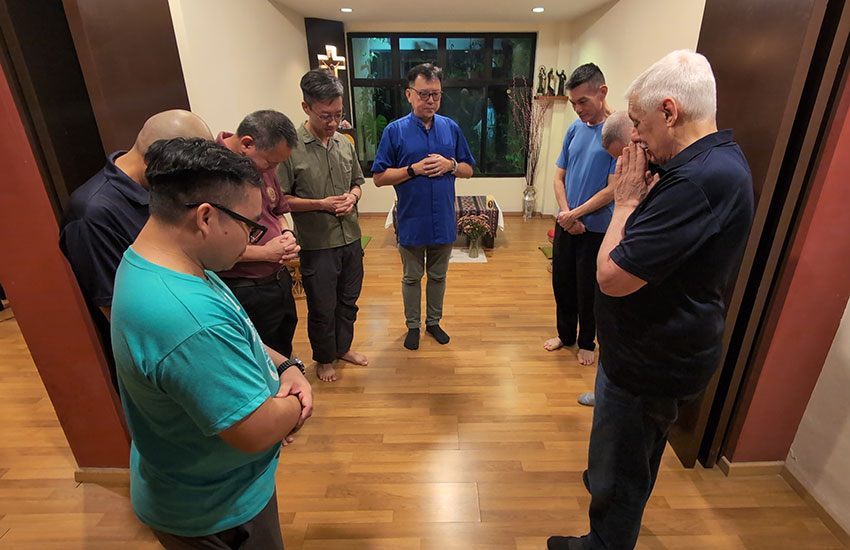
Across the causeway in the south of Peninsular Malaysia, the Church in Singapore exists under a very different reality. The nation’s brand of secularism, enshrined in its constitution, ensures religious freedom while strictly separating religion from politics. While this maintenance of good religious harmony is a cornerstone of the small island-state, it can also foster a form of privatised faith. Within this framework, the Church faces the challenges of materialism and affluence. Singapore’s status as a global financial hub means that its Catholic population is not immune to the pervasive culture of consumerism and careerism, which can erode the primacy of spiritual life.
Furthermore, the Singaporean Church is undergoing a demographic shift. With a low birth-rate, the Church is aging drastically. A significant proportion of its Catholic population are foreigners, a mix of expatriates and migrant workers. There’s a high divorce rate among Catholics. Moreover, just like in Malaysia, around 60% of Catholic marriages are now interfaith, presenting a pastoral challenge that demands delicate and nuanced guidance for couples navigating different religious traditions within the family unit. The Church must develop more effective programmes to support these families and raise children in the faith. The presence of many foreign migrant workers prompts the Church to play a more prophetic role in advocating for their dignity and providing them with spiritual and material support.

Related Posts:
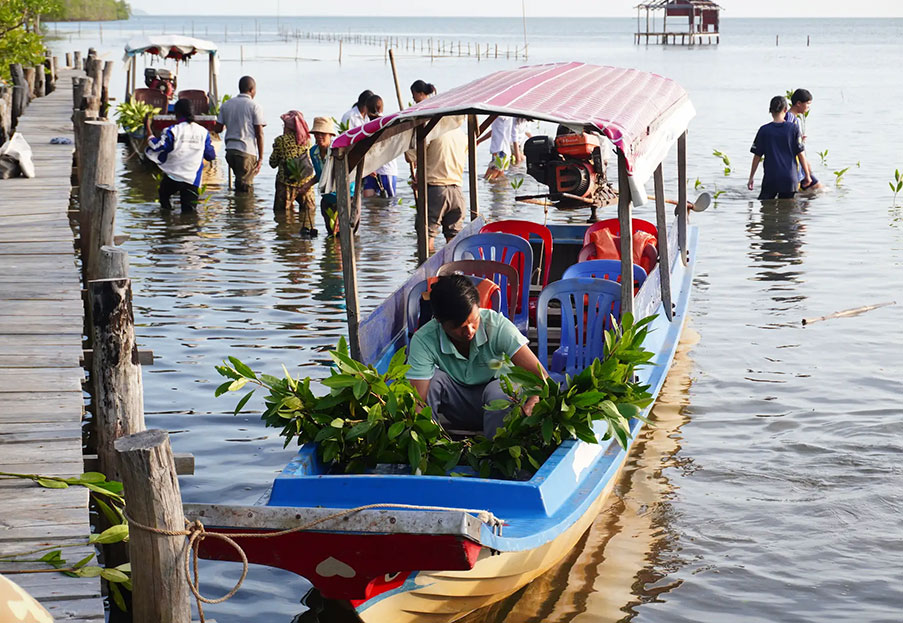
The Caring for Community and Creation (CCC) project was initiated by the Jesuit Conference of Asia Pacific (JCAP) in 2022 to address poverty and ecology as identified in the JCAP apostolic plan. The project has three specific objectives, one of which is strengthening communities through...
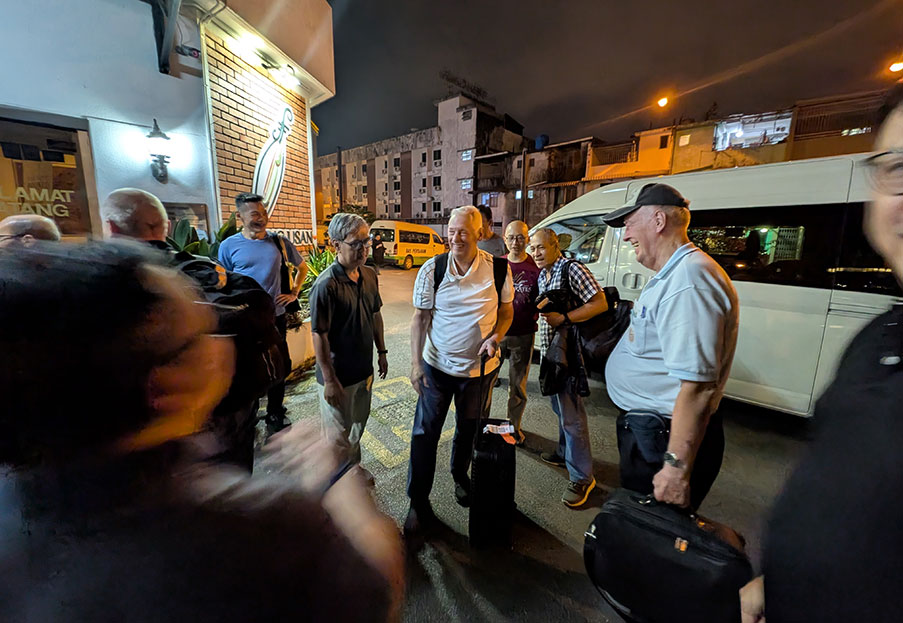
Fr Arturo Sosa, SJ, arrived in Kuching, Malaysia to begin his 5th apostolic visitation of the Jesuit Conference of Asia Pacific (JCAP). With a full schedule of meetings and travel between different Jesuit ministries and communities in Malaysia, Thailand and Indonesia...
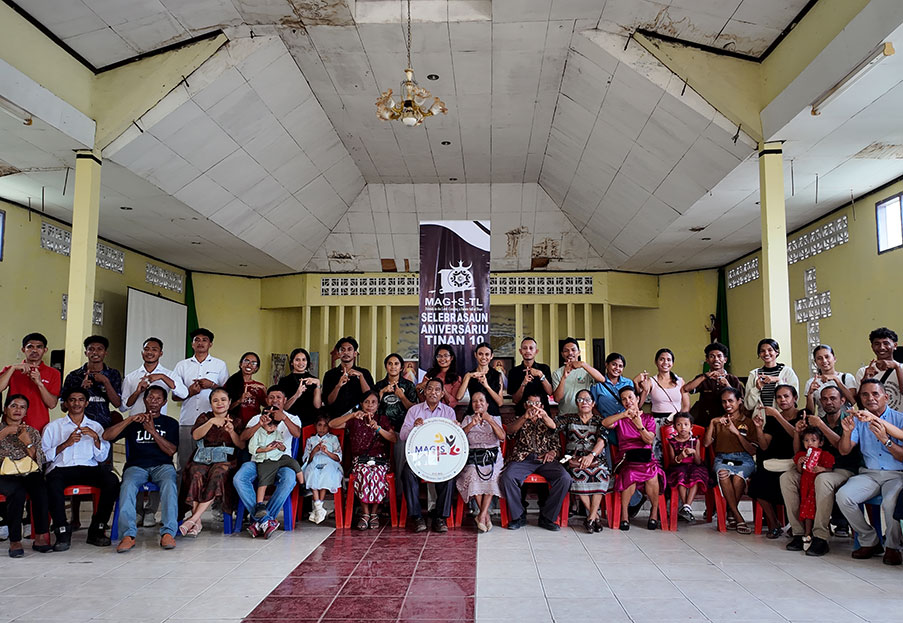
For ten years, MAG+S Timor-Leste has been quietly accompanying young people. In our small community shaped by friendship, prayer, and service, many young people have encountered the richness of Ignatian spirituality and discovered a deeper relationship with God...

In April 2026, Pope Leo XIV made the first-ever papal visit to Algeria. Two weeks later, Father Arturo Sosa, SJ, Superior General of the Society of Jesus, travelled to Algeria to visit the small Jesuit community there for the first time since his election in 2016. The land of St Augustine, bishop of Hippo...

After three years of being ad experimentum with the Jesuit Conference of Asia Pacific (JCAP), the Pakistan Jesuit Mission pauses to reflect on what it means to live and serve in this land. These years have not been easy. Pakistan is often described as an “arduous” place...
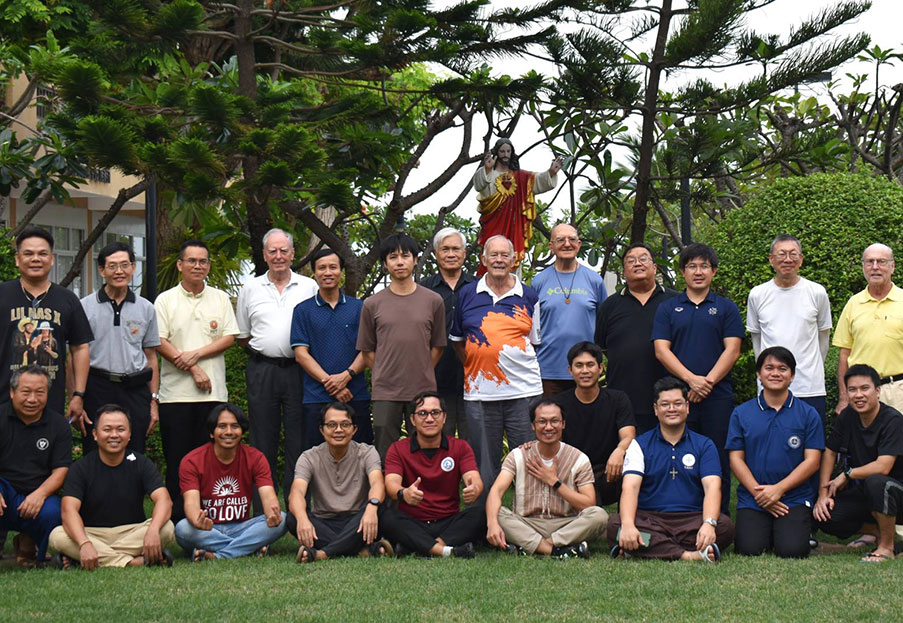
On 12 May 2026, Father General Arturo Sosa appointed Fr Francis Xavier Manasan Wongvarn, SJ, as the new Regional Superior of Thailand. Born on 4 October 1981 in Bangkok, Fr Manasan entered the Society of Jesus in 2001. He studied philosophy at Ateneo de Manila University where he obtained...