Acción Cultural Loyola (ACLO): 59 years of promoting better living
The Acción Cultural Loyola (ACLO) Foundation is a network of radio stations in southeast and south-central Bolivia founded by the Society of Jesus. ACLO harnessed the power of radio to uplift and educate rural communities. Through community-based media, it engages in advocacy, literacy, and civic awareness, and pushes for participatory democracy for local communities.
To speak of ACLO is to speak of a journey woven with threads of hope and commitment. It is not just an institution, nor is it solely a social project. ACLO is, above all, a collective heart that has beaten alongside the peoples of southern Bolivia for decades, lighting up places where darkness seemed to reign, sowing words where silence had been imposed, and cultivating dreams where many said there was only resignation.
From its earliest days, ACLO understood that true transformation comes from the voice of the people. That is why it chose a humble but immense path: to accompany, listen to, and give a voice to the silenced. Literacy was not just an educational strategy, but an act of dignity. Teaching people to read and write meant opening doors, removing blindfolds, and giving wings to the indigenous peasant populations. Each word learned was a seed of freedom, each word written was a victory against oblivion.
But ACLO did not stay in the classrooms or in the shared books. It knew that the voice had to travel further, destroy mountains and cross rivers. Thus, the radio was born as a tool of liberation. Through its airwaves, the echo of the people became news, and even poetry. The ACLO radio network did not just transmit sounds: it transmitted life, justice, tenderness, and courage. There, in the murmur of a transistor radio, peasants and indigenous people discovered that they were not alone, that there was a community united by the same desire to live well.

Decade after decade, the commitment grew deeper. When political times became difficult and the dictatorship tried to silence voices, ACLO stood firm, responding with community organization and leadership training. When the new millennium demanded new paths, ACLO found ways to reinvent itself without losing its essence: always with the people, always from the grassroots, always with an eye focused on the dignity of the people.
Its mission was not limited to giving a voice, but also to offering tools. Field trainings, organizing cooperatives, training local communicators, supporting indigenous communities, defending the environment. Everything was part of the same fabric: strengthening the identity and rights of those who had always been neglected. All these, because ACLO understood that true development is not measured in numbers or statistics, but in the smile of a child who studies, in the peasant woman who raises her voice, in the community that defends its water and land as sacred goods.
The book of ACLO’s history is not written in ink on paper, but in the souls of the people. It is in the hands of the peasants and indigenous people who learned to write their names with pride. It is in the microphones of community radio stations that resisted attacks and threats but never stopped broadcasting. It is in every training workshop where young people discovered that they too could become agents of change. It is in every community that understood that caring for our Common Home is not an option but a shared responsibility.
The concept of the Common Home is one that ACLO has embraced with such energy. Because talking about living well is not just about having bread on the table, but also about living in harmony with the earth, water, air, and all the beings that accompany us on this journey. ACLO teaches that defending nature is defending life itself, and that there is no social justice without environmental justice. In this context, its work also became that of guardians of creation, sowers of the future, and protectors of hope.

For more than five decades, the word “accompany” has become concrete action. And looking ahead, the commitment remains intact. Because the challenges have not disappeared: inequality persists, indigenous peoples continue to demand respect, the environment cries out for help, and dignity is still a pending debt. But the history of ACLO teaches us that there is no shadow that cannot be overcome by the light of hope.
That is why reflecting on ACLO is not just about remembering. It is also about renewing a commitment. It is about listening to the voices of those who were once silenced and today shout loudly: “We are here, we are still standing, we are still dreaming of Good Living.” It is understanding that hope is a vital necessity, and that institutions like ACLO are beacons that illuminate the collective path toward a future where justice and a full life are for all.
ACLO is not the past: it is the beating heart of the present and the dream of the future. It is memory that embraces and hope that flourishes. It is the certainty that, as long as there are communities that believe in the power of their words, there will always be reasons to continue sowing hope.

Related Posts:

The Paraquarensis Province was separated from that of Peru in 1604. It comprised the territories of the present-day states of Paraguay, Argentina, Uruguay, part of Bolivia, and, temporarily, Chile. One of the most notable ministries in this Province was the Guaraní reductions...
The General Curia of the Society of Jesus launches its brand-new Webinars’ Calendar. After being in pilot mode for the last two years, these meetings have proved to be incredibly useful, with sometimes up to 600 people taking part from all around the globe. The idea is to provide ongoing formation...

A series of powerful earthquakes have struck Venezuela on 24 June, causing widespread destruction across affected communities and leaving thousands of people in urgent need of assistance...
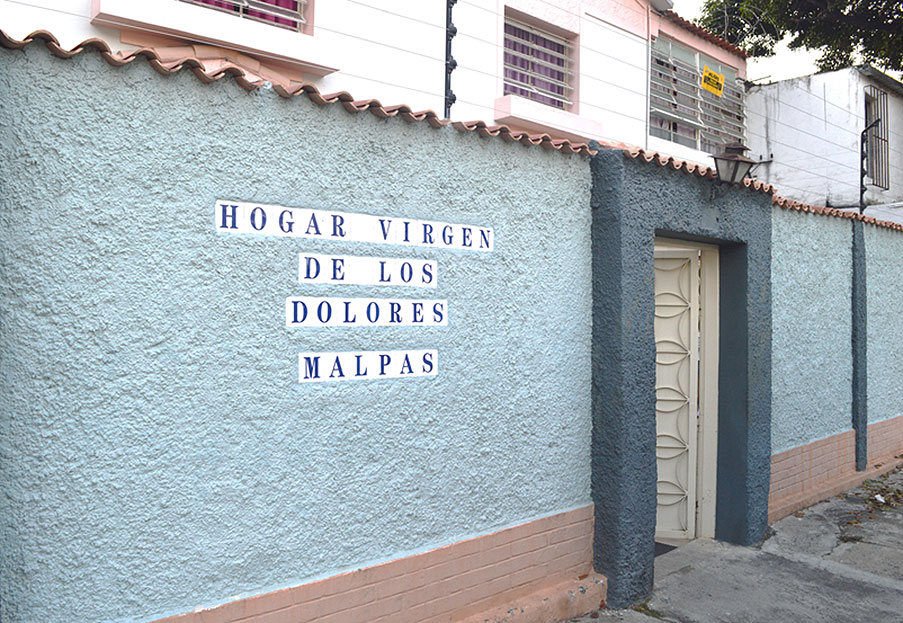
For eight decades, the Hogar Virgen de los Dolores (HVD) has served Venezuela’s most vulnerable children, building a legacy rooted in the Jesuit commitment to education and social justice. What began as an apostolic initiative has now evolved into a model of education...

Communication delegates from the six Conferences convened at the General Curia last week to confront the defining challenges of their ministry: examining ways to better communicate the mission and vision of the Society of Jesus in an age of rapid technological transformation.

One of the Universal Apostolic Preferences promulgated by Father General in 2019 invites the Apostolic Body of the Society of Jesus to “Walk with the poor, the outcasts of the world, those whose dignity has been violated, in a mission of reconciliation and justice”...