The silences of the Good Friday
By James Hanvey, Secretary for the Service of Faith
Good Friday is a strange day for most Christians. It is a day of contrasts. While the Church keeps the solemn liturgy of the crucifixion, passion and death of Christ the rest of the world carries on with its usual business completely oblivious of what is taking place. Oblivious of what has taken place; indifferent to the extraordinary Christian claim that on the cross Jesus, a Jew, sacrificed his life for the salvation of the world. If not indifferent then sceptical or hostile to the even more scandalous and preposterous claim that Jesus was the Son of God and, in some way, God was crucified. Whatever way people choose to interpret the death of Jesus, it is fairly clear that it was not a fiction. The account in the New Testament though they will differ in detail as will any witness statements for an event will differ, in substance there is remarkable agreement. Each of the details and their variations all carry some significance. They seek to show that violent, humiliating, and degrading the process of crucifixion was intended to be, Jesus believed himself to be accomplishing God’s will. The prayer which he taught his disciples he was now living in the most shocking and dramatic way, “Our Father, who are in heaven, hallowed be your name. Your kingdom come, your will be done, on earth as in heaven...”
Like the onlookers at the time, we too can feel confused and betrayed as well as moved and powerless before this tortured and crucified man who only a few days before who entered Jerusalem with all the symbols of the Messiah ushering in the new age of peace and God’s reign not only for Israel but for all the nations of the world. The same Jesus from Nazareth who healed the sick and defended the poor and powerless is not himself completely powerless and exposed. The whole process of crucifixion was a deliberate act of the state – the Roman empire – to demonstrate its absolute power over anyone who was judged a criminal or a threat. It was not only designed to break a human body with maximum torture and pain, but to break a person’s faith and membership of their community. The fact that the victim’s body could normally be buried meant that they were permanently put beyond the family and the community no longer to be honoured in memory, consigned to abject hopelessness and exile. Wherever we are on ‘Good Friday’, whether we care or don’t, we cannot help but recognise that we are not only witnessing a historical act. It is repeated in every age. Today, the spectacle of crucifixion, whatever modern form it takes and instruments are used – primitive or high tech – the torture and humiliation have the same intent: the demonstration of the absolute power – sacred or secular – the State makes over a human person, their body, soul, and memory. The Christian memory keeps this brutality always before us because it is here that we are confronted with our gods and idols. It is here that we also stand before the radical scandal of Christ and the Christian God.
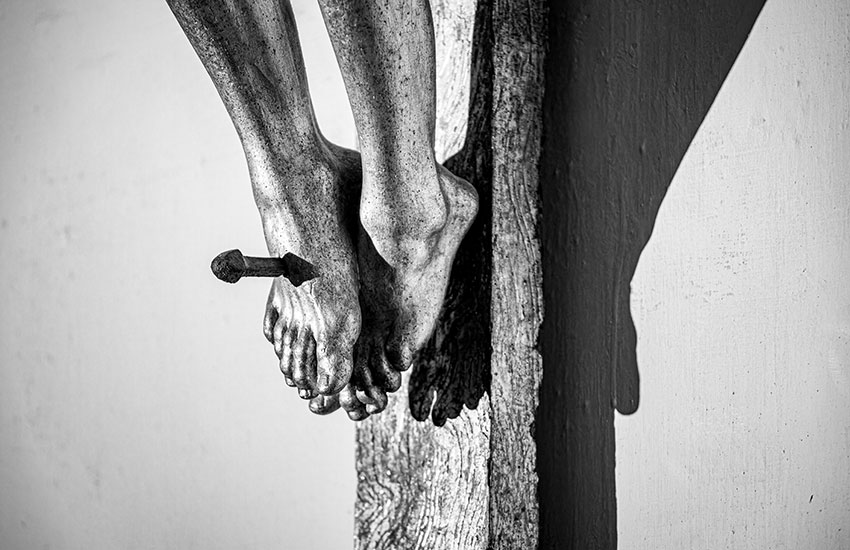
As if all this were not disconcerting enough, there is a strange silence that covers this day. It is not natural silence of that can attend any death; this silence is deeper and draws us in. The liturgy marks it when after the reading of the passion and the minimal acts surrounding the distribution of communion, the music ceases, the tabernacle is emptied and the altar stripped. Although there is a sense of an ‘end’, a ‘completion’ behind it, in the silences, lurks the question of absence itself. Even when faith is confident, Good Friday, exposes its precariousness – maybe, just maybe – once all the ceremonies are over and the candles extinguished there really is only darkness and emptiness, ‘my one companion is darkness’ (Ps.143; Ps. 88; Job 7)?
What is striking and disturbing in the narratives of Christ’s crucifixion, passion, and death is his own journey into silence. From his arrest and trial, through his torture and humiliation until the end of his agony on the cross, Jesus moves progressively into a profound silence. At the beginning his responses to those who charge him are not so much about self-defence or justification but expose their own motives in wanting his death. We know from experience that extreme pain concentrates our body and soul into one small, intense point as we try to endure it; it demands all our mental, physical and spiritual strength. A cry or scream may provide a transitory moment of release, but with intense pain even that gives way to silence as pain concentrates all our faculties and resources. The silence deepens and world itself becomes distant as the anguish completely absorbs our attention. The narratives are faithful witnesses showing how only on a few limited moments Jesus breaks free to care for his mother and acknowledge the few women who are there. Then, finally, from the depth of his own soul he enters into the absolute silence of death. It is not simply acceptance of the inevitable but a surrender, body and soul, to the silence of God.
And here is the other silence against and within which the whole horror of the suffering and death of Jesus is played out. The silence of the Father. From Gethsemane the Father is silent; Jesus’ prayer appears unheard and his cry unanswered. In that silence our own faith is also at stake. All that Jesus has done and said, all his miracles, the hopes which people, especially the poor and powerless, had placed in him, are now all in question. In the end, the power-barons of the world seem to have triumphed again. How can the Father remain silent – even those who mocked him both in the praetorium and on the cross – ask the same question. Finally, Jesus is exposed as deluded, abandoned by the very God/god he sought to reveal. The ‘powers and principalities’ of Jesus’ time like the ‘powers and principalities’ in every age felt justified, fickle and transitory though their own power proves to be. The scandal of the cross, the scandal of faith in Jesus Christ, is always present on Good Friday. The cry of Jesus ‘my God, my God, why have you forsaken me’ is always present in those who are the victim of violence whatever its form; who live with the fear that they have been abandoned by God or ask what is the purpose of faith in a crucified God? Is the revelation of Sinai finally extinguished on Calvary?
We cannot avoid the silences of Good Friday. They keep Christian faith honest and aware of its own precariousness. It is that very truth that makes it a genuine faith. For the silences cannot be covered up with cleaver arguments, philosophical or psychological explanations and systems. The silences kept faith naked, humble and real. It keeps it open to the pain and suffering of the world, to the casual horror of power that believes it is its own law. In the silences of Good Friday, we come to realise that faith can only be the faith of Christ: a surrender in love and trust to the Father. It does not provide answers or minimise the moral, intellectual and spiritual scandal but it refuses to let go of God. It refuses to make ‘God’ and ‘It’ a thing to be held as some sort of charm or comfort object against the dark. That, too, would only be a disguised atheism to cover up the quiet nihilism that colonises the soul. This poor but strangely invincible faith waits in the silence for the Father to act.
Although the gospels of Mark and Matthew place the words of psalm 22 on lips of Jesus as he hangs from the cross, the psalm is the declaration of a profound faith that refuses to desert God. It is the silences that hold open the space for God, a personal God; they are claim upon God and refusal to accept that the silences are an absence. Jesus’ surrender into the silence of the Father is a claim upon him to act. The silence of the Father is not indifference to suffering but the bringing of it into the full arena of history where it cannot be erased. It is the way in which the Father confronts the world with its own horror and exposes its lies and deceptions and its own powerlessness to save itself. The crucified Christ places before the world the silence in which it too is called to abandon its illusions and turn in faith to the One who alone can save it. But the world will always want to save itself. The silence of God is a refusal to enter the logic of the world. To do so would only normalise or sacralise the horror of violence and the empty sacrifice humanity on the altars of imperialist fantasy whether they be political or spiritual.
The silences are finally broken with the ‘shalom’ of the risen Christ. He always who still bears marks of his crucifixion not only so that we may recognise him and the reality of the cross can never be erased from history. In the meantime, in every age, the Church continues to wait with the women who stood at the foot of the cross and, in solidarity with all the crucified, she waits in silence to hear his voice ‘shalom, be not afraid it is I’.
Related Posts:
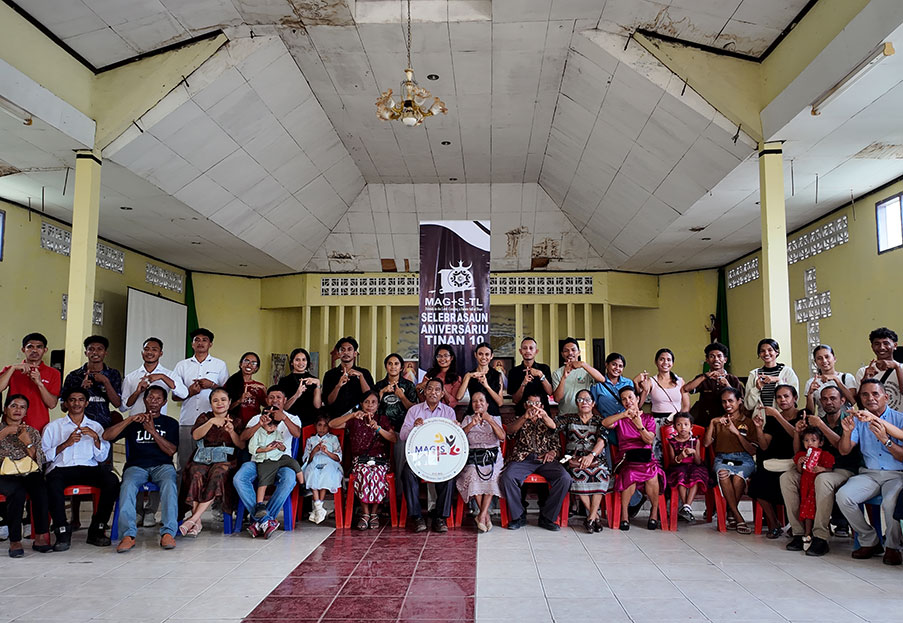
For ten years, MAG+S Timor-Leste has been quietly accompanying young people. In our small community shaped by friendship, prayer, and service, many young people have encountered the richness of Ignatian spirituality and discovered a deeper relationship with God...
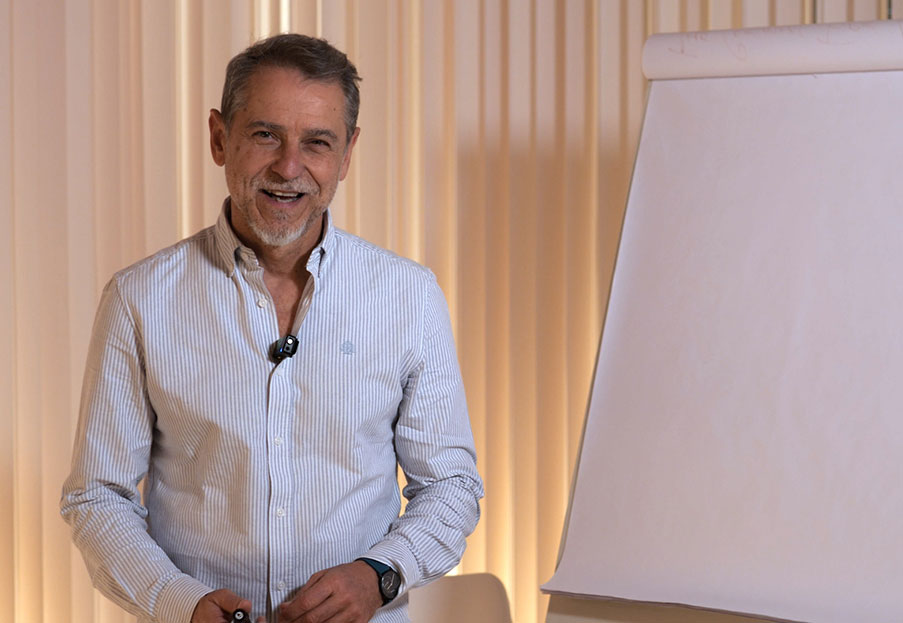
Elías López, a Jesuit from Spain, addresses the challenge of discerning conflicts within groups and communities. He emphasizes the importance of collectively discerning the conflict itself as a path to healing and regenerating communion – an essential foundation for participation and mission...
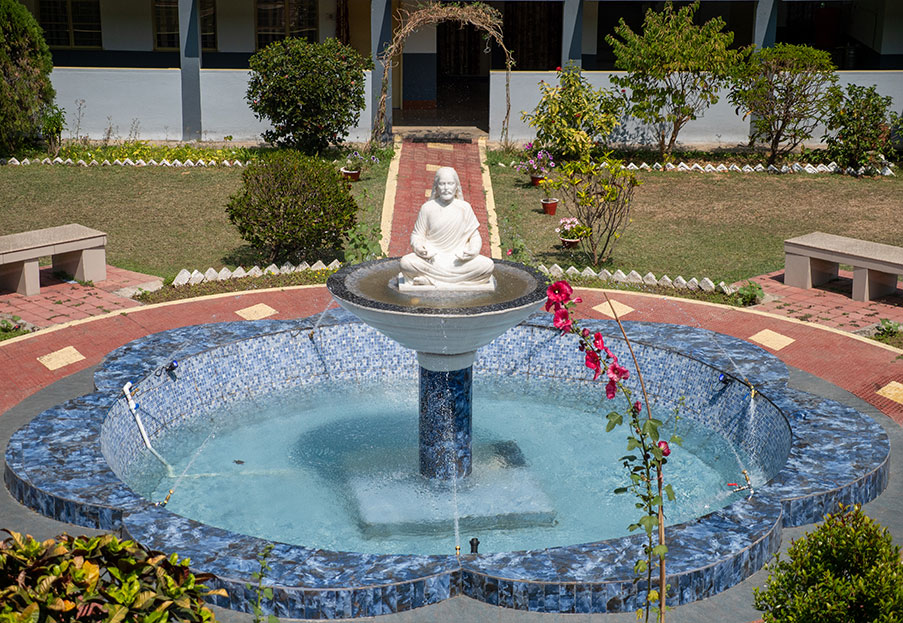
When Jharna Spirituality Centre in Ranchi Province opened on 13 September 2008, it answered a deep longing. Thousands have since crossed its threshold seeking spiritual renewal – Jesuits primarily, but also priests, religious sisters and brothers, and laypeople...

“We say these weeks of Advent, in which we prepare to celebrate the birth of Jesus, are a time to renew hope. But what do we mean by hope? In the everyday sense of the word, hope is often linked to optimism, a positive anticipation of the future. Hope in this ordinary sense...”

Advent is a time of waiting, a sacred season in which the Church prepares to celebrate the birth of the Saviour and to welcome once again the light of Christ into our world. It is a time of hope, and in a world often marked by uncertainty and anxiety, Advent reminds us that hope...

Fr James Hanvey, SJ, the Secretary for the Service of Faith, shares deep insights on Pope Leo XIV’s first Apostolic Exhortation, Dilexi Te. This is more than a discussion of a papal document; it’s an exploration of the radical Christian spirituality at its heart.