Jesuit Voices from the Archives: World War Two and the Society of Jesus
On 11 January 1945, when Germany was under Nazi rule, Alfred Delp, SJ, wrote a farewell letter to his Jesuit brothers from the Berlin‑Tegel prison: “[my] execution can be expected today”. He continued, “The real reason for the condemnation is that I am and have remained a Jesuit.” Of his trial, he wrote, “The atmosphere was so full of hatred and hostility”, concluding his letter with the words, “God’s blessing and protection to you, your grateful Alfred Delp SJ” (Jesuit Archives of the Central European Province). He was executed on 2 February at the age of thirty-seven.
Alfred Delp (1907-45) is one of the best‑known Jesuit victims of the Second World War. He, along with dozens of fellow Jesuits, are the subjects of a new book about the Jesuit experience of the war, through an archival lens.
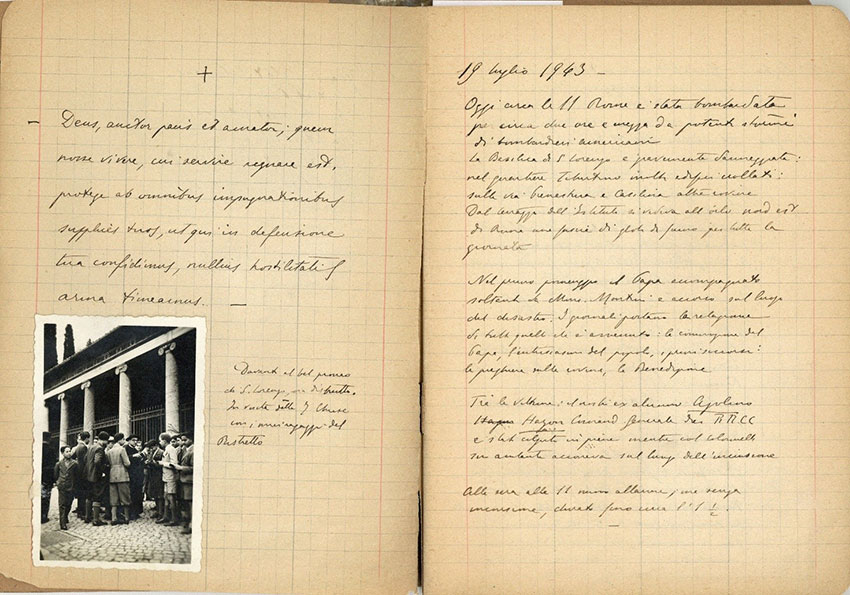
Giuseppe Massaruti, SJ, describes the bombing of Rome on 19 July 1943 in his personal diary (Historical Archives of the Euro-Mediterranean Province – AEMSI, Fondo Provincia Romana, serie scritti personali, vol. 758.1).
The Second World War is recognised as a humanitarian disaster on a scale never before seen in world history. It transformed the world’s economic, political and social order. At the time, the Society of Jesus had almost 30,000 members worldwide – of whom almost 20,000 were in Europe – yet studies about Jesuits from this period remain fewer than for other periods. This new volume seeks to provide research tools for exploring Jesuit history within the context of this crucial turning point in modern history.
It showcases collections from Jesuit Archives – together with historical overviews – for the years 1939-45, in Britain, Czechia, France, Germany, Greece, Hungary, Ireland, Italy, Lebanon, the Low Countries, Malta, Poland, Portugal, Slovakia, Spain, and the world headquarters of Jesuit Archives in Rome. Accompanied by rich colour reproductions of select archival sources, the result is a mosaic of perspectives and experiences.
During this period, the Society of Jesus (Jesuits) faced major disruptions to its mission and structure. Some were killed, imprisoned, or had their mission cut short. The war also damaged Jesuit properties or resulted in their seizure, with many institutions repurposed for wartime use.
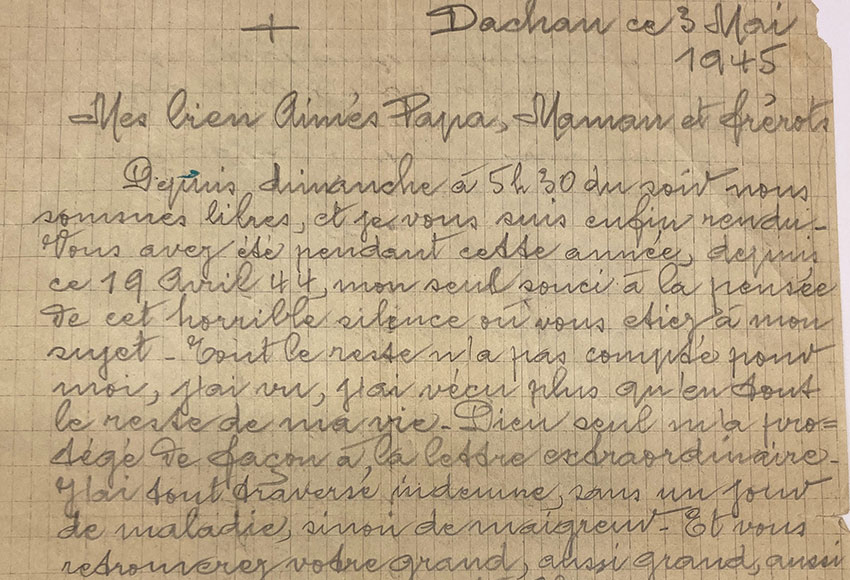
Letter sent by Jacques Sommet SJ (1912–2013) to his family from Dachau concentration camp
(Archives Jésuites EOF France, Fonds personnel du P. Jacques Sommet, boite n°1).
Ninety‑six Jesuits were sent to the Dachau concentration camp, and thirty‑one died there. Several Jesuits made significant contributions to the intellectual and theological foundations of resistance to authoritarian rule and the definitive rejection of antisemitism as fundamentally unchristian.
Yet, while targeted in many parts of Europe, Jesuits did not suffer persecution or death at anywhere near the rates of other groups. Most were safer and better off than much of Europe’s population. The book therefore is not so much representative of Europe’s war experience, as much as shedding new light on one aspect of it, as well as revealing the variety of experience within the Society of Jesus for these years.
For example, Alfred Delp, mentioned above, was a member of the “Kreisau Circle”, a group of diverse intellectuals, which sought to draft the basic framework for a renewed post-Nazi German society. Other Jesuits in the book are less famous than Delp but provide vivid descriptions of the war experience. Reflecting the Society’s global nature, the diary kept for the Jesuit residence in Macau described the “true unexpected cataclysm” of the Pacific War (Archives of the Society of Jesus in Portugal).
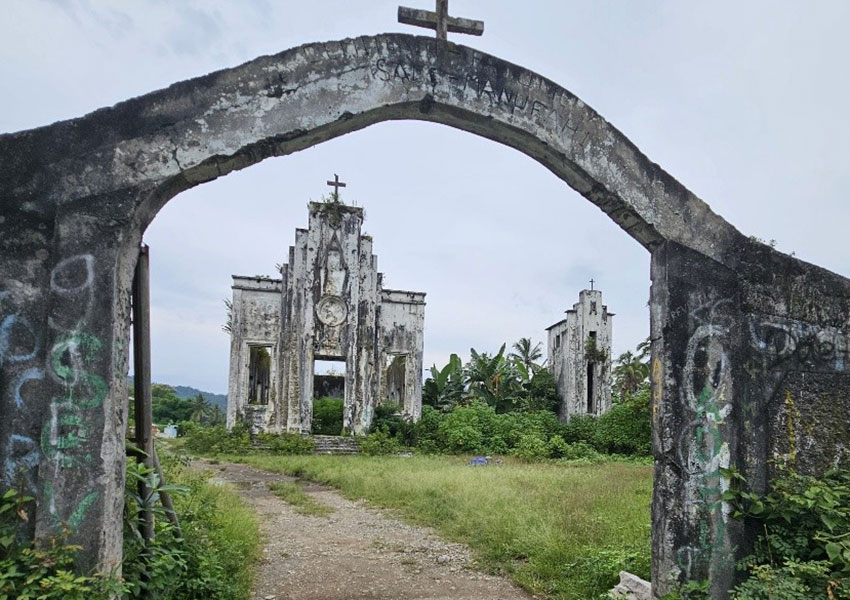
The Church in Same, a city in the interior of East Timor, destroyed by the Japanese during the Second World War (APSI).
In Hungary, meanwhile, individual Jesuits shed light on the Axis war experience: for example, Sándor Mogyoróssy, SJ, (1903-76) kept a diary while serving as military chaplain: he described the military withdrawal from the territories of present‑day Poland, and witnessed the Warsaw uprising in August 1944, as well as the last Hungarian offensive of the Second World War. His confrere József Kráhl, SJ, (1923–99) wrote about the 1944 Soviet siege of Budapest, later becoming a missionary in Vietnam and the Philippines.
For the first time, archivists from the Jesuit Provinces of Europe and the Eastern Mediterranean have collaborated to make the Jesuit experience of the Second World War accessible to specialists and general readers. Edited by archivists Damien Burke (Ireland), Rebecca Somerset (United Kingdom), and Christian Taoutel (Lebanon), the volume is the result of a project coordinated by the Roman Jesuit Archive (ARSI), in collaboration with the Province Archives of the Jesuit Conference of European Provincials (JCEP). It is available from IHSI Publications, at www.fondazionepolanco.org.
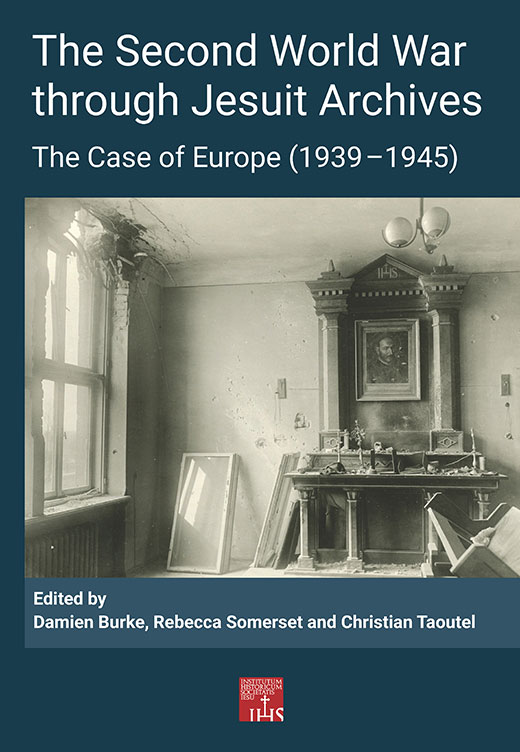
The Second World War through Jesuit Archives: The Case of Europe (1939–1945), edited by: Damien Burke, Rebecca Somerset and Christian Taoutel (2026), paperback, 348pp, €35. ISBN 978-88-7041-702-9. For orders, please visit our sales site at Fondazione Polanco.
[© Photo in the header of the article: British Jesuit Archives, #26]
[© Featured photo for the article in the home page, and cover photo of the book: Warsaw, APWMTJ]
Fondazione Polanco
The Second World War through Jesuit Archives: The Case of Europe (1939–1945)
IHSI – Institutum Historicum Societatis Iesu
Related Posts:
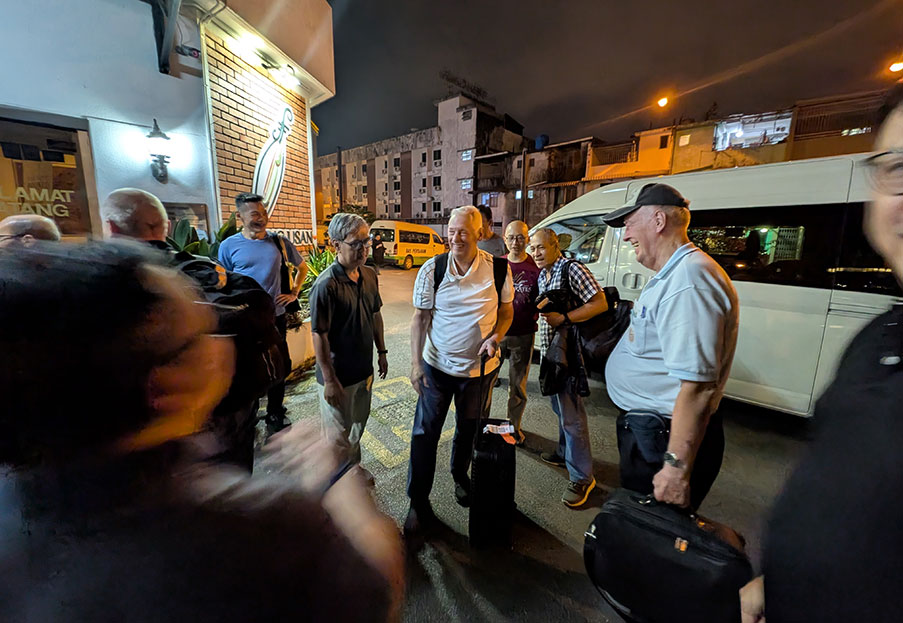
Fr Arturo Sosa, SJ, arrived in Kuching, Malaysia to begin his 5th apostolic visitation of the Jesuit Conference of Asia Pacific (JCAP). With a full schedule of meetings and travel between different Jesuit ministries and communities in Malaysia, Thailand and Indonesia...
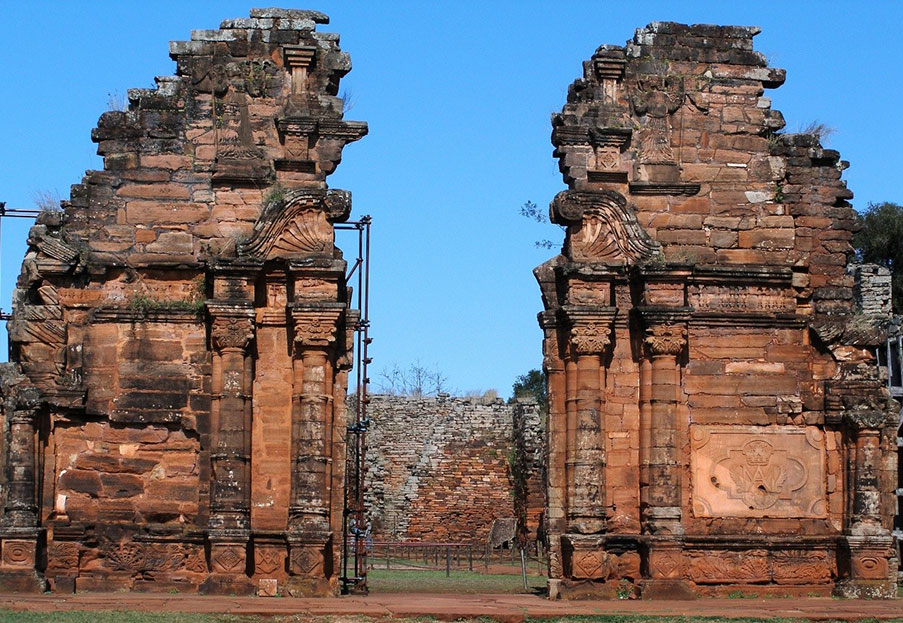
The Paraquarensis Province was separated from that of Peru in 1604. It comprised the territories of the present-day states of Paraguay, Argentina, Uruguay, part of Bolivia, and, temporarily, Chile. One of the most notable ministries in this Province was the Guaraní reductions...
Launched at the 2018 IAJU Assembly, Magis Exchange offers students the chance to study across borders, cultures and academic contexts. It is more than an academic mobility program: it embodies a shared commitment to forming young people ready to engage thoughtfully...
The Society of Jesus has designated Loyola University Chicago as the new home for the Discerning Leadership Program (DLP) which provides leadership formation, accompaniment and resources for senior Church leaders. Loyola University Chicago will henceforth steward...
When nearly one hundred facilitators of discernment gathered in Salamanca in late 2025, something more than a meeting took place. Convened at the desire of Fr Arturo Sosa, Superior General of the Society of Jesus, the Ignite the Way gathering set out to form facilitators for processes of communal discernment...
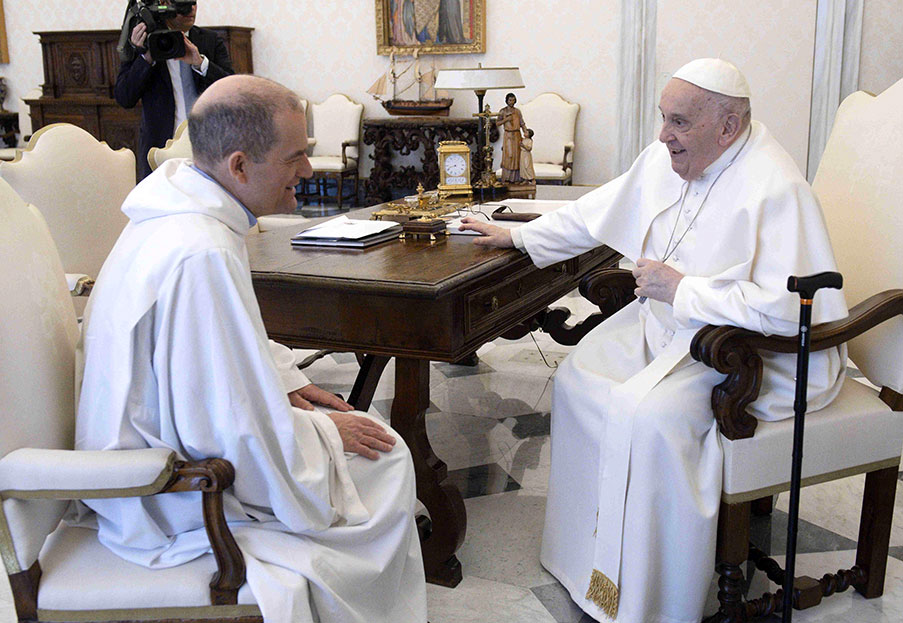
“On 15 January 2023, after the Angelus – I was travelling to Rome and we watched from the train – Pope Francis announced officially the ecumenical prayer vigil for 30 September of that year. He said that the path to Christian unity and the Church’s synodal conversion are linked...”