Caring for communities and Creation
By Gabriel Lamug-Nañawa, SJ | Jesuit
Conference of Asia Pacific
[From “Jesuits 2024 - The Society of Jesus in the world”]
A flagship project in Asia Pacific to care for the young and the poor in a changing climate.
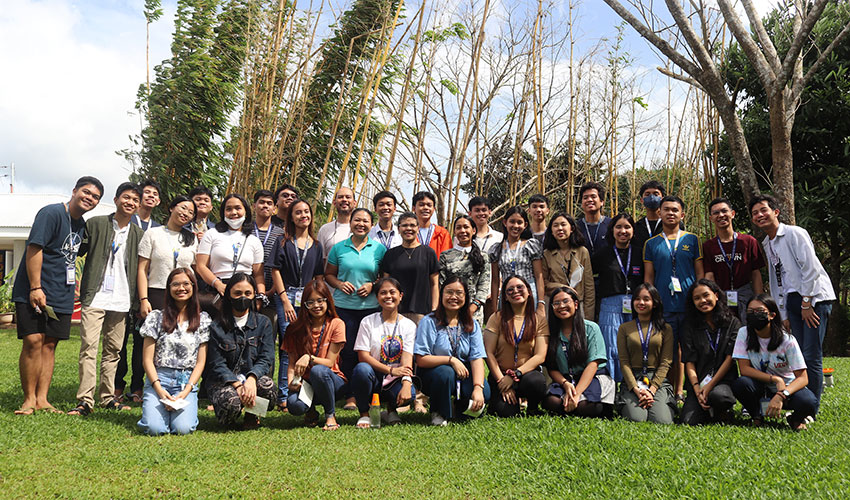
It had been constantly raining a few days already and there were no signs that it was stopping anytime soon. The sky was grey and the ground muddy. The type of situation that would seem discouraging for a group of adolescent students coming to our place for a retreat. But, quite surprisingly, before breakfast on a wet Friday morning, 30 high school and university student leaders of the Ateneo de Naga University, a Jesuit school in the southern end of Luzon, Philippines, arrived on time and in good spirits. They were embarking on a three-day Ignatian retreat. The theme: ecological conversion, a project set up in partnership with the Jesuit Conference of Asia Pacific (JCAP).
Last year, JCAP had launched its Apostolic Plan,
part of which was to respond to the issues of poverty and ecology in Asia
Pacific. It created a flagship project named, “Caring for Communities and
Creation,” through which the different ministries and Provinces of the region
could engage collaboratively towards a common goal. The flagship project
included three approaches, namely, a) “Youth Leading the Future”; b)
“Transitioning to Cleaner Energy”; and c) “Strengthening Local Communities”.
Taken together, these approaches focus on and integrate topics such as:
Ignatian spirituality, youth, marginalized and indigenous communities, energy
and greenhouse gas emissions, biodiversity and climate crises. All of these
themes could easily be related to the Universal
Apostolic Preferences of the Society of Jesus.
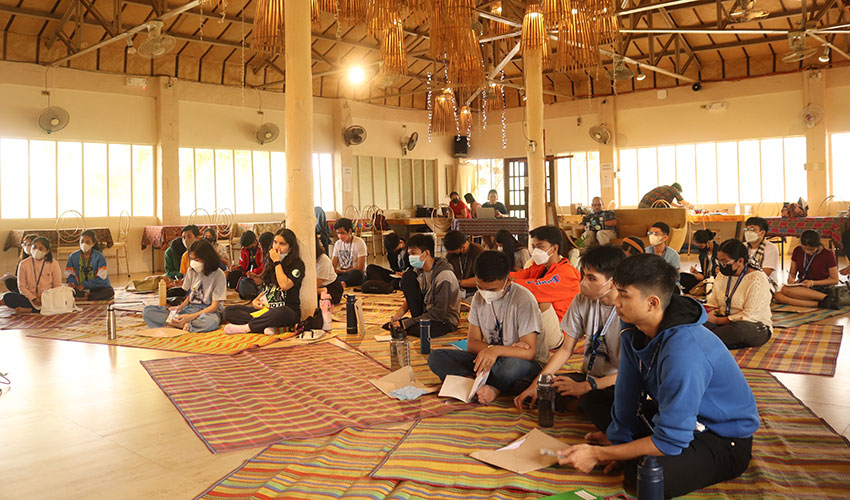
The retreat ended by lunch of Sunday, just when the sun was coming out. Aside from inputs given by lay mission partners from Ateneo de Naga and a few local Philippine Jesuits, there were also online talks on ecological conversion by Fr Ed Quinnan, SJ, superior of the Jesuits in Micronesia, and on integral ecology by Dr Peter Saunders of “Being with God in Nature”, a Jesuit Ignatian ministry in Australia. Ecological conversion is a long process that did not end at the close of the retreat. The student leaders brought back with them project plans, whose execution will be part of their eco-spiritual journey.
Before leaving to go back home, 16-year old senior high school student Ethan Portes commented, “The ecological crisis that we face stems from the problem of our relationship with nature because we think that we are the masters of nature. However, after the retreat I realize that as stewards of God’s creation, our care for nature should be built on a deeper and more personal relationship with nature.” Surely, he is on the right track, as ecological conversion necessitates a new way of relating with God’s creatures, one that is not determined by modern anthropocentrism. Another student, Denise Padua, an 18-year old university student, concluded, “I used to think that life’s success is manifested in worldly ambition. Now I realize that eco-spiritual consciousness and enriching creation are what matters as God’s children.” She thus affirms the need to give back to creation, in gratitude, providing the chance to regenerate and thrive.
This retreat for student leaders was the pilot
for the flagship approach on “Youth Leading the Future.” The coming together of
youth, ecology, and Ignatian spirituality was natural and organic, a way to
form a much-needed nexus. The modules used during the retreat will be shared
with other units across JCAP. Each institution or ministry is invited to adapt
the material to their own contexts.
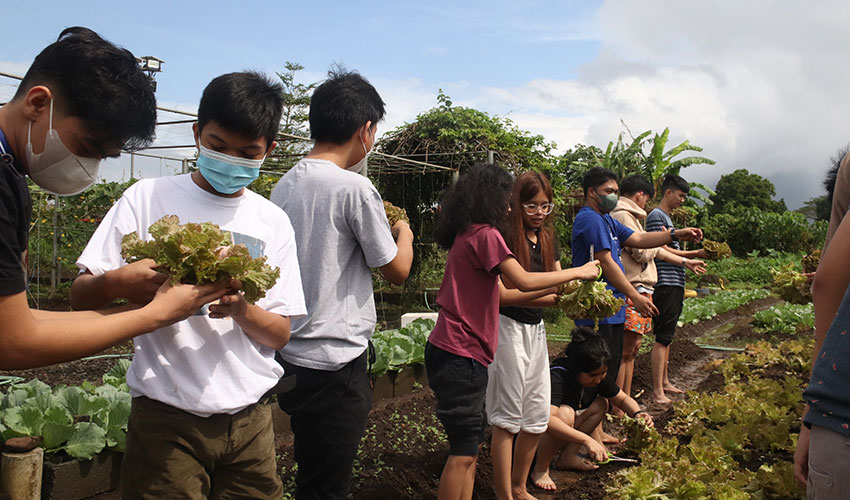
The second approach of the flagship project, “Transitioning to Cleaner Energy,” is about advocating for the reduction of carbon emissions by at least 50% by 2030, achieved through downsizing our energy use and shifting away from fossil fuel dependency. Although installing renewable energy systems are expected for this approach, other methods are also possible, such as adopting a low-carbon diet, i.e., choosing food options that do not have a high carbon footprint.
Finally, “Strengthening Local Communities” is the third approach, which is geared towards helping build resilience in marginalized or indigenous communities. It will be done mainly through collaborative partnerships with Jesuit ministries and promotes a systemic application of nature-based solutions. At present, there are two communities in the Philippines and two others in Indonesia, whose resilience is being studied to prepare the grounds for a wider application.
The natural systems of our world today are
rapidly changing. We are expected to breach the safe limit of 1.5 °C
increase in global mean temperature within the next few years, potentially
triggering other tipping points. It is urgent that we collaborate in addressing
the causes of the many storms, of all kinds, that will greatly harm the world’s
poor and vulnerable peoples.

Related Posts:

Fr Arturo Sosa, SJ, arrived in Kuching, Malaysia to begin his 5th apostolic visitation of the Jesuit Conference of Asia Pacific (JCAP). With a full schedule of meetings and travel between different Jesuit ministries and communities in Malaysia, Thailand and Indonesia...
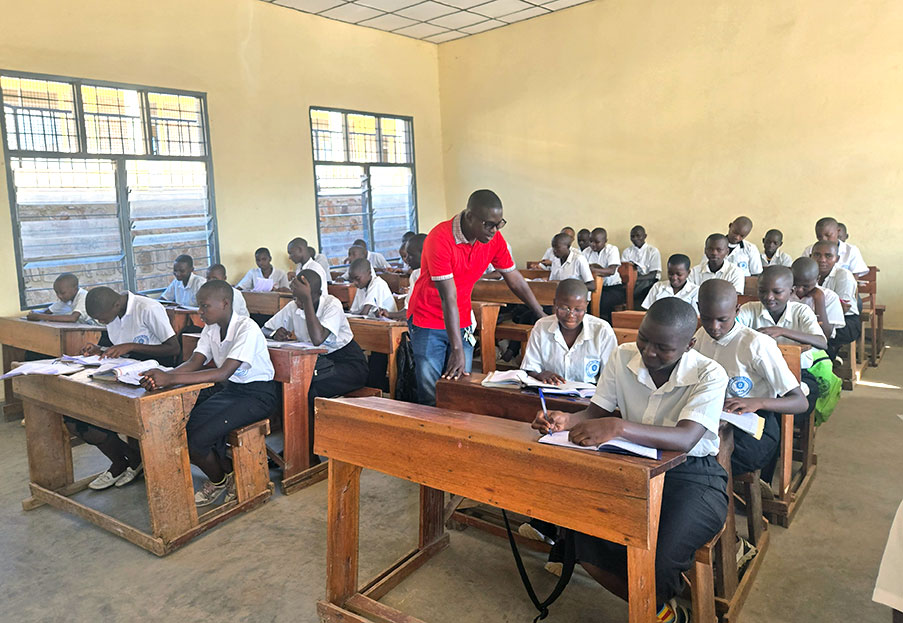
École Fondamentale Saint Louis de Gonzague was built to give every child space to be included, to live and learn alongside others, and to recognize their dignity as human beings. When the Jesuits founded the school in September 2004, in a region greatly affected by...
As the Society of Jesus prepares for the II Congress JESEDU-Montreal 2027, a global process of review, discernment, and foresight is now underway. This initiative seeks to evaluate how the shared vision for Jesuit education has been implemented across the worldwide network of...

Pope Francis raised climate change to global consciousness as the defining moral issue of our time. As a result, the Church has become a global voice urging political accountability and personal responsibility for healing the planet. Building on his legacy, Pope Leo vigorously calls for urgent climate action...

The Secretary for Secondary and Pre-secondary Education, with great joy and gratitude, announces that Fr Hugo Gómez Sevilla, SJ, a Jesuit leader with a wealth of valuable international leadership experience building networks, pastoral sensitivity, and a deep commitment to Jesuit education...
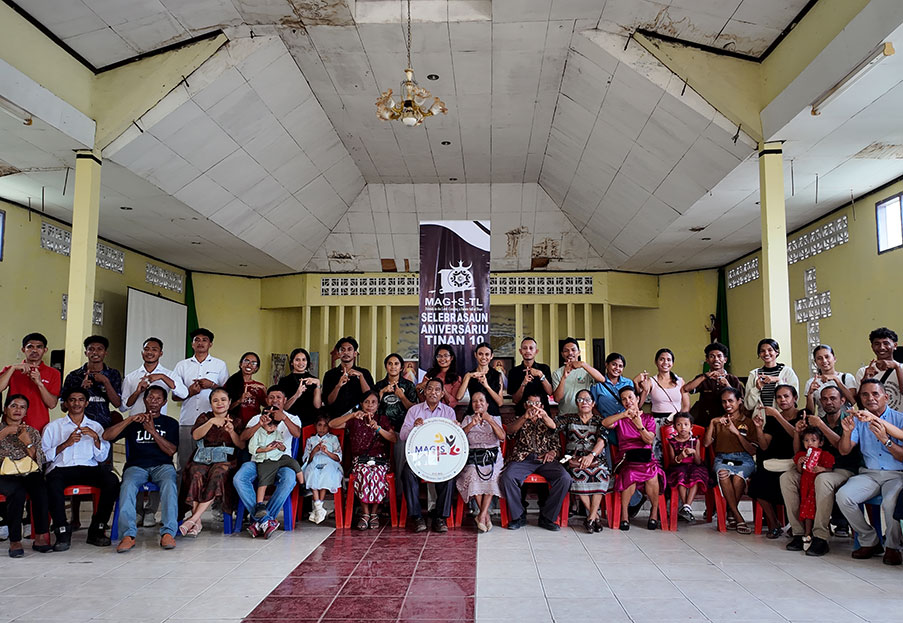
For ten years, MAG+S Timor-Leste has been quietly accompanying young people. In our small community shaped by friendship, prayer, and service, many young people have encountered the richness of Ignatian spirituality and discovered a deeper relationship with God...