Complex socio-ecological reality in India and a dream for a better future
By Lumnesh Swaroop Kumar, SK | Karnataka
Province
[From “Jesuits 2024 - The Society of Jesus in the world”]
A reflection arising from the experience of the Coordinator for Ecology of the South Asian Jesuit Conference.
Malappa and his family had to migrate from their
native village due to frequent extreme climates. He was a small-scale Dalit
farmer in North Karnataka, India. Due to crop failures, he was heavily in debt.
In search of an alternative livelihood, he left his ancestral land and ended up
as a construction worker in a slum in the city of Pune in the neighbouring
state of Maharashtra. The family had to adapt to a new socio-cultural
environment, which caused additional psychological pressure. Malappa was
confronted with a complex, interrelated ecological problem. It is no longer a
rarity for hundreds of Malappas to end up in India’s urban slums.
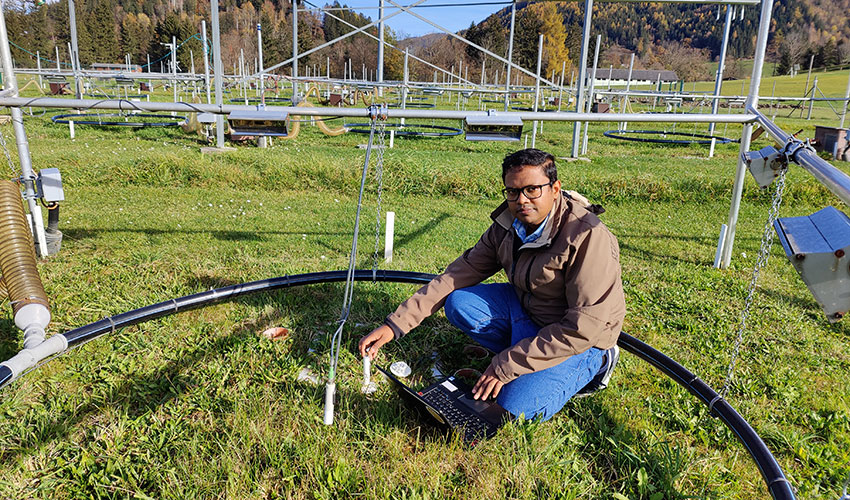
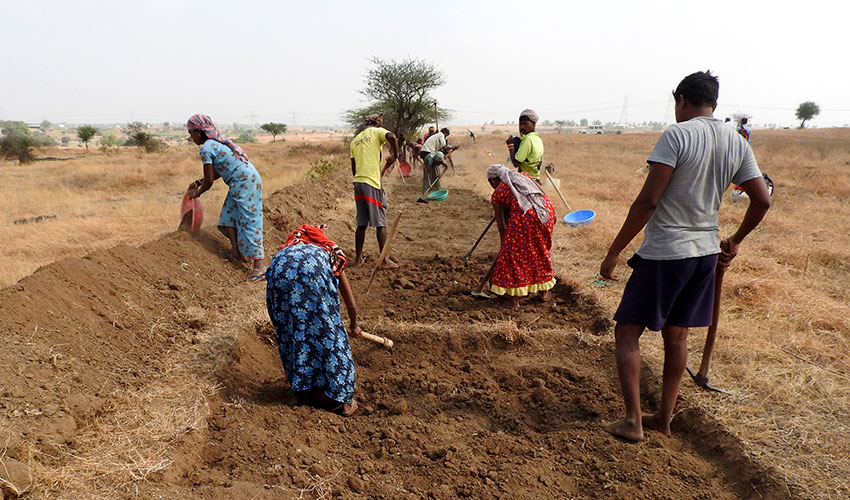
I have witnessed the harsh reality of farmers facing flooded crops and droughted lands every year. What shocked me the most was how Indian farmers, who were attuned to the seasons and signs of nature, used to predict the timing of sowing and crop yields, were hoodwinked by unpredictable climate change in recent years. The result was an unseasonal harvest, lower yields, economic losses, and the suicide of several farmers. Changing monsoon patterns, landslides, severe cold and heat waves, soil degradation and water scarcity are just some of the impacts of extreme climate events that affect agricultural production, public health, and infrastructure, leading to mass migration and loss of lives and livelihoods in most South Asian countries.
It is evident for me, what we are encountering
now – interconnected ecological problems – is a result of human avarice and
narcissism caused by our failure to accept the reality that we are an integral
part of an interrelated and interdependent cosmos. Climate change does not
discriminate against anyone. We all suffer its consequences. The question,
however, is, who bears the brunt? The poor, farmers, tribals, migrants, women,
children, the elderly, and the differently-abled are particularly vulnerable.
Thus, ecological problems are linked to gender, legal, psychological and
physical, socio-economic, migration, spiritual and existential issues.
The exercise of contemplation to obtain love, in which Ignatius asks us to contemplate God working ceaselessly in the world, inspired the Jesuits to care for our common home – the earth. The socio-ecological problems in India enkindled Jesuits to a deeper commitment in promoting integral ecology for the past 30 years and more. The recent fourth Universal Apostolic Preference has reaffirmed and revitalized this commitment.
Indian spirituality views reality as an interconnected coexistence in the cosmos. “Vasudhaiva Kutumbakam”, a Sanskrit phrase meaning “The earth is a family”, sums this up well. This spiritual concept presents a vision of holistic development and respect for all forms of life, including non-human life. This provides a cultural context for Indian Jesuits.
As Ecology Coordinator for the Jesuit Conference
of South Asia from 2018-2020, I had the opportunity to visit and interact with
several Jesuit ecological responses within the Conference. Most of them have proved
to be creative responses to the needs of local people in a particular context.
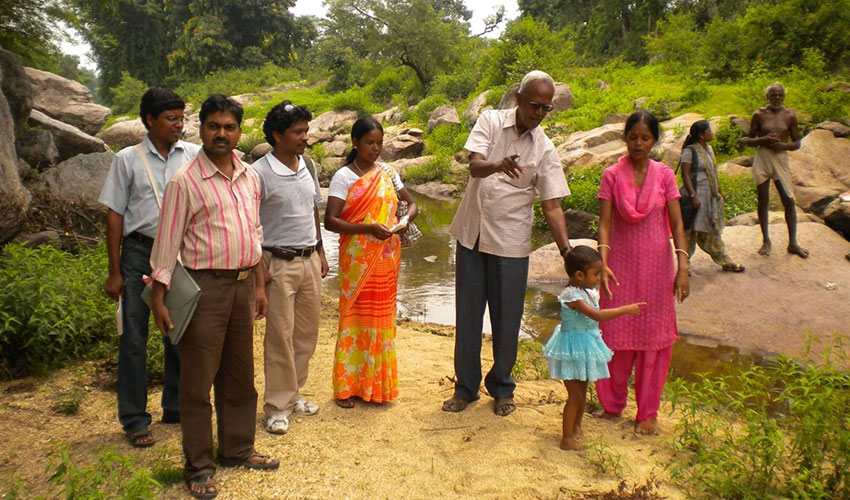
Watershed projects in drought-prone villages, promoting ecological leadership
among the youth, creating economic opportunities for tribals based on their
traditional knowledge, conserving biodiversity in collaboration with indigenous
peoples and conducting ecological research, to name a few. This convinced me
that ecology cannot be another apostolate of the Society of Jesus, but rather
part of every apostolate we already do.
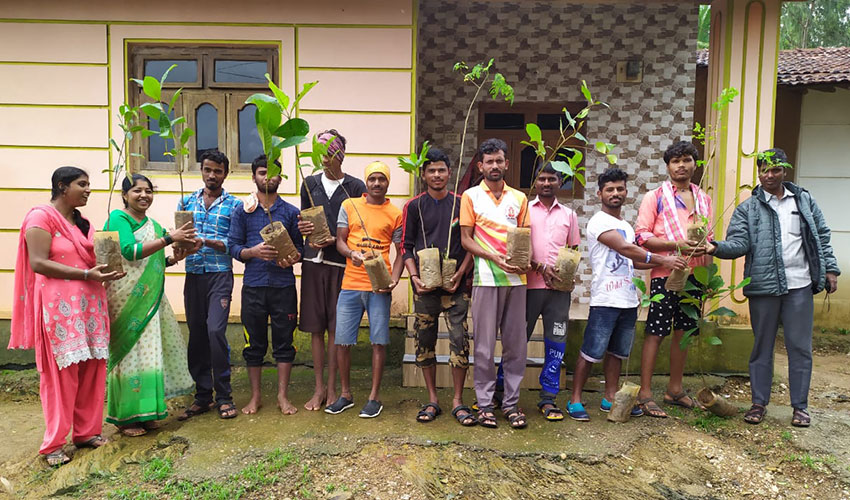
Today’s India expresses immense hope towards an ecologically conscientious society. Several non-governmental organisations (NGOs), faith-based organisations (FBOs), social activists, scientists, youth, economists, artists, and most importantly the victims of ecological disasters are exercising responsibility and optimism in bringing ecological metanoia among individuals and the government. Fr Stan Swamy, who championed the rights of indigenous peoples – who are fighting for their land rights and conserve forests from mining mafia – sacrificed his life with unrelenting courage for a socio-ecological cause.
My dream of a possible Jesuit ecological action.
• Developing need and context-based socio-ecological responses in Jesuit social centres.
• Establishing linkages between different apostolates within a Province on ecological theme.
• Networking between socio-ecological models of different Provinces.
• Initiating collaboration with the government, other NGOs and FBOs – partnerships beyond Jesuit centres.
• Exploring global advocacy linkages between Jesuit conferences.
• Creating socio-ecological leadership among youth – national-level ecological youth network.
• Conducting socio-ecological research in Jesuit higher education institutions.
• Developing and promoting ecological transformation programmes in Jesuit parishes and retreat centres.
• Using socio-ecological responses as a starting point for inter-religious dialogue. We have neither a Christian air nor a Muslim water nor a Hindu soil.
The socio-ecological aim of Jesuits could be summarized as collective responsibility, collaborative effort, and creative response to build a hope-filled, ecologically equitable society together with many Malappas.

Related Posts:
A series of powerful earthquakes have struck Venezuela on 24 June, causing widespread destruction across affected communities and leaving thousands of people in urgent need of assistance...
Service Yezu Mwiza (SYM) is a Christian, socio-medical organization dedicated to fighting HIV/AIDS, tuberculosis, and malaria, while promoting holistic healthcare and social justice. Founded in 2008, it operates as a prominent reference centre under the care of the Jesuits in Burundi...

Pope Francis raised climate change to global consciousness as the defining moral issue of our time. As a result, the Church has become a global voice urging political accountability and personal responsibility for healing the planet. Building on his legacy, Pope Leo vigorously calls for urgent climate action...
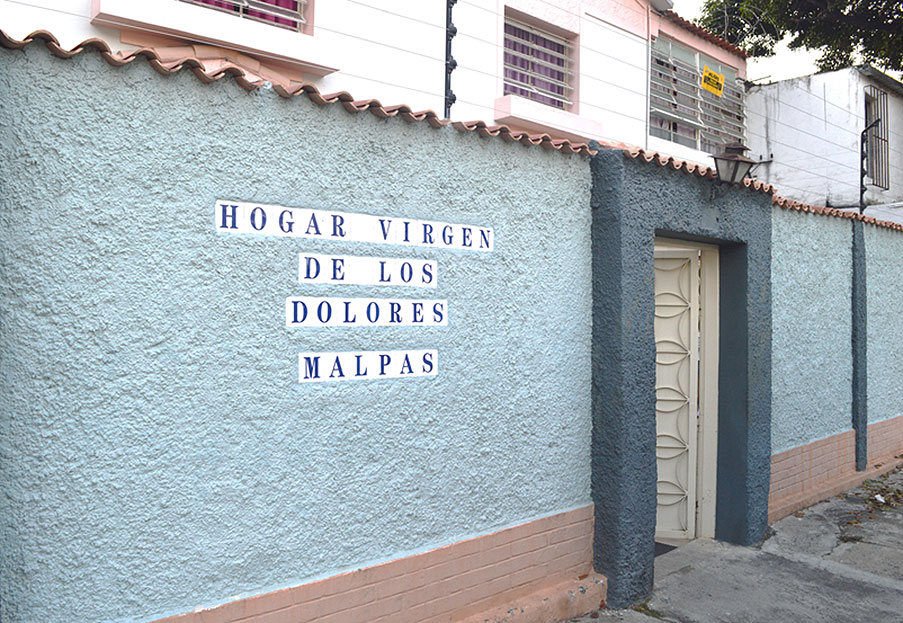
For eight decades, the Hogar Virgen de los Dolores (HVD) has served Venezuela’s most vulnerable children, building a legacy rooted in the Jesuit commitment to education and social justice. What began as an apostolic initiative has now evolved into a model of education...

The annual meeting of Eco-Jesuit delegates in South Asia, held at Inigo Bhawan in Matigara, Darjeeling, became much more than a routine gathering. Set against the fragile ecology of the Eastern Himalayas, the meeting turned into a moment of discernment on the future...

One of the Universal Apostolic Preferences promulgated by Father General in 2019 invites the Apostolic Body of the Society of Jesus to “Walk with the poor, the outcasts of the world, those whose dignity has been violated, in a mission of reconciliation and justice”...