Matteo Ricci: A Heritage of Friendship, Dialogue and Peace
A one-day conference titled “Matteo Ricci: A Heritage of Friendship, Dialogue and Peace” was held at the Pontifical Gregorian University in Rome, Italy, in honor of the renowned Jesuit missionary Matteo Ricci (Macerata 1552 - Beijing 1610). The Italian Jesuit is acknowledged as one of the main figures in the history of the missions of the Society of Jesus. He was the first Jesuit to enter China. In so doing, Ricci realized the dream of St Francis Xavier (1506-1552), another Jesuit missionary who died just before he entered China. Ricci reached Beijing and laid the foundations for the stable presence of the Church in the “Middle Kingdom”.
Ricci’s in-depth knowledge of the Chinese language and culture and his sincere friendship with the Confucian scholars of his time made him a lasting point of reference for the inculturation of the proclamation of the Gospel and for the construction of bridges between Chinese and European cultures and between the West and the East.
A conference on Matteo Ricci could not have been more timely. Recently, Pope Francis declared Ricci’s virtues as heroic, thus conferring on him the title of “venerable” and setting in motion the process for his beatification. Although this Jesuit missionary is well known among scholars, the Pope’s declaration created an opportunity to know Ricci better as a person and a believer in dialogue with others. This comes at a time when China is increasingly occupying a position of cultural and economic influence in the world, pointing to yet another opportunity for dialogue and mutual understanding among cultures. Moreover, the vitality and the challenges of the Catholic Church in China, together with the relations between the Holy See and the Chinese Government, all add to the importance focusing on the positive lessons from the past.
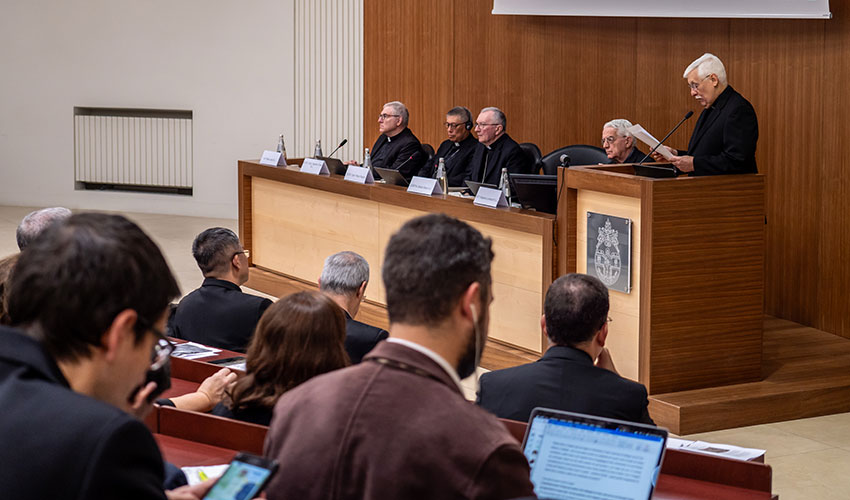
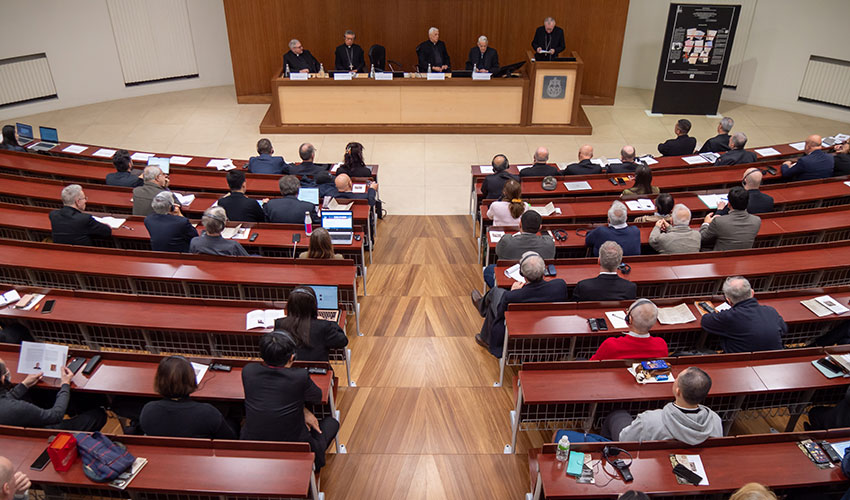
The conference was divided into morning and afternoon sessions during which participants followed two distinct sets of interventions. The morning was opened by words of welcome and introduction from Father Mark Lewis, SJ, Rector of the Pontifical Gregorian University and Father Federico Lombardi, SJ, who works with the office of the General Postulator of the Society of Jesus for the cause of the beatification of the Venerable Matteo Ricci. Father Lewis, who emphasized the lessons on dialogue that we learn from Ricci, also reminded the audience that the Italian Jesuit studied at the Roman College, as the Gregorian University was originally called. On his part, Father Lombardi introduced the theme of the day, emphasizing Ricci’s openness to the whole world and readiness for the opportunities offered by his new mission context. Fr Lombardi continued to moderate the morning session, which was addressed by Jesuit Superior General Arturo Sosa, SJ, Secretary of State Cardinal Pietro Parolin, and Bishop of Hong Kong Cardinal Stephen Chow, SJ.
Father Sosa opened by reminding the audience the Jesuit belief that “the world is our home”. Ricci’s missionary point of departure, said the General, was his faith in God and in the mission of Jesus Christ. He spoke about the historical commitment of the Society of Jesus to the Chinese mission, which was started by Ricci and continues to this day. The “apostolic body” of the Society makes a part of the world so well captured in its entirety by the map that Ricci designed. In that world, the kind of friendship that Ricci spoke about in his first Chinese book expresses efficiently the importance of mutual appreciation and dialogue, which opens the way for encounters. Such was the encounter between western and eastern science and wisdom made possible by Ricci’s faith and openness to the world, said Fr Sosa.
Cardinal Parolin recounted the history of papal pronouncements confirming the relevance and importance of the figure of Ricci. Saint John Paul II spoke extensively of Ricci and of inculturation, thanks to which he became “a true bridge between two civilizations, European and Chinese”. This missionary success was the result of “an exemplary testimony of life” and of the rooting of the evangelical message in new and fruitful soil, following the action of the Holy Spirit, said the Cardinal. Going further, he said Saint John Paul II was also convinced that Ricci’s example of dialogue with China was lasting, credible and current. As such, it constituted a solid reference even today for developing a respectful, loyal and constructive dialogue between the authorities of the Church and those of China. Benedict XVI later highlighted the importance of friendship and dialogue, two qualities that shaped Ricci and guaranteed the good outcome of his mission. Finally, Cardinal Parolin showed how Pope Francis has often cited Matteo Ricci as an example for inculturation in the context of the evangelizing mission of the Church. “In a certain sense, Ricci embodies that ‘culture of encounter’ that Pope Francis proposes and pursues”, said the Cardinal.
The morning session was concluded by Cardinal Chow’s opening lecture of the day. Seeking to offer a contemporary context for the historical discussions of the day, Cardinal Chow provided highlights of the Catholic Church in China from 1949 to the present time. The story is one of movement from an attempt to purge the country from western control to one of greater openness to foreign capital and technological know-how. This openness also lead to greater scholarly interest in Christianity and other religions, ultimately culminating in the conclusion that religion could be beneficial to the development of the Chinese society. Like all other institutions, the Catholic Church in China is going through a process of Sinicization. “Against this background,” said Cardinal Chow, “the Chinese Catholic Church faces a new reality – an indigenized community under the civil authority with increasing incorporation of Chinese ‘elements’ to eventually becoming part of the integrated Chinese society.”

The afternoon session of the conference engaged with Matteo Ricci and the Chinese realities of his time from a scholarly perspective. In a way that complemented the morning session, the presenters deepened reflection on various themes relevant to the conference’s topic. Two scholars focused directly on Ricci and his mission. Father Sun Xuyi (Giovanni) from the ‘Centro Studi Ricci’, Macerata (Italy), showed the person and the mission of Ricci in China as one integral reality that made it possible to envisage a harmonized world. Professor Anthony Clark, whose presentation was communicated through a pre-recorded audio message, went beyond Ricci’s legacy of inculturation to illustrate the missionary’s methodology as one that effectively inaugurated a broader form of Sino-Western “integration”.
Three other scholars focused on the more relational aspects of Ricci and his missionary context in China, thus deepening the theme of friendship and highlighting the contributions of other persons and circumstances toward the success of the Jesuit mission in China.

Related Posts:
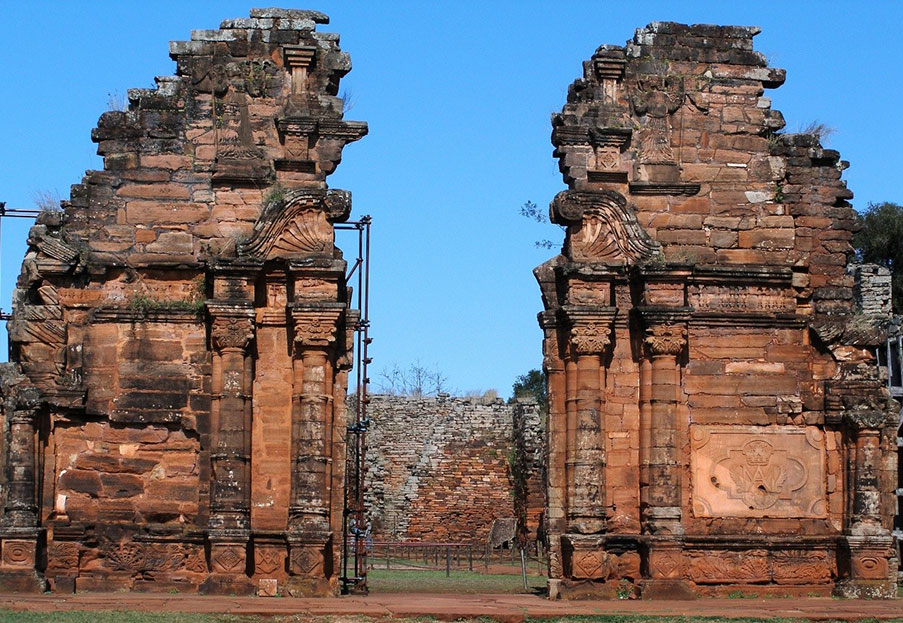
The Paraquarensis Province was separated from that of Peru in 1604. It comprised the territories of the present-day states of Paraguay, Argentina, Uruguay, part of Bolivia, and, temporarily, Chile. One of the most notable ministries in this Province was the Guaraní reductions...
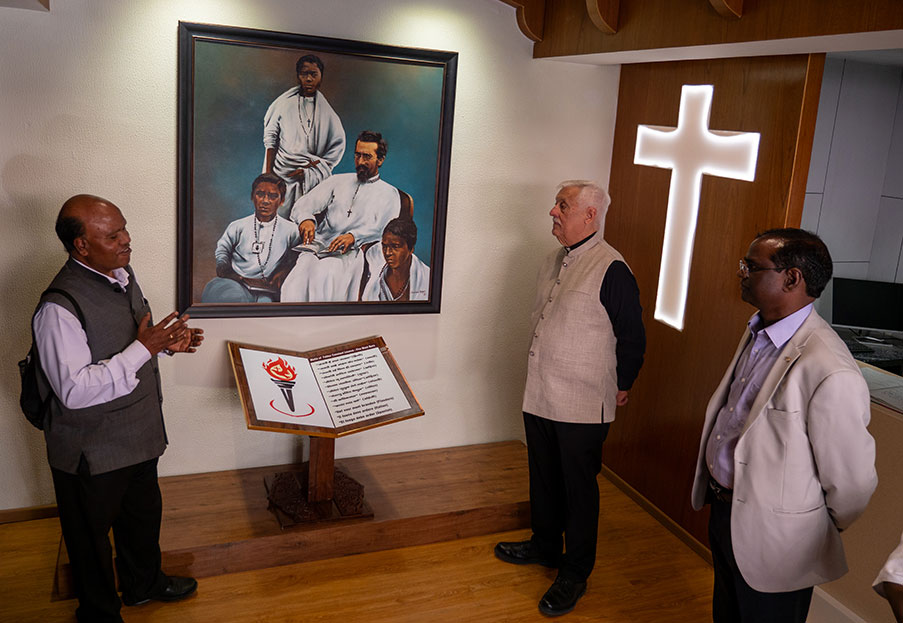
In 1885, a 29-year-old Belgian Jesuit stepped off a train in Ranchi and into a landscape scarred by injustice. Fr Constant Lievens had travelled thousands of miles from his homeland, driven by a calling he couldn’t ignore. What he found in Chotanagpur shook him to his core...
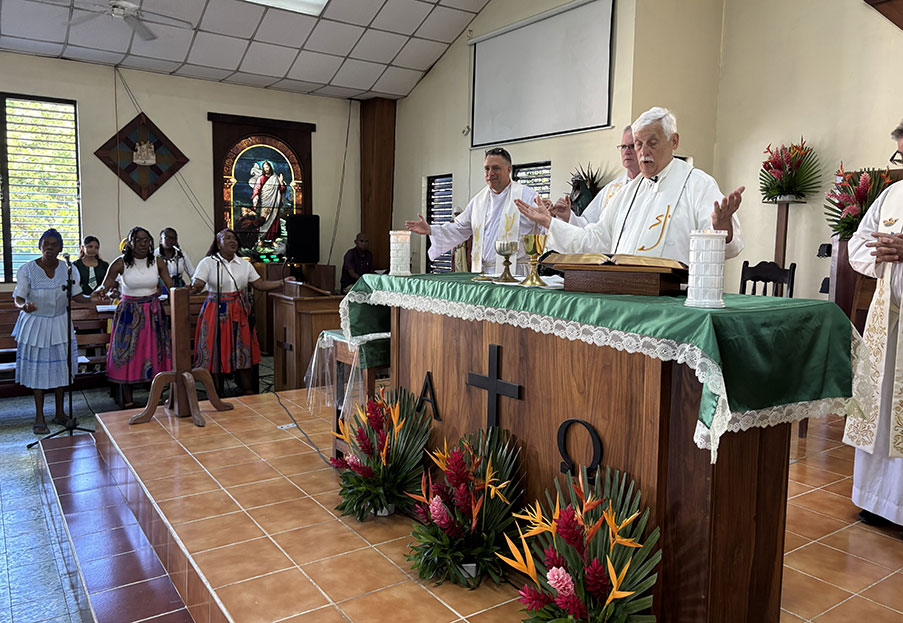
Fr Aric Serrano, SJ, is a Jesuit of the US Central and Southern Province. Born in Pecos, Texas, he was missioned to St. Peter Claver Parish in Punta Gorda, Belize after his ordination in 2023. He shares his reflection on the visit of Father General Arturo Sosa to the indigenous communities of southern Belize.
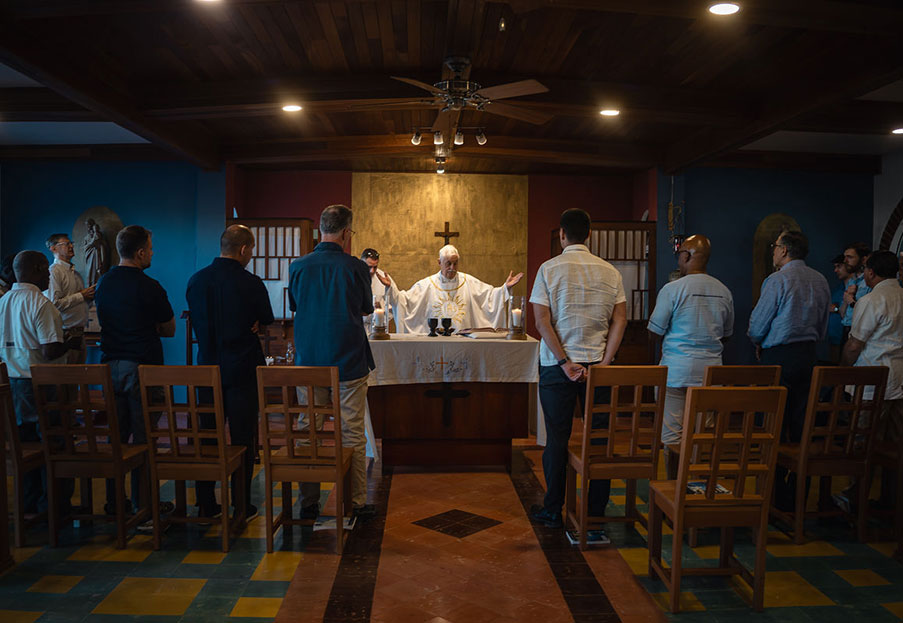
Fr General’s travels through the USA Central and Southern Province (UCS) continued with a visitation of Jesuit ministries in Belize. For 175 years, the Society of Jesus has been ministering to the people of the Central American country. The following is an excerpt of a brief history of the Society of Jesus in Belize...

Amid turmoil and uncertainty, faith continues to burn as a living flame of hope. “A Flame of Divine Providence” offers a deeply moving reflection by Sr Rosy Sor Moe, SMF, who walks alongside displaced and suffering communities in conflict-scarred Myanmar...
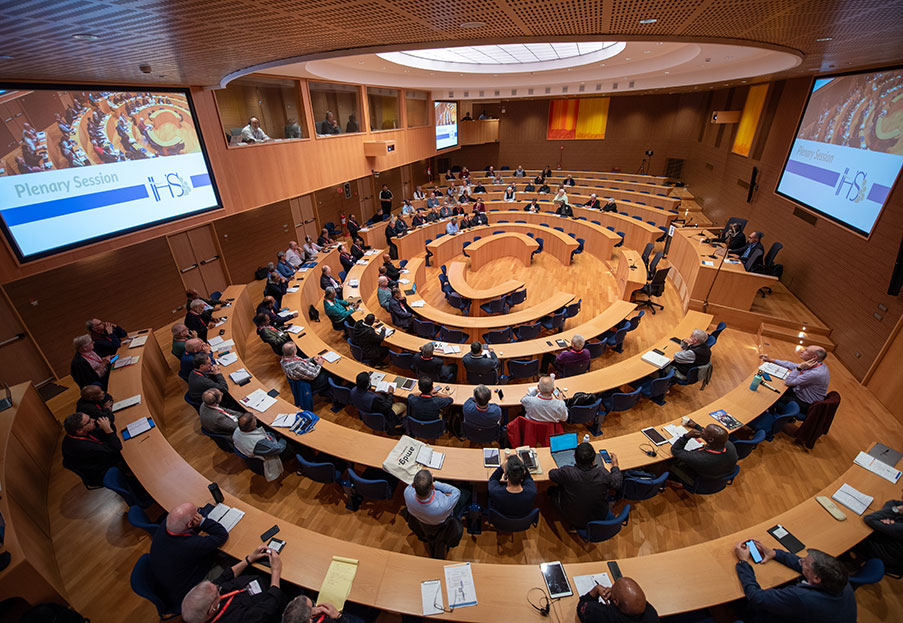
Over the past days, the Jesuit leaders reflected deeply on themes that shape the life-mission of the Society today: the Universal Apostolic Preferences (UAPs), collaboration, Cura Apostolica and Cura Personalis, safeguarding, structures of governance, promotion of vocations...