One Mission, Many Hearts, Rooted in Christ | 175 Years of Jesuit Mission in Belize
Fr General’s travels through the USA Central and Southern Province (UCS) continued with a visitation of Jesuit ministries in Belize. The Belize mission became part of the Missouri Province of the Society of Jesus in 1894, which became the UCS Province in 2014. For 175 years, the Society of Jesus has been ministering to the people of the Central American country. The following is an excerpt of a brief history of the Society of Jesus in Belize by Charisse Broderick King.
Any historical discussion of modern Belize would be incomplete without including the role of the Society of Jesus. Known as the “Jewel of the Caribbean”, this small and beautiful country with a complex history nestles along the eastern coast of Central America. Its population of just under 425,000 people of Mayan, Mestizo, Creole and Garifuna heritage forms a rich tapestry of culture and tradition in which the Jesuits have been a unifying thread for the past 175 years, since their arrival in 1851.
A Brief History
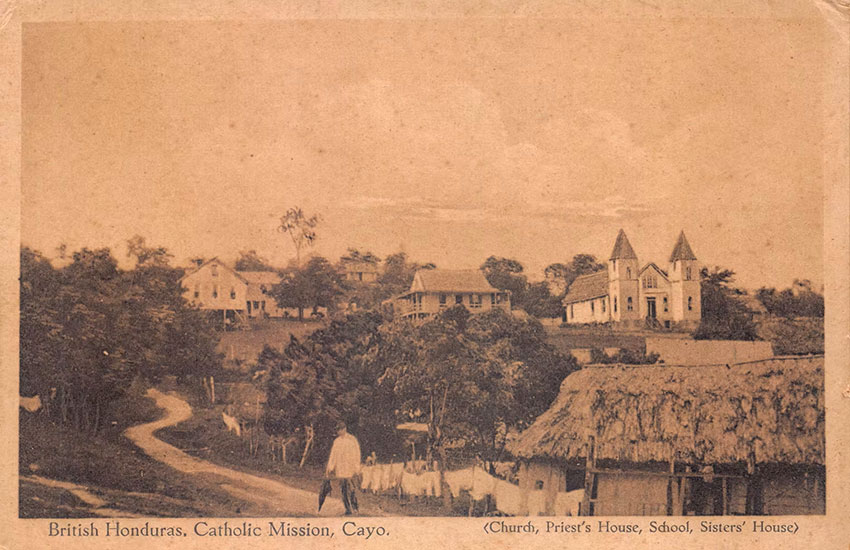
The Maya were the first to populate the region now called Belize, dating back to 1500 B.C., with their civilization flourishing until around A.D. 1000. Spanish explorers travelled to the area in the early 1500s and were the first Europeans to attempt to colonize the Maya living in the Yucatán Peninsula. Drawn by the abundance of logwood and mahogany in the area, the British also began sending expeditions during the 17th century. Tensions between Spain and Britain over settlement and resource rights escalated, culminating in the Battle of St. George’s Caye on 10 September 1798, in which the British drove out the Spanish and assumed control. British Honduras was formally declared a colony in 1840.
Under British rule, the cultural makeup of the region began to change. The British brought enslaved Africans from Jamaica, Bermuda and other British colonies in Central America, who assimilated to form a new Creole (Kriol) culture. The Garinagu, descendants of Caribs and Arawak from the Lesser Antilles, who had resisted British and French colonisation, were forcibly exiled to northern Honduras in the late 18th century following an unsuccessful rebellion. In 1802, they began to migrate by dory to the southern coast of Belize. Following the Caste War of Yucatán with the Maya, thousands of Catholic Mestizo refugees fled to the northern region of British Honduras, starting in 1847.
The Jesuits’ Arrival and Early Impact
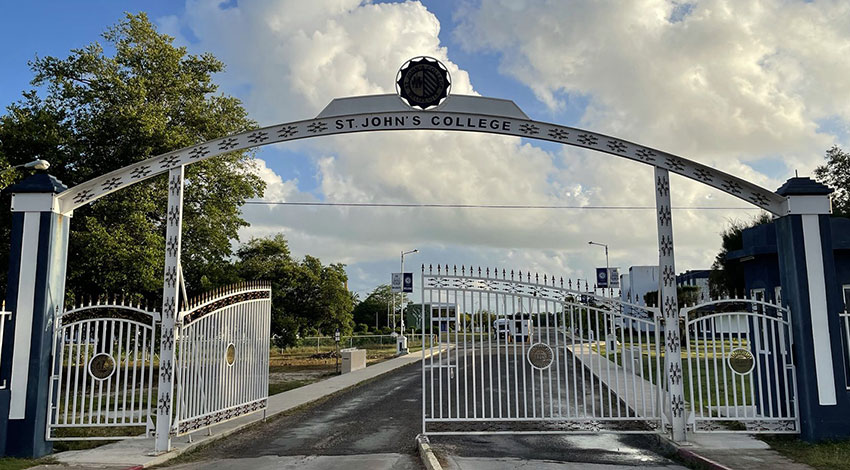
It was in response to the influx of these Catholic refugees that the Jesuits were first missioned to British Honduras in 1851 as a work of the English Province and began to establish a permanent Catholic presence in the region. They oversaw construction of the first Catholic church remaining to this day, Holy Redeemer Parish, in Belize City. Over the next 50 years, primarily European Jesuits established Catholic churches and schools, including St. John’s College (SJC) in 1887. Sicilian Jesuit Fr Salvatore di Pietro became the first bishop in 1888; Jesuits continued to serve as bishops in Belize until 1983. The mission was transferred from the English Province to the Missouri (now the USA Central and Southern) Province of the Society of Jesus in 1893.
Role in the Independence Movement
British Honduras was officially renamed Belize in 1973 and gained full independence from Britain on 21 September 1981. The seeds of the independence movement had been growing for decades, cultivated with the influence and support of the Jesuits.
Father Jeremy Zipple, SJ, interim chief mission and identity officer and campus ministry director at St. John’s College, is working on a documentary to celebrate the 175th anniversary of Jesuit ministry in Belize. He notes that Fr Edward O’Donnell, SJ, headmaster at St. John’s College in the early 1940s, was instrumental in the drive for independence. According to Fr Zipple, “At the urging of the president of the alumni association, who recognized the place of Belize as a country trying to figure itself out, Fr O’Donnell met with a group of top students to teach and familiarize them with the social teachings of the Church.”
The group of students included George Price, now popularly known as the “Father of the Nation”, who served as Belize’s first prime minister and held the top office in the country for a cumulative 27 years, as well as classmates Philip Goldson, Herman Jex, John Albert Smith, Leigh Richardson and Nick Pollard Sr. This group would go on to become political leaders and secure independence for Belize, establishing policies rooted in the social justice concepts learned at SJC.
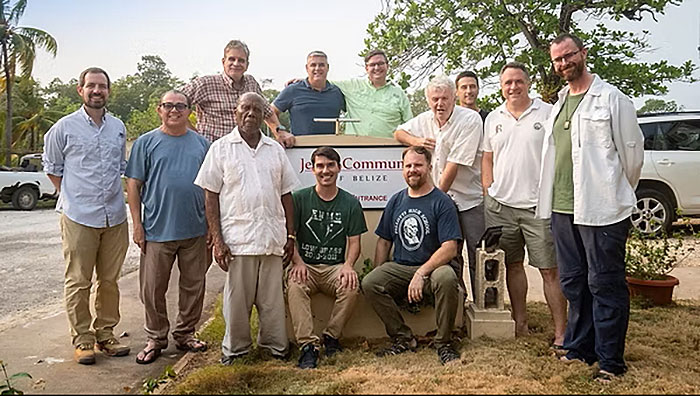
Father Brian Christopher, SJ, the current superior of the Jesuit Community of Belize, points out that the preamble to the Belizean Constitution “reads like a primer on Catholic social thought” – because of the founders’ formation at St. John’s College.
Another key factor in the independence movement was the introduction of cooperatives and credit unions that increased financial literacy, boosting local economies and social resilience while simultaneously building community and personal agency among Belizeans. Father Marion Ganey, SJ, started the first credit union in 1943, and Holy Redeemer Credit Union, which would become one of the largest, was founded by Fr Henry Sutti, SJ, that same year. Within a decade, there were more than 22 credit unions across the country, along with cooperative associations around housing, marketing and farming. George Price’s older sister, Jane Usher, became president of the Holy Redeemer Credit Union and held that post until her death in 1981 at age 101.
Fostering the Faith: Parishes and Mission Life
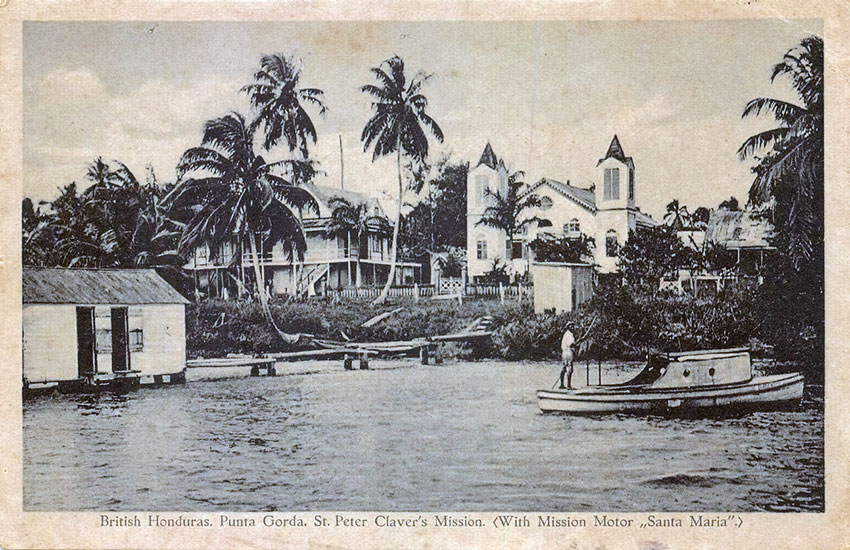
Since their arrival in 1851, the Jesuits’ primary focus in Belize has been Catholic formation. Beginning with Holy Redeemer, they founded the first Catholic churches in all seven of the country’s districts. Today, Jesuits continue to minister at several parishes, including St. Peter Claver in Punta Gorda, with its 31 mission stations throughout southern Belize; St. John Vianney and St. Martin de Porres in Belize City; Nuestra Señora de la Asunción in Caye Caulker, a small island off the eastern coast; and three churches in the Belize River Valley.
Father Richard Hadel, SJ, lived and worked at Saint John’s College in Belize as a Jesuit scholastic from 1959 to 1962 and as a priest from 1972 to 1981. He also spent a year there in 1970-71, when he was working on his doctorate in anthropology. During this time, he lived in Seine Bight, located on a peninsula. On one side was the Caribbean Sea and on the other a lagoon. At the time, the sole connection with the mainland was by dory, a kind of canoe. The people of Seine Bight spoke Garifuna, an Amerindian language.
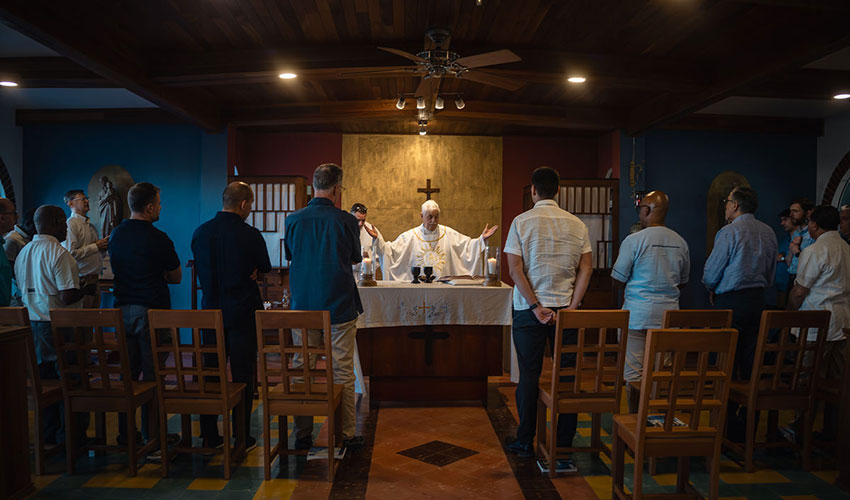
Father Hadel spent four hours a day learning Garifuna, and by Christmas, he had translated the Mass into that language. Bishop O. P. Martin – the first Belizean-born bishop – approved the translation and approved its use. So, in the village of Seine Bight on Christmas Eve 1970, Fr Hadel became the first priest to celebrate Mass in Garifuna, the language of the Carib people.
He remembers with pride one of the women coming up to him afterward to say that hearing the Mass in her native tongue “went to my heart” and thinking to himself, “Thank you, Lord, for letting me do this, because these people will never be the same. They’ll be able to call God ‘Our Father’ in their own language.”
Every Saturday night around a bonfire, Fr Hadel recalls, the people would sing songs they made up about their real-life struggles and share them as a form of entertainment. He came to understand the practice as a way for the people to exercise their agency to deal with powerlessness by singing about it with joy and turning it into a positive.
Father Hadel contributed to a Garifuna language dictionary created by the late Fr John Stochl, SJ. Father Hadel and Fr Richard Buhler, SJ, also started a small magazine called Belizean Studies, focused on elevating and celebrating Belizean history and culture, much of which had been disparaged during colonial rule.
Schools and Scouts
Originally established under the British educational system and still operating under the purview of the Jesuits, St. John’s College in Belize City now comprises an all-boys high school, a co-educational junior college and a university. The largest school in Belize, it became a university in 2023under the leadership of President Mirtha Alicia Peralta. It is considered one of the premier institutions in Central America and has educated leaders from around the region.
The continuing impact of St. John’s College on Belize is undeniable. “From early on, the Belizean people loved [the Jesuits], loved the works that they do, believed in the Ignatian charism, and believed in them greatly because of all the things that they did – creating the first credit unions, opening the first teachers college, bringing higher education to Belize”, Dr Peralta said. “The impact is incredible. Without them, I don’t think we would have an educated community like we have today.”
Father Leo Weber, SJ, understood that an informed population was fundamental to fostering a young democracy. Father Weber, who died 3 February 2025, served as president of SJC in two different assignments and spent the lion’s share of his 81-year apostolic life in Belize. He was recognized as a “Belizean Patriot” in 2023.
Many of Belize’s elected officials, including three of the four prime ministers, were educated at SJC, Dr Peralta noted with some pride. Father Christopher believes there is “no other place anywhere in the world where the Society of Jesus has had such an impact on the life of a nation”.
Dr Peralta takes her role at St. John’s College seriously in carrying the same kind of positive impact forward, especially as the school’s first female president. “My purpose is to serve God’s people and open opportunities”, she said, noting that part of that is opening doors for the women who will come after her.
The Jesuits also established and continue to operate other schools throughout the country, including two primary schools connected to the parishes in Belize City and another 29 in St. Peter Claver Parish in the southern Toledo district near Punta Gorda.
Brother Karl Swift, SJ, a Belizean-born Jesuit now in his 90s who helped to found St. Martin de Porres Parish in Belize City, notes that the educational models first established by the Jesuits were adopted by the Belizean government, including the agricultural school Lynam College, where he served in the late 1960s, and the teachers’ college. “The Jesuits started it; the government copied it”, Br Swift said, because the government recognised that the Jesuit approach helped Belizeans and their country flourish.
In the 1960s, Br Swift recognised that the students at St. Martin’s needed something constructive to do with their time after school. He was inspired by the scouting program Jesuit Brother John Mark “Brah Jake” Jacoby revived at Holy Redeemer in 1931, which became so popular it went on to boast more than 300 participants. So, Br Swift worked to establish recreational programs in soccer, basketball and boxing. These extracurricular opportunities helped to form the students beyond the classroom and prepare them for the future. In 2016, Br Swift was honoured as a “National Hero” of Belize, recognizing his lifetime of service. The church hall at St. Martin’s is named for him.
Ongoing Service and Continued Partnership
Today, about 40% of Belize is Catholic. There are eight Jesuits currently missioned in the country, and the need and the desire for the Ignatian charism remain. Father Christopher identifies lay formation as one of the most critical current apostolic focuses. “Belizeans are hungry, not just for spirituality in general, but for a particular depth of spirituality that comes from having a sense of mission, a sense of purpose, a sense of responsibility for the welfare of the wider community”, Fr Christopher said.
Father Christopher is quick to note that none of the works in Belize was started by Jesuits alone. The laity were always involved, especially women, something that can be traced back even to the success of St Ignatius’ ministry. So, continuing to partner with lay people, “now, more than ever, that is part of our vision”.
Formation and collaboration remain key dimensions of the work of the Society of Jesus supporting the local Church. Since 1994, the Jesuit community has collaborated with the Sisters of Mercy to facilitate the 19th Annotation of the Spiritual Exercises retreat; to date, more than 260 Belizeans have participated. Beginning in 2024, Fr Christopher and Br Glenn Kerfoot, SJ, have led six previous retreatants through a two-year training to become spiritual directors. Father Andrés Vall-Serra, the pastor of St. Martin de Porres, has worked on building the lay leaders in the parish, and is accompanying his second cohort through the JustFaith program to help parishioners integrate faith and justice more deeply.
Having spent 14 years – much of his Jesuit life – in Belize, Fr Christopher emphasizes that the formational relationship is reciprocal. “The people here have taught me how to be a priest”, he said, through the relationships created over meals, shared work and experiences that build mutual respect. “The whole Province has been in love with Belize because of those relationships. We learn about what it means to be a Belizean church by surrounding ourselves with Belizeans.”
Father William Snyders, SJ, who served in Belize from 1981 to 1996 and again from 2002 to 2019 at St. John’s College, Caye Caulker and the Belize Central Prison, upholds Fr Christopher’s observation. “The greatest benefit is to the Jesuit himself”, Snyders said, noting that his time in Belize, especially “the diversity and wonderfulness of the people I met”, opened his eyes to how much larger the world is.
Father Christopher believes that after 175 years, the Jesuit presence in Belize still matters. Each of the Society of Jesus’ four Universal Apostolic Preferences are represented in the diverse ministries. He emphasizes the importance of being there for the entire Church of Belize.
“Our spirituality brings something important to the table in a country that is so wounded and hurting, a country whose future sometimes seems uncertain, and yet has such tremendous beauty. It’s about finding God in the good times and bad times and all the rest. Our spirituality lends itself to a young country still trying to articulate its foundational stories.”
[Photos courtesy of the Jesuits in Belize and the UCS Province]
Related Posts:
The Society of Jesus in Thailand is relatively small, with 37 Jesuits concentrated in three communities serving four cities, but the history of the Jesuits in Thailand goes back centuries, to the time of Saint Francis Xavier and the first missions of the Society of Jesus to what was then called...
On a sunny mid-week day in Kuching, Fr General Sosa visited St. Joseph’s Private Secondary School (SJPS) where the Jesuits of the Malaysia-Singapore Region work as teachers and administrators. Currently, Fr Stanley Goh is the Rector, while Fr Francis Lim served as the first...
Fr Arturo Sosa, SJ, arrived in Kuching, Malaysia to begin his 5th apostolic visitation of the Jesuit Conference of Asia Pacific (JCAP). With a full schedule of meetings and travel between different Jesuit ministries and communities in Malaysia, Thailand and Indonesia...
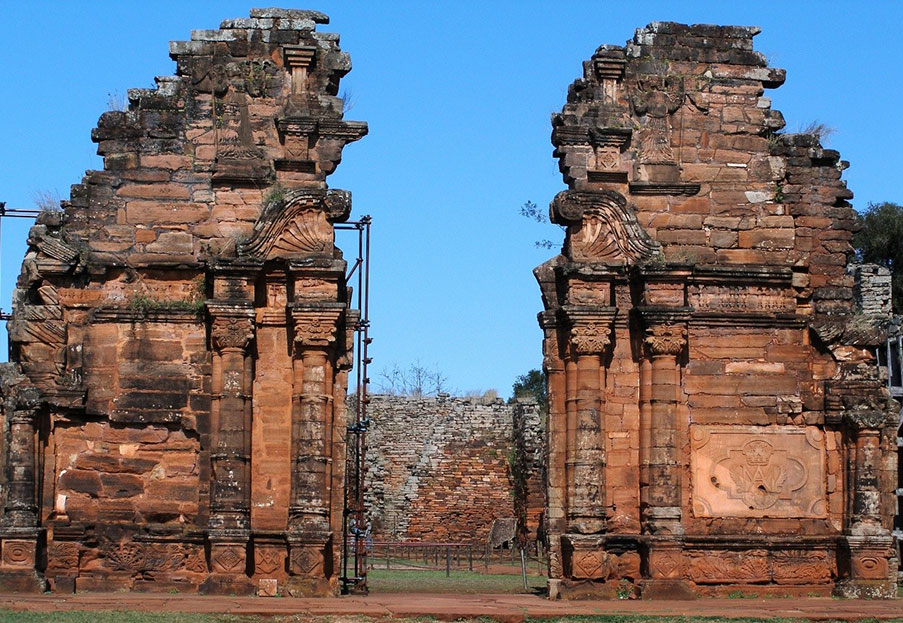
The Paraquarensis Province was separated from that of Peru in 1604. It comprised the territories of the present-day states of Paraguay, Argentina, Uruguay, part of Bolivia, and, temporarily, Chile. One of the most notable ministries in this Province was the Guaraní reductions...
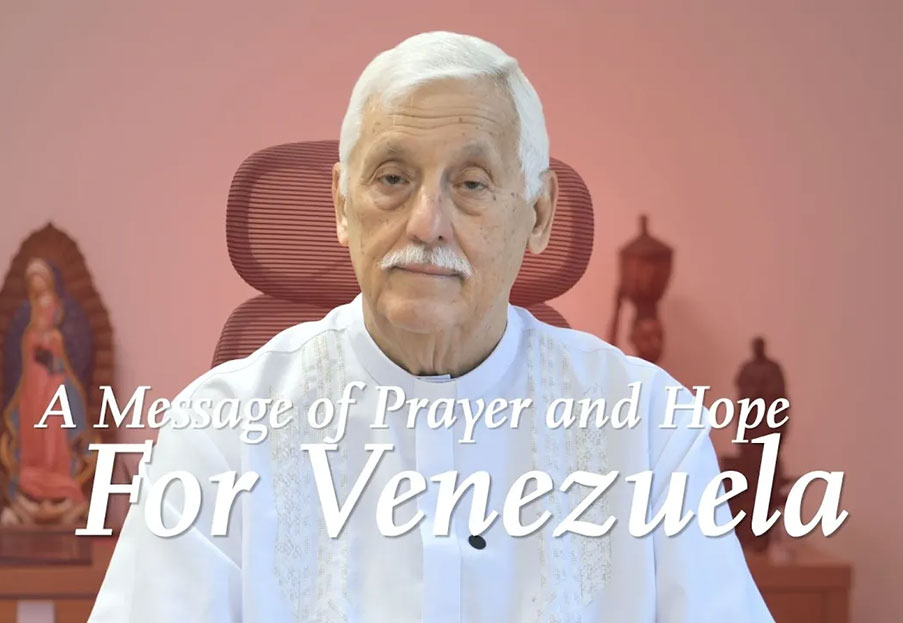
As Venezuela begins the difficult task of recovering after two strong earthquakes that claimed lives, left many missing and caused widespread destruction, Father General Arturo Sosa has sent a message of closeness and hope to the Venezuelan people.

As the Society of Jesus prepares for the II Congress JESEDU-Montreal 2027, a global process of review, discernment, and foresight is now underway. This initiative seeks to evaluate how the shared vision for Jesuit education has been implemented across the worldwide network of...