Becoming a true neighbour to migrant workers in Korea
By Ju-chan Albert Kim, SJ | Korea Province
[From “Jesuits 2025 - The Society of Jesus in the world”]
The Korean Jesuits set up Yiutsari to help migrant workers. And then, they realize that these marginalized migrants are helping them to be not only “Good Samaritans” but better disciples of Jesus.
After the Korean War (1950-1953), the Korean government encouraged Koreans to go overseas looking for work to upgrade their poor economic conditions. In the 1960s and 70s, more than 2 million went to Germany as nurses and miners. Many others joined deep-sea fishing crews and construction worker teams in the Middle East.
Since those days, however, South Korea has gone through a strong and rapid economic development so that, in 2007, the UN identified it officially as a receiving country for migrant workers. It is currently estimated that there are more than 1.2 million migrant workers in Korea, mainly from East Asian countries. With Korea’s rapidly aging population and low birthrate, the number is accelerating.
In 2004, the Korean Jesuit Province launched the Jesuit Centre for Migrant Workers, Yiutsari (Accompanying the Neighbour). It is inspired by the parable of the Good Samaritan (Lk 10:25-37). Moved with compassion, like the Good Samaritan, we seek to provide these marginalized migrants with practical help, such as legal assistance for labour cases, decent shelters, Korean language lessons, accompaniment to the hospital, religious services, and more.
One of the flagship projects of this ministry is an on-line education program providing information for migrant workers in their mother tongues on basic Korean labour law. It deals with issues like wage theft and industrial accidents. In fact, surveys have found that the amount of unpaid wages is huge, exceeding 100 million USD every year; and it is dramatically increasing as the number of migrants is growing. To help the workers protect their rights and interests, we produced videoclips on fifteen topics presenting Korean labour law in the languages of the three major sending countries, Cambodia, Vietnam, and Thailand. We posted online notebooks in these languages as well as in the main languages of the Philippines, Myanmar, and Nepal. Access is made easy on their smartphones through QR codes.

In conjunction with other organizations, we participate in the criminal complaint movement against wage theft. This practice is seen as a social structural matter rather than an employer’s personal immoral behaviour against employees. Taking advantage of workers’ language limitations and lack of understanding of the Korean social system, employers exploit them; and labour officers tend not to actively investigate the cases from the victim’s point of view. The resulting monetary loss and emotional distress fall on the workers and their families. Like Jesus in his dealings with merchants in the Temple (Jn 2:14-17), we seek to break down this corrupt practice and establish sound ways of proceeding based on social justice.
The acceleration of migration from countries of broad language and sociocultural diversity creates barriers that are hard to overcome. Like for the large hungry crowds that Jesus’ disciples encountered in the wilderness (Lk 9:10-17), the needs are overwhelming and are not simply humanitarian needs. The migrant workers hunger for true love. Jesus tells his apostles – tells us – “Give them something to eat” (Lk 9:13). So, we try to give them what is best, first of all by caring for them along their road “between Jerusalem and Jericho”.
Through Yiutsari, we, the Korean Jesuits, have understood that Jesus calls us to participate in the mystery of the Incarnation, the mystery of the Son sharing entirely the vulnerability of humanity. Jesus invites us to be like Good Samaritans, to share the difficulties and pains of the migrant workers as our own as we walk with them. In the light of faith, these people come to us not just as people in need but as God’s gifts for us. They are mediators who lead us to Jesus’ incarnate way of salvation. Journeying with them, we, ourselves, become more truly human. Along the journey, we become part of the Bread.

Related Posts:

A series of powerful earthquakes have struck Venezuela on 24 June, causing widespread destruction across affected communities and leaving thousands of people in urgent need of assistance...
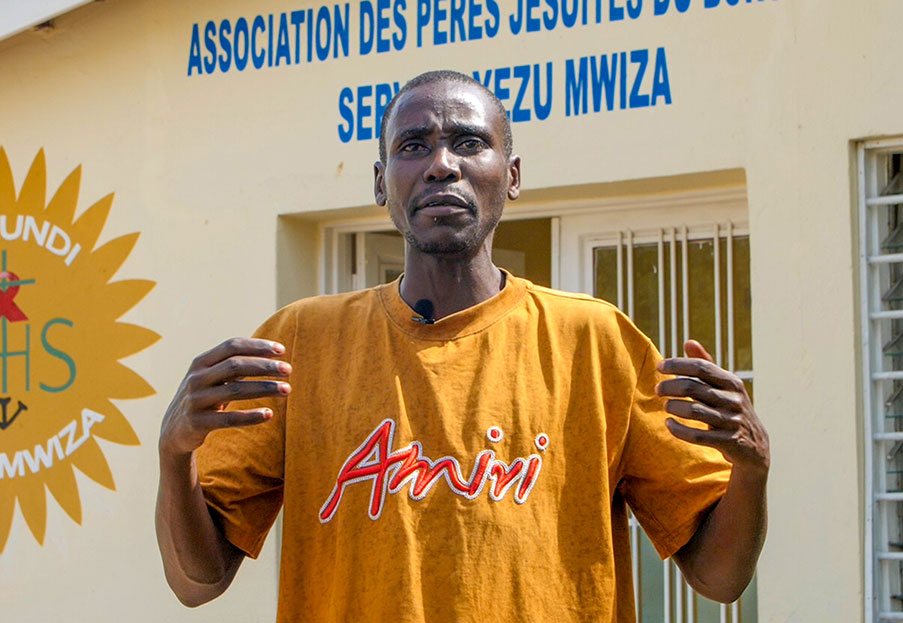
Service Yezu Mwiza (SYM) is a Christian, socio-medical organization dedicated to fighting HIV/AIDS, tuberculosis, and malaria, while promoting holistic healthcare and social justice. Founded in 2008, it operates as a prominent reference centre under the care of the Jesuits in Burundi...

World Refugee Day is celebrated every year on 20 June. This international day was designated by the United Nations to honour refugees around the globe, shine a light on their plight, and work together to find long-term solutions to displacement.

For eight decades, the Hogar Virgen de los Dolores (HVD) has served Venezuela’s most vulnerable children, building a legacy rooted in the Jesuit commitment to education and social justice. What began as an apostolic initiative has now evolved into a model of education...

One of the Universal Apostolic Preferences promulgated by Father General in 2019 invites the Apostolic Body of the Society of Jesus to “Walk with the poor, the outcasts of the world, those whose dignity has been violated, in a mission of reconciliation and justice”...

The Social Justice and Ecology Secretariat (SJES) of the Society of Jesus has released its 2025 Annual Report, “The Promotion of Justice is Fueled by Hope”. The report details regional milestones at the conference level, the results of global advocacy, and its commitment to the mission of...