Media for change: empowering communities and mitigating migrations
By Ignacy Arockiasamy, SJ | Chennai Province
[From “Jesuits 2025 - The Society of Jesus in the world”]
“Climate change is a problem which can no longer be left to a future generation.” Pope Francis
Embarking on a journey as a Jesuit Scholastic, my path unexpectedly converged with the realm of media studies. This serendipitous intersection of academia and community engagement revealed the transformative power of media, catalysing change among marginalized communities nestled in the Kodai hills. Representing India on a global stage at the Students In Free Enterprise (SIFE) World Cup in New York further underscored the potential of media technology in fostering entrepreneurship and social upliftment, garnering a bronze medal for pioneering initiatives among the downtrodden. Yet, it was a pivotal moment when my gaze shifted towards Tiruvannamalai District in Tamil Nadu, where the tapestry of environmental degradation and socioeconomic vulnerabilities loomed large.
Significance of collaboration and networking
Through collaboration and dialogue, the Society of Jesus promotes justice, reconciliation, and the greater good, guided by its Ignatian values and dedication to serving the marginalized and promoting the Kingdom of God. Here, amidst the backdrop of rampant migrations, predominantly of marginalized farmers, I witnessed first-hand the pressing need for media campaigns to raise environmental awareness and prompt climate-resilient actions. Thus began a journey of advocacy, aiming to harness the transformative potential of media to nurture sustainable livelihoods and empower communities grappling with adversity.
Media campaigns targeting migration and climate change challenges
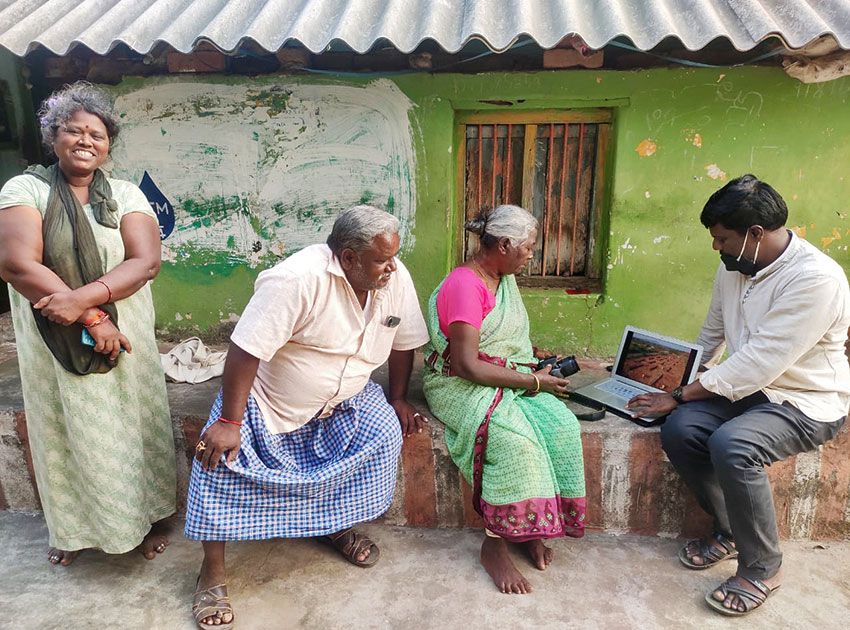
In Laudato si’, Pope Francis encourages environmental education and awareness to foster a culture of stewardship and care for the planet. Recognizing the potency of media, I designed an 8-week media intervention integrating climate-resilient measures including 1. Nursery development, 2. Greening of hillocks, 3. Silvi-pasture development, 4. Massive tree plantation, and 5. Medicinal plants cultivation. Two media campaigns targeted the workers of the Mahatma Gandhi National Rural Employment Guarantee Act (MGNREGA), a Government social programme, utilizing diverse channels such as the Eco India television series, radio, posters, communication technology, and social media to bolster climate resilience education and awareness.
Real life stories and community voices
The following community testimonies, attributing the success of the five distinct climate-resilient initiatives bolstered by the media campaigns, echo the sentiment of Pope Francis, “Climate change is a problem which can no longer be left to a future generation”.
“As a beneficiary of Nursery development, our small nursery has grown into a major sapling supplier for our district, helping us combat migration. Media campaigns taught us to integrate activities like farm ponds and check-dams.”
“As the village head benefiting from the Greening of hillocks initiative, I’m astonished by the transformation of our barren hill into lush green cover. Media campaigns played a vital role in visualizing and conveying this idea to our community.”
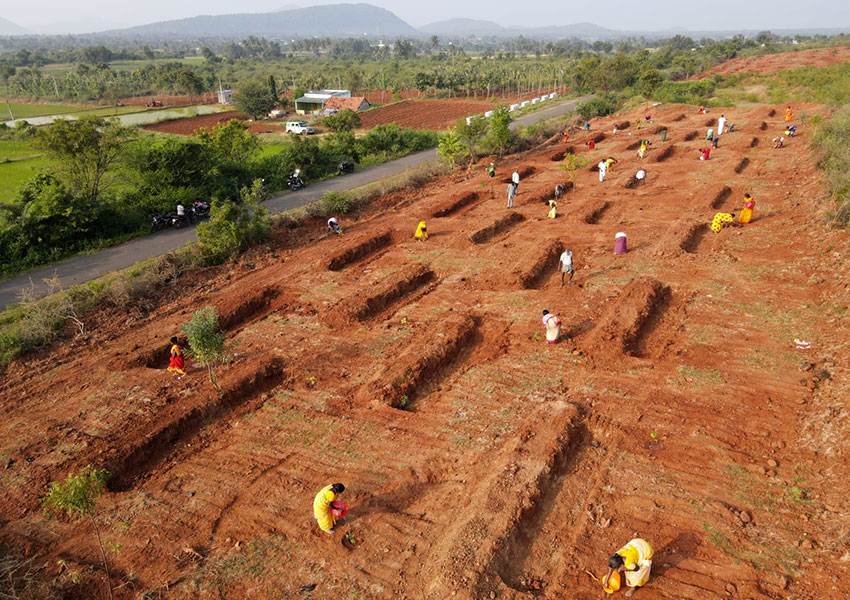
“As a beneficiary of Silvi-pasture development, the local fodder growth has been transformative for reclaiming our livelihoods. Media campaigns introduced us to indigenous fodder varieties, enabling sustainable land management.”
“As a beneficiary of Massive tree plantation, I’ve witnessed its transformative impact first-hand. Media campaigns played a crucial role, visually illustrating the future benefits of our green surroundings.”
“As a beneficiary of Medicinal plants cultivation, I was initially skeptical. Yet, witnessing the healthy growth of these herbs completely changed my perspective. Now, I plan to establish personal herbal gardens, fostering economic growth and promoting healthier lives.”
No more need for migration
In conclusion, media interventions have served as vital catalysts in advancing climate resilience and alleviating forced and livelihood migrations within rural communities of Tiruvannamalai District. Internal forced migration has been largely reduced. Through the synergy of sustainable practices and interdisciplinary collaboration, we can effectively address climate-related risks and uplift vulnerable populations. In doing so, we heed the call of the Lord of the Universe, paving the path towards sustainable development and the betterment of humanity.

Related Posts:

The General Curia of the Society of Jesus launches its brand-new Webinars’ Calendar. After being in pilot mode for the last two years, these meetings have proved to be incredibly useful, with sometimes up to 600 people taking part from all around the globe. The idea is to provide ongoing formation...

Pope Francis raised climate change to global consciousness as the defining moral issue of our time. As a result, the Church has become a global voice urging political accountability and personal responsibility for healing the planet. Building on his legacy, Pope Leo vigorously calls for urgent climate action...
A Croatian Jesuit who crossed half the world to serve the poorest communities of Bengal, Fr Ante Gabrić spent five extraordinary decades building up the Church in the Sundarbans – one school, one clinic, one family at a time. His cause for beatification is now before the Church...

The annual meeting of Eco-Jesuit delegates in South Asia, held at Inigo Bhawan in Matigara, Darjeeling, became much more than a routine gathering. Set against the fragile ecology of the Eastern Himalayas, the meeting turned into a moment of discernment on the future...

Communication delegates from the six Conferences convened at the General Curia last week to confront the defining challenges of their ministry: examining ways to better communicate the mission and vision of the Society of Jesus in an age of rapid technological transformation.

The Social Justice and Ecology Secretariat (SJES) of the Society of Jesus has released its 2025 Annual Report, “The Promotion of Justice is Fueled by Hope”. The report details regional milestones at the conference level, the results of global advocacy, and its commitment to the mission of...