“Sii tenero, sii coraggioso”: Pope Francis’ Encounters with Jesuits
Pope Francis, the first Jesuit Pope, has made it a tradition to meet with Jesuits during his Apostolic Journeys. These private, informal gatherings reflect his deep connection to his Jesuit roots and emphasise his pastoral vision for the Church as the successor of Saint Peter. In these encounters, the Pope not only encourages the Jesuits but also reinforces their mission within the Church.
A key feature of
these meetings is the candid dialogue Pope Francis fosters during
question-and-answer sessions. He attentively listens to the experiences shared
by Jesuits and integrates their insights into his broader reflections on the
Church’s role in the world. In general, the content of these discussions is
usually made public through the Jesuit journal La Civiltà Cattolica,
which publishes summaries or transcripts.
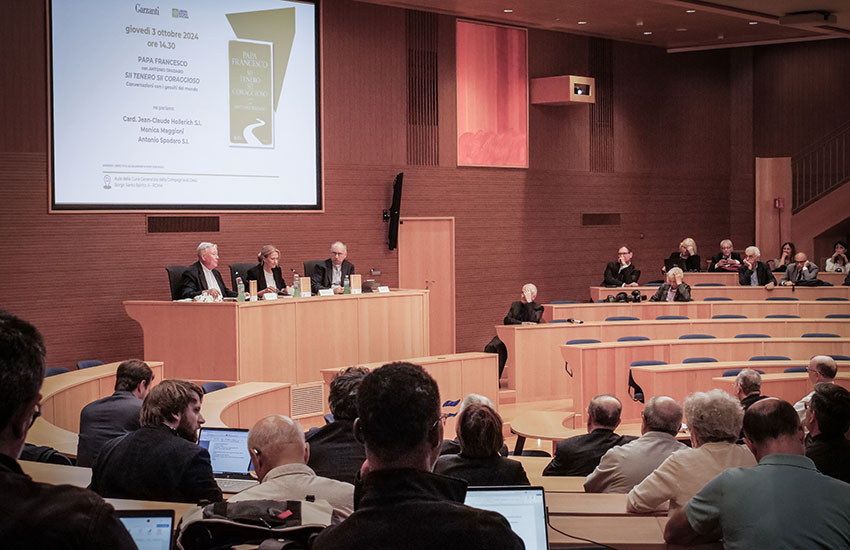
Father Antonio Spadaro, SJ, has compiled 18 of these conversations in his book titled Sii tenero, sii coraggioso (translated as “Be Tender, Be Courageous”). The book draws its title from Pope Francis’s words to Jesuits in the Democratic Republic of Congo in February 2022, where he urged them to commit wholeheartedly to their mission with both compassion and courage.
Father Spadaro, the Undersecretary of the Vatican’s Dicastery for Culture and Education, was for many years the editor of La Civiltà Cattolica. Having accompanied the Pope on numerous Apostolic Journeys, he has been a direct witness to these intimate and inspiring encounters between the Pope and Jesuits around the world.
Published by the Libreria
Editrice Vaticana (LEV) and the Garzanti, the book offers a rich tapestry of
spiritual insights and pastoral reflections. The collected conversations also
serve as a resource for the Society of Jesus, indicating issues close to the
heart of the Holy Father to guide the work of Jesuits.
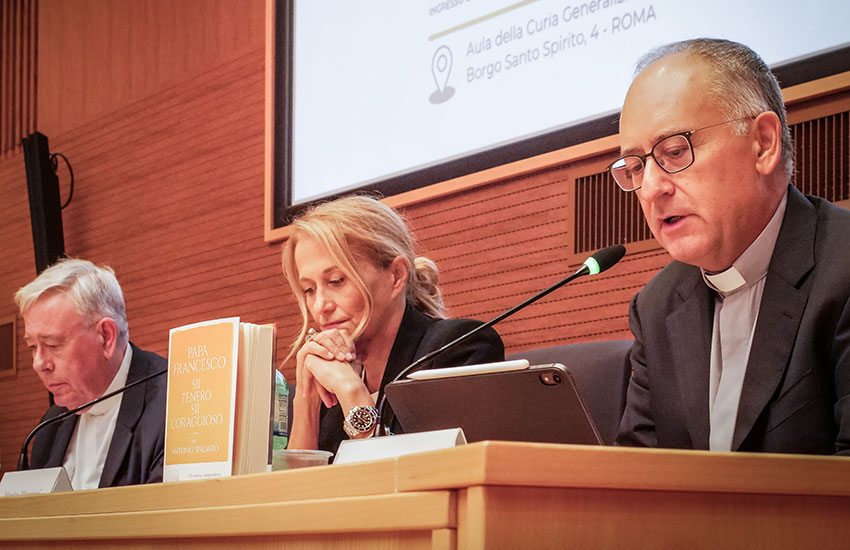
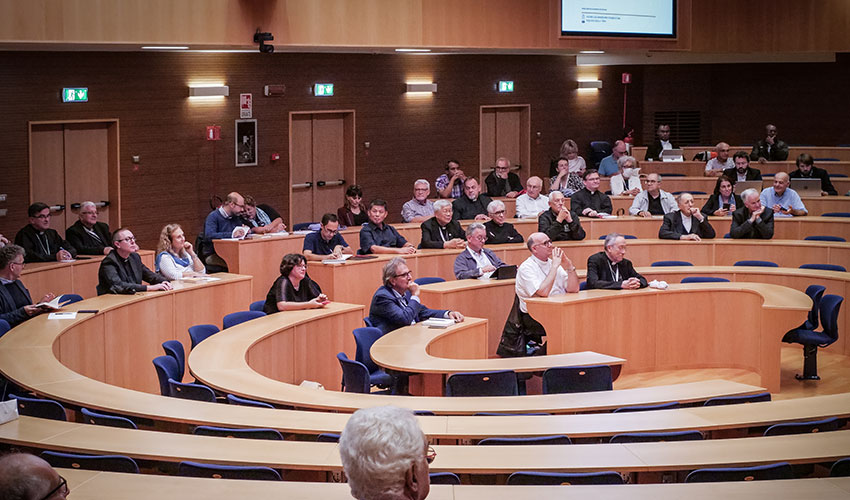
At the presentation of the book in the Aula of the General Curia in Rome on 2 October, Fr Spadaro explained that the task of recording the Pope’s conversations with Jesuits started inadvertently. He was just finishing a live broadcast for the RAI (Radiotelevisione Italiana) during the Pope’s Apostolic Visit to South Korea in 2014 when he was invited by Alberto Gasbarri, the then organizer of Papal trips, to Sogang University where the Pope was meeting with Jesuits. From then on, with the permission of the Pope, he has taken up the job of recording and transcribing these encounters.
Cardinal Jean-Claude
Hollerich, SJ, Archbishop of Luxembourg and Relator-general at the ongoing
Synod also spoke at the book presentation. He observed that “Sii tenero, sii coraggioso”
is an invitation to us to travel with Pope
Francis: a journey that takes us to many countries in almost all the continents
of the world. Reflecting on the interactions collected in the book, he said
that the Pope answers the “personal” questions of the Jesuits which are related
to how they are to concretely carry out their mission in the local context. He
notes that the Pope’s responses are never universal nor absolute, but always
open the door to dialogue, personal responsibility, and discernment in view of
the mission. The Cardinal further underlined that the central themes of the
Pope’s responses – caring for the poor, mercy, discernment, among others – are
also themes that the Holy Father wishes for a synodal Church.
Monica Maggioni, an Editorial Director at RAI and one of the speakers at the book presentation, describes feeling a sense of “privilege” as she read the book, to hear the Pope speaking in a language of his own – different from what we hear in speeches. In these interactions with Jesuits, she notes that his choice of words shows that he is always seeking contact and seeks to share with those he is talking with.
Fr Spadaro considers
the Pope’s meetings with Jesuits to be some sort of new literary genre of “public
words spoken in private” – conversations held in private but with a public
impact – as they also offer a peek into the “backstage” of Pope Francis’
pontificate. For him, these interactions offer the Pope the opportunity to
speak in a language familiar to Jesuits in particular, but also in a way that
is clear, comprehensible, and credible.
Related Posts:
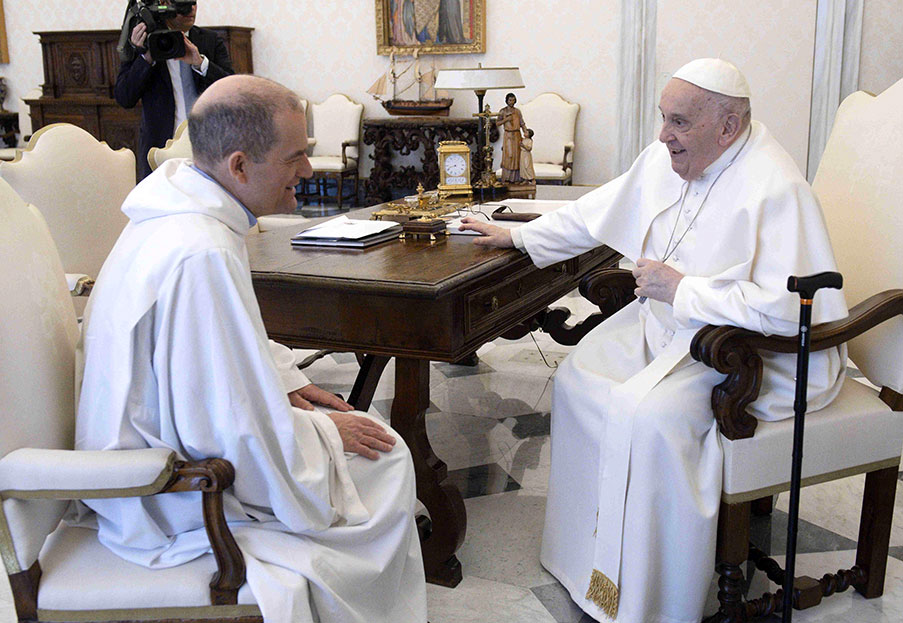
“On 15 January 2023, after the Angelus – I was travelling to Rome and we watched from the train – Pope Francis announced officially the ecumenical prayer vigil for 30 September of that year. He said that the path to Christian unity and the Church’s synodal conversion are linked...”
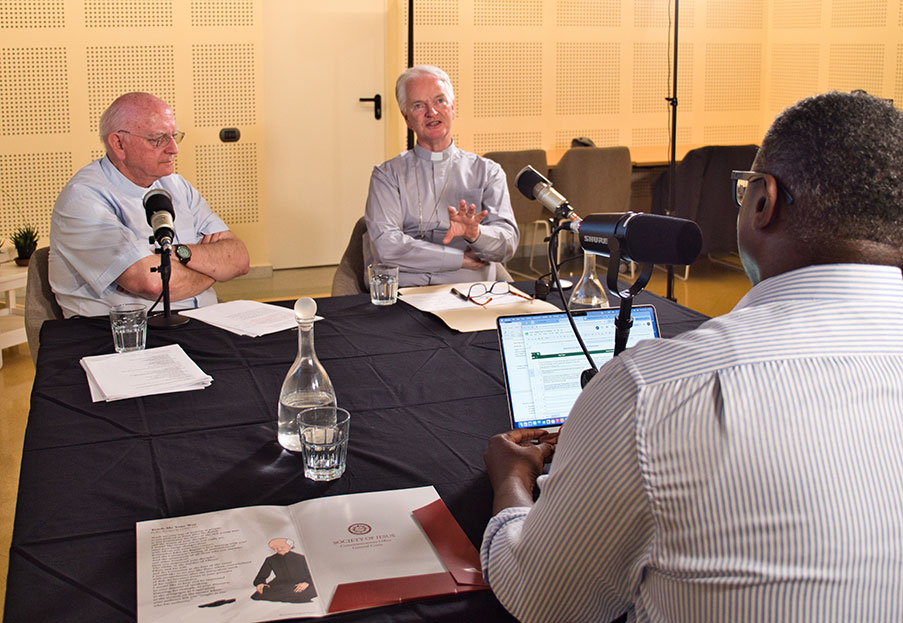
The General Curia of the Society of Jesus launches its brand-new Webinars’ Calendar. After being in pilot mode for the last two years, these meetings have proved to be incredibly useful, with sometimes up to 600 people taking part from all around the globe. The idea is to provide ongoing formation...
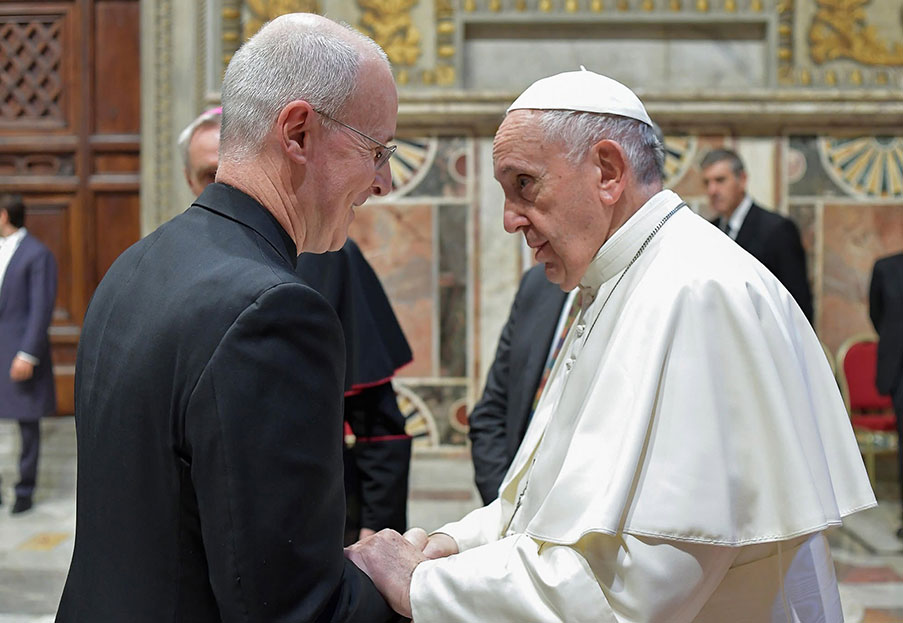
“I did not know Pope Francis as well as many others did. Certainly not as well as some mutual friends who had known him since his days as the Archbishop of Buenos Aires. Nor did I know him as well as the cardinals, bishops, priests and religious men and women who worked with him...”
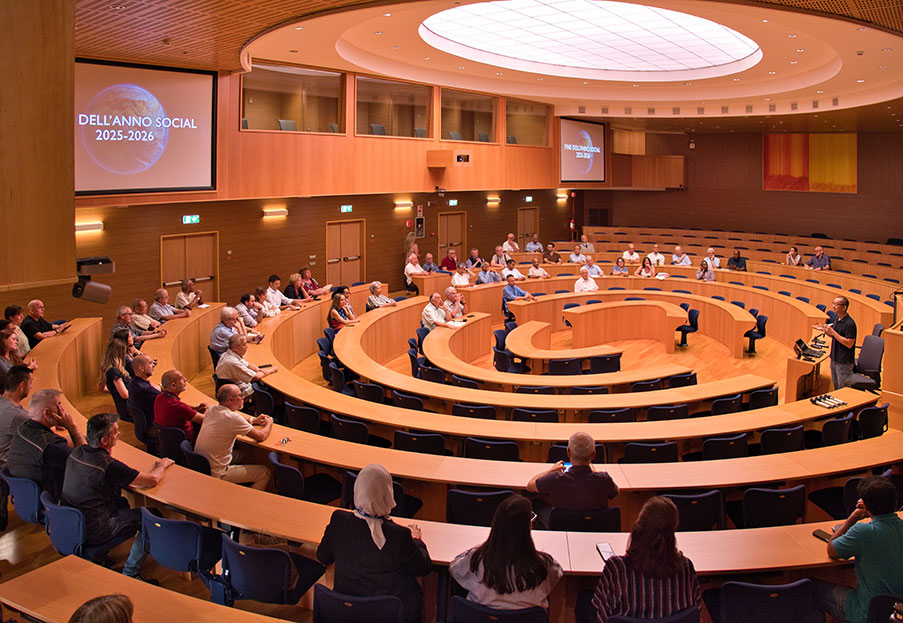
The General Curia concluded its social year with a gathering in the Aula on 19 June that brought together the Jesuit members of the Curia community and the lay collaborators that jointly sustain its administrative operations...

The Enlarged Council brought together the Secretaries of the Apostolic Sectors, General Counsellors, General Treasurer, Presidents of Conferences, and other officials at the Curia to examine a central question: How to increase and deepen collaboration across apostolic...
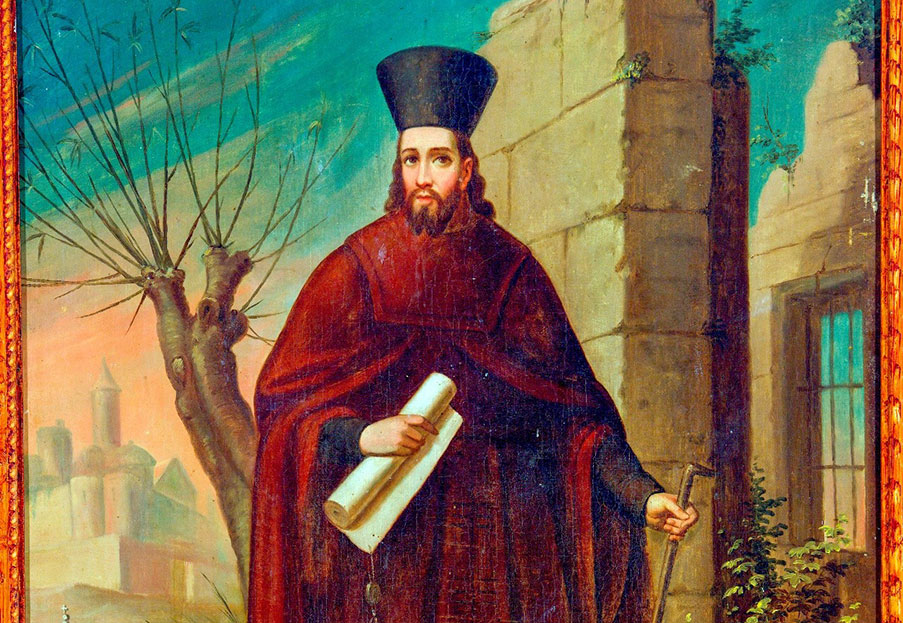
On 5 June 1546, Paul III signed the brief “Exponi nobis”, which addressed how men who did not belong to the original group of highly qualified priests of the Society could nonetheless belong to it and serve its mission. The brief did so by establishing the grade of coadjutor...