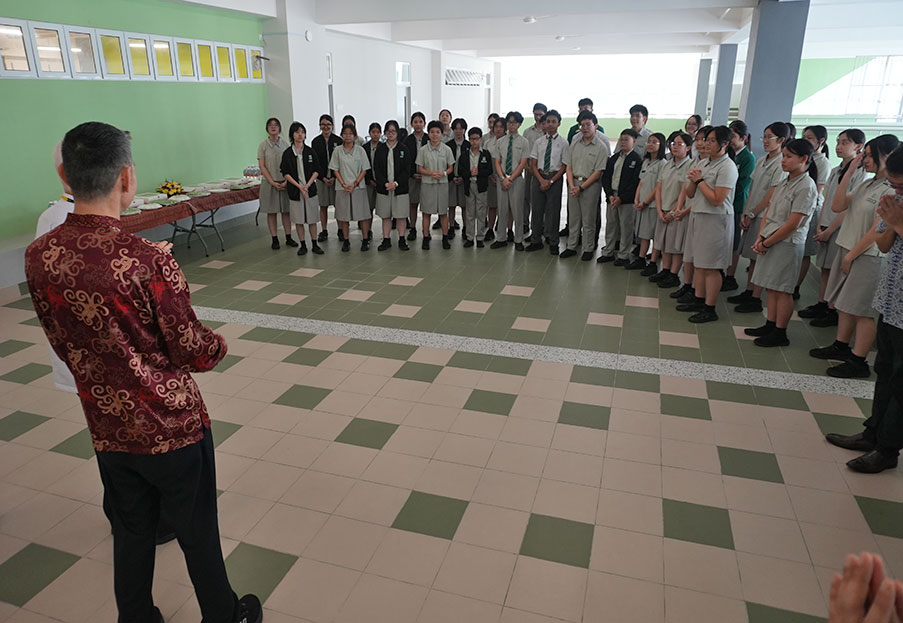
IAJU Assembly 2025: Jesuit Universities and the call for Educational Transformation
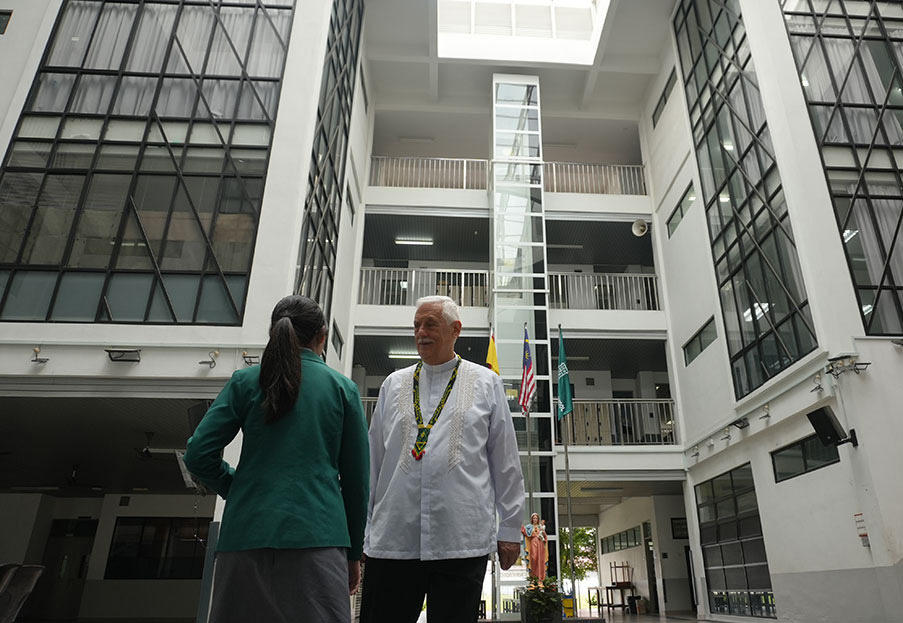
Institutional leaders from Jesuit universities all over the globe are meeting in Bogota, Colombia, in the 2025 Assembly of the International Association of Jesuit Universities (IAJU) to reflect on their mission in an increasingly fragmented and secular world. The Assembly began with a call from Father General Arturo Sosa, who urged universities to become “witnesses of hope, creative presences, and spaces for dialogue”.
Responding to this rally call framed the inaugural plenary session of the Assembly. Fr Luis Fernando Múnera, the Rector of the host Pontificia Universidad Javeriana, and Fr Joseph Christie, Secretary of Fr General for Higher Education introduced two strategic objectives: to develop concrete plans for institutional transformation and to adopt a new five-year strategic plan.
Speakers billed to speak on the panel highlighted how Jesuit institutions can embody hope and creativity in our world. Each speaker offered a regional perspective on this global call for transformation in education. Dr Tania Tetlow (Fordham University, USA) highlighted the growing crisis facing universities in the United States and stressed the importance of forming students in hope and courage, focusing on building a loving community. Fr Roberto Yap (Ateneo de Manila University, Philippines) advocated for a reinvented educational model that fosters ethical reasoning, interdisciplinary growth, and integral formation.
The global resonance on the subject of education was evident, as participants from Kenya, India, Japan, France, and other places echoed the themes of reconciliation, ecological justice, spiritual identity, interdisciplinary learning, among others, as the path ahead for educational formation.
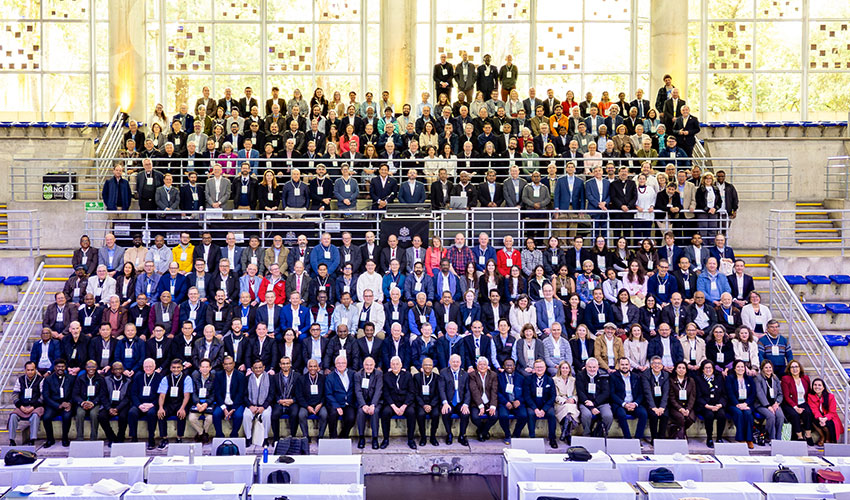
Later sessions tackled the question of navigating secularism while maintaining the integrity of our mission. Mgr Carlo Maria Polvani, Secretary of the Dicastery for Education and Culture, delivered a keynote that reframed secularism as a sociocultural phenomenon rather than a hostile ideology. He highlighted the Church’s vision of rejecting extremism on both sides of secularism and proselytism and urged Jesuit institutions to promote the dialogue between faith and reason while modelling a “culture of encounter”.
The sessions also surfaced some best practices from Jesuit institutions worldwide. At Sanata Dharma University in Indonesia, Fr Albertus Bagus Laksana described how his university engages with secularism in a predominantly Muslim context. The majority Muslim student body engages Ignatian spirituality through inclusive retreats and shared moral commitments, embracing hybrid religious identities as tools for reconciliation. Dr Katia Passerini (Gonzaga University, USA) emphasized that although many students today do not identify with a religion, they remain deeply concerned about purpose, belonging, and meaning. She recommended integrating spiritual seeking into the curriculum, especially through dialogue and the integration of faith and reason in disciplines beyond theology. In Antonio Ruiz de Montoya University (Peru), Father Rafael Fernández emphasized the importance of witnessing faith through action. With the declining Catholic affiliation in Latin America, he urged institutions to deepen their mission using Ignatian pedagogy.
In all, there was a general insistence that Catholic identity must coexist authentically with diversity, as inclusion enriches the Jesuit mission in universities. The call is to lead with creativity in order to build bridges across traditions, while grounding education in both spiritual and intellectual depth.



Related Posts:
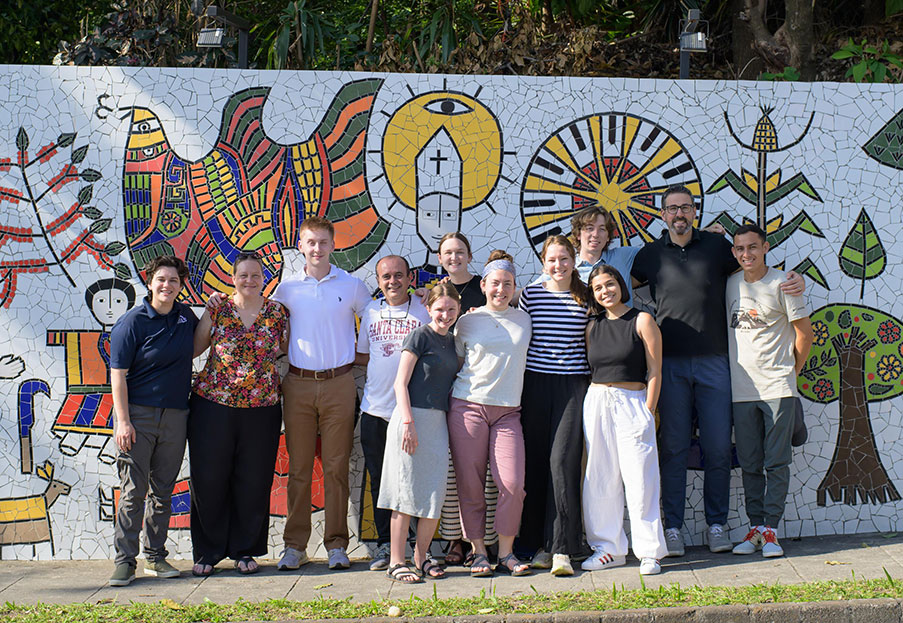
Launched at the 2018 IAJU Assembly, Magis Exchange offers students the chance to study across borders, cultures and academic contexts. It is more than an academic mobility program: it embodies a shared commitment to forming young people ready to engage thoughtfully...

Pope Francis raised climate change to global consciousness as the defining moral issue of our time. As a result, the Church has become a global voice urging political accountability and personal responsibility for healing the planet. Building on his legacy, Pope Leo vigorously calls for urgent climate action...

In the sixteenth episode of Ignite the Way video series, Fr Stephen Sundborg, SJ, former president and current chancellor of Seattle University, discusses the application of “discernment in common” within boards of institutions such as universities and schools. He emphasizes that discernment...

What began as a simple encounter between urban students and forgotten hamlets has evolved into a profound Jesuit mission of accompaniment. For eight years, St. Xavier’s University Kolkata has answered the Society of Jesus’ call to “walk with the excluded” through its transformative...

Sri Lanka is known for its stunning, diverse landscapes and ancient sites. At the same time, its three decades of horrific civil war, the devastating 2004 tsunami, and the more recent political unrest, along with the strain of an economic crisis which deepens inequalities, also remain impressed...

On 30-31 March 2026, the Board of the International Association of Jesuit Universities (IAJU) met at the General Curia in Rome to review the ongoing implementation of the Strategic Agenda (2024-2028) and the priorities defined at the Assembly in Bogotá in July 2025...