Rediscovering the Constitutions: Voices from the CIS Conference 2025
The CIS Conference on “The Constitutions in the Life of the Society” was a great success, with a wide participation and interest. Held in Rome from 23 to 25 June 2025, the Conference provided an ideal space to deepen the value of the Constitutions as the “horizon of the Exercises” and a tool for the renewed mission of the Society. The participants – formators, Jesuits in formation, collaborators and apostolic partners – particularly appreciated the depth of the content, the atmosphere of open discussion and the quality of the interventions, which were able to stimulate reflections on how the Constitutions continue to speak and inspire life today.
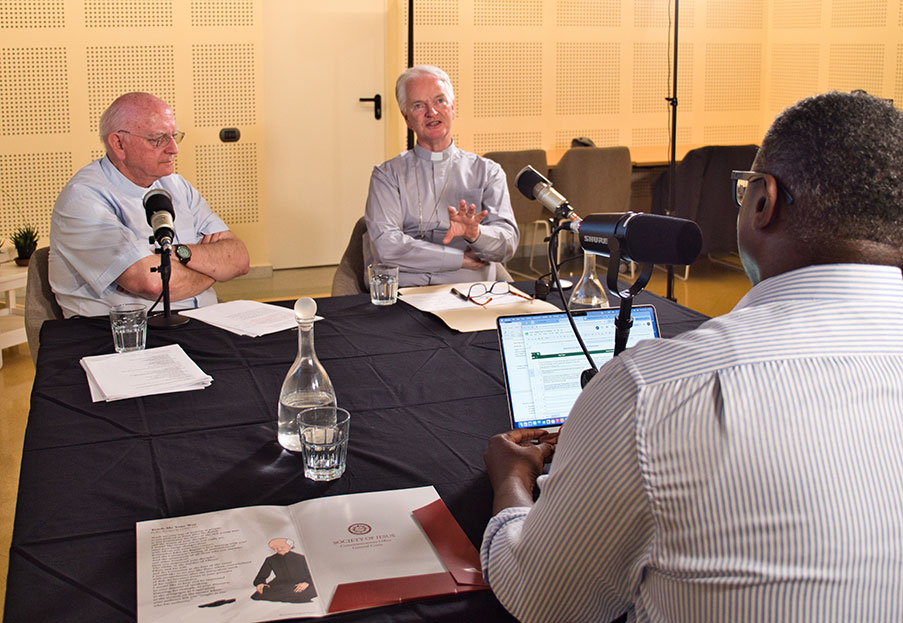
To give voice also to the protagonists of the event, we have interviewed three participants who lived the conference experience in depth. The first participant interviewed is Miki Suzuki Hayashi, a PhD student from Japan.
What do you bring with you from the Conference?
I will be doing the Spiritual Exercises for a month in July. This was a good preparation for that. I am translating many of Fr Arrupe’s books from Japanese to English, and I am also researching his time in Japan. I met people who got interested to my works and encouraged me in my work. I understand that my translation and research in Japan are big and important work, but unfortunately, there are few people who understand their value.
What or which talk struck you, enriched you, surprised you most and why?
Fr James Grummer’s talk on the three Superior Generals was interesting. Even within the role of Superior General, which is defined in Chapter 9 of the Constitutions, there is each individual’s personality. From Chapters 1 to 9 of the Constitutions, the growth of Jesuits seems all set, like a train running on rails, but each Superior General has his own personality based on his own thoughts and experiences. In the same way, Jesuits are all formed in a similar way, but still, I was able to understand that each individual fulfils their own mission and becomes one body as a whole.
What inspiration did you draw from the CIS Conference?
I decided to read the Constitutions again. When Fr Arrupe wrote the books on the annotations on the Spiritual Exercises in Japanese, he quoted the Constitutions many times. Perhaps in his time, or before the Second Vatican Council, the Constitutions were often quoted, just as the Spiritual Exercises was quoted. I wondered if the current Jesuits have the habit of rereading it properly. I think it should be suggested that they reread it in its entirety during their annual one-week Spiritual Exercises. I am amazed that a group management manual written about 500 years ago is still valid.
What did the CIS Conference bring to the Society?
It makes us aware of things that we don’t think about in our daily activities. For example, working with women. It’s a shame that the time for their presentation was shorter than the others. I think it should have been longer. I hope that the audience will take what they heard from them back to their own countries and share it with others. I don’t want it to end with just listening.
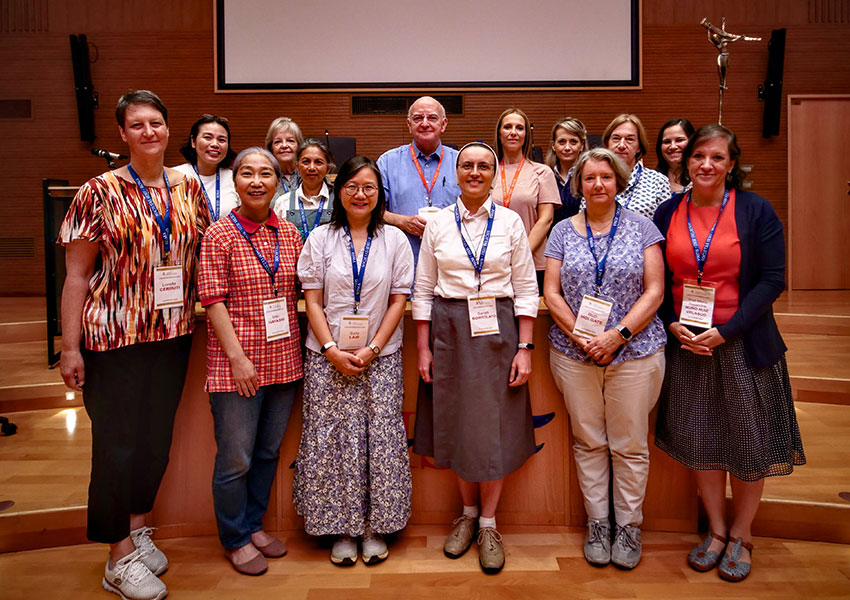
On the basis of the same questions Fr Nathan Krawetzke SJ, a scholastic entering his final year of theological studies, who is a part of the Midwest Province USA (UMI), shared the following:
“Speaking as a Jesuit, so much of our life revolves around talking about what we are doing right now or in the future: what we will open, what has to close, the Apostolic Preferences, etc. These are all great and necessary things, but often when we talk of them in community, we do so in a way that seems disconnected from the Constitutions. Perhaps as we begin to discuss synodality and communal discernment more and more, it would be beneficial for all of us to consider those in light of what the Constitutions teach us. As such, I found this to be a wonderful conference that recharged my desire to spend more time with the text, in order to better understand and draw spiritual profit from it, hopefully leading me to greater devotion.
One of the things that most surprised me was the brief arguments over the text. What exactly does the text mean in certain places? I thought that having all of the experts in the room would dispel any confusion, but fortunately, it brought out a much richer experience of the text. Having professors who have devoted their lives to understanding our Institute debate and challenge one another has brought out greater insights. More importantly, though, it showed me perhaps what the early Society was like when they too had to try and understand, teach, and implement the Constitutions.
One final note: I was quite taken by a point made in the very first talk by Fr José Garcia de Castro on ‘The relationship between the Exercises and the Constitutions’. He mentioned that the Constitutions are a way of corporately instantiating the Spiritual Exercises. So, what God has done with me in the Exercises now takes on a corporate form or body when lived according to the Constitutions, and then this gets integrated into how I perceive the Exercises, which then impacts again how I understand the Constitutions. Thus, the two interpenetrate one another, helping us to understand not only how God is animating me to be on mission, but how he animates us as a corporate body to follow Christ under his standard. Incorporating a point made by Fr Staab in his talk ‘The Constitutions – a pedagogy of desire’ , this means that we should not only consider the desires that God gives oneself in the Exercises, but that these desires received must also be placed at the service of this collective body, that we might together channel them as God’s instrument. For then truly oneself and the whole will be one in embodying Christ’s desires and walking with Him in His mission in the world.”
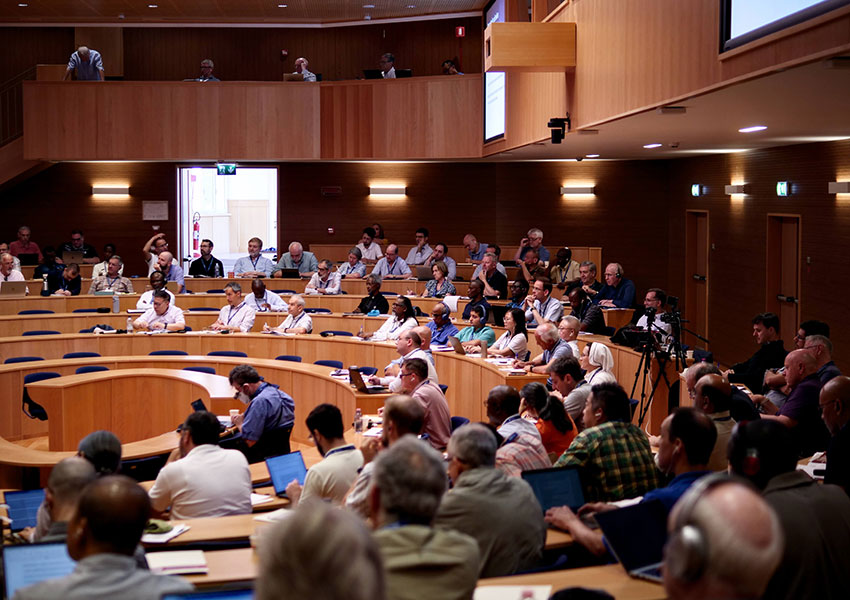
The third testimony is from Sister Sarah Bortolato of the Congregation of the Sisters of Santa Marcellina:
“The CIS Conference has evolved into a much-awaited and desired event in which one breathes an atmosphere of Ignatian familiarity with the world as its horizon. Personally, I acknowledge with gratitude that reading the Constitutions and having the time to discuss them, with depth and competence, has been precious in rooting me further in the Ignatian sources for the service of the Exercises and spiritual accompaniment that I live daily.
I appreciated the plurality of the interventions that stood out in the quality of their academic rigour and spiritual depth. The first ones were essential because they opened new perspectives of understanding the Constitutions and helped to create a common cognitive ground among participants from different countries and backgrounds. The later ones nourished and inspired the heart, consolidating the sense of belonging to the Apostolic Body and strengthening the desire to ‘be sent by Christ – each in his own reality – to serve the greater glory of God’. Among the latter, I was profoundly touched by Fr Grummer’s talk – in offering us a summary of his life experience he was able to speak to the hearts of those who are not Jesuits. He made us non-Jesuits want to live that same experience in the ways we engage, perhaps even through the exercise of Spiritual Conversations.
The genius of Ignatius continues to inspire new and inclusive points of view. The greatest and most surprising gift I received during these days was to discover that the Constitutions allow the dynamic of the Exercises to be applied to the entire Apostolic Body, that is, they allow the Exercises to become not just a punctual experience, but a true way of proceeding and living, both personally and as an Apostolic Body. The challenge is to figure out how to incarnate all this, but the perception is clear: truly the Constitutions are an inspiration for the whole Ignatian family!”
The CIS Conference offered the Society a renewed impulse towards a prayerful and shared reading of the Constitutions, as a way to understand not only where God is calling each one, but also how together, as an Apostolic Body, we can continue to respond faithfully to His call in today’s world.
Related Posts:
The General Curia of the Society of Jesus launches its brand-new Webinars’ Calendar. After being in pilot mode for the last two years, these meetings have proved to be incredibly useful, with sometimes up to 600 people taking part from all around the globe. The idea is to provide ongoing formation...
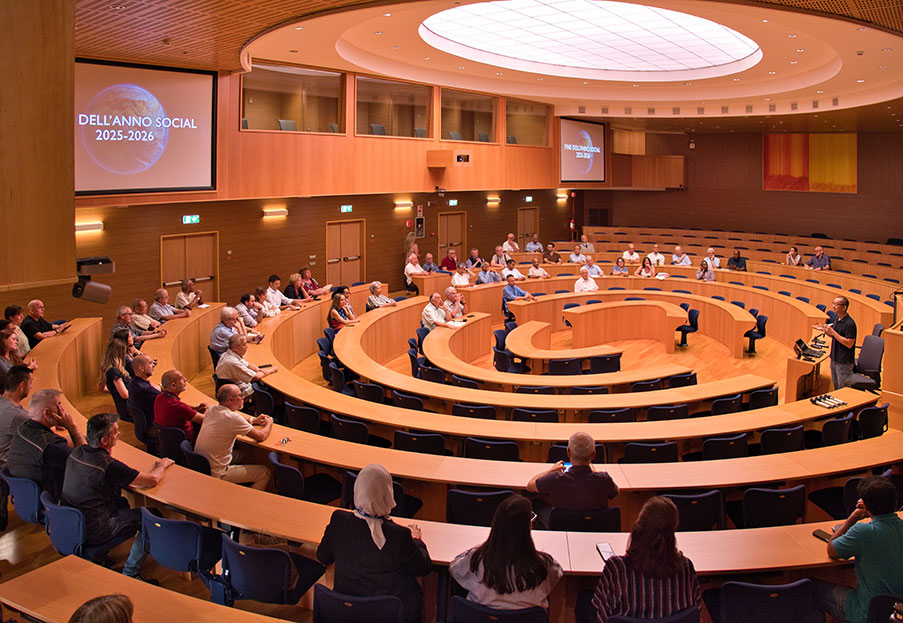
The General Curia concluded its social year with a gathering in the Aula on 19 June that brought together the Jesuit members of the Curia community and the lay collaborators that jointly sustain its administrative operations...

The Enlarged Council brought together the Secretaries of the Apostolic Sectors, General Counsellors, General Treasurer, Presidents of Conferences, and other officials at the Curia to examine a central question: How to increase and deepen collaboration across apostolic...
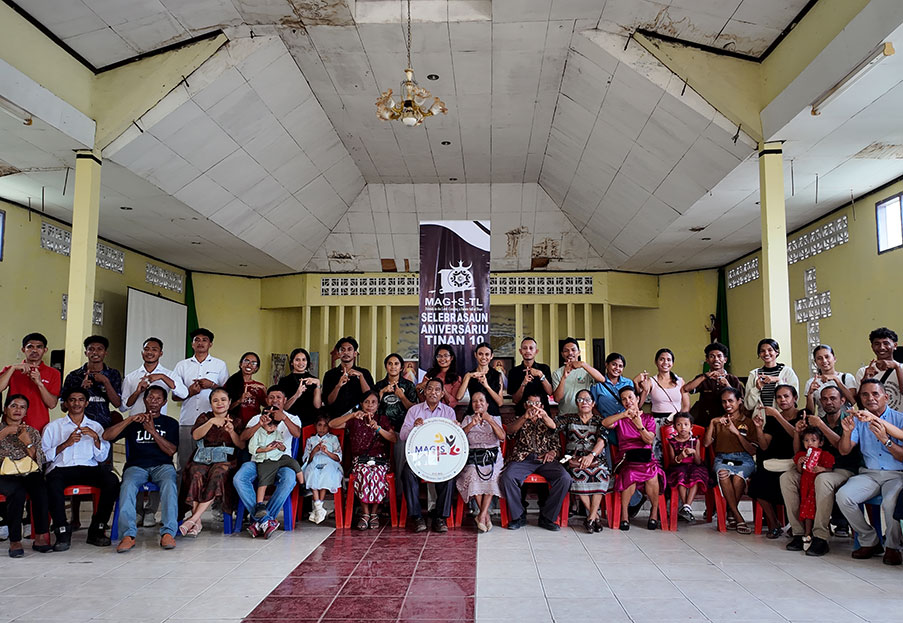
For ten years, MAG+S Timor-Leste has been quietly accompanying young people. In our small community shaped by friendship, prayer, and service, many young people have encountered the richness of Ignatian spirituality and discovered a deeper relationship with God...
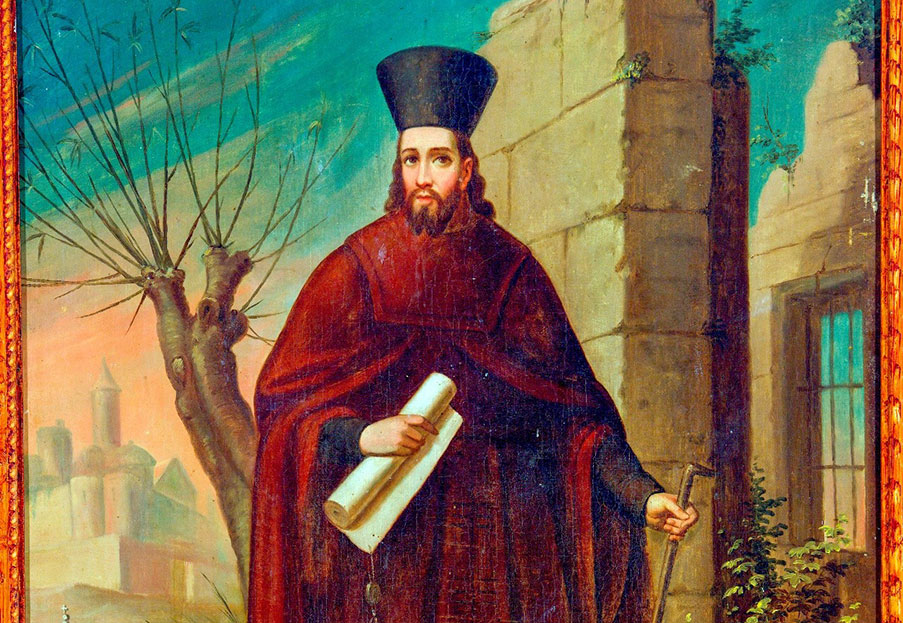
On 5 June 1546, Paul III signed the brief “Exponi nobis”, which addressed how men who did not belong to the original group of highly qualified priests of the Society could nonetheless belong to it and serve its mission. The brief did so by establishing the grade of coadjutor...

Four hundred and eighty-four years ago, the Apostle of Asia stepped ashore in Portuguese India – marking both the end of a long formation and the beginning of a ministry that would span a continent. The arrival of St Francis Xavier (1506–1552) in Goa, India, on 6 May 1542 was at once a...