6 May 1542: Francis Xavier arrives in Goa, India
By Festo Mkenda, SJ | Academic Director of the Archivum Romanum Societatis Iesu (ARSI)
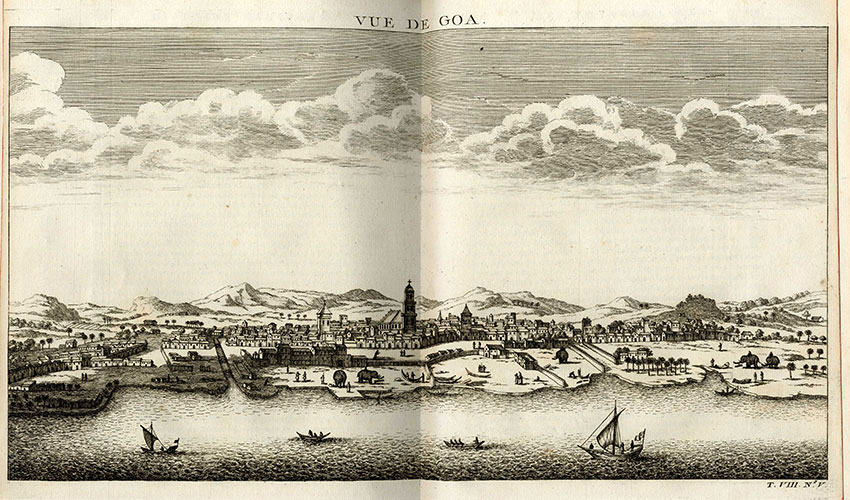
Four hundred and eighty-four years ago, the Apostle of Asia stepped ashore in Portuguese India – marking both the end of a long formation and the beginning of a ministry that would span a continent.
The arrival of St Francis Xavier (1506–1552) in Goa, India, on 6 May 1542 was at once a culmination and a beginning. In reaching Goa, Xavier brought to a close the first chapter of a spiritual journey that had started with his fateful encounter with St Ignatius of Loyola (1491–1556) at the University of Paris. That encounter had drawn him into the spiritual vision of Ignatius, and together with a small band of companions the two founded the Society of Jesus, embarking on Christian missions that aimed to reach the furthest ends of the world – “even to the Indies”, as they then expressed it. Xavier’s sea voyage from Lisbon, threading round the continent of Africa before arriving in Goa, was itself part of his initial formation. Lasting over a year, the journey compelled him to detach completely from his familiar world and prepare to embrace one that was different in almost every way.
© Jesuit.Media, Communications Office of the General Curia, 2026
“The harvest was immense, as he quickly noted, and the work had to start without delay.”
For Xavier, reaching Goa also marked the beginning of many things. He had barely enough time to acquaint himself with the place, its culture and its people before throwing himself into the work. Yet within just five months he had established himself firmly in Goa and built a network of relationships that reached far beyond the city. The urgency he felt to preach salvation and bring baptism to all who would hear him had already rendered him an impatient itinerant – not entirely unlike St Paul in the earliest years of Christianity.
Goa was a deserving starting point for Xavier, and in many ways the cradle of his new apostolic life. Then the capital of Portuguese India, the city had become the nucleus of Catholic activity in Asia – so much so that it was widely known as the Rome of the East. From here, the East’s new apostle launched a ministry that embraced an entire continent. He built connections that carried him as far as Japan and Ming China, always leaving behind a trail of new believers along the way.

© Jesuit.Media, Communications Office of the General Curia, 2026
But Goa was also Xavier’s grave – his honoured resting place after a gallant ministry in the East. Having died on 3 December 1552 on the island of Shangchuan off the coast of mainland China, his remains were eventually returned to Goa, where they can still be venerated today in the Basilica of Bom Jesus. Even in death, Xavier became so completely identified with Goa and its inhabitants that he grew into a symbol of their unity across cultural and religious differences – a legacy as enduring as the city itself.
Related Posts:
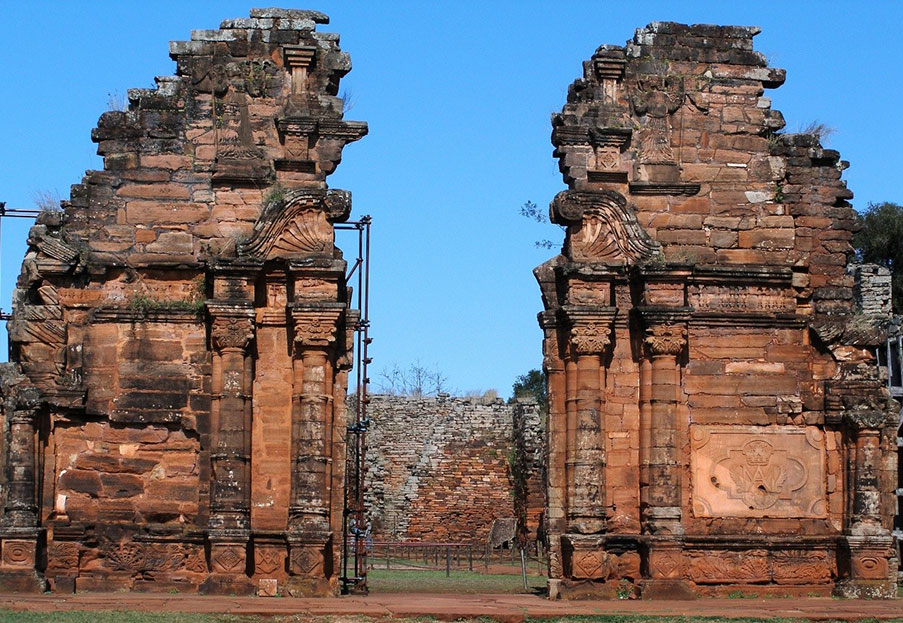
The Paraquarensis Province was separated from that of Peru in 1604. It comprised the territories of the present-day states of Paraguay, Argentina, Uruguay, part of Bolivia, and, temporarily, Chile. One of the most notable ministries in this Province was the Guaraní reductions...
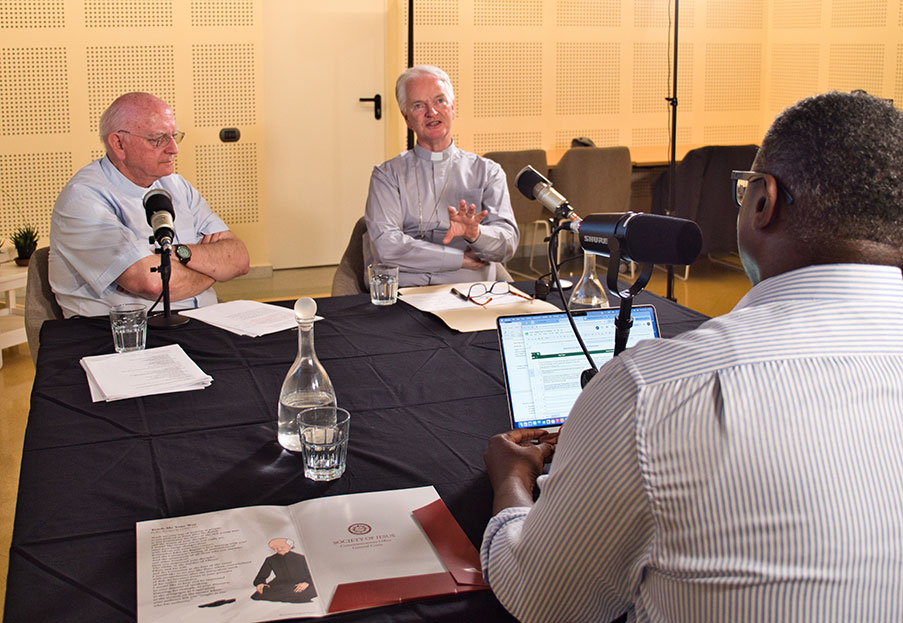
The General Curia of the Society of Jesus launches its brand-new Webinars’ Calendar. After being in pilot mode for the last two years, these meetings have proved to be incredibly useful, with sometimes up to 600 people taking part from all around the globe. The idea is to provide ongoing formation...
The General Curia concluded its social year with a gathering in the Aula on 19 June that brought together the Jesuit members of the Curia community and the lay collaborators that jointly sustain its administrative operations...
On 21 June 1629, the sky above Beijing darkened for a few moments. To astronomers, it was a partial solar eclipse. To the Chinese imperial court, however, the phenomenon had a much deeper significance. For centuries in China, eclipses had been interpreted as messages from Heaven...

The Enlarged Council brought together the Secretaries of the Apostolic Sectors, General Counsellors, General Treasurer, Presidents of Conferences, and other officials at the Curia to examine a central question: How to increase and deepen collaboration across apostolic...
On 5 June 1546, Paul III signed the brief “Exponi nobis”, which addressed how men who did not belong to the original group of highly qualified priests of the Society could nonetheless belong to it and serve its mission. The brief did so by establishing the grade of coadjutor...