Human faces in the dark homeless night
By Innocent G. Kalulu, SJ | Southern Africa
Province, JRS South Africa
[From “Jesuits 2025 - The Society of Jesus in the world”]
A perceptive human and compassionate look at the reality of homeless migrants in Johannesburg. And the care JRS offers them, particularly to the sick.
A youthful Sudanese couple arrives in Johannesburg, to be greeted with homelessness. It is getting late, the first of many chilly nights on the pavements, the nights that may gradually become a way of life. What safety does one get on the street corners? Foreseeable attacks and the nothing they had is robbed from them. The mother of two kids gets stabbed in the abdomen; she needs emergency care for worsening internal bleeding. The husband must find food for the two little faces, the ones inheriting homelessness, starvation and confusion.
Observe the masses of passers-by: individuals, institutions, the international bodies; will this woman find care? Does anybody care anymore about the experiences of migrants and refugees? Is anyone really feeling with them?
“Johannesburg used to be a clean city, foreigners make our streets dirty, they urinate anywhere”, says an elderly woman, wearing neatly-ironed church attire.
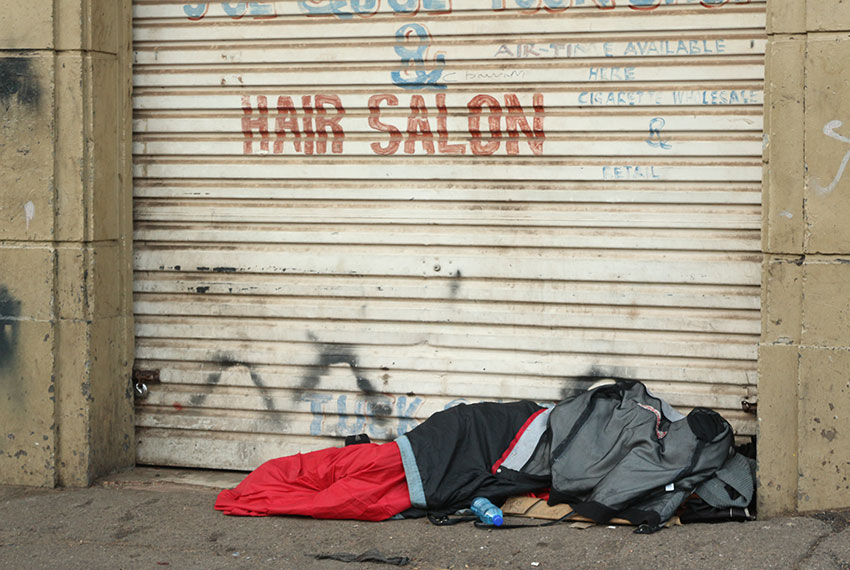
Such are the sobering encounters of JRS South Africa and, surely, of others who dare to care, to bear the load. The health project has databases of sick asylum seekers and refugees needing primary health care. Chronic illnesses and cancers advancing, day by day, into terminal illness for lack of access to attention. Yes, attention: hospitality is too strong an ideal, attention is expensive enough. Behold the cost of attention on earth, not the cost of care or accompaniment; not the cost of dignity or recognition; not the cost of service; bare fragments of attention.
“Brother, look at me; my tummy keeps swelling, they will not help me. I don’t have money,” the abdomen bulges out as she lifts her hand, “brother, just tell me I’m dying”, says the human face of a Congolese woman, shedding tears.
Lifting one’s eyes to the eyes of the other human face in the forlorn flat, a Rwandan woman, totally blind from diabetes, faces eviction for lack of rent ‒ the kind of rent the privileged spend on ice-cream. Have you ever paid attention to blind eyes when they shed tears? What do they not see that makes their tears overflow? Have you any tears to shed with them? The inner vision of blind eyes sheds tears, the inner hunger of a stabbed abdomen spills blood, pleading for peace on earth.
The refugees and asylum seekers know it well. Beyond the rhetoric and theorized roundtables, the world has abandoned them. They are on their own. They must survive, whatever they can do, sometimes simply ‘whatever’. They were not born like that, hopeless, captive, exiled; “I am old, my life is damaged; if I die, I die like a chicken”. Someone needs to help them out of their situations, to listen to their stories with dedicated attention.
Their waiting often exceeds the limits of hopeful patience, a deafening insulting silence seeping from locked doors. The loud muteness: “beware of dogs”, “trespassers shall be prosecuted”, “beware of guns”, “protected area”, “warning! barbed wire”, and “danger! electric fence”. The human face, universal fraternity, obscured by concrete and sensory barriers, noxious indifference.
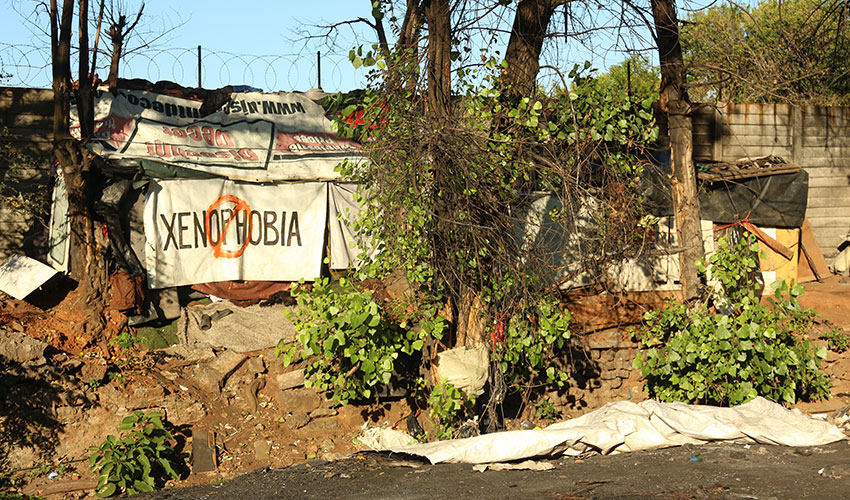
Yet, little candles, somewhat dim and not so loved, flicker still, jolting the dark homeless night. JRS, other organizations, churches and individuals pull together against weights of internal and external frustration. They need efforts multiplied, a renewed recognition of human faces; faces so remote from what would have been home, but their odysseys had to be undertaken. So remote, so late in their night, where is our compassion to feed them?
There is joy in the human face affirmed, “Oh, you people and what your organization is doing; God bless you, I am so grateful”, says an elderly Ethiopian during a home-visit, having undergone an orthopaedic procedure.
“I see JRS on this car; I just want to say ‘thank you’, this is the organization that sent me to school”, says a gentleman by the car park. Such words he could not repress, but let them overflow, a man of peace. “We are all one people, I believe we are all one people”, says the Nigerian human face, bedridden but so thankful, and so wise.
“My brother, he has abandoned me, but I still love him”, the message of a woman with advanced disease. “No caregiver”, the JRS database records, since people scarcely pay attention in a busy, sightless world. Evicted several times, nobody wants her for a tenant; she may die, her remains will be an inconvenience. There the human face still languishes in the dark, homeless night.

Related Posts:
École Fondamentale Saint Louis de Gonzague was built to give every child space to be included, to live and learn alongside others, and to recognize their dignity as human beings. When the Jesuits founded the school in September 2004, in a region greatly affected by...
A series of powerful earthquakes have struck Venezuela on 24 June, causing widespread destruction across affected communities and leaving thousands of people in urgent need of assistance...
Service Yezu Mwiza (SYM) is a Christian, socio-medical organization dedicated to fighting HIV/AIDS, tuberculosis, and malaria, while promoting holistic healthcare and social justice. Founded in 2008, it operates as a prominent reference centre under the care of the Jesuits in Burundi...

World Refugee Day is celebrated every year on 20 June. This international day was designated by the United Nations to honour refugees around the globe, shine a light on their plight, and work together to find long-term solutions to displacement.
For eight decades, the Hogar Virgen de los Dolores (HVD) has served Venezuela’s most vulnerable children, building a legacy rooted in the Jesuit commitment to education and social justice. What began as an apostolic initiative has now evolved into a model of education...
Rwanda’s youthful population holds great potential, yet nearly one in four young people are not in employment, education, or training, according to the 2025 Labour Force Survey. In response to this situation, the Jesuit Urumuri Centre (JUC), a social initiative of the Jesuit Rwanda-Burundi Province...