African Jesuits in Science hold Symposium on AI Innovation and Ecology
By Didier Cimalamungo, SJ, & Anastasia Makunu
In a compelling convergence of faith, science, and ethical innovation, the Jesuit Conference of Africa and Madagascar (JCAM) convened the African Jesuits in Science (AJIS) Symposium 2025 under the theme “Smart Planet, Just Future: AI and Ecology in the Fight for Sustainability”. Held from 4-8 August 2025, at AFRICAMA, the Jesuit regional hub in Nairobi, this five-day symposium marked a landmark moment in the African Church’s commitment to scientific leadership for ecological justice.
Bringing together Jesuit scientists, scholars, and technology experts from across Africa and beyond, the symposium explored how artificial intelligence (AI) and ecological innovation can serve the common good, especially in a region disproportionately affected by climate change, food insecurity, and under-resourced health systems. A JCAM initiative, the symposium exemplifies the Society of Jesus’ commitment to education, justice, and scientific inquiry in the 21st century. AJIS supports African Jesuit scientists in contributing to global knowledge while responding to local needs, especially where communities face ecological degradation, public health crises, and technological inequity.
The symposium showcased 12 groundbreaking research projects, each blending technical innovation with real-world application. Jesuits involved in STEM (Science, Technology, Engineering, Mathematics) shared cutting-edge research that reflected the symposium’s interdisciplinary spirit and social relevance. Research spanned across four major domains: Quantum physics, biogas, AI ethics and asteroid defense. This vibrant intellectual landscape offered technical insights about pressing ethical questions regarding the future we are shaping, especially for communities in the Global South.
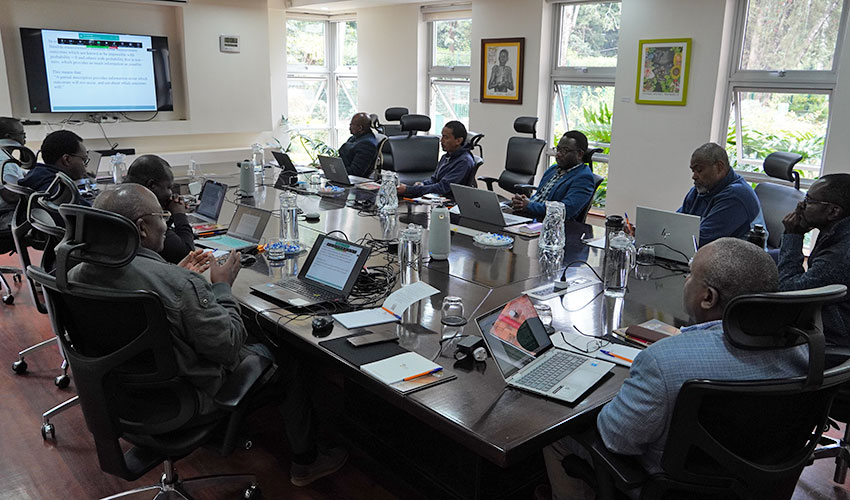
The research sessions began with explorations of quantum and space evolution theories. Jerome Paschal Manyahi (Mwenge Catholic University, Tanzania) argued for a synthesis of quantum probability and biological evolution through the lens of the anthropic principle. He contended that the emergence and sustainability of life can be grounded in the probabilistic logic of quantum mechanics, a fusion of physics, philosophy, and theology. In a different cosmic direction, Williams Dhelonga examined the feasibility of interstellar travel in response to Earth’s ecological crisis. His overview addressed propulsion methods, ethical implications, and the role of AI in expanding humanity’s reach while ensuring survival. Meanwhile, Jean-Baptiste Kikwaya’s presentation on asteroid defense revisited the catastrophic Chicxulub impact that ended the age of dinosaurs. He emphasized the importance of international missions like NASA’s Double Asteroid Redirection Test (DART) and European Space Agency’s (ESA) space prob HERA to deflect potentially hazardous near-Earth objects.
In the second category on understanding the benefits and crisis of AI in ecology, several presentations interrogated the role of artificial intelligence across sectors. Boniface Mbouzao (Catholic University of Central Africa & Loyola Marymount University) explored how AI has revolutionized education in Africa but warned of the challenges in regulation, access, and evaluation, particularly due to funding gaps. Didier Cimalamungo (Jesuit School of Theology, Santa Clara University) presented an ethical framework to ensure that the AI revolution era serves ecological justice rather than exacerbating harms. Through the analysis of social structural complicity, he examined how AI technology’s mineral demand contributes to the ecological crisis and advocated for Restorative Ecological Justice. Itua Egbor (Arrupe College University) critiqued the hidden labor behind AI development. His paper called attention to the exploitation of data annotators and content moderators often from the Global South and proposed a hybrid ethical model that blends multiple philosophies and prioritizes human dignity over profit.
The third concentrated on the use of AI tools in lab research. Armel F. Setubi (Georgetown Medical Center, Center for Global Health Practice and Impact) examined the use of electronic adherence monitoring devices to improve adherence to Antiretroviral therapy. These devices could strengthen monitoring, reduce viral rebound, curb viral mutation, drug resistance, and accelerate progress toward the UNAIDS 95-95-95 targets. His analysis highlighted feasibility, acceptability, and cost-effectiveness in African settings. On the agricultural virology front, Alain Pitti Djida (IQS School of Engineering) used advanced AI tools like AlphaFold to model the 3D structure of the Replication-associated protein of the African Cassava Mosaic Virus. His work provides a computational foundation for designing inhibitors that could mitigate crop losses across the continent. Similarly, Fabrice Kameni (Ubicom Lab, Marquette University) offered a hopeful application of quantum-enhanced AI for cassava disease detection. His hybrid quantum-classical model, trained on over 21,000 leaf images, achieved 87.4% accuracy. While still under development, the model could significantly aid African farmers by enabling earlier and more accurate diagnosis of crop diseases. Michael Otieno Ochieng delved into one of the deadliest cancers, pancreatic ductal adenocarcinoma (PDAC), and its resistance to chemotherapy. His study identified 31 exosomal proteins associated with drug resistance, suggesting new pathways for prognosis and therapy.
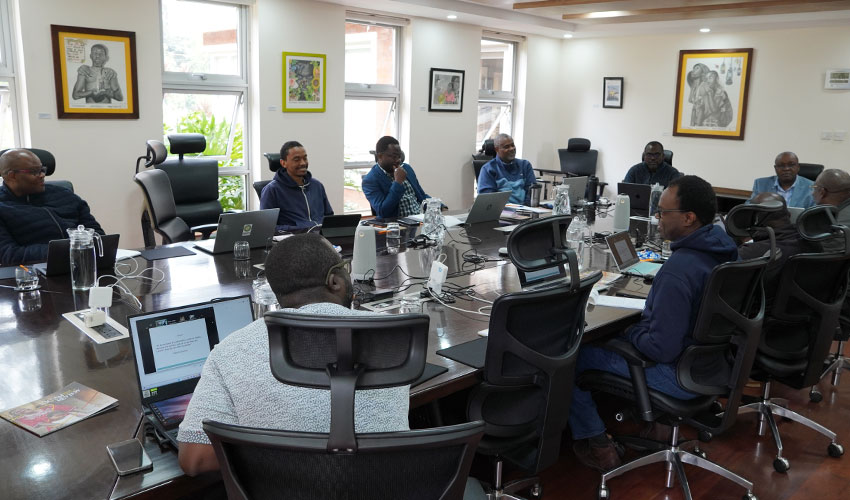
The final group focused on practical applications with direct social impact. On the environmental front, Pierre Luhata Lokadi (Université Loyola du Congo and Sophia University) conducted a comparative study in Kinshasa, revealing that household biogas can substitute up to 76% of charcoal use, offering a viable solution to indoor air pollution and deforestation. His findings advocate larger-scale biogas initiatives optimized for methane yield. Similarly, Herintsitohaina Mahasedra Ratsimbarison (Madagascar) presented a small hydropower feasibility study in Madagascar, proposing data-informed models that integrate community needs and environmental sustainability. The emphasis is on empowering local capacity through careful planning and strategic data use.
These diverse contributions demonstrate the depth of African scientific inquiry and its global significance. Through applications of AI in agriculture and education, modeling of pandemics and planetary threats, and ethical examination of emerging technologies, these scholars show that Africa is not merely responding to local challenges but actively shaping global debates on science, sustainability, and justice.

Related Posts:
École Fondamentale Saint Louis de Gonzague was built to give every child space to be included, to live and learn alongside others, and to recognize their dignity as human beings. When the Jesuits founded the school in September 2004, in a region greatly affected by...
Service Yezu Mwiza (SYM) is a Christian, socio-medical organization dedicated to fighting HIV/AIDS, tuberculosis, and malaria, while promoting holistic healthcare and social justice. Founded in 2008, it operates as a prominent reference centre under the care of the Jesuits in Burundi...

Pope Francis raised climate change to global consciousness as the defining moral issue of our time. As a result, the Church has become a global voice urging political accountability and personal responsibility for healing the planet. Building on his legacy, Pope Leo vigorously calls for urgent climate action...
Rwanda’s youthful population holds great potential, yet nearly one in four young people are not in employment, education, or training, according to the 2025 Labour Force Survey. In response to this situation, the Jesuit Urumuri Centre (JUC), a social initiative of the Jesuit Rwanda-Burundi Province...

The annual meeting of Eco-Jesuit delegates in South Asia, held at Inigo Bhawan in Matigara, Darjeeling, became much more than a routine gathering. Set against the fragile ecology of the Eastern Himalayas, the meeting turned into a moment of discernment on the future...

The Social Justice and Ecology Secretariat (SJES) of the Society of Jesus has released its 2025 Annual Report, “The Promotion of Justice is Fueled by Hope”. The report details regional milestones at the conference level, the results of global advocacy, and its commitment to the mission of...