400 years of Jesuit mission in Quebec City
Quebec City recently celebrated the 400th anniversary of the arrival of the Jesuits in the city. In 1625, Jesuit missionaries Jean de Brébeuf, Charles Lalemant and Ennemond Massé settled in what was then known as New France. The Sieur de Champlain had founded the city in 1608, and his project included spreading the Christian faith throughout these vast lands. Recollects – of Franciscan tradition – had arrived in 1615. Ten years later, the Jesuits settled in the colony.
What was in their minds and, above all, in their hearts? They set about sharing their faith and knowledge, creating and consolidating networks during their missionary adventures as explorers, educators and also lords of territories granted to them by Monsieur de Champlain on behalf of the King of France.
On Saturday, 27 September, historian Fannie Dionne, PhD, who specializes in the history of missions in New France and the study of Indigenous languages, gave a lecture in the Chapelle des jésuites, a historic heritage site in Old Quebec. She pointed out that the Jesuits first arrived in Quebec City in 1625 and that, 400 years later, they are still there. Their mission has taken many facets. Focusing on the 17th century, the historian showed how the Jesuits shaped the young colony through their role in evangelization, colonization, and social organization, in constant interaction with Indigenous peoples, civil authorities, and other religious leaders. Here are some key points from her presentation.
Let’s follow the guide: Fr Chaumonot
We know a lot about the ‘Canadian Martyrs’, starting with Jean de Brébeuf. But let’s be guided by a lesser-known but no less fascinating Jesuit, Fr Pierre-Joseph-Marie Chaumonot. He was born in 1611, the same year that two Jesuits came to Port-Royal, Acadia, and established good relations with the Mi’Kmaw. But tensions with French merchants led to failure, and in less than two years, Frs Massé and Biard were forced to return to France.
Ennemond Massé was not discouraged; he wanted to serve in New France and, in his homeland, he continued to promote the mission over there, the spread of the Christian faith. The young Chaumonot heard about this and, a little later, he was influenced by the writings of Fr Brébeuf. The door opened in 1625, and Ennemond Massé was part of the journey. The Jesuits shared the pastoral ministry with the Recollects, but between 1632 and 1657, they were the only religious order of men in the colony, hence their importance... and sometimes also tensions with the authorities.
Among the Indigenous peoples
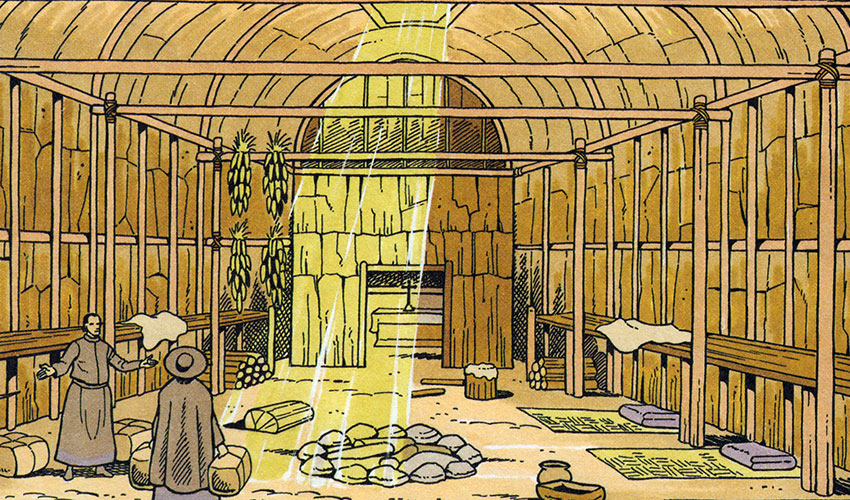
But first, the Jesuits devoted themselves to missions among the Indigenous peoples, primarily the Wendat. Fr Chaumonot himself, upon his arrival in Quebec City, was sent to the Wendat, on the shores of Lake Huron, some 800 km by canoe from Quebec City. What an adventure! Chaumonot tried not to move too much so as not to capsize the small boat.
Fr Brébeuf was already there, along with Fr Jérôme Lalemant, the superior of the mission. It was from there that they set out to evangelise the villages in the region. Chaumonot did not arrive on neutral ground. Tensions had arisen between the missionaries and certain groups. This was due, for example, to waves of epidemics that devastated communities, alliances between indigenous nations that were courted by European empires other than France, and friction between new converts and those who wanted to remain faithful to practices, feasts, or ceremonies that the Jesuits considered incompatible with Christian life. The transmission of the Catholic faith therefore had to be achieved by creating links within the indigenous context, particularly through the study of languages. Everything was difficult, but progress was made as the Jesuits compiled vocabularies and grammars.
Fr Chaumonot, for his part, after enduring much mockery, eventually became a very good speaker of Wendat and other indigenous languages. He noted how difficult it was to translate Christian concepts into the cultural context of the indigenous communities.
In 1673, upon his return to Quebec City, he founded a shrine in honour of Our Lady of Loreto. In his youth, he had been cured of scubies by visiting this pilgrimage site in Italy. He intended to foster devotion to Mary in New France.

Among the French
In fact, Fr Chaumonot was also called upon to work among the French. In 1662 in Montreal, then in 1665 at the request of Mgr. de Laval in Quebec City, where he collaborated with the latter in founding the Confrérie de la Sainte-Famille (Brotherhood of the Holy Family). He also went to the forts of Richelieu as chaplain to the French regiments. In Quebec City, he contributed to all the apostolic works that were largely directed towards the settlers, even though the first college founded north of Mexico was initially intended to cater for indigenous boys. Hydrography, mathematics, astronomy and physics were taught there. The college library was impressive for its time, with works on theology, of course, but also on the flora and fauna of New France, pharmacy, medicine, chemistry, geography, history and literature.
Collaboration with the authorities
Pierre-Joseph-Marie Chaumonot contributed to the expansion of New France through his travels to Indigenous lands and the founding of the Notre-Dame-de-Lorette mission. Other Jesuits, such as Jacques Marquette, were even true explorers, travelling as far as the Mississippi. These advances were made possible by the relationships maintained with the Indigenous peoples. The ties between the Jesuits and the colonial authorities were strong but at times tense. The Jesuits were sometimes sent on missions on behalf of the colonial government. Chaumonot served as ambassador to the Onondaga; other Jesuits served as translators and thus served the interests of the authorities.
Chaumonot died in Quebec City in 1693 after playing a role in many of the apostolates that characterised the Jesuit presence in New France in the 17th century. He is an example of a life built on human relationships, connections between nations, and sharing.
Related Posts:
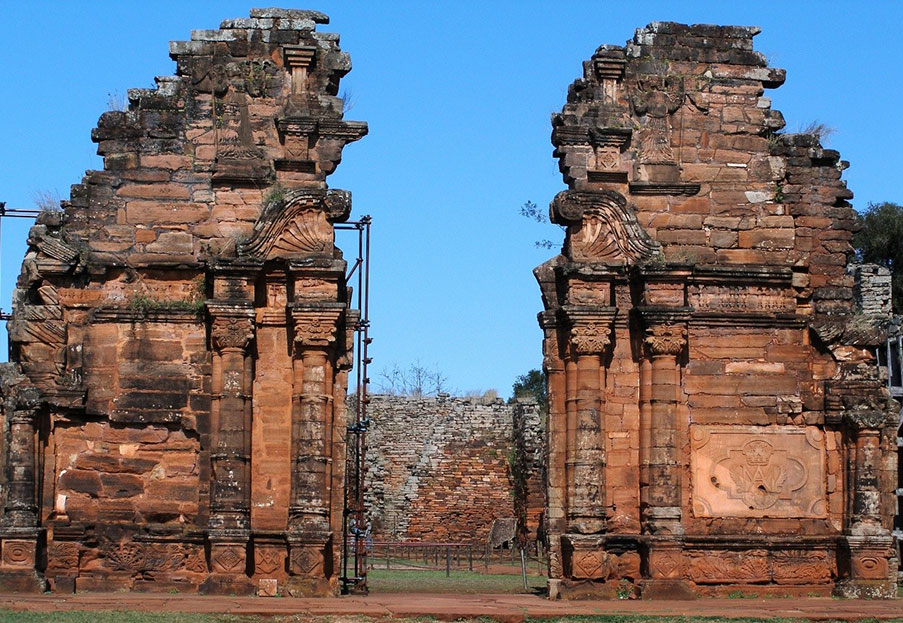
The Paraquarensis Province was separated from that of Peru in 1604. It comprised the territories of the present-day states of Paraguay, Argentina, Uruguay, part of Bolivia, and, temporarily, Chile. One of the most notable ministries in this Province was the Guaraní reductions...

There is an ostensibly simple sign that hangs in the entryway of The Loyola School. It greets students and visitors alike as they step from the streets of Baltimore into what once was a string of rowhomes but now is a center for early learning and childhood development...

The USA Midwest Province’s use of solar energy began with schools and now reaches to the rooftops of a Jesuit residence and the Province office itself. About half of the Province office’s electricity comes from the 152 panels on the roof of the Chicago building...
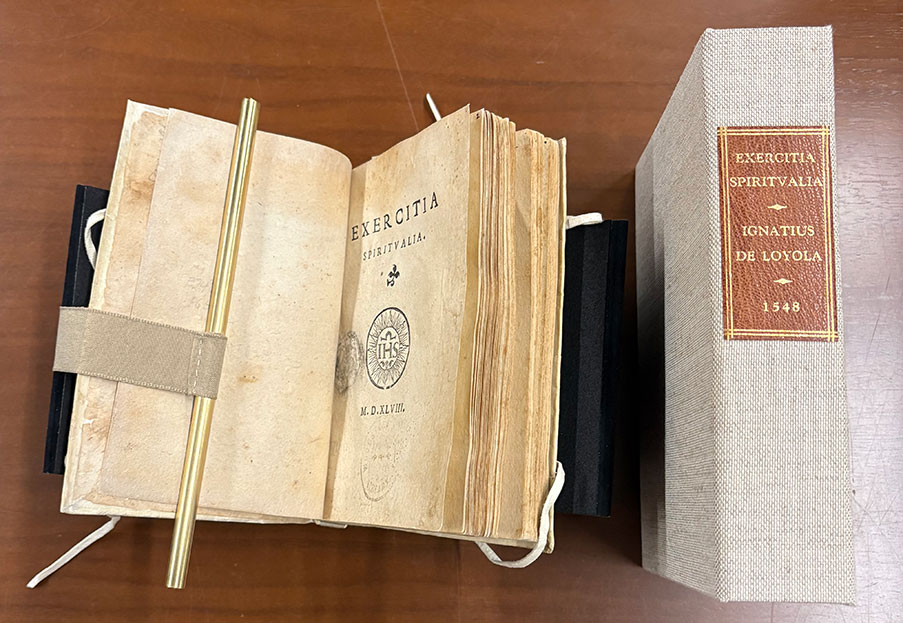
On a cool Advent morning, nine members of the Jesuit Media Lab community – an initiative sponsored by the Jesuit Conference of Canada and the United States to gather and support creators inspired by the Ignatian tradition – met at Georgetown University in Washington, D.C., the oldest...
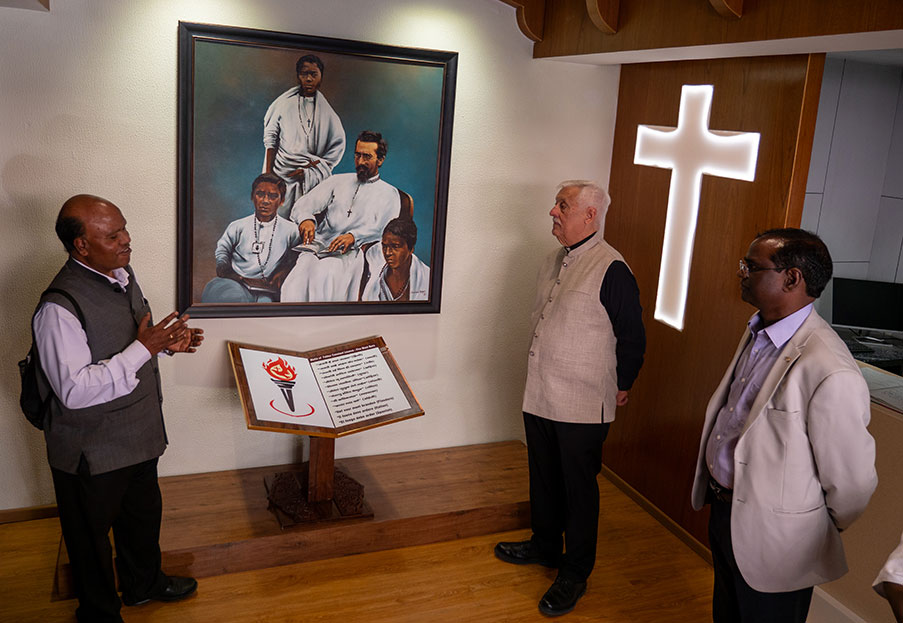
In 1885, a 29-year-old Belgian Jesuit stepped off a train in Ranchi and into a landscape scarred by injustice. Fr Constant Lievens had travelled thousands of miles from his homeland, driven by a calling he couldn’t ignore. What he found in Chotanagpur shook him to his core...
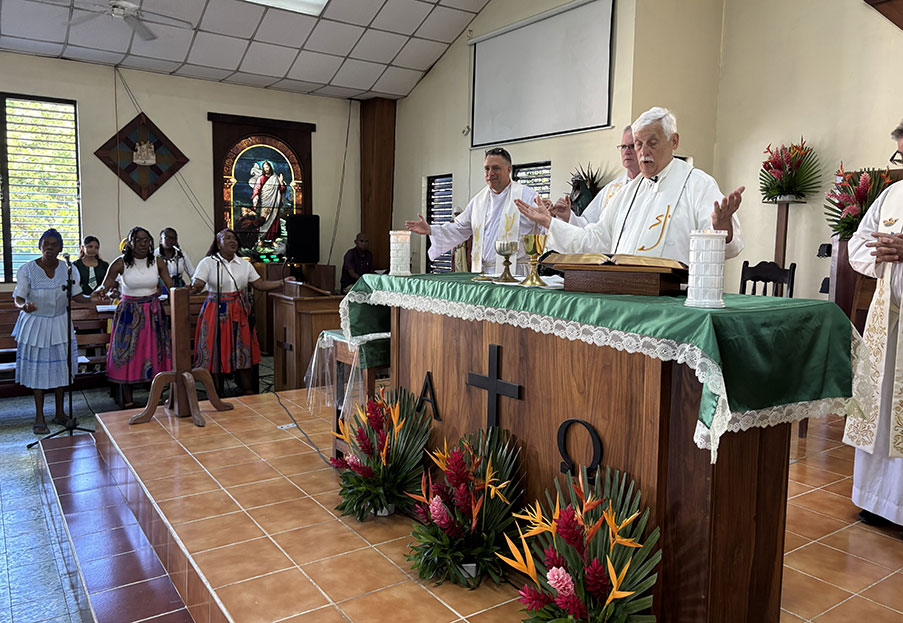
Fr Aric Serrano, SJ, is a Jesuit of the US Central and Southern Province. Born in Pecos, Texas, he was missioned to St. Peter Claver Parish in Punta Gorda, Belize after his ordination in 2023. He shares his reflection on the visit of Father General Arturo Sosa to the indigenous communities of southern Belize.