The Loyola School – Baltimore’s Jesuit-Run Early Education Centre Reminds Students that They Are Worthy of Greatness
By Eric A. Clayton
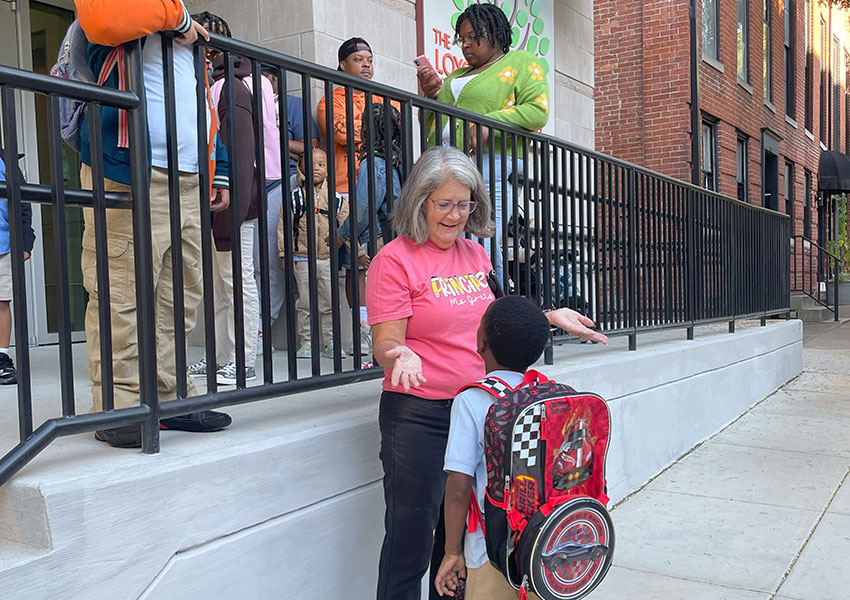
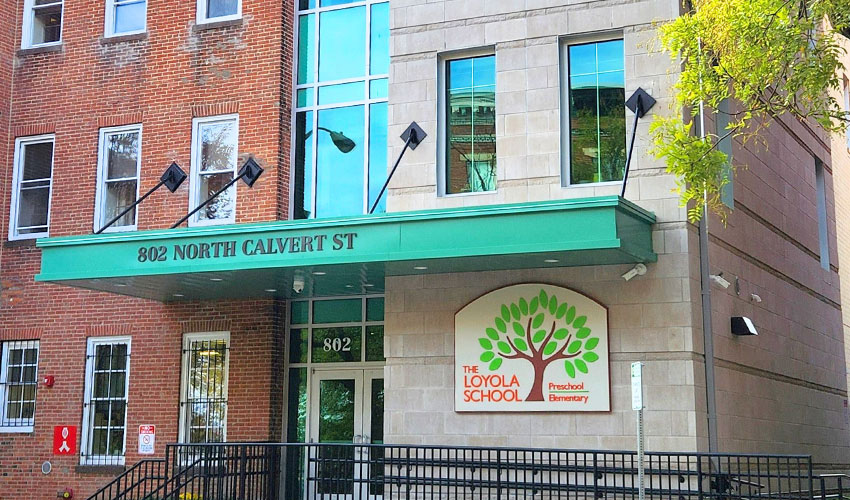
There is an ostensibly simple sign that hangs in the entryway of The Loyola School. It greets students and visitors alike as they step from the streets of Baltimore into what once was a string of rowhomes but now is a center for early learning and childhood development. Students as young as two years old all the way through fourth grade are welcome here.
How do they know it? Because of the sign, boldly declaring: “Welcome to our amazing school!” And it is amazing – three floors of completely renovated space, newly restored and reopened to house the ever-expanding education center. Founded in 2017, the new space means classes are no longer taught in the basement or chapel of St. Ignatius Church across the street. The Loyola School – and its students, faculty, administrators and families – has its very own home.
And that sign? It’s a simple, perhaps even predictable touch. Yet it serves as a daily reminder to the young minds who cross that threshold: I’m worthy of the amazing. I’m worthy of all of this.
“I want [our students] to know they are known, they are loved, they are cherished and challenged, that they deserve all that”, says Greta Rutstein, The Loyola School’s principal.
Having a dedicated, beautiful building is only the latest and most tangible example of this ongoing project to equip and empower young minds. At the heart of this work is a Jesuit priest and legendary founder of multiple schools in Baltimore and beyond, Fr William Watters, SJ.
Fr Watters, while serving as pastor of St. Ignatius, realized that there was a real need in Baltimore city for a tuition-free Jesuit middle school. So, he founded St. Ignatius Loyola Academy in 1993, and then went on to found Cristo Rey Jesuit High School in 2007 to continue serving these students at no cost to their families.
Yet despite these successes, a troubling fact became clear: many of these students were beginning middle school two to three years behind in reading and math. Catching up can be a herculean effort, and those who fall behind, often stay behind. The solution was clear: the Jesuits would need to begin serving these communities earlier. And that meant starting at the preschool level.
And so, in 2017, The Loyola School began with only 18 two-year-olds enrolled. Every subsequent year (with one exception due to Covid) has seen the addition of another grade, resulting in 140 students enrolled as of 2026. And there’s still room to grow!
Even from those earliest days, The Loyola School was blazing a new path in the city.
“In the state of Maryland, kindergarten is universal”, says James Fiore, president of the school. “They’re trying to make preschool universal for everyone, too. But there’s no equivalent free tuition for two or three olds.”
And that means there’s a large gap in which families are forced to fend for themselves – and in which children without access to resources can already begin to fall behind their peers.
The Loyola School is changing that – not only for the students, but for their parents, too.
Before becoming president of The Loyola School, Fiore was a teacher at St. Ignatius Loyola Academy. One of the great joys of his current role, he says, is seeing so many of his former students now as parents and working professionals who are entrusting their own children to his care. This is a success story, and yet, true and lasting success takes time.
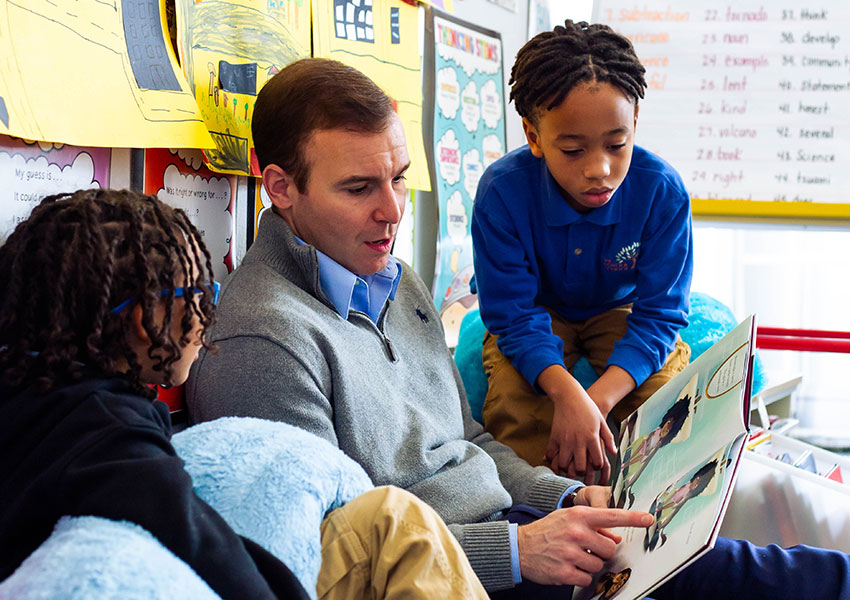
“Wealth is a generational thing”, Fiore explains. His former students have high school degrees, college degrees, but they need the chance to continue working to invest in themselves and their wider community. Setting their careers aside because they can’t find daycare means setting back the lives of their families and communities. That’s where tuition free preschool comes into play. “This model helps because they’re not taking time away from their career”, Fiore says.
This care for the whole family – and, ultimately, for the whole community – isn’t limited to the frontend of the experience at The Loyola School. “We really imagine ourselves providing a wraparound experience for these families”, Rutstein says. She points to the mother of a fourth grader who needed just a little guidance and encouragement to complete her daughter’s application for middle school. The Loyola School team was there to help. “But there’s way more we can be doing”, Rutstein admits.
Rutstein and her colleagues are very aware of the fact that, once the 2026 school year ends, The Loyola School will have graduates. How can they continue to support this growing community of alumni?
Care for the whole family echoes a core Ignatian principle: care for the whole person, or cura personalis. Students are cared for not only academically, but spiritually, too, in line with the rich Ignatian tradition of forming women and men to discern their unique, God-given vocations. At The Loyola School – where Catholics make up a minority of the student population – students experience religious education through the Catechesis of the Good Shepherd, a Montessori-based Catholic faith formation program that fosters a contemplative relationship with God in children as young as three.
Beyond the classroom, the newly named director of Ignatian mission and faith formation, Mark Dushel, has been tapped to form students spanning The Loyola School, St. Ignatius Loyola Academy and Cristo Rey Jesuit High School in the Ignatian charism. This means prayer services, ecumenical outreach and more.
His work across three educational institutions reflects the constellation of Jesuit schools present in Baltimore – and the potential for collaboration. Already, Cristo Rey students are serving as teaching assistants; students from Loyola Blakefield – a Jesuit-run preparatory school north of Baltimore city – help install computers; and, students and faculty at Loyola University Maryland engage The Loyola School for hands-on research and learning opportunities.
But there’s more work to do. The Loyola School wants to continue growing, to continue offering great classes and a committed network of staff and administrators to the students and their families. What’s more, The Loyola School wants to share what they’ve learned.
“What were the things that have worked really well so that we can be a model in the future for other cities?” Rutstein asks. She’s concerned with recording the learnings of the first several years of The Loyola School so as to share best practices with others. She wants other Jesuit-centric cities to begin asking: “Is there a place in our community for this?”
Because ultimately, no matter the city, there are young people present who need to be reminded of their worth, who need to be accompanied throughout their lives by a community of caring adults. There are students in communities the world over who deserve to see those bold signs that declare: “Welcome! You are worthy of the amazing.”
Learn more at The Loyola School: https://loyolaschoolbaltimore.org/
Related Posts:
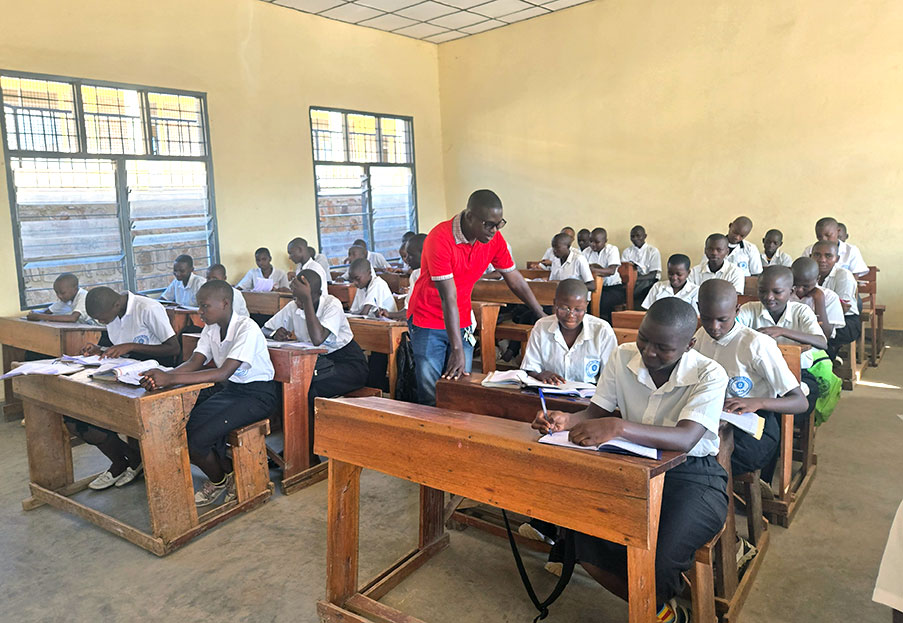
École Fondamentale Saint Louis de Gonzague was built to give every child space to be included, to live and learn alongside others, and to recognize their dignity as human beings. When the Jesuits founded the school in September 2004, in a region greatly affected by...
As the Society of Jesus prepares for the II Congress JESEDU-Montreal 2027, a global process of review, discernment, and foresight is now underway. This initiative seeks to evaluate how the shared vision for Jesuit education has been implemented across the worldwide network of...

The Secretary for Secondary and Pre-secondary Education, with great joy and gratitude, announces that Fr Hugo Gómez Sevilla, SJ, a Jesuit leader with a wealth of valuable international leadership experience building networks, pastoral sensitivity, and a deep commitment to Jesuit education...
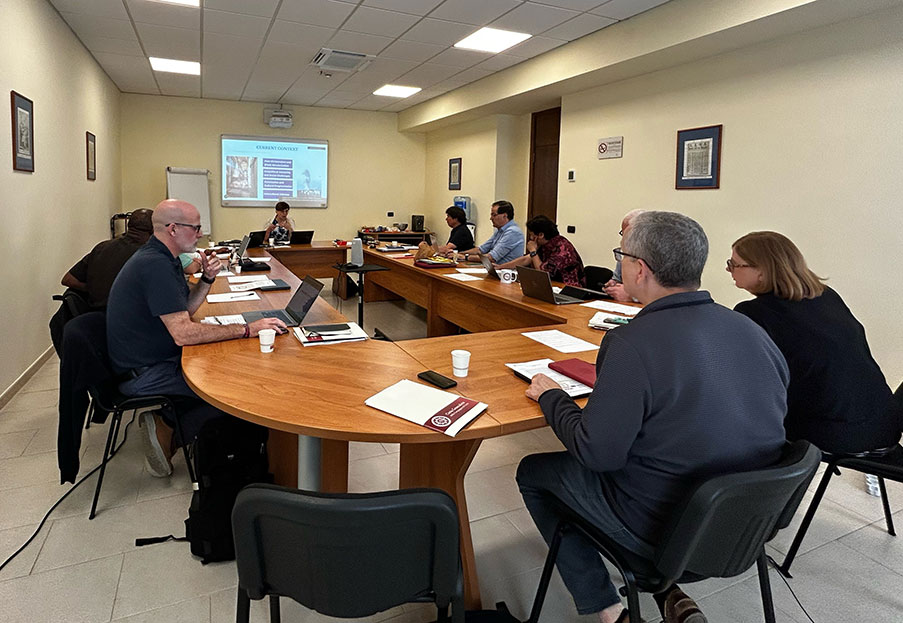
The ICAJE (International Commission on the Apostolate of Jesuit Education) and JGNS (Jesuit Global Network of Schools) Board meeting took place from 26 May to 29 May 2026, bringing together leaders of the global Jesuit educational apostolate to reflect on shared priorities...

After three years of being ad experimentum with the Jesuit Conference of Asia Pacific (JCAP), the Pakistan Jesuit Mission pauses to reflect on what it means to live and serve in this land. These years have not been easy. Pakistan is often described as an “arduous” place...
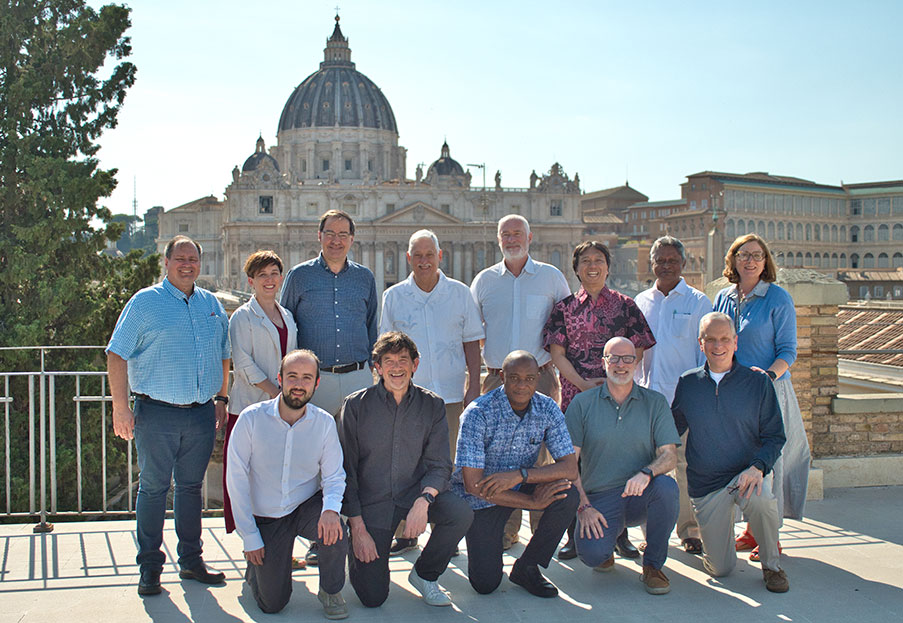
The International Commission on the Apostolate of Jesuit Education (ICAJE) supports the Secretariat for Secondary and Pre-Secondary Education in animating, coordinating, and renewing Jesuit education worldwide. Since its establishment in 1980, ICAJE has fostered collaboration...