Working for Peace and Reconciliation in South Sudan
South Sudan, the world’s youngest nation, has been profoundly shaped by protracted conflict, political instability, and economic fragility since gaining independence in 2011. Despite the optimism that accompanied statehood, the country has been beset by recurrent violence, widespread displacement, and fragile governance structures. These challenges have significantly undermined social cohesion, weakened institutions, and left deep physical and psychological scars on its people.
Within this fragile context, Solidarity with South Sudan – a Catholic, inter-congregational initiative – has emerged as a key actor engaged in grassroots peacebuilding, reconciliation, and social reconstruction. Its mission is rooted in the promotion of peaceful coexistence, trauma healing, and sustainable development through education, healthcare, agriculture, and community empowerment. Unlike many short-term interventions, its approach seeks to foster resilience and long-term transformation at both community and institutional levels.
Reconciliation as an Ongoing Process
According to its new Executive Director, Fr Hyacinthe Loua, SJ, the work of reconciliation remains both urgent and unfinished.He underscores that the challenge extends beyond interpersonal relationships to encompass political leadership and governance: “We still need to work hard on the question of reconciliation, the question of living together. We are in a country at war even now. Our mission is to help people to live together–not only the people, but also those leading the country.”
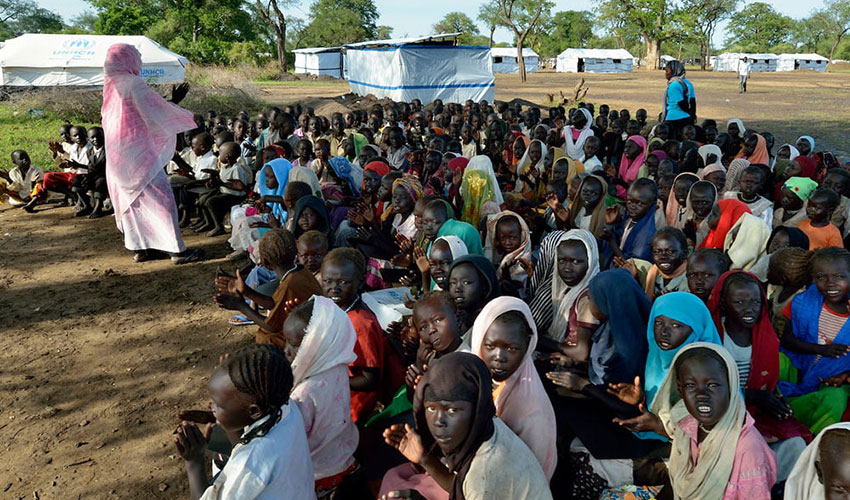
It is in this perspective that the Bishops of South Sudan, through their recent pastoral letters, have likewise called for dialogue, reconciliation, and peace. Their stance provides not only spiritual legitimacy but also political weight, reinforcingSolidarity with South Sudan’s mission as part of the broader ecclesial and societal response to conflict.
Fr Loua, recognizes that “the journey toward lasting peace and reconciliation in South Sudan has been fraught with challenges. Despite efforts to address the underlying causes of conflict through national dialogues, peace agreements, and international peacebuilding frameworks, the process of healing and rebuilding trust among local communities remains largely unfinished.” This violent shock remains a barrier to true reconciliation in South Sudan.
Education and Peacebuilding
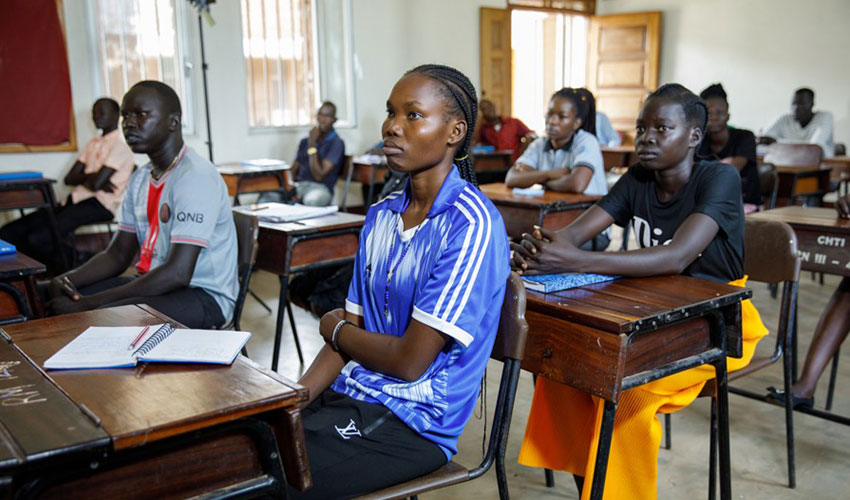
Education emerges as one of the most pressing challenges and priorities. Fr Loua, identifies education as both a developmental necessity and a peacebuilding strategy: “A significant proportion of South Sudanese have migrated or been displaced as a consequence of ongoing conflict and instability. However, for those who remain within the country, access to quality education constitutes a critical necessity. The shortage of trained professionals is particularly evident in the healthcare sector, where the lack of adequately prepared personnel undermines the capacity to provide essential services to the population. Education, therefore, emerges not only as a developmental priority but also as a foundational pillar for national recovery and stability.”
This perspective aligns with scholarship that situates education within the framework of “positive peace” (Galtung, 1996), where structural transformation – through capacity-building, training, and the dissemination of knowledge – becomes a precondition for sustainable peace.
In this sense, education is not only instrumental for economic development but also constitutive of reconciliation, as it fosters critical skills, civic responsibility, and social trust. It resonates with South Sudan’s own national development framework, Vision 2040which names ‘an educated and informed nation’ as one of its pillars. Education is seen as a catalyst for development ‘Towards Freedom, Equality, Justice, Peace and Prosperity for All (2015)’.
Peace, Trust, and Social Cohesion
Beyond education, peace itself is framed as a challenge requiring constant reinforcement. Fr Loua’s reflections suggest that reconciliation must be understood not solely as conflict reduction but as cultural transformation: “the gradual rebuilding of trust, solidarity, and coexistence among diverse communities”. This vision reflects theories of social healing, which argue that post-war societies require both structural reform and relational transformation to overcome cycles of violence.
Concrete progress is evident. Solidarity with South Sudan has significantly contributed to the formation of catechists and Christian community leaders, particularly in rural areas where priests and professionals are scarce. According to Fr Loua, and indeed the founding members of Solidarity, trauma healing is essential in a society marked by pervasive violence and intergenerational trauma. Without addressing these psychological dimensions, reconciliation efforts risk remaining superficial.
Similarly, agricultural training contributes directly to food security, thereby addressing structural vulnerabilities that fuel instability. As Fr Loua notes, equipping farmers with improved techniques enhances livelihoods and strengthens local resilience. Teacher training remains another central focus, based on the conviction that educators’ function as multipliers who will transmit knowledge, values, and civic skills to future generations: “If we want to develop the country, we need to train the teachers– those who will be training the youth”. The mission of Solidarity with South Sudan illustrates the interconnection between peacebuilding, education, and community development in fragile states.
Fr Loua, emphasizes that the work requires not only local participation but also international solidarity: “Solidarity is open to those who like to go there and work there.” His words reflect an enduring conviction that despite the enormity of the challenges, incremental progress is possible. His perspective reflects both the complexity of the challenges and the enduring hope that transformation, though arduous, is possible.
Related Posts:
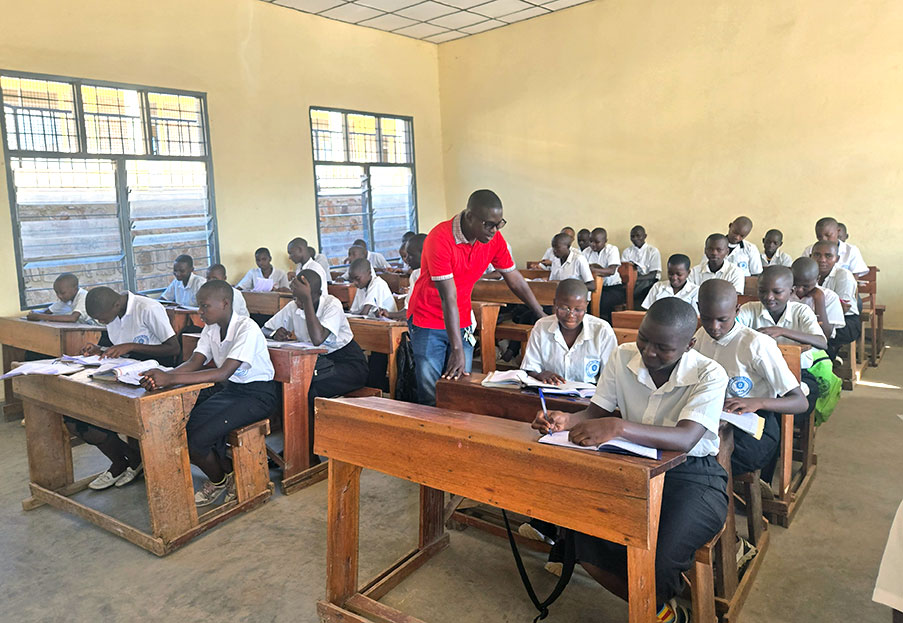
École Fondamentale Saint Louis de Gonzague was built to give every child space to be included, to live and learn alongside others, and to recognize their dignity as human beings. When the Jesuits founded the school in September 2004, in a region greatly affected by...
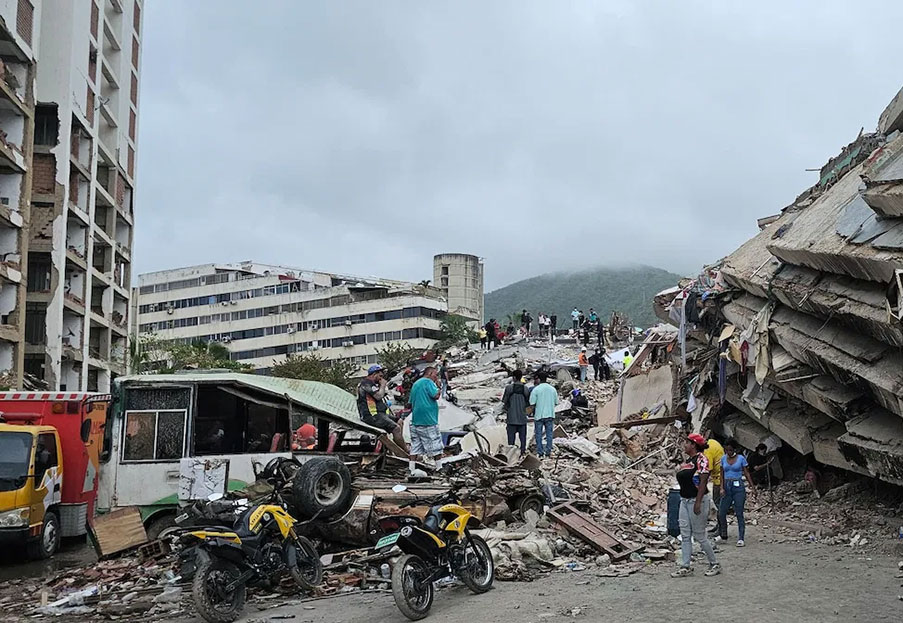
A series of powerful earthquakes have struck Venezuela on 24 June, causing widespread destruction across affected communities and leaving thousands of people in urgent need of assistance...
Service Yezu Mwiza (SYM) is a Christian, socio-medical organization dedicated to fighting HIV/AIDS, tuberculosis, and malaria, while promoting holistic healthcare and social justice. Founded in 2008, it operates as a prominent reference centre under the care of the Jesuits in Burundi...
For eight decades, the Hogar Virgen de los Dolores (HVD) has served Venezuela’s most vulnerable children, building a legacy rooted in the Jesuit commitment to education and social justice. What began as an apostolic initiative has now evolved into a model of education...
Rwanda’s youthful population holds great potential, yet nearly one in four young people are not in employment, education, or training, according to the 2025 Labour Force Survey. In response to this situation, the Jesuit Urumuri Centre (JUC), a social initiative of the Jesuit Rwanda-Burundi Province...

One of the Universal Apostolic Preferences promulgated by Father General in 2019 invites the Apostolic Body of the Society of Jesus to “Walk with the poor, the outcasts of the world, those whose dignity has been violated, in a mission of reconciliation and justice”...