Hope Has a Woman’s Face: A Prophetic Look at the Church Today | Interview with María Lía Zervino
Introduction by Carla Bellone | Assistant to the Secretary for the Service of Faith
In this interview, María Lía Zervino offers an insightful reading of the present and future of the Church, drawing on her clarity of thought and extensive ecclesial experience, placing synodality, mission and the co-responsibility of women in dialogue with one another. Her answers are interwoven with personal experience and spiritual discernment, and with a vision of service and commitment, lived out on the peripheries of society, and with a perspective on women as a resource for the Church in relationships, structures, and decision-making processes. The result is a significant and deep proposal for the renewal of the Church, centred on relationships, whose development and care respects a Marian dimension of the Gospel.
Dr Zervino, over your many years of service to the Church, you have encountered many “invisible disciples”. Who are these women for you, and why do you believe it is important to give them a voice today?
By the grace of God, I have known women of extraordinary ‘beauty’ – a dynamic beauty – such as Mother Teresa of Calcutta, and many others whom Gaudete et Exsultate describes as ‘saints next door’. They are just as radiant in their dynamic beauty, yet largely ‘invisible’ to most people. At a time when discrimination, violence and other social wounds – loneliness, for example – are wreaking havoc, it is urgent to give voice to women who live out their diakonia [ministry of service] among the Indigenous peoples of the Amazon, to other women who are artisans of peace because they have laid down their weapons and now catechise soldiers, and to those who specialise in accompanying trans persons, abandoned because they are seen as the ‘lepers’ of the contemporary world. In the Kairós that was the Jubilee, the words of Pope Francis echo within me: hope in the Church has a woman’s face (Bogotá, Address to the CELAM Committee, 7 September 2017).
What stands out most to you about the “Invisible Disciples” project, and how do you relate it to the current mission of the universal Church?
I was pleasantly surprised by how closely Invisible Disciples aligns with the World Women’s Observatory (WWO), a project I saw come to life within the World Union of Catholic Women’s Organisations (WUCWO) in 2021 and to which I am an adviser. The observatory focuses on making women visible – especially the most vulnerable, who so often appear “invisible” – to inspire and bring about changes that foster their integral development. The universal Church is committed to eradicating the distortion of ecclesial authority, which manifests itself in the use of power for personal gain and in sexual, economic, spiritual and power abuses by ministers of the Church, as highlighted in the Final Document of the Synod. This project is a contribution to overcoming that clericalism and to fostering a positive conversion of our relationships and structures.
At a time when much is said about “visibility”, what value does silent witness have in Christian life and evangelisation?
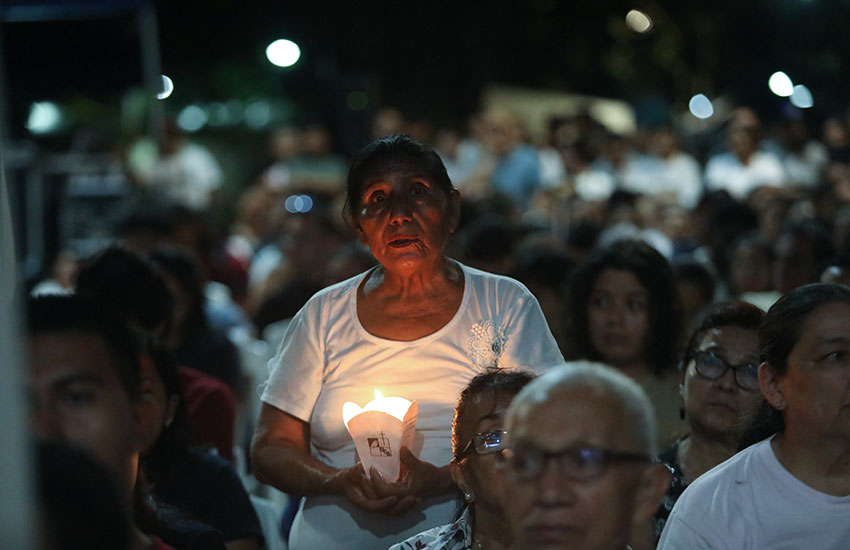
We do not love, value or pray for what we do not know. Silent witnesses – so many women in the world today – fall into what Pope Francis calls the globalisation of indifference. As a result, they are neither loved nor valued, and still less prayed for. Solidarity and care for our common home often go hand in hand with hundreds of women who largely go unnoticed. I have had the grace to know missionaries, artisans of relationships, lay and consecrated women from every continent, experts in evangelisation and in humanity. They do not appear under the spotlight of the media or on social networks, but they are visible in the eyes of God, as are their fruits, which He himself blesses. I am convinced that it is the Holy Spirit who stirs them in the depths of their hearts. They love to proclaim the Good News wherever they are, to care for those most in need and for creation. If the gift they offer were known, no one would want to miss out on it.
How have your training as a sociologist and your vocation to consecrated life shaped the way you see the place of women in the Church and in society?
There is no doubt that sociology, with its scientific theories and research, is always a help. Even so, I would say that it is my formation within my own vocational family, the Asociación de Vírgenes Consagradas “Servidoras”* (Association of Consecrated Virgins “Servidoras”), that most shapes my perspective on the role and responsibility of women in the Church and in society. Our founder, now Servant of God Luis María Etcheverry Boneo, understood women to be central to the “sacramentalisation” of relationships and social bonds. He hoped that our consecration would serve everyone without exception, but especially women, who are life-givers and agents of transformation in all social institutions. Beyond my professional formation as a social worker and sociologist, I believe it is the particular charism of the Servidoras that continues to feed my life and my work with women in the People of God.
During your term as president of WUCWO, you represented millions of Catholic women around the world. What is the most important lesson you learned from them?
I am convinced that there is a common denominator among the millions of women who belong to the organisations that make up WUCWO: their love for the Church. It moves me to see them together, coming from every corner of the world, when they gather in their traditional dress, with a rich array of colours in their skin tones and clothing that reflect their diverse cultures, ages and ways of life. Even the aims of the Catholic organisations to which they belong vary widely: from nightly Eucharistic adoration to the construction of wells for Muslim communities in the heart of Africa, and to raising the banner of human rights in international forums. Yet for all this richness of diversity, they always taught me that what unites and defines us is an unconditional love for the Church.
The project speaks of women who evangelise “on the frontiers of suffering”. What does their silent fidelity teach you?
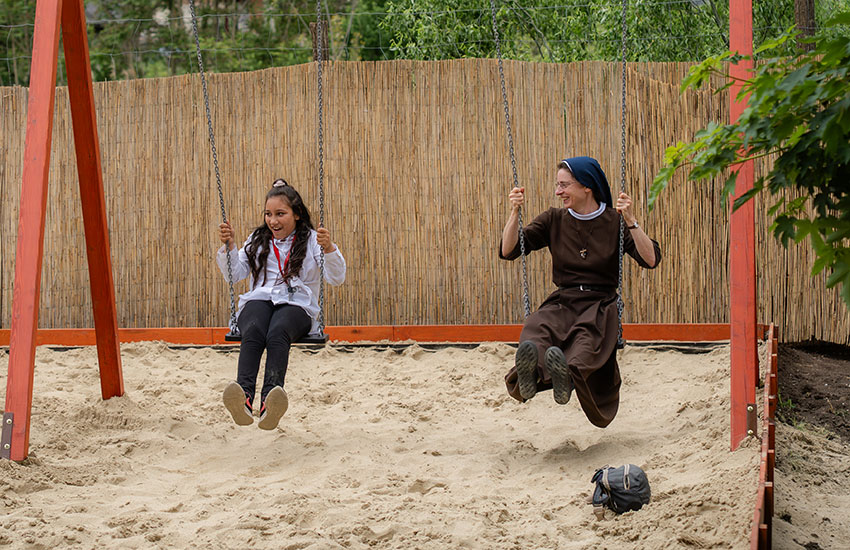
Their silent fidelity teaches me that Mary was there at the foot of the Cross during the three most fruitful hours of Jesus’ life. She stood “on the margins of suffering” when, in her mother’s heart, the Church was born – the second Incarnation of the Word. I see a Marian reflection in the witness dimension of religious life, especially in the low-profile lives of sisters who live their generous self-giving to Jesus Christ alongside those who are marginalised and discarded, and who still today experience devaluation, injustice, and even violation and death. For me, they are an examination of conscience, present in my prayer and in my daily life. Perhaps the history of the Church deserves to be rewritten from the perspective of women, including their role in evangelisation and their response to the cry of the poor and of the Earth, across the length breadth of the world.
How can we ensure that these women do not remain “invisible”, but that their witness becomes leaven for the whole Christian community?
In a conversation that, by God’s grace, I was able to have with Pope Leo, he expressed his intention to continue along the path traced by Pope Francis regarding the role and responsibility of women on the journey towards a synodal and missionary Church. Without doubt, the recent changes introduced in the Roman Curia and Praedicate Evangelium offer a panoramic picture and an exemplary, pedagogical model for dioceses and for civil society. However, it is ultimately the changes that begin in the local Churches that will close the gap between what is said – the Magisterium – and what is done in practice. We hope that bishops, in different regions and according to the needs of the People of God entrusted to them, will establish new ministries for women, while strengthening their formation. This necessarily entails an investment of time, human resources and financial means in formation, offered equitably to women and men alike, without discrimination based on gender.
In which areas do you see the most urgent need today for a transformative female presence in the Church and in society?
At the grassroots level, by forming women together with men in schools of synodality, so that ecclesial discernment may indeed become a reality at every level of decision-making and the mission may be carried forward. In seminaries, by including suitably qualified women on formation teams, so that they can contribute with voice and vote to the accompaniment and formation of future ordained ministers. In the Pontifical Academy, by enabling women to be trained for the Vatican diplomatic service, with a view to collaboration in nunciatures, so that a female perspective is brought to relations with governments and to the selection of candidates for the episcopate.
Pope Francis frequently highlighted the need for “a Church with a woman’s face”. How do you interpret this expression considering the “Invisible Disciples” project?
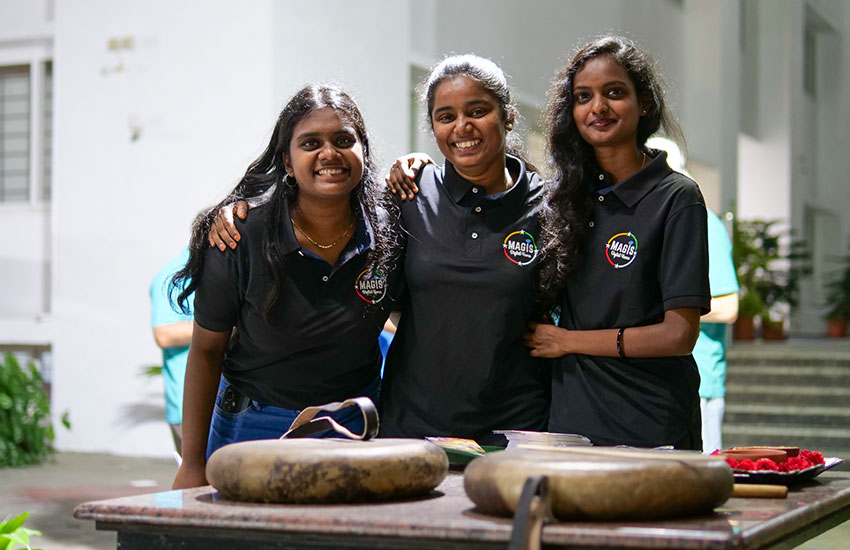
I think this expression points to the profile that the Holy Spirit is bringing about in both women and men who walk side by side and assume their differentiated co-responsibility. I dream of that Church with a feminine face and language: a Church of the depths of mercy, of the revolution of tenderness, of drawing close to the child who suffers, of caring for our own land, of the missionary ardour of one who is made to give Life with a capital L – all of them characteristics of a mother. I hope that the “Invisible Disciples” project will be a source of inspiration and a driving force for the implementation phase of the Synod on Synodality, which is crucial for the People of God.
What message would you like to send to women – religious and lay – who serve faithfully but often go unnoticed?
Look to Mary. Let us speak aloud the words of the angel, so that they may resound in our hearts like bells that wake us from a deep sleep. How much we need to hear them: Rejoice! The Lord is with you; do not be afraid (cf. Lk 1:28, 30). We can often feel a little like that young woman of Nazareth, known by no one, from whom nothing was expected, whom no one noticed, yet who was committed to serving God every day of her life, in smallness, in the solitude of a hidden village. Those words that the evangelist places on the lips of Jesus are spoken to us today: Rejoice! The Lord is with you, just as in the Gospel he always stood with women. There is no reason to be afraid, to lose heart, or to feel that we are incapable. Take courage. Hail Mary. Go on.
Finally, looking to the future, what dream do you carry in your heart for the Church and for the women who are part of her?
Just as, at the Second Vatican Council, the Virgin Mary was rethought in the light of the mystery of the Church, I dream that the time will come to rethink the Church in the light of the mystery of Mary, our Mother, in a Synod of the People of God.
*Editor’s note: The Asociación de Vírgenes Consagradas “Servidoras” is among the public associations recognised by the Catholic Church, usually overseen at the diocesan level by the local bishop. Its members live the vocation of consecrated virginity in the world, rather than within a religious order, and give Christian witness through shared prayer and service.
Related Posts:

Sr Nathalie Becquart, the undersecretary of the Synod of Bishops discusses how to accompany dioceses or local church communities in implementing a synodal process, based on experiences from the Secretariat General of the Synod. She emphasizes two foundational principles...

Fr Joseph Xavier, SJ, a Jesuit priest from Madurai, India, shares his involvement with the Conference of Catholic Bishops of India (CCBI), which oversees 132 dioceses. Over the past few years, he has facilitated a spiritual discernment process across 14 regions, engaging bishops, clergy...
After nine days in Salamanca, nearly 100 facilitators of discernment processes concluded the inaugural “Ignite the Way” meeting on 3 December. Participants – Jesuits, diocesan priests, religious women, and lay people from across the globe – are now preparing to bring their experience home...
Laos, a nation situated in the heart of Southeast Asia, is a land of rolling hills, pristine forests, and the Mekong River, which flows through its entire territory and serves as a symbol deeply intertwined with the local culture...

The Jubilee Year of Hope offers the Church a sacred time for renewal, reconciliation, and revival. On June 25, the Church sets aside a special moment for the Jubilee of Priests to honor and to celebrate the sacred calling of presbyters in their ministry to the faithful...
In this interview, Sr Nathalie Becquart, XMCJ, reminds us of a special link between the Jubilee Year celebration and the synodal journey of the Church. She says that the synodal approach fosters hope amidst challenges, encourages dialogue across diverse backgrounds...