22 May 1622: Death of the discoverer of the sources of the Blue Nile
By Wenceslao Soto Artuñedo, SJ | Archivum Romanum Societatis Iesu (ARSI)
On 22 May 1622, Pedro Páez died in Gorgora (Gondar, Ethiopia). He was born in Olmeda de las Fuentes (Madrid, Spain) in 1564 and entered the Society at the age of 20 at the novitiate in Villarejo de Fuentes (Cuenca, Spain), although older biographies state that he entered in Coimbra (Portugal). In Belmonte (Cuenca) he signed his “indipeta” letter, requesting to be sent to the Indies, on 8 May 1587; consequently, having completed his studies in Philosophy, he departed from Lisbon (Portugal) on 1 April 1588.
He had begun his theological studies in Goa when, unexpectedly, an opportunity arose to support the moribund Catholic community in Ethiopia, where it was difficult to send reinforcements due to its isolation and its being surrounded by the Arab and Turkish worlds. He was ordained a priest on an emergency basis and sent to assist the veteran Antoni Monserrat (1536-1600). They left Goa on 2 February 1589, passed through the island of Elephanta or Ghârâpuri and arrived at Vasei (Bazain), where he studied Persian and they adopted the local manner of dressing.
A Muslim pilot promised to take them across but betrayed them and they were captured by pirates near Dhofar (Oman) in January 1590. After six years in the prisons of Heinan and Sa’ana (Yemen), they were taken to the port of Mukha (Yemen), where they served as galley slaves for several months, until, at the behest of King Philip I of Portugal (II of Spain), they were ransomed by the Viceroy of India in 1596.
Back in Goa, he completed his theological studies and worked in Salsete, Chaul and Vasai (Maharashtra, India) as a preacher, confessor and architect. There he was ordered to make a second attempt at the mission to Ethiopia, for which he travelled to Diu (Gujarat, India), from where he set sail on 22 March 1603 on a Turkish ship, unaccompanied and disguised as an Armenian merchant. This time he achieved his goal, reaching the island of Massawa (Eritrea), which was under Turkish control, from where he set sail for the African mainland, arriving in Fremona, in northern Ethiopia, on 15 May 1603, where the Catholic community that had been led by the fellow Spanish Jesuit Andrés de Oviedo (1518-1577) was on the verge of collapse.
The Ethiopian mission experienced its golden age under Páez, who became an advisor to Emperor Susenyos (1572-1632). Whilst debating with the Coptic monks, he wrote a History of Ethiopia, built a palace and two Baroque stone churches, and was the first European to visit the sources of the Blue Nile on 21 April 1618, although James Bruce (1730–1794) claimed the ‘discovery’ in 1790. Shortly after receiving the emperor into the Catholic Church, he died on 22 May 1622. In a letter written to the Provincial of Goa, Susenyos refers to him as “our spiritual father, the shining sun of the faith who purified Ethiopia from the darkness of Eutyches [initiator of the Monophysite heresy]”.
Related Posts:
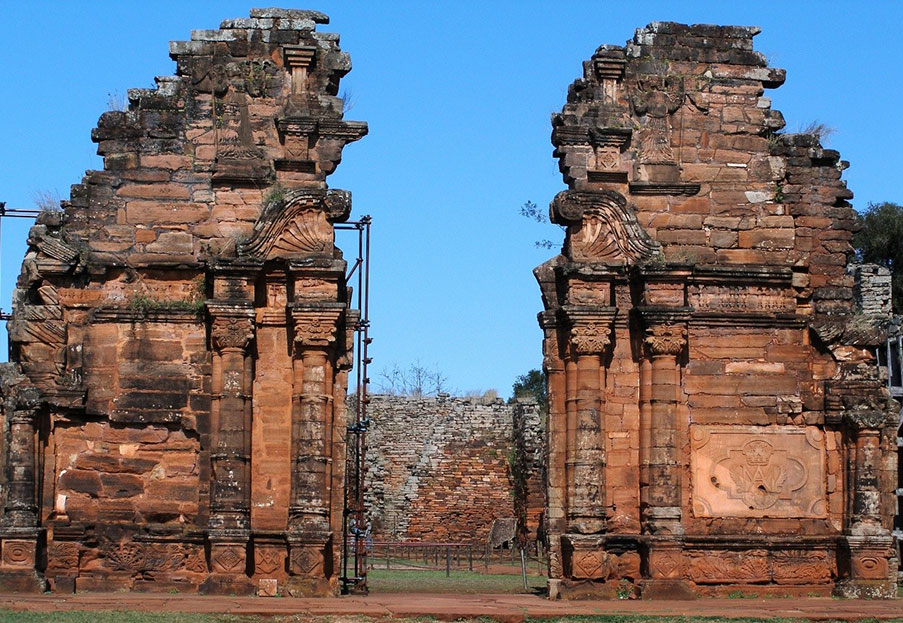
The Paraquarensis Province was separated from that of Peru in 1604. It comprised the territories of the present-day states of Paraguay, Argentina, Uruguay, part of Bolivia, and, temporarily, Chile. One of the most notable ministries in this Province was the Guaraní reductions...
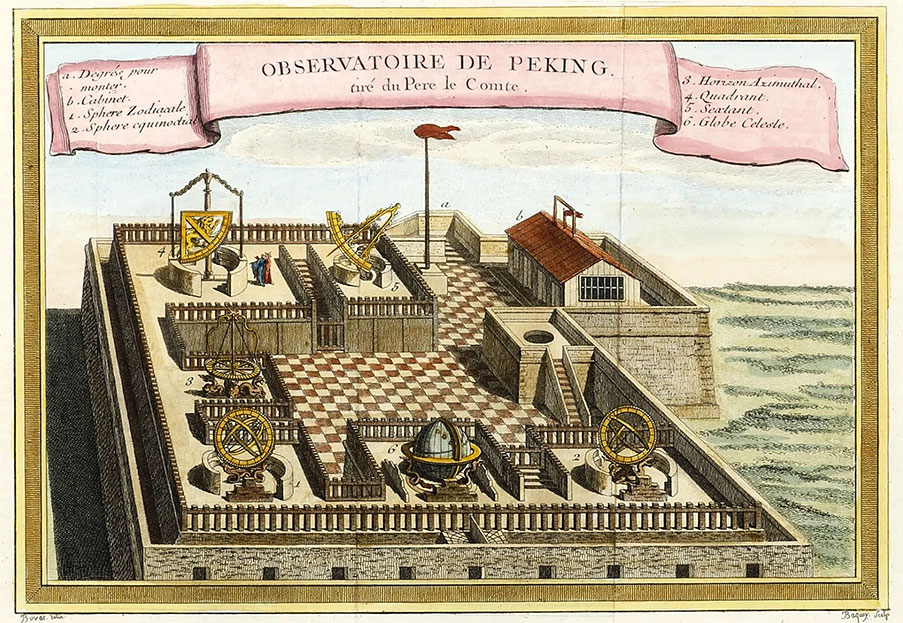
On 21 June 1629, the sky above Beijing darkened for a few moments. To astronomers, it was a partial solar eclipse. To the Chinese imperial court, however, the phenomenon had a much deeper significance. For centuries in China, eclipses had been interpreted as messages from Heaven...
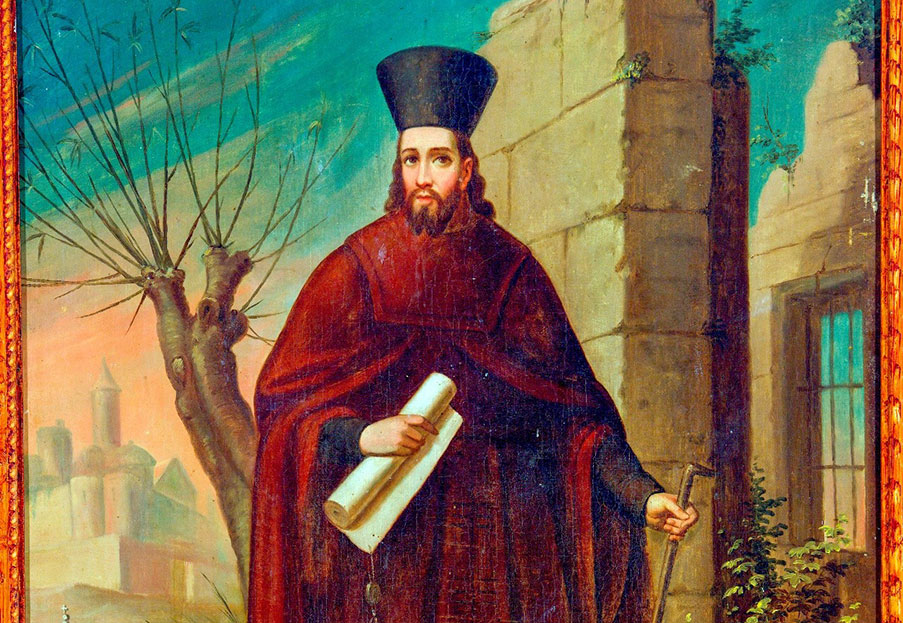
On 5 June 1546, Paul III signed the brief “Exponi nobis”, which addressed how men who did not belong to the original group of highly qualified priests of the Society could nonetheless belong to it and serve its mission. The brief did so by establishing the grade of coadjutor...

Four hundred and eighty-four years ago, the Apostle of Asia stepped ashore in Portuguese India – marking both the end of a long formation and the beginning of a ministry that would span a continent. The arrival of St Francis Xavier (1506–1552) in Goa, India, on 6 May 1542 was at once a...