The eclipse of an era: How the Jesuits changed the skies over Beijing
By Mauro Brunello | Archivum Romanum Societatis Iesu (ARSI)
On 21 June 1629, the sky above Beijing darkened for a few moments. To astronomers, it was a partial solar eclipse. To the Chinese imperial court, however, the phenomenon had a much deeper significance. For centuries in China, eclipses had been interpreted as messages from Heaven, signs capable of reflecting the state of the empire and the relationship between the emperor and the cosmic order. When the sun darkened, one looked not only to the sky, but also to the throne. For this reason, the accurate prediction of celestial phenomena was one of the most important functions of the imperial court. The official calendar was not merely a tool for measuring time; it represented one of the foundations of the sovereign’s authority. Correctly predicting eclipses, conjunctions and other celestial phenomena meant demonstrating that the government was in harmony with the order of the universe. Errors in astronomical calculations could therefore have significant political consequences, and the astronomers charged with making predictions bore an enormous responsibility.
By the early 17th century, however, something was no longer working as it once had. The astronomical systems used by the Ming dynasty were showing increasing limitations, and predictions were becoming less and less reliable. Whilst China sought a solution, on the other side of the world, Europe was undergoing a period of great scientific transformation. It was in this context that the Jesuits entered the scene.
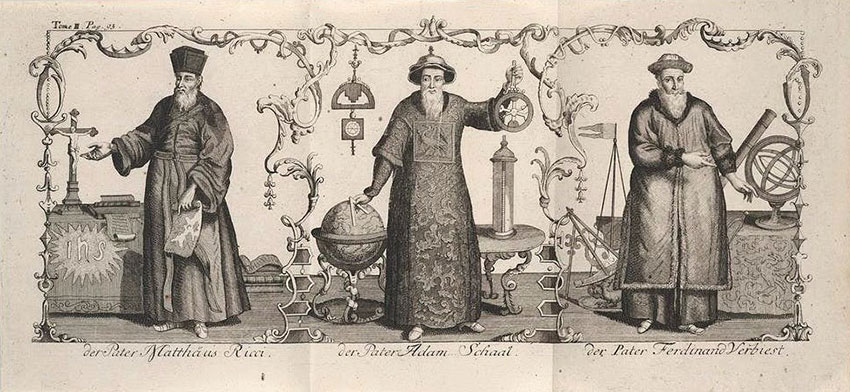
Missionaries such as Matteo Ricci, Johann Schreck, Sabatino de Ursis and Adam Schall von Bell brought not only Christianity to China but also books on mathematics, astronomical instruments, and methods of calculation developed in European universities and colleges. They soon realised that science could become a common language through which to engage with Chinese scholars and officials.
The eclipse of 21 June 1629 provided the perfect opportunity to put Western expertise to the test. The court compared three different predictions: that of the traditional Chinese astronomers, that of the court’s Muslim astronomers, and that calculated using the methods introduced by the Jesuits.
For a long time, it was said that the test ended in a resounding victory for the missionaries. The reality was less spectacular. None of the three systems was flawless. However, the Western calculations proved, on the whole, more convincing, particularly in predicting the duration and extent of the eclipse.
The result had a significant impact. For the imperial court, it was not simply a matter of establishing who had been right. It was necessary to identify which method offered the best guarantees for the future. A few months later, Emperor Chongzhen entrusted the high-ranking official Xu Guangqi, a collaborator of the Jesuits and a convert to Christianity, with the task of initiating a calendar reform using the new astronomical knowledge.
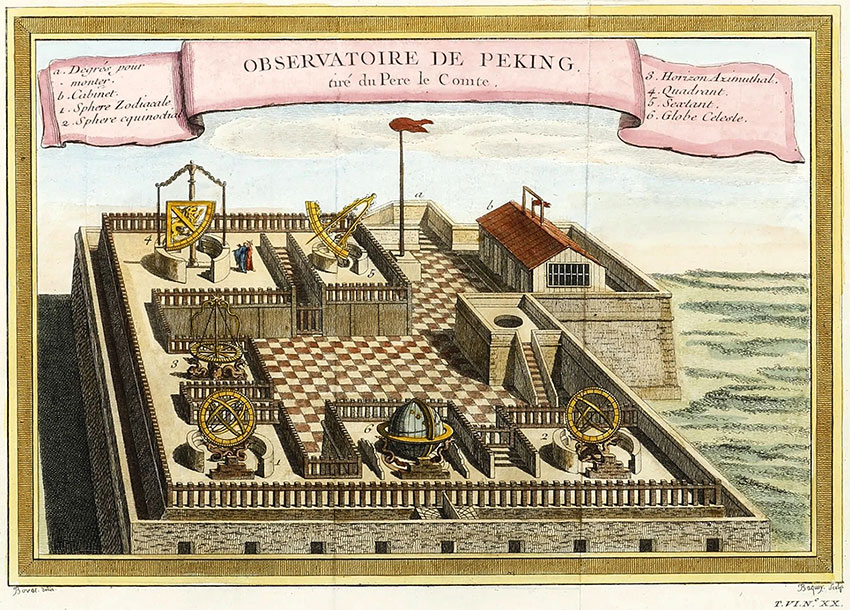
That decision had lasting consequences. With the advent of the Qing dynasty in 1644, the Jesuit Adam Schall von Bell was appointed head of the Imperial Astronomical Bureau. For the first time, a European held such a prestigious position within the Chinese administration. In the decades that followed, other Jesuits continued this work, contributing significantly to the development of astronomy, cartography and mathematics in China.
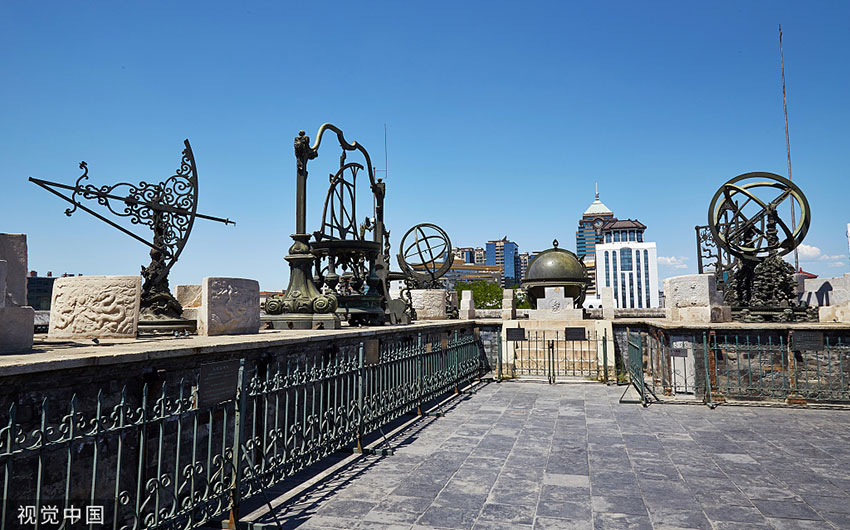
Among them, Ferdinand Verbiest stands out; in the second half of the 17th century, he consolidated the role of the Society of Jesus at the court of Emperor Kangxi. Thanks to his scientific expertise and the construction of new astronomical instruments for the Beijing Observatory, Verbiest further strengthened the reputation earned by his predecessors and helped to secure the Jesuits’ presence within the Empire’s scientific institutions.
The eclipse of 21 June 1629 thus represented much more than an astronomical event. It was the moment when the Jesuits’ scientific expertise won the trust of the imperial court, paving the way for a collaboration destined to last over a century. From then on, the Jesuits became privileged interlocutors of the Chinese emperors and key figures in one of the most extraordinary encounters and exchanges of knowledge of the early modern era.

Related Posts:

The Paraquarensis Province was separated from that of Peru in 1604. It comprised the territories of the present-day states of Paraguay, Argentina, Uruguay, part of Bolivia, and, temporarily, Chile. One of the most notable ministries in this Province was the Guaraní reductions...
On 5 June 1546, Paul III signed the brief “Exponi nobis”, which addressed how men who did not belong to the original group of highly qualified priests of the Society could nonetheless belong to it and serve its mission. The brief did so by establishing the grade of coadjutor...

On 22 May 1622, Pedro Páez died in Gorgora (Gondar, Ethiopia). He was born in Olmeda de las Fuentes (Madrid, Spain) in 1564 and entered the Society at the age of 20 at the novitiate in Villarejo de Fuentes (Cuenca, Spain), although older biographies state that he entered in Coimbra...

Four hundred and eighty-four years ago, the Apostle of Asia stepped ashore in Portuguese India – marking both the end of a long formation and the beginning of a ministry that would span a continent. The arrival of St Francis Xavier (1506–1552) in Goa, India, on 6 May 1542 was at once a...