St Francis of Assisi Reimagined Through Indian Dance and Drama
On 5 June, a remarkable spectacle of cultural convergence took place at the General Curia’s Sala Nadal, where participants gathered to experience the life and message of St Francis of Assisi through the medium of Indian classical dance, music and drama.
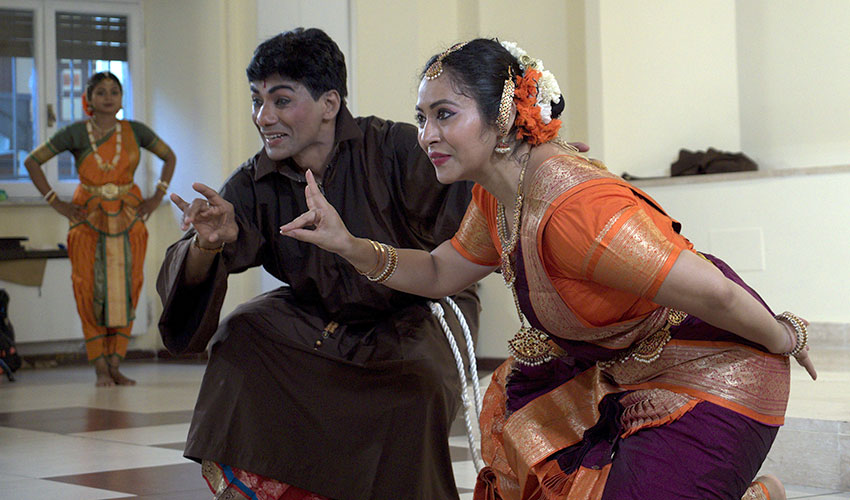
Fr Saju George, a Jesuit from the Calcutta Province led a company of professional dancers in a dance drama that reimagined the Saint’s timeless message of simplicity and harmony with all of creation. Eight centuries ago, St Francis walked this earth, his vision continues resonate across continents, spiritualities and traditions – and on this evening, that vision found expression through the language of movement, rhythm and dance.
Movement as a spiritual expression
Indian classical theatre draws from a tradition that dates more than two millennia, anchored in texts and practices that have been passed down through generations. This ancient heritage is deeply woven into Hindu spirituality and other traditions that have shaped Indian culture itself. Fr Saju explains that there is even a text that is over 2,200 years old!
Reflecting on his own path into performing arts, Fr Saju recalls being drawn to artistic performances from an early age. This interest gained direction during his undergraduate years at St. Xavier’s College in Calcutta where he began to take formal lessons in Indian classical dance, theatre and music from professional dancers. When Fr Saju engaged with these classical forms, he recognized something extraordinary – they offered a uniquely eloquent language for communication. What began as an artistic inclination evolved into a profound conviction: that performing arts could become a vehicle for spiritual expression and a means of communicating experiences of God in ways that words alone cannot capture.
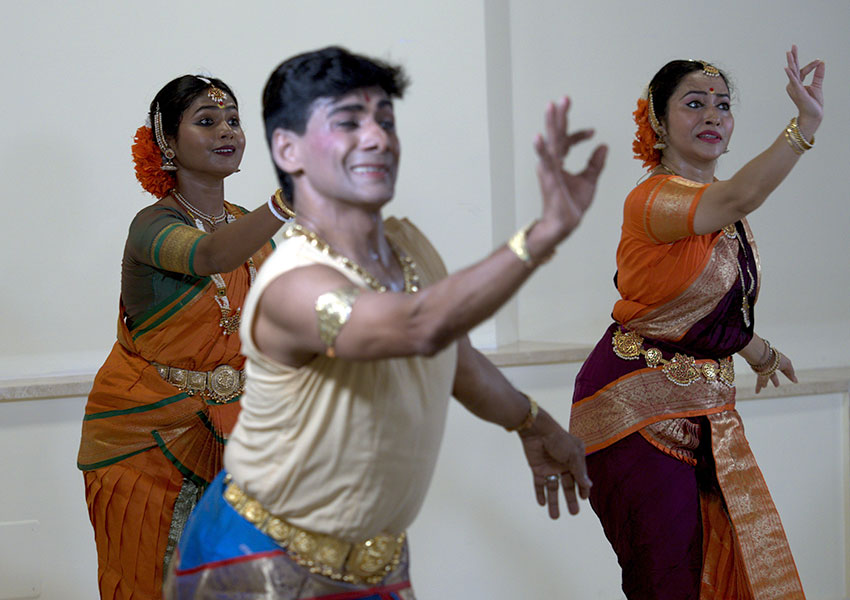
The art form expresses itself through an intricate system of gestures called “mudras”, along with facial expressions and full-body movements, all of them precisely codified and developed over centuries. For Fr Saju, this rich expressive tradition became a bridge between ancient spiritual practices and contemporary faith expression.
Why St Francis of Assisi
Fr Saju has portrayed the lives of many saints and remarkable figures through this artistic apostolate – from St Francis Xavier and St Ignatius to St Vincent de Paul and Saint Teresa of Calcutta. He has also dramatized social themes and biblical stories, each time testing the boundaries of creativity and expression within Indian classical theatre.
The initiative to create this piece on St Francis of Assisi came through the Consulate General of Italy in Calcutta, which was planning activities to commemorate the 800th anniversary of the death of the saint. Fr Saju immersed himself in preparation. He read extensively and even travelled to Assisi itself to speak to locals to gain both historical and spiritual contexts for this artistic representation.
A fusion of traditions across continents
The performance draws from “Bharatanatyam” – one of India’s classical dance forms, enriched with creative contemporary dance movements. The music itself reflects a fusion of classical Indian music with modern and western elements blended into an experience that honours both European and Asian traditions. The score unfolds in both predominantly English language mixed with some Bengali to render the performance accessible to the audience.
A saint for all times
At its core, the message of the performance serves as a tribute to St Francis of Assisi and to represent him as an agent of peace and reconciliation between peoples, humanity and our common home. It echoes the prayer for peace often associated with the saint: “Lord, make me a channel of your peace”.
Beyond just mere entertainment, Fr Saju and the dancers invited everyone to imagine a more peaceful and harmonious world – one that St Francis envisioned eight hundred years ago, and one that remains urgently relevant today.
Fr Saju and his team are actively involved in teaching and passing down the important cultural patrimony of Indian classical dance to young people.He has many scheduled performances in the coming days including at the Church of St Ignatius in Rome and in other venues across Europe.

Related Posts:
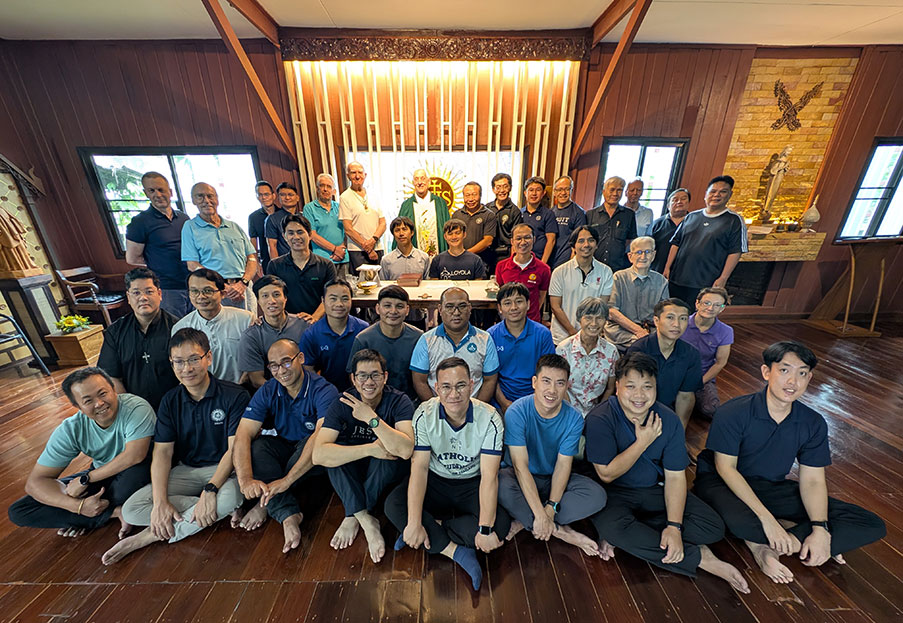
The Society of Jesus in Thailand is relatively small, with 37 Jesuits concentrated in three communities serving four cities, but the history of the Jesuits in Thailand goes back centuries, to the time of Saint Francis Xavier and the first missions of the Society of Jesus to what was then called...
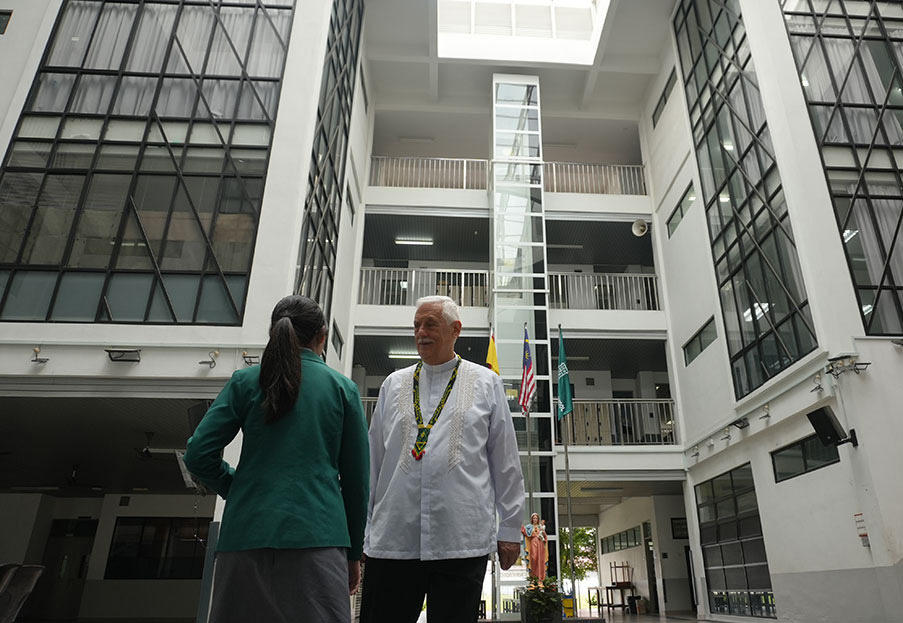
On a sunny mid-week day in Kuching, Fr General Sosa visited St. Joseph’s Private Secondary School (SJPS) where the Jesuits of the Malaysia-Singapore Region work as teachers and administrators. Currently, Fr Stanley Goh is the Rector, while Fr Francis Lim served as the first...
“Malaysia and Singapore are two nations with shared histories but divergent trajectories. While both countries are multicultural and multireligious, their distinct socio-political climates – Malaysia’s constitutional Islam and Singapore’s pragmatic secularism – shape the struggles...”

In an effort to strengthen global collaboration and advocacy across regions, the Global Ignatian Advocacy Network (GIAN) – an apostolic platform of collaboration animated and coordinated by the Social Justice and Ecology Secretariat of the Society of Jesus (SJES) – has launched...

The Caring for Community and Creation (CCC) project was initiated by the Jesuit Conference of Asia Pacific (JCAP) in 2022 to address poverty and ecology as identified in the JCAP apostolic plan. The project has three specific objectives, one of which is strengthening communities through...

Fr Arturo Sosa, SJ, arrived in Kuching, Malaysia to begin his 5th apostolic visitation of the Jesuit Conference of Asia Pacific (JCAP). With a full schedule of meetings and travel between different Jesuit ministries and communities in Malaysia, Thailand and Indonesia...