Francis Borgia and Gandía: A Visit that Reopens Memory and Mission
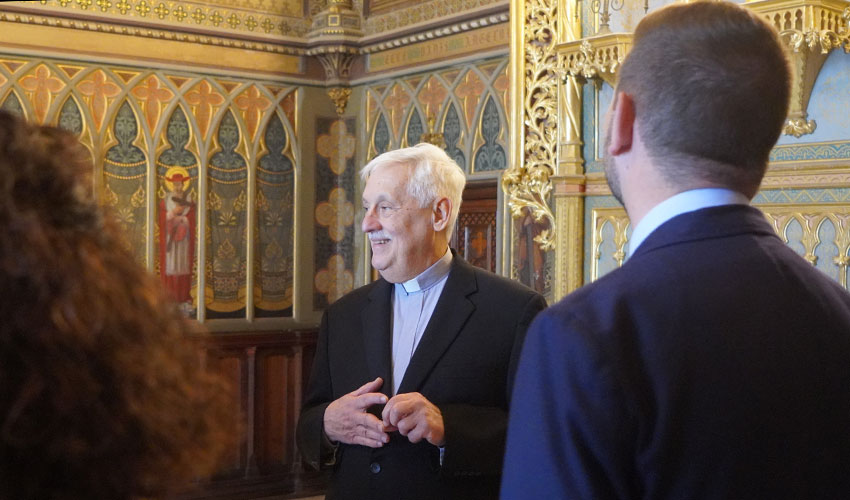
The visit of the Superior General of the Society of Jesus to Gandía puts the spotlight back on the birthplace of San Francisco de Borja and on a relationship – spiritual, cultural, and educational – that spans five centuries. Father Sosa’s itinerary, in keeping with the Universal Apostolic Preferences, invites us to look at the legacy of Borja not as an illustrious memory, but as a call to renew the mission in terms of reconciliation and justice.
Born in the Palau Ducal of Gandía on 28th October 1510, Francis Borgia embodied a decisive transition: from a grandee of Spain and viceroy of Catalonia to a Jesuit and, later, to becoming the third Superior General of the Society of Jesus. After his wife’s death (1546), he set his affairs in order, renounced his titles, and entered the Society. In 1554, Ignatius of Loyola entrusted him with the general commissariat for Spain – with influence over Portugal – and, upon the death of Diego Laínez, the General Congregation elected him Father General in 1565. He died in Rome on September 30, 1572, and was canonized in 1670. Throughout his life, the pattern is clear: prudent governance, a strong impulse for formation, and missionary expansion.
The Palau Ducal of Gandía.
His bond with Gandía was both affective and institutional. He founded the first Jesuit college in Spain – the first in Europe to admit non-Jesuit students. With the papal bull of Paul III in November 1547 and imperial support, it became the University of Gandía. Historians consider it the first Jesuit university and the direct antecedent of the educational commitment that, over time, would mark the Society of Jesus around the world.
Jesuit presence in Gandía experienced seasons of splendor but also of rupture. The expulsion of 1767 brought a dramatic break and led to the university’s closure a few years later. Yet the bond was restored with vigor in the nineteenth century: on 31st August 1888, the Jesuits acquired the Palau Ducal – the saint’s birthplace – and, ever since, the recovery of its heritage and its cultural revitalization have been constant, while the educational work has taken concrete form in today’s Colegio Borja. Declared a Site of Cultural Interest in 1964, the Palau is now one of the landmarks of Valencian civic architecture and a driver of cultural and tourist programming in the city.
Institutionally, the Palau Ducal is governed by a public-private foundation whose board includes the Society of Jesus. This arrangement has made it possible to preserve the spiritual and Jesuit memory of St Francis Borgia.

Although the resident Jesuit community at the Palau was closed in 2023, the Society’s relationship with Gandía has not been interrupted. It exemplifies how works – beyond a stable community presence – can keep the charism alive and foster collaboration with the local Church.
The Father General’s visit to the hometown of St Francis Borgia brings recognition and gratitude for a history that begins in Gandía and reaches the entire Society through the saint. It is a reminder that the Society’s history cannot be understood without this city, and at the same time a call to the city to continue drawing inspiration from the life of its most universal saint.
The Universal Apostolic Preferences offer a framework for rereading Borgia’s legacy with a view to the future – from school and culture to urban pastoral care and welcome. Walking the Borgia sites of Gandía confirms that memory is not a museum piece, but a mission shared with other institutions and with the citizenry.
Related Posts:
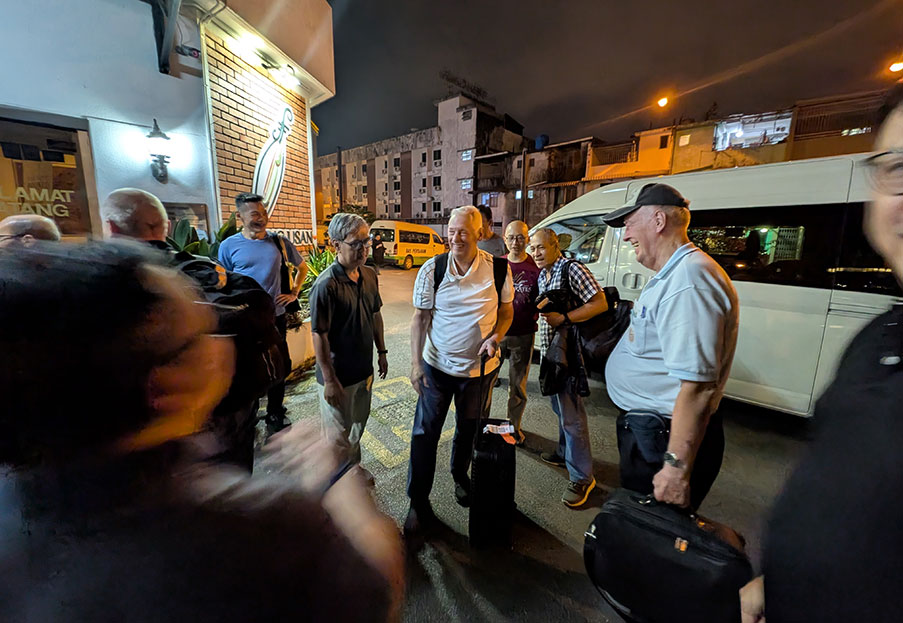
Fr Arturo Sosa, SJ, arrived in Kuching, Malaysia to begin his 5th apostolic visitation of the Jesuit Conference of Asia Pacific (JCAP). With a full schedule of meetings and travel between different Jesuit ministries and communities in Malaysia, Thailand and Indonesia...
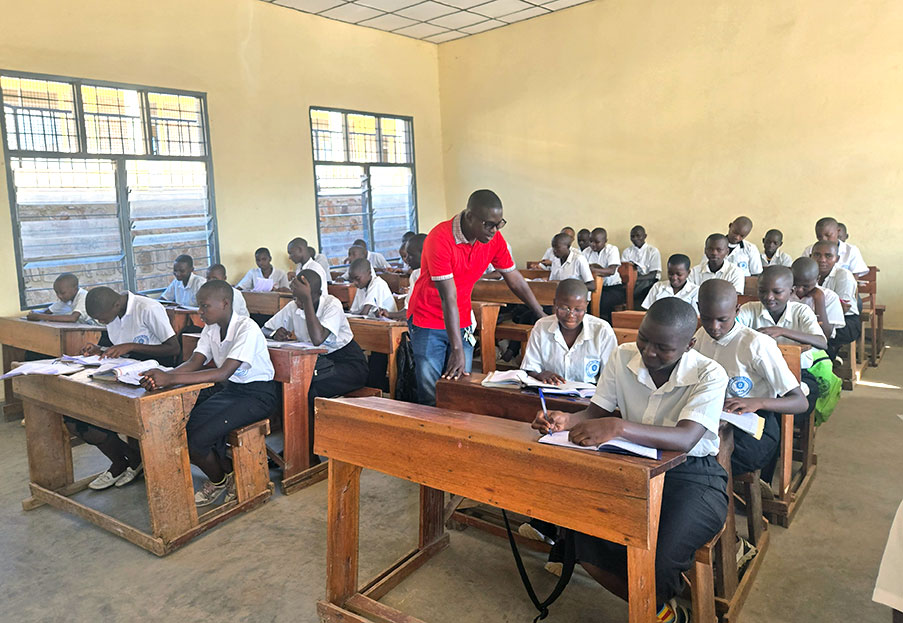
École Fondamentale Saint Louis de Gonzague was built to give every child space to be included, to live and learn alongside others, and to recognize their dignity as human beings. When the Jesuits founded the school in September 2004, in a region greatly affected by...
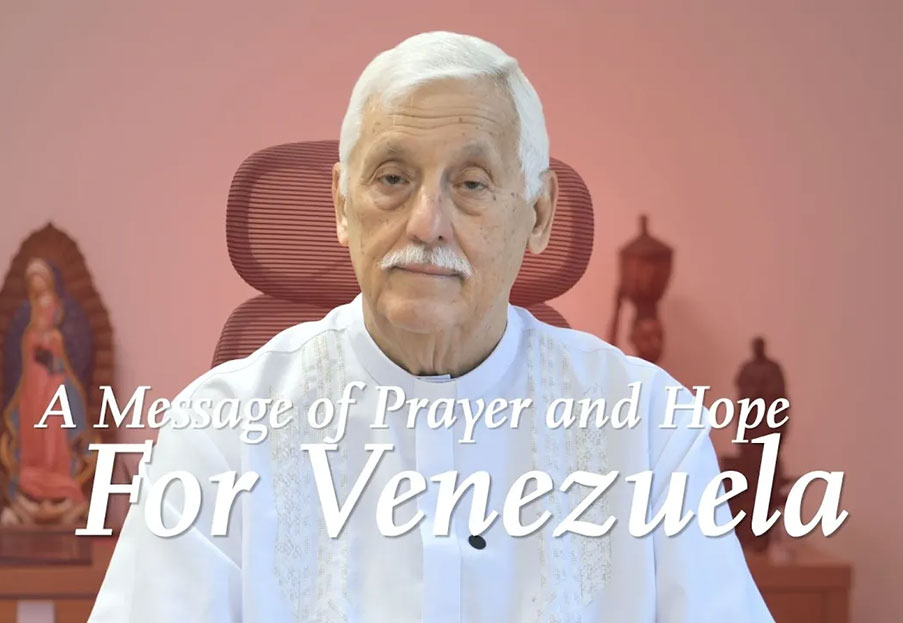
As Venezuela begins the difficult task of recovering after two strong earthquakes that claimed lives, left many missing and caused widespread destruction, Father General Arturo Sosa has sent a message of closeness and hope to the Venezuelan people.
As the Society of Jesus prepares for the II Congress JESEDU-Montreal 2027, a global process of review, discernment, and foresight is now underway. This initiative seeks to evaluate how the shared vision for Jesuit education has been implemented across the worldwide network of...
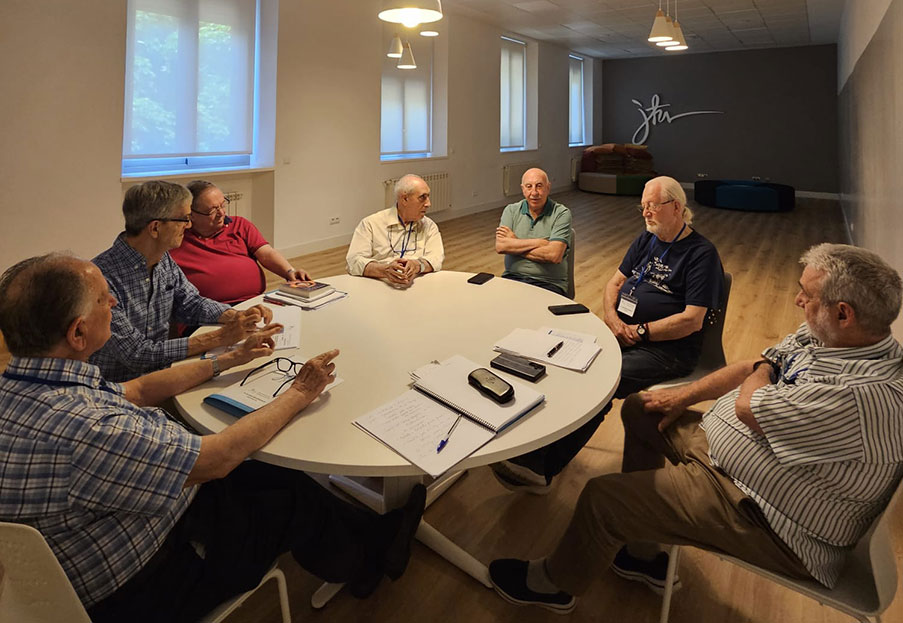
From 23 – 31 May, the Delegation for the Elderly of the Spanish Province organised the third edition of the formation course for elderly Jesuits at the Jesuit House in Salamanca. The program brought together 24 Jesuits aged between 70 and 85, with one or two participants in their 90s...

“Since the third Universal Apostolic Preference was given to us, I have spent time discerning how the General Curia can help to move it forward. I didn’t want to set up a heavy structure. I didn’t think a Secretariat here in the Curia was needed. In the end, I opted for a light network structure...”