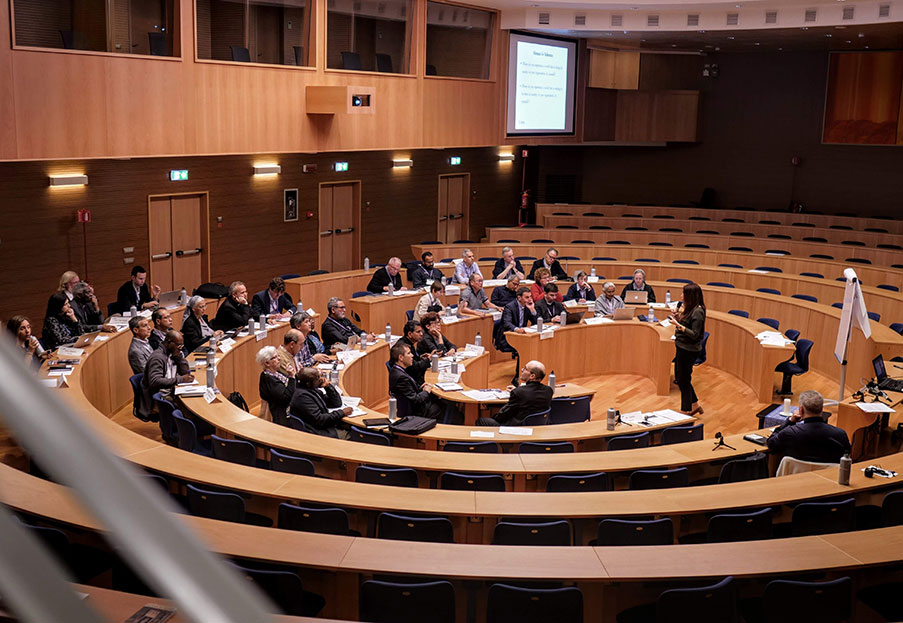
Father General at the Pontifical Biblical Institute of Jerusalem
Academia as encounter with the past and the present
Reflection by Josef Mario Briffa, SJ
Fr Josef Mario Briffa, SJ, is the Director of Academic Programmes at the Pontifical
Biblical Institute in Jerusalem
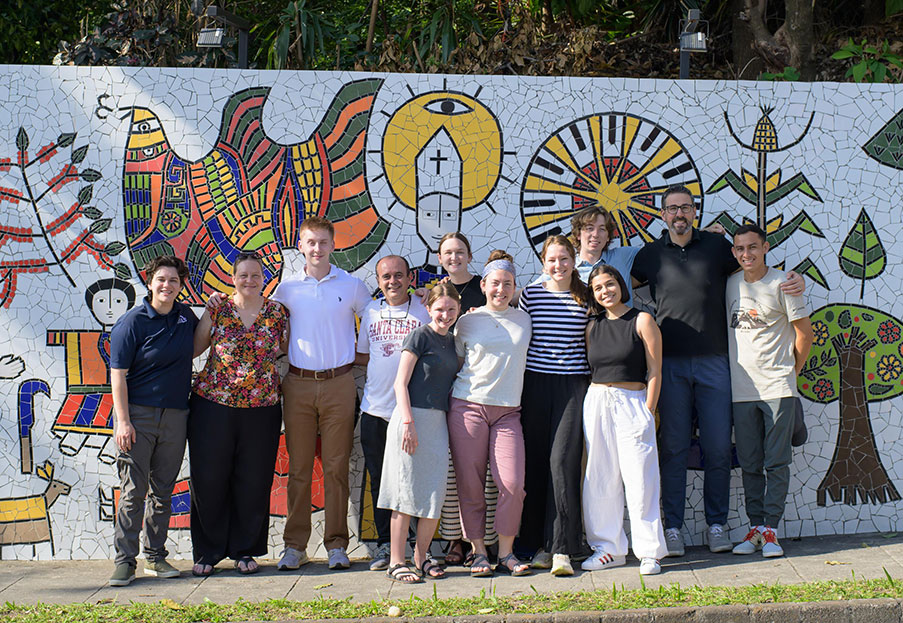
On 18 October 1925 the foundation stone of the Pontifical Biblical Institute in Jerusalem was lain with great ceremony. This was to be the starting point for the fulfilment of a dream that started in 1913, four years after the foundation of the Pontifical Biblical Institute in Rome. The dream was not about the stone and mortar, but of encounter with the land of Incarnation and salvation. As such it is highly significant that Father General, with his team as well as the Rector of the Pontifical Gregorian University – of which the Pontifical Biblical Institute is now part – should visit us at the century milestone of that foundation.
Father General’s visit also came at an important moment in world events, coming after two years of war in Gaza, with only very fragile ceasefire in place. His presence helped to confirm both the work of the Pontifical Biblical Institute, as well as the ministerial presence of the Jesuit community who chooses to remain present as a concrete sign of hope, a sign of reconciliation, and a sign of working for a different future.
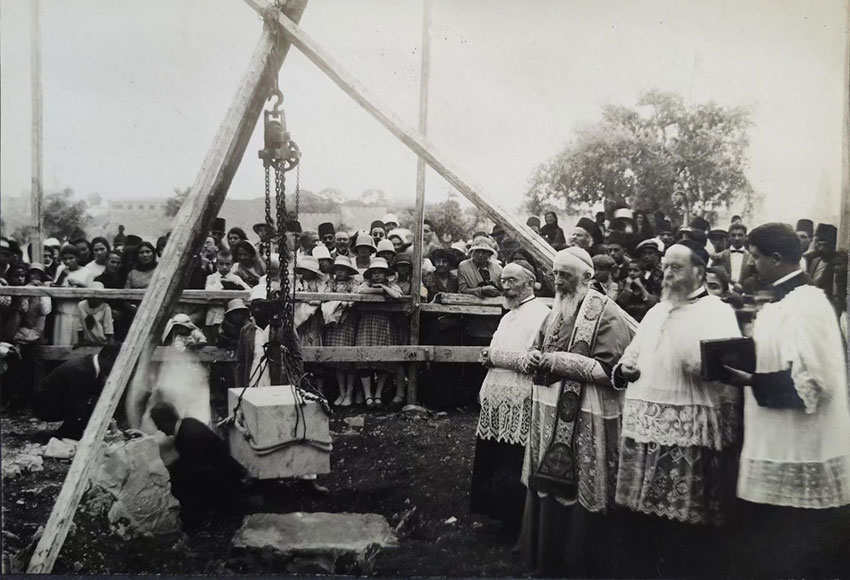
Back in 1913 the idea of the Institute was to provide a base in Jerusalem for students and faculty from Rome who come to complete their studies in Scripture by visiting the Holy Land, the land of the Bible itself. Soon enough, through tireless academic work, the Institute found itself involved in the wider academic network, both through archaeological excavations, as well as through research and collaboration with fellow institutions that were and are still based in Jerusalem.
Over the century, this land has seen many geopolitical shifts – from Ottoman empire to British Mandate, then to the wars of 1948, 1967, and 1973. Then to the intifadas, and a series of wars and military operations of different scales that have shaped and reshaped the region time and time again. As the constant conflicts reshaped the region, so they reshape its peoples.
Since the 1970s, the Pontifical Biblical Institute has developed an important relationship with the Hebrew University of Jerusalem. This relationship has allowed our students – primarily postgraduate students specialising in Sacred Scripture, many of whom are priests – to spend a semester in Jerusalem. The Pontifical Gregorian University, and notably the Cardinal Bea Centre for Judaic Studies, also has an important connection with the Center for the Studies of Christianity, with students from both centres having the opportunity to spend some of their study in their respective counterpart.
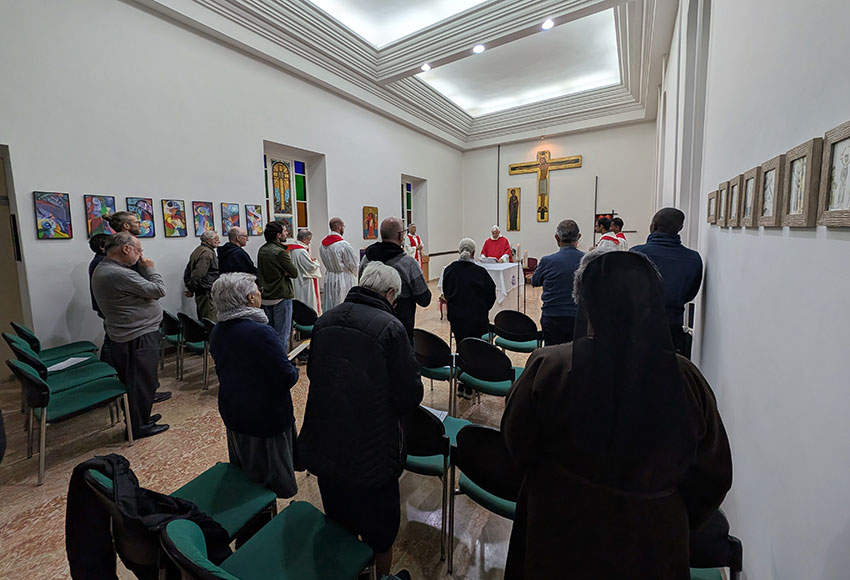
In terms of concrete connections, our Institute also has close ties with the DominicanÉcole Biblique et archéologique française, as well as the Studium Biblicum Franciscanum, both specialist schools for the study of Sacred Scripture and archaeology. These ties allow our students to spend a semester (or even a year) of study in Jerusalem. Father General’s visit was a moment of encounter even with fellow Catholic institutions with whom we already collaborate, providing encouragement to all of us.
Our joint programme with the Hebrew University of Jerusalem, set up only a few years after Nostrae Aetate, was the dream of Fr (later Cardinal) Carlo Maria Martini, when he was Rector of the Pontifical Biblical Institute. This relationship developed further in recent years, offering our students more flexibility regarding the courses in which they can enrol. Moreover, in the last three years we have offered a course taught jointly by two professors – currently Prof Noam Mizrahi from the Hebrew Universityand myself for the Pontifical Biblical Institute. This course is a concrete space of encounter between our students, mostly Catholic priests, the local students – most of whom are Jewish – as well as other international students from diverse backgrounds. The visit by the Rector of the Pontifical Gregorian University to the Hebrew University of Jerusalem, helps highlight the importance of our ties, and with providing spaces of encounter.
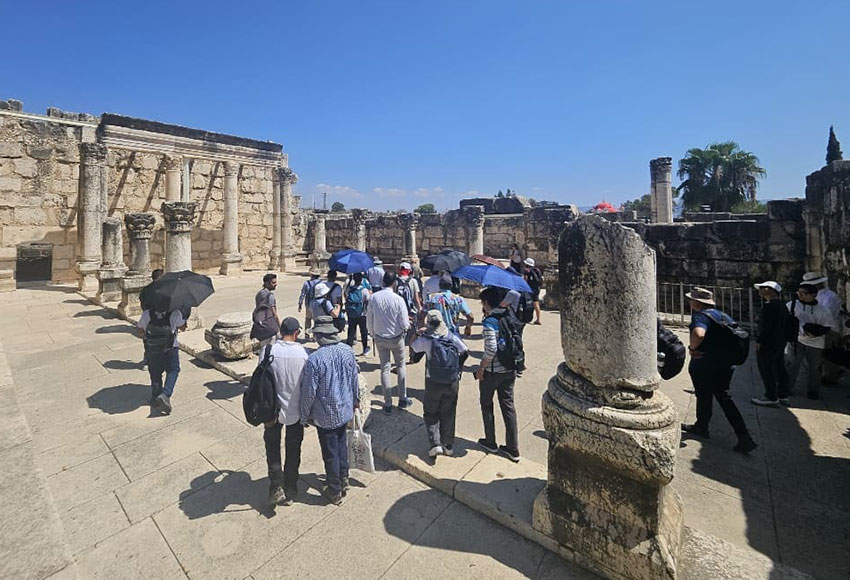
During the semester programme the students also have the opportunity to visit sites of archaeological and religious interest both in Israel and within the Palestinian Territories. A highlight for the students is the midnight Mass on Christmas night. Aside from the visits themselves, the time in Jerusalem becomes a time of encounter, not only with the past, but also with the lived reality of the present, both where it is painful and difficult, but also in those small signs of hope where people seek concretely to life and be together in mutual respect.
Personally, I am also part of the excavation team at the Lautenschlager Azekah Expedition, led by Tel Aviv University, in conjunction with Heidelberg University and several international partners. Over the years, the project – aside from its scientific importance for me as an archaeologist – has also become an important space of respect, encounter, friendship, across national and religious boundaries of various kinds.
When the war broke out in 7 October 2023, it came as brutal shock to all. There was a call for us to evacuate, but after conversations with our partner institutions in Jerusalem, as well as the authorities of the Institute in Rome, we decided to stay. While we took the safety of our students and staff as paramount importance, we knew our presence would provide an important sign of hope. My experience during the first years helped me become aware of how significant our decision to stay was for our friends and colleagues, whether Israeli or Palestinian, whether Christian, Muslim or Jewish, believing or non-believing.
Staying was a concrete sign of hope in a situation that felt increasingly hopeless, a sign of not being abandoned, not being sidelined. Our concrete hope, following the visit of Fr. General, is that the potential of encounter that the Institute, as part of the Gregorian University, may grow further in more concrete ways, realising that peace and reconciliation needs to be built through encounter, building bridges and not walls, where the “other” ceases to be the other, but becomes a partner and a friend.
Related Posts:
As Venezuela begins the difficult task of recovering after two strong earthquakes that claimed lives, left many missing and caused widespread destruction, Father General Arturo Sosa has sent a message of closeness and hope to the Venezuelan people.
As the Society of Jesus prepares for the II Congress JESEDU-Montreal 2027, a global process of review, discernment, and foresight is now underway. This initiative seeks to evaluate how the shared vision for Jesuit education has been implemented across the worldwide network of...

“Since the third Universal Apostolic Preference was given to us, I have spent time discerning how the General Curia can help to move it forward. I didn’t want to set up a heavy structure. I didn’t think a Secretariat here in the Curia was needed. In the end, I opted for a light network structure...”

The Enlarged Council brought together the Secretaries of the Apostolic Sectors, General Counsellors, General Treasurer, Presidents of Conferences, and other officials at the Curia to examine a central question: How to increase and deepen collaboration across apostolic...
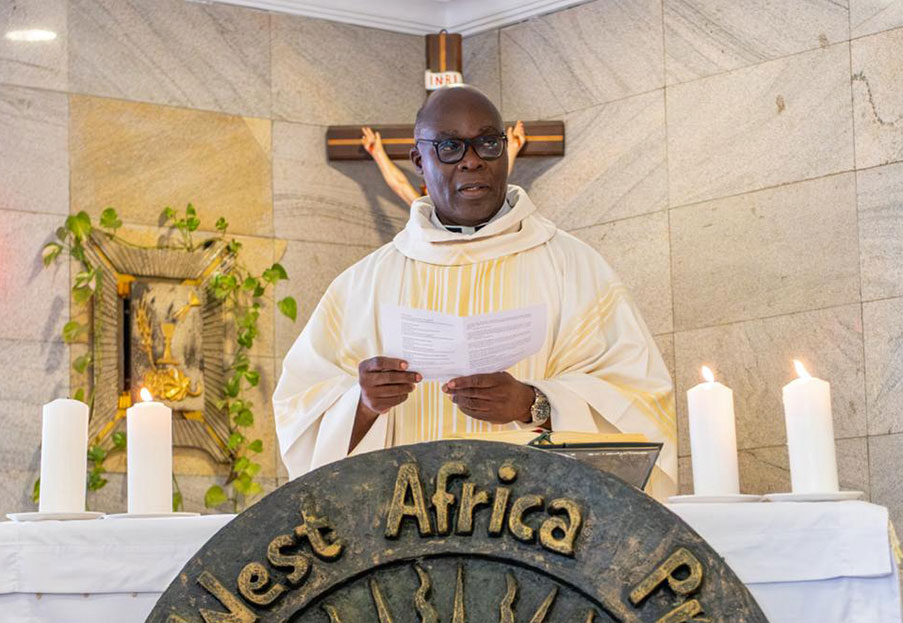
Father General Arturo Sosa has appointed Fr John Kobina Ghansah as the new Regional Assistant for Africa and Madagascar and General Counsellor. Fr Ghansah, currently Provincial of the North-West Africa Province (ANW), will assume his new role on 6 January 2027...

In April 2026, Pope Leo XIV made the first-ever papal visit to Algeria. Two weeks later, Father Arturo Sosa, SJ, Superior General of the Society of Jesus, travelled to Algeria to visit the small Jesuit community there for the first time since his election in 2016. The land of St Augustine, bishop of Hippo...