Kohima Jesuits: A Frontier Mission Comes of Age
By Samir Talati, SJ*
The Kohima Jesuit Province stands at a decisive moment in its history. In the far north-eastern corner of India, the Jesuit mission that began modestly in 1970 has grown into a vibrant apostolic presence. Rooted in more than fifty years of frontier mission across Northeast India, the Kohima Jesuit Region was elevated to the status of a Province in 2025. With this elevation, a new phase begins – one marked not only by institutional maturity but also by renewed discernment about its future. The Province now looks ahead with a clear sense of purpose – to consolidate the mission it has built over decades while responding creatively to emerging realities in the region. At the heart of this future vision lies a deep commitment to the people among whom the mission first took root, especially the rural and tribal communities of Northeast India.
Fr Valerian Castelino, the first Provincial, describes the Kohima Province as a “United band of happy Jesuits with a strong commitment to the poor and the marginalised”, a phrase that captures both the communal joy and the preferential option for those on the margins that will shape priorities going forward. This identity – incarnational, communal, and mission-focused – frames the future horizon, seeking to balance the consolidation of present ministries with selective expansion in higher education, research, and formation, so that leadership increasingly emerges from within the region itself. This article has emerged from insights gained in an interview with Fr Valerian Castelino about the future hopes and aspirations of the newly established Province.
A Mission Rooted in the Church of the Northeast
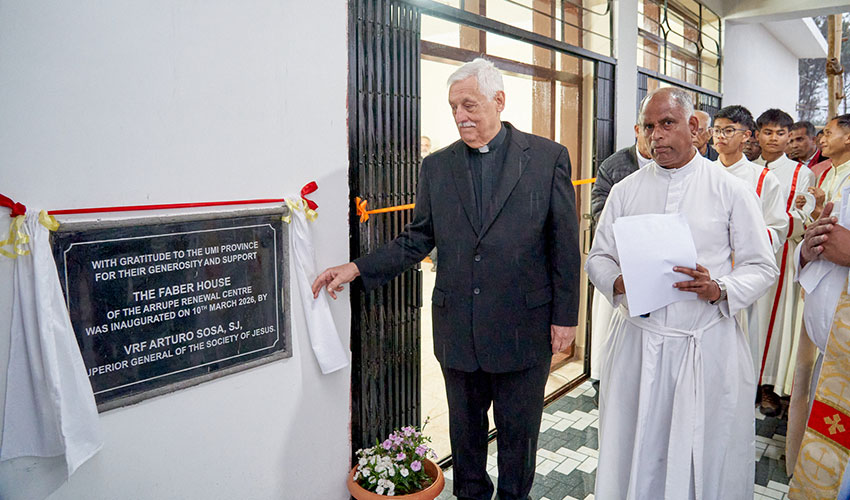
After more than five decades of presence in Northeast India, the Province understands its core identity as a frontier mission rooted among the region’s diverse people. This identity continues to shape its vision today: to remain a Church that walks with the people, attentive to their cultures, struggles, and aspirations. The Kohima Jesuits understand their mission as being at the service of the Church in Northeast India. They work alongside bishops, clergy, religious congregations, and lay leaders in strengthening pastoral life, education, and social outreach. Their apostolic priorities are guided by both the Universal Apostolic Preferences of the Society of Jesus and the Province’s own Apostolic Plan, which seek to respond to the specific realities of the Northeast. Looking ahead, the Province hopes to deepen this collaborative model of mission. Jesuits are widely welcomed in many dioceses across the region. Responding to the many requests to open Jesuit centres will require careful discernment, balancing expansion with the need to consolidate the province’s existing works.
Central to realising the future vision is the indigenisation of vocations and a deliberate formation strategy. The Province envisions a formation programme with early identification of young Jesuits for higher studies and specific ministries. The vision of vocations extends beyond mere regional needs to embrace the diverse demands of the global Jesuit society. In addition, the Province places strong emphasis on the quality of formation. Through careful planning, the Kohima Jesuits hope to prepare men capable of serving effectively in diverse ministries such as education, pastoral outreach, research, and social engagement.
Youth ministry and accompaniment in a digital, globalised era are also priorities. The Province aims to equip young people with critical thinking, data literacy, legal awareness, ecological stewardship and intercultural communication, while forming Jesuits and lay leaders capable of mentoring youth in contexts shaped by migration, social media and changing aspirations. Formation will therefore include both pastoral sensitivity and technical skills relevant to contemporary challenges.
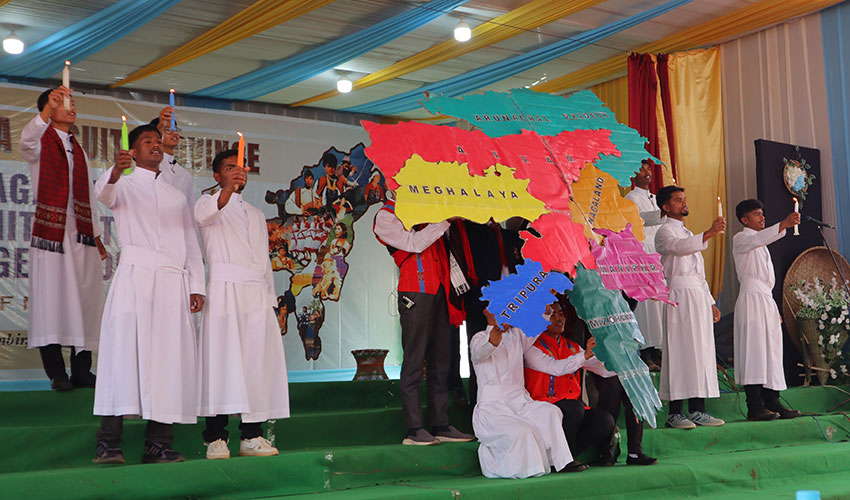
Education remains the Provinces’ flagship apostolate, but with a strategic reorientation. The Province seeks to deepen higher education and research, especially in the fields of Law, Management Studies, Mass Communication, Master of Social Work, and Teacher Education. While higher education will focus on holistic application of knowledge to various facets of life, job creation will remain its critical focus. In addition, research on crucial issues of Northeast India – land, migration, ecology, conflict, and identity – will provide reliable data and insights to the younger generation to support social transformation. Given the Northeast’s status as a biodiversity hotspot, the Province intends to link ecological responsibility with livelihoods and cultural identity, rather than treating it as an add-on. This ecological emphasis is seen as integral to both social justice and the preservation of tribal identities intimately connected to the land and natural resources.
Governance and the Question of Sustainability
As the Province moves forward, questions of governance and sustainability inevitably arise. Building institutions, forming young Jesuits, and sustaining social initiatives require careful planning and responsible stewardship of resources. Generating sufficient local resources within the country is challenging. While being grateful to the generous benefactors, the Province is well aware of the need to secure the resources necessary for long-term stability without losing sight of the Jesuit commitment to serve the poor.
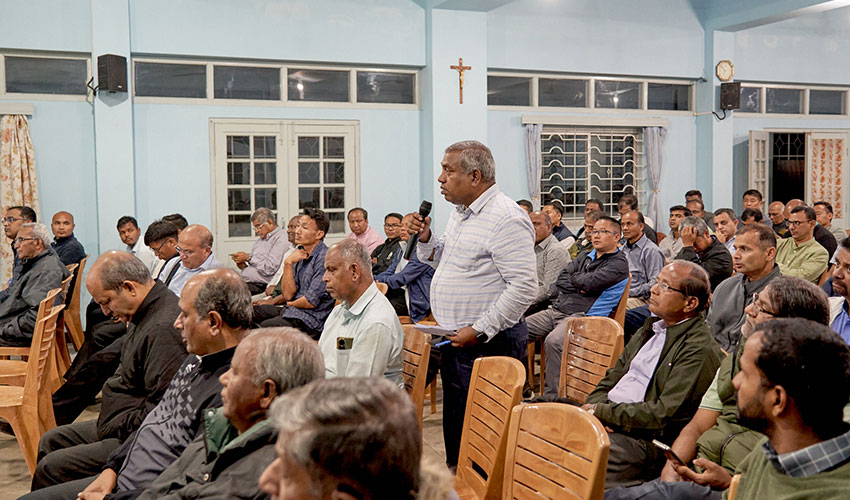
At the same time, the Province is also mindful of the challenges that accompany the growth of its mission in the Northeast. Ensuring the availability of well-trained Jesuits to guide its expanding ministries and developing sustainable financial resources remains an important priority. The task ahead is to build stable and effective institutional structures while remaining faithful to the Jesuit commitment to serve the poor and to contribute meaningfully to the spiritual, social and intellectual life of the Northeast.
Looking ahead, the Kohima Jesuit Province enters a new stage in its history with gratitude to the pioneers who began the journey in humility and with confidence in the communities that continue to sustain it. The mission that began quietly in a few villages of Nagaland has now grown into a dynamic regional presence. Yet its deepest aspiration remains simple: to walk with the peoples of Northeast India in faith, justice, peace, solidarity, and hope as they shape their own future. Fr Valerian’s message to the next generation of Kohima Jesuits is both hopeful and realistic: be rooted in local culture, rigorous in formation, and bold in education and social action.
*Fr Samir Talati, SJ, belongs to Kohima Province and works as a researcher at North East Social Research Centre, Guwahati, India.

Related Posts:

Fr Arturo Sosa, SJ, arrived in Kuching, Malaysia to begin his 5th apostolic visitation of the Jesuit Conference of Asia Pacific (JCAP). With a full schedule of meetings and travel between different Jesuit ministries and communities in Malaysia, Thailand and Indonesia...
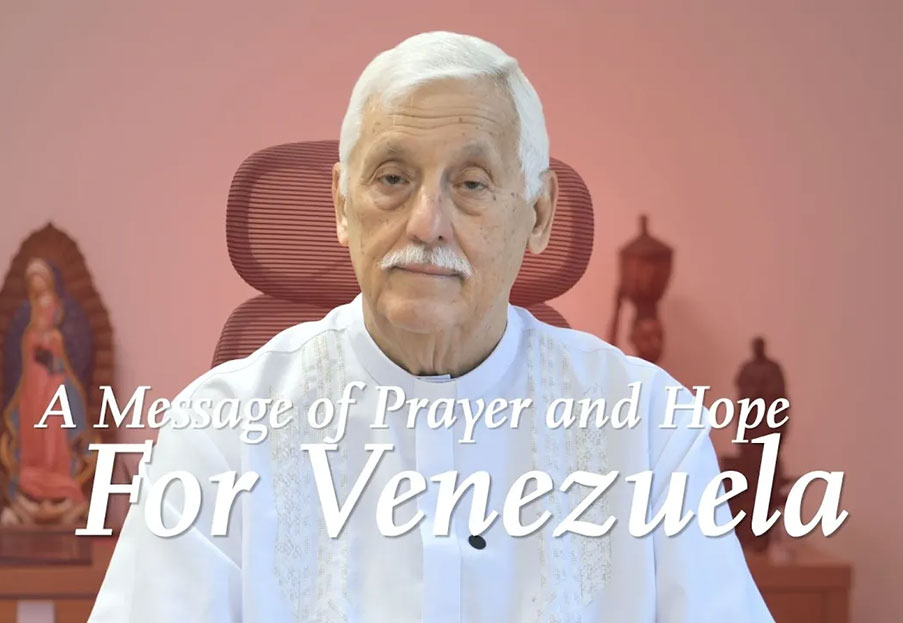
As Venezuela begins the difficult task of recovering after two strong earthquakes that claimed lives, left many missing and caused widespread destruction, Father General Arturo Sosa has sent a message of closeness and hope to the Venezuelan people.
As the Society of Jesus prepares for the II Congress JESEDU-Montreal 2027, a global process of review, discernment, and foresight is now underway. This initiative seeks to evaluate how the shared vision for Jesuit education has been implemented across the worldwide network of...

“Since the third Universal Apostolic Preference was given to us, I have spent time discerning how the General Curia can help to move it forward. I didn’t want to set up a heavy structure. I didn’t think a Secretariat here in the Curia was needed. In the end, I opted for a light network structure...”

The Enlarged Council brought together the Secretaries of the Apostolic Sectors, General Counsellors, General Treasurer, Presidents of Conferences, and other officials at the Curia to examine a central question: How to increase and deepen collaboration across apostolic...
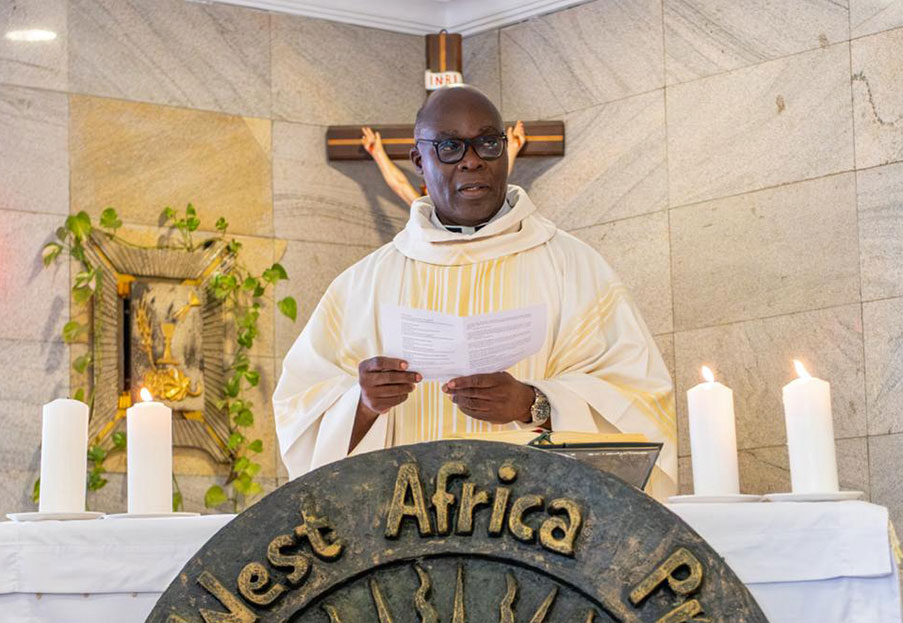
Father General Arturo Sosa has appointed Fr John Kobina Ghansah as the new Regional Assistant for Africa and Madagascar and General Counsellor. Fr Ghansah, currently Provincial of the North-West Africa Province (ANW), will assume his new role on 6 January 2027...