Learning by Doing… a Global Apostolic Network
By José Mesa SJ, former Secretary for Secondary and Pre-Secondary Education
“Puerilis instituto est renovatio mundi (the education of the youth is the renewal of the world)”, Juan Bonifacio SJ, circa 1575.
“The educational apostolate in all its ramifications, recommended in a special way by the Church in our day, is to be valued as of great importance among the ministries of the Society for promoting today’s mission in the service of faith from which justice arises. For this work, when carried out in the light of our mission, contributes greatly to ‘total and integral liberation of the human person, leading in the participation in the life of God himself’.” (Complementary Norms, Part VII, #277)
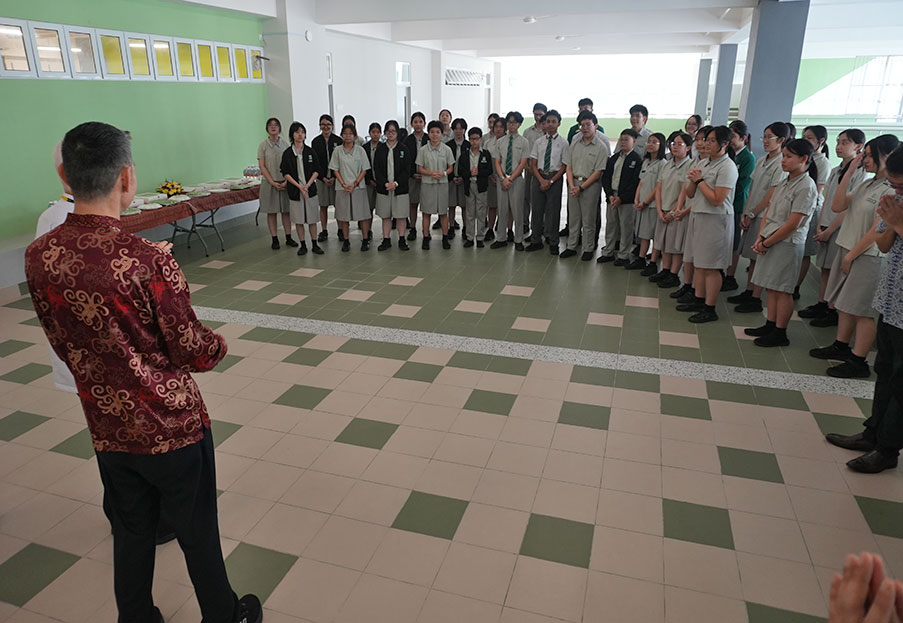
Although Saint Ignatius and the first Jesuits did not consider opening schools at the very beginning, they quickly discover their apostolic potential and became deeply involved in education. Thus, they understood that they needed common guidelines to guarantee a shared identity and to create a sustainable system. The Ratio Studiorum of 1599 offered such standards with the classic Jesuit flexibility to accommodate to times, places and persons and to guarantee that the schools could remain focused on their raison d’être: “to take care than in our colleges not only our own scholastics may be helped in learning, but also those from outside in both learning and good habits of conduct... looking always to the greater service of God our Lord” (Const. #392). Fr Arrupe expressed it in a contemporary language: “The basic idea behind all that I have to say is simply this: the secondary school is an effective apostolic instrument which the Society entrusts to a community... the purpose can only be apostolic... is an authentic act of ‘mission’” (Our Secondary Schools: Today and Tomorrow, 1980, #6).
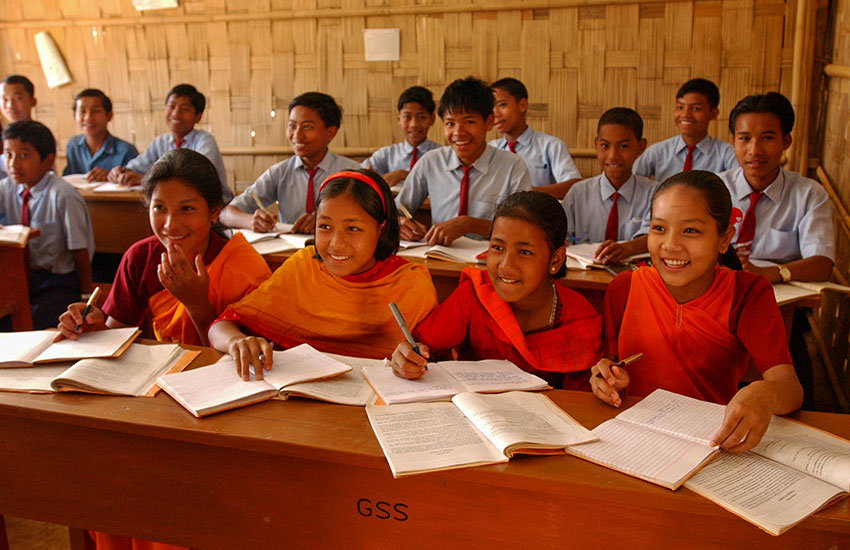
Therefore, the challenge for our schools today is how they can serve the mission of the Society. General Congregation 36 (GC36) has defined this mission as a mission of reconciliation and justice with God, within Humanity and with Creation and express through the Universal Apostolic Preferences (UAPs) entrusted by Pope Francis to the Society. The UAPs asks that our schools can show people the way to God (UAP #1); walk with the outcasts of the world in a mission of reconciliation and justice (UAP #2); accompany the young in the creation of a hope-filled future (UAP #3); and collaborate in the care of our common home (UAP #4).
General Congregation 35 (GC35) reminded us that “Serving Christ’s mission today means paying special attention to its global context. This context requires us to act as a universal body with a universal mission, realizing at the same time the radical diversity of our situations. It is a worldwide community – and, simultaneously, as a network of local communities – that we seek to serve others across the world.” (GC35, D.2, No. 20)
Our schools have responded to the challenges walking the path of global collaboration, discernment and networking. This path has helped us to affirm our roots. The first Jesuits encouraged frequent correspondence and sharing of good practices. In education they created the Ratio Studiorum providing common guidelines. Today we recognize that “in this global context it is important to highlight the extraordinary potential we possess as an international and multicultural body. Acting consistently with this character can not only enhance the apostolic effectiveness of our work, but in a fragmented and divided world it can witness to the reconciliation in solidarity of all children of God.” (GC35, D.3, No.43)
How are our schools responding to this global context today?
I want to highlight two important developments that are helping our schools to respond: (1) The cycles of global gatherings and (2) New levels of networking and collaboration.
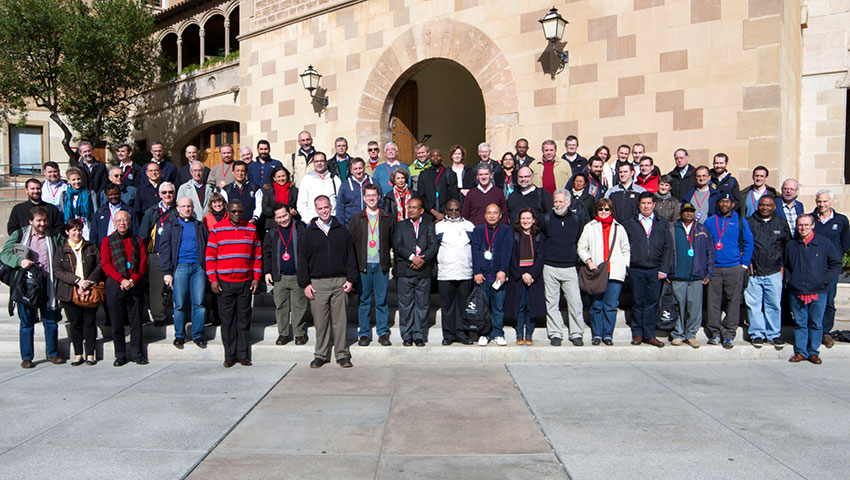
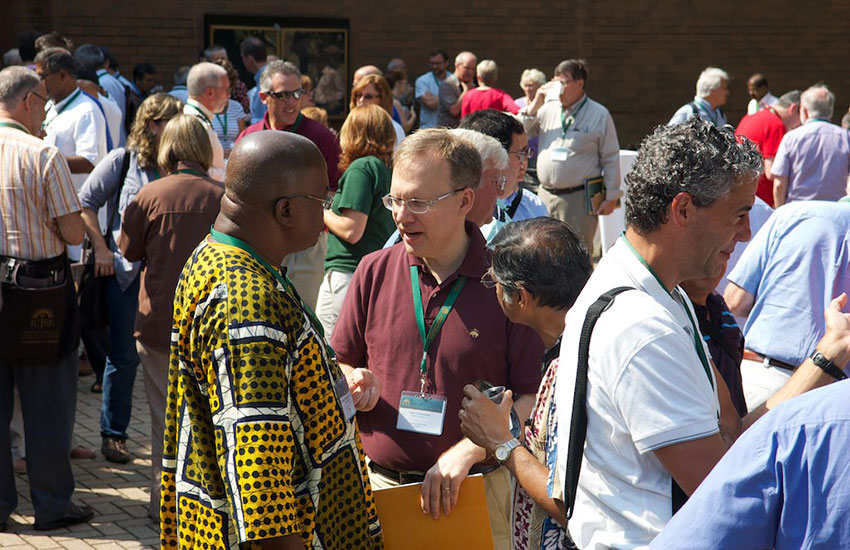
1. The Cycles. In 2012 Boston College High School organized the first ever global meeting of Jesuit Secondary Schools leaders, the International Colloquium on Jesuit Secondary Education (ICJSE). The vision statement of the meeting of more than 400 leaders captures well the significant of it: “At the conclusion of the meeting, the delegates are convinced that the new ‘signs of the times’ warrant a change in our way of proceeding. This new way of proceeding includes on-going communication and collaboration through a continued development of our international network of schools... and to provide our students with opportunities for a truly global education”. Indeed, the ICJSE began a new way of proceeding followed by other important gatherings such as SIPEI in 2014 and the Congress JESEDU-Rio in 2017. These gatherings have continued the true tradition of Jesuit Education of learning by doing. Soon we realized that the process would be better done with a cycle of gatherings: a colloquium first, followed by a seminar and then a congress.The first cycle (2012-2021) was called Discovering Our Apostolic Global Potential to raise awareness of our global outreach and incredible apostolic potential. In 2021 we began the second cycle: Walking as a Global Network at the Service of the Mission (2021-2030) with the goal of consolidating the Jesuit Global Network of Schools (JGNS) as an apostolic body at the service of our mission.
The Colloquium as the initial gathering of every cycle, aims to bring together members of our school leadership teams to experience firsthand the interconnectedness of the Jesuit network and our common mission. The Colloquium is mindful of current trends, both in the world and within Jesuit education, to set the tone for the cycle.
The Seminar is conceived as a moment of an in-depth reflection on a central topic or concern for Jesuit Education. In the case of the International Seminar SIPEI 2014, it was about the interrelation between Ignatian Pedagogy and Spirituality. For the II Seminar JESEDU-Jogja2024 the topic chosen is fundamental to our education: Educating for Faith in the 21st Century.
The Congress of Jesuit Education Delegates provides the necessary forum for people in charge of the local, regional, and international networks of Jesuit Schools to discern and promote a global agenda within the call of GC36 (2016) that discernment, collaboration, and networking form our “contemporary way of proceeding... suited to our times” (GC36, D.2 #3). The first Congress was organized in Rio de Janeiro, and it ended with an Action Statement that established an international agenda for our schools. Currently, the II Congress JESEDU-Montreal 2027 is being prepared.
2. New levels of Networking and Collaboration. Pope Francis words captures well the contemporary challenge for Jesuit Schools:“Many things have to change course, but it is we human beings above all who need to change. We lack an awareness of our common origin, of our mutual belonging, and of a future to be shared with everyone. This basic awareness would enable the development of new convictions, attitudes and forms of life. A great cultural, spiritual and educational challenge stands before us, and it will demand that we set out on the long path of renewal.” (Laudato si’ 202). It is clear that we cannot respond to the challenges of our time unless we work with our fellow schools and with others. In 2021 we officially launched the Jesuit Global Network of Schools to provide a platform for our schools to work at the global level. The gatherings are important, but gatherings alone are not enough to learn the path of collaboration. Well, we are learning. Educate Magis, the online community and platform of Jesuit/Ignatian educators have created unprecedented opportunities for working together and connecting with other schools in the world. Launched in 2015 Educate Magis now counts with more than 19.000 members. This has allowed many educators to work with others recognizing our shared values and creating amazing opportunities for collaboration developing a truly global education.
It is also true that Jesuit local and regional school networks are flourishing everywhere. Many have been around for many years like JSN North America or JEASA in South Asia with significant accomplishments. But we also have newer networks like JASBEAM in Africa & Madagascar that is providing a common vision and opportunities for formation and collaboration in a region that has seen many new Jesuit schools in recent decades and are planning many more. They just organized the II JASBEAM Colloquium in Harare with the participation of more than 200 people for our schools in this region. The quality of the event and the enthusiasm of the participants will certainly strengthen Jesuit education and will keep our tradition relevant to Africa. At the provincial and national levels many of our networks are thriving with new initiatives and collaborative projects. True that we still lack enough networking in some provinces and that some of our local networks or schools are still tempted by “a splendid isolation” and, in some cases, they need a bolder leadership that develops our full international potential.
Ultimately, the cycles and the new levels of networking guaranteed, as the document A Living Tradition (2019) argues that ours is indeed a living tradition and that Jesuit Schools are committed to remained relevant apostolic institutions for the Church and our world today.

Related Posts:
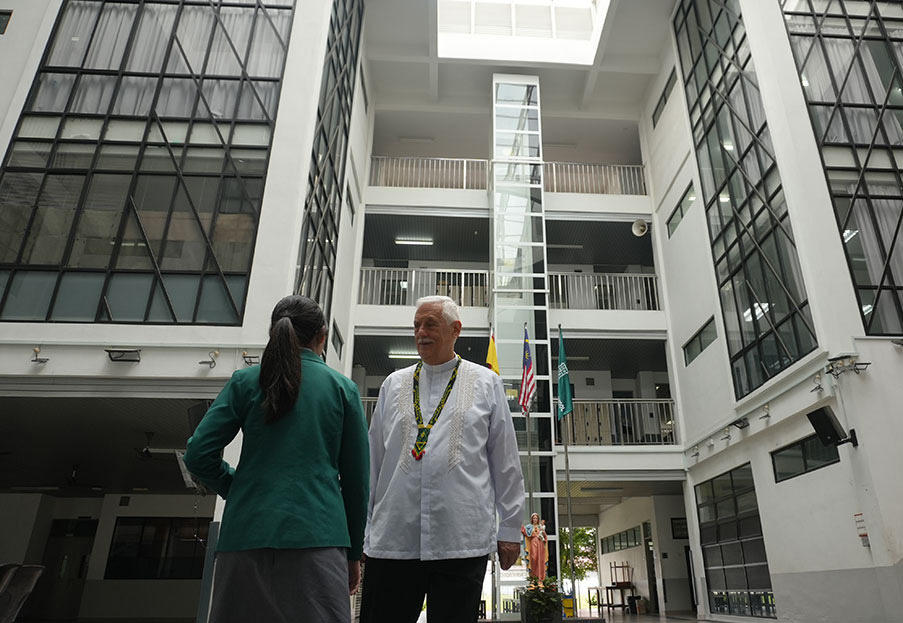
On a sunny mid-week day in Kuching, Fr General Sosa visited St. Joseph’s Private Secondary School (SJPS) where the Jesuits of the Malaysia-Singapore Region work as teachers and administrators. Currently, Fr Stanley Goh is the Rector, while Fr Francis Lim served as the first...

Excitement is building for MAGIS Korea 2027, the international gathering that will bring young people from across the Ignatian family to Korea ahead of World Youth Day in Seoul. A recent online information session, led by Fr Hakjoon Lorenzo, SJ, General coordinator of MAGIS Korea...
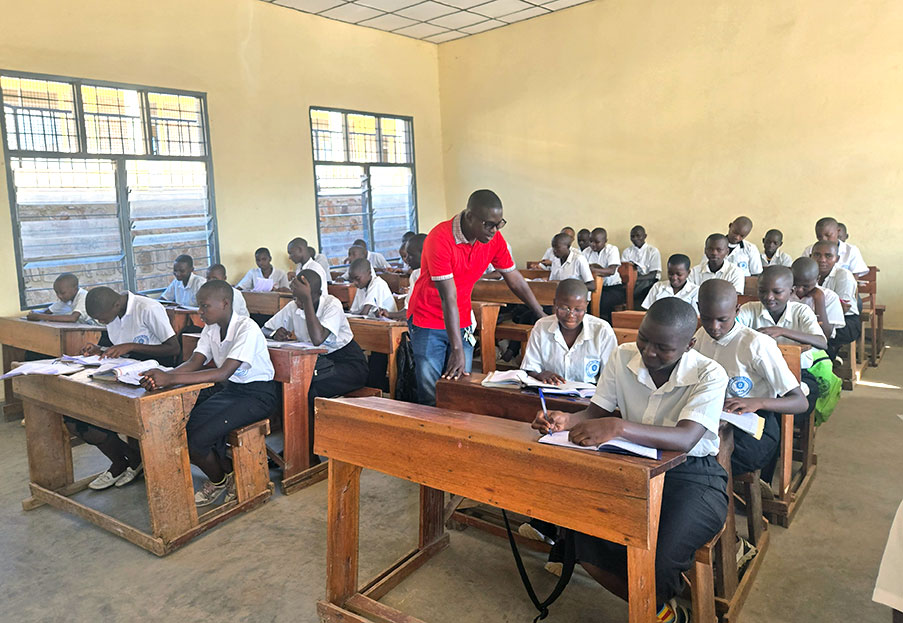
École Fondamentale Saint Louis de Gonzague was built to give every child space to be included, to live and learn alongside others, and to recognize their dignity as human beings. When the Jesuits founded the school in September 2004, in a region greatly affected by...
As the Society of Jesus prepares for the II Congress JESEDU-Montreal 2027, a global process of review, discernment, and foresight is now underway. This initiative seeks to evaluate how the shared vision for Jesuit education has been implemented across the worldwide network of...

“Since the third Universal Apostolic Preference was given to us, I have spent time discerning how the General Curia can help to move it forward. I didn’t want to set up a heavy structure. I didn’t think a Secretariat here in the Curia was needed. In the end, I opted for a light network structure...”

The Secretary for Secondary and Pre-secondary Education, with great joy and gratitude, announces that Fr Hugo Gómez Sevilla, SJ, a Jesuit leader with a wealth of valuable international leadership experience building networks, pastoral sensitivity, and a deep commitment to Jesuit education...