Social Justice and Integral Ecology: Igniting Hope for Africa’s Future
Fr Rampe Hlobo, SJ, was recently appointed the new director of the Jesuit Justice and Ecology Network Africa (JENA). The Network promotes social justice initiatives and fosters ecological awareness across the African continent. African nations face some of the most severe consequences of climate change, from food insecurity to water scarcity, driven by systemic inequality and environmental exploitation. These challenges are not isolated – they reinforce each other, disproportionately affecting the continent’s most vulnerable populations.
As Fr Rampe takes on his new important role, he answers a few questions reflecting on the challenges and aspirations of the African continent and the role of JENA within it.
What are the most urgent social justice issues currently affecting African communities – and how are they linked to environmental concerns?
The Interwoven Crisis of Social and Climate Injustice in Africa. The intersection of social justice and environmental degradation is starkly visible across Africa. Here, systemic inequality and ecological breakdown do not occur in isolation – they reinforce one another. Nowhere is this more evident than in the climate crisis.
Africa contributes the least to global greenhouse gas emissions, yet suffers some of the harshest consequences of climate change: prolonged droughts, devastating floods, desertification, and cyclones. These climate extremes are not abstract – they destroy crops and livestock, fuel hunger, and provoke conflict over dwindling resources. The poorest and most vulnerable bear the heaviest burdens of a crisis they did not create. Unsustainable farming practices further degrade fragile ecosystems, while food insecurity becomes the reality for millions. When floods or droughts wipe out agricultural yields, it is the rural poor – especially women and children – who suffer first and most.
Access to clean and safe water is another major front of injustice. In sub-Saharan Africa, millions lack basic access to clean drinking water and sanitation. Deforestation, pollution, and poor waste management contaminate water sources, while climate change disrupts rainfall, drying up rivers and aquifers. Water, a basic human right, is increasingly scarce – and this scarcity deepens existing gender and class divides.
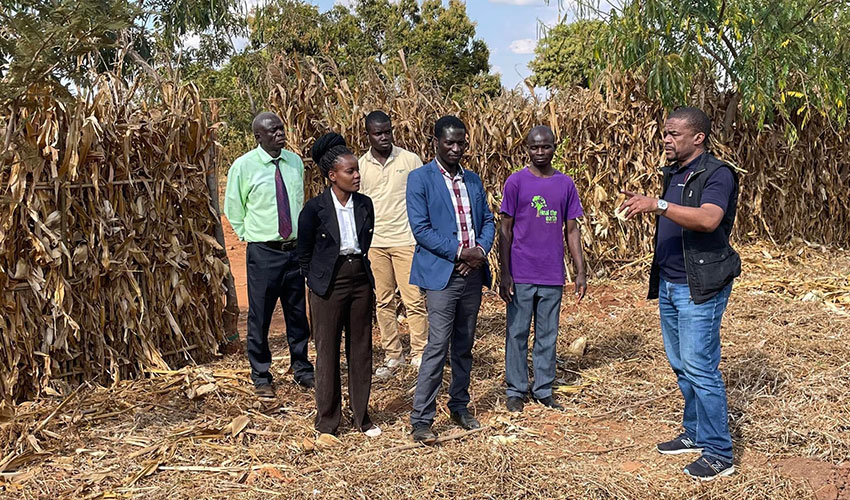
Africa is a young continent: over 60% of its population is under 25, with a median age of just 19.3. Yet one of the continent’s most alarming challenges is youth unemployment. Far too many young people are locked out of meaningful economic participation, facing staggering levels of joblessness and underemployment.
Economic exclusion is a crisis. When youth are denied dignified, sustainable work, poverty and inequality deepen. Rising temperatures and disrupted ecosystems only worsen this, reducing agricultural productivity and pushing pastoralist and farming communities into forced migration or resource-based conflict – intensifying joblessness and instability.
Extractive industries pose yet another layer of injustice. While Africa is rich in natural resources – gold, oil, cobalt, lithium – the benefits of these industries rarely reach the communities where extraction occurs. Instead, local populations face pollution, exploitation, displacement, and violence. Toxic spills and air pollution devastate ecosystems and fuel biodiversity loss, with no regard for the long-term health of people or planet.
These interlocking issues require an integrated response – one that recognizes the deep connections between environmental health, social equity, and human dignity. As Catholic Social Teaching and Laudato si’ remind us, care for creation is inseparable from care for the poor. We cannot heal the Earth without uplifting its people – especially the young, the marginalized, and the voiceless. Now is the time to act with courage, compassion, and vision – to build a just, sustainable future rooted in solidarity.
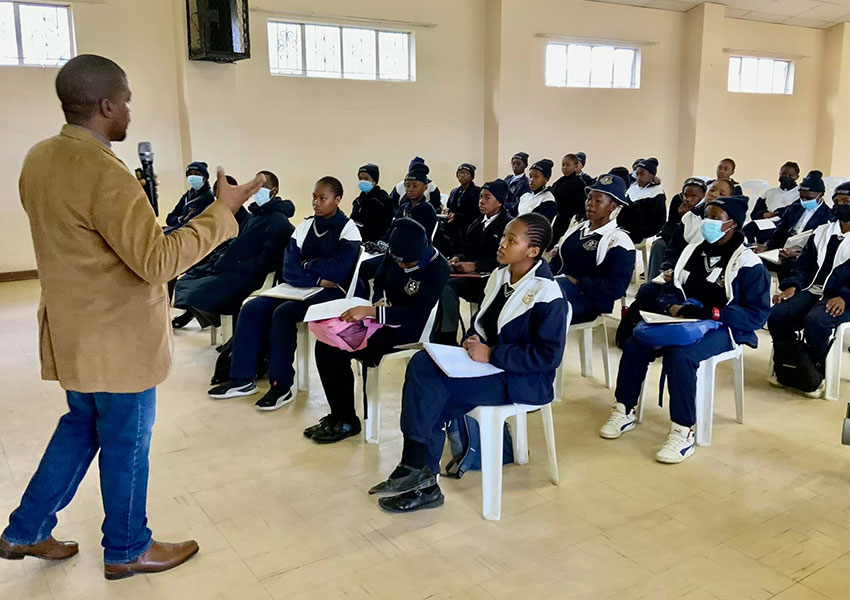
How can young people, especially in Africa, be empowered to lead the charge for climate and social justice?
With the youngest population in the world, Africa stands at a critical crossroads. Its youth are not only the leaders of tomorrow but the changemakers of today – navigating the complex labyrinth of climate and social justice. To secure a sustainable and equitable future for the continent, we must place the power of transformation in the hands of young people.
As Ugandan climate activist Vanessa Nakate reminds us: “We are not too young to lead. We are just too bold to wait.”
Africa’s youth are not waiting for permission – they are already leading climate marches, founding innovative start-ups, restoring fragile ecosystems, and speaking truth to power in the face of injustice. Empowerment begins with education. Young people must have access to quality education where climate literacy and social awareness are central – not optional. Our educational systems must evolve to foster critical thinking, environmental stewardship, and civic responsibility. Knowledge must translate into opportunities – through training and meaningful jobs in sustainable sectors that grow the Green Economy.
But education alone is not enough. We must also advocate for policies and legal frameworks that recognize the urgency of the climate crisis and the rights of young people to shape their future. From climate action laws to youth representation clauses, the law must empower, not exclude. This is not just a call to action – it’s a call to recognition. Africa’s youth are already leading. It’s time the world followed their lead.
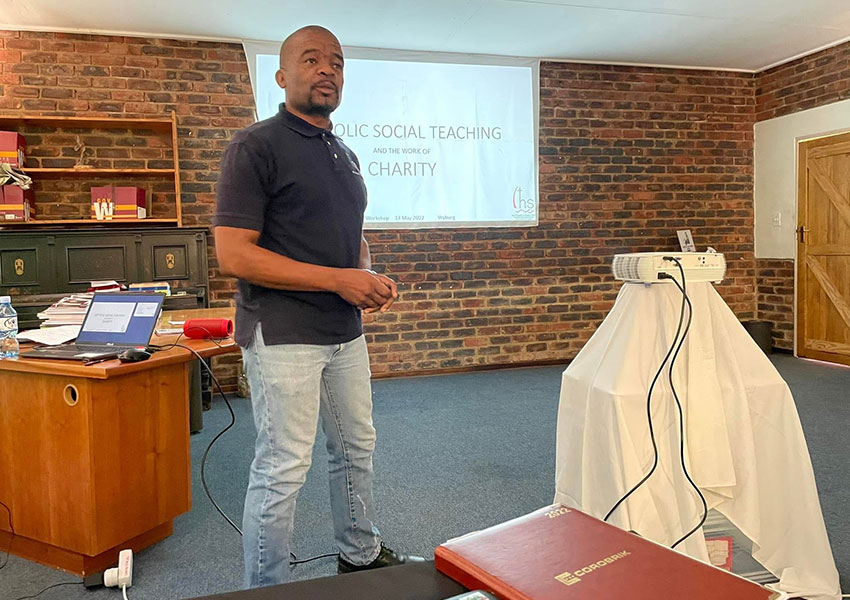
What is your vision for this network under your leadership? How do you plan to engage both grassroots communities and policymakers?
My hope is that, in this mission – rooted in Jesuit identity and inspired by the principles of Catholic Social Teaching – we will be able to advance both social and ecological justice across our Conference of Africa and Madagascar. This vision will be realized by empowering and amplifying the voices of the marginalized and the poor, through coordinated action, collaboration, and capacity building among our Jesuit Social Centres and Ministries.
With the wealth of Jesuit and Ignatian resources, alongside the rich tradition of Catholic Social Teaching, we are not starting from scratch – the groundwork has already been laid. These resources provide not only wisdom but also a compass to guide us in the prophetic task entrusted to us by the Society: to amplify the cries of those at the existential margins of our societies.
It is my hope and conviction that through this commitment, we can begin to influence ethical environmental and economic policies that embody integral ecology – policies that uphold human dignity, promote justice, and ensure sustainability for generations to come.

Related Posts:
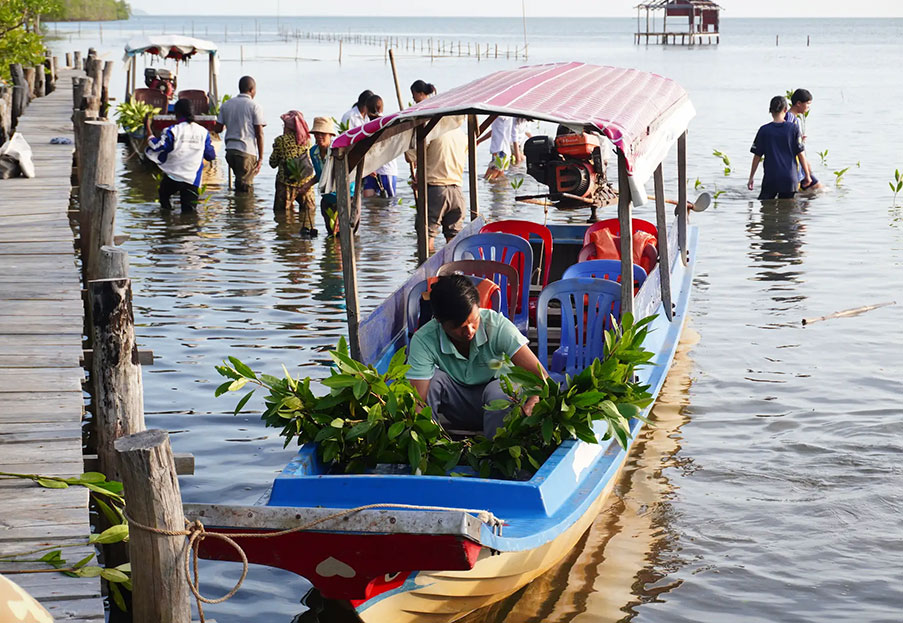
The Caring for Community and Creation (CCC) project was initiated by the Jesuit Conference of Asia Pacific (JCAP) in 2022 to address poverty and ecology as identified in the JCAP apostolic plan. The project has three specific objectives, one of which is strengthening communities through...
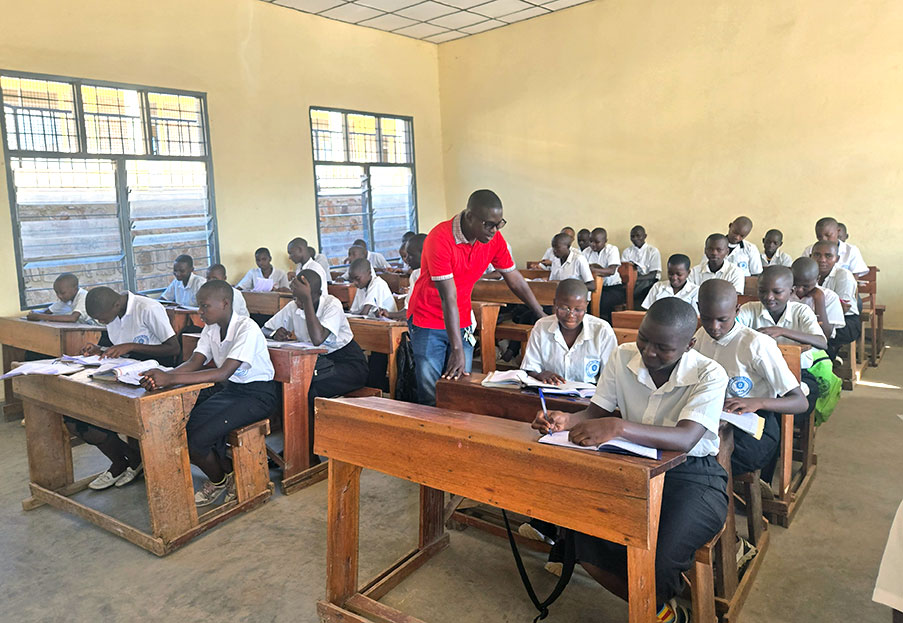
École Fondamentale Saint Louis de Gonzague was built to give every child space to be included, to live and learn alongside others, and to recognize their dignity as human beings. When the Jesuits founded the school in September 2004, in a region greatly affected by...
Service Yezu Mwiza (SYM) is a Christian, socio-medical organization dedicated to fighting HIV/AIDS, tuberculosis, and malaria, while promoting holistic healthcare and social justice. Founded in 2008, it operates as a prominent reference centre under the care of the Jesuits in Burundi...

Pope Francis raised climate change to global consciousness as the defining moral issue of our time. As a result, the Church has become a global voice urging political accountability and personal responsibility for healing the planet. Building on his legacy, Pope Leo vigorously calls for urgent climate action...

Rwanda’s youthful population holds great potential, yet nearly one in four young people are not in employment, education, or training, according to the 2025 Labour Force Survey. In response to this situation, the Jesuit Urumuri Centre (JUC), a social initiative of the Jesuit Rwanda-Burundi Province...

The annual meeting of Eco-Jesuit delegates in South Asia, held at Inigo Bhawan in Matigara, Darjeeling, became much more than a routine gathering. Set against the fragile ecology of the Eastern Himalayas, the meeting turned into a moment of discernment on the future...