An effort to promote holistic ecology at Iniangi, Democratic Republic of Congo
By Christian Ngoso SJ
The most vulnerable populations to the current ecological crisis are those living in developing countries. In the face of this crisis, it is imperative to find sustainable solutions. Pope Francis made an urgent appeal in his encyclical letter Laudato si’ for an integral ecology as a sustainable response to this crisis. The Society of Jesus, for its part, has made the protection of our common home a Universal Apostolic Preference. One of the places where the Jesuits are doing their best to bring about sustainable solutions is the village of Iniangi, in the Democratic Republic of Congo.
According to Pope Francis, integral ecology is one that perceives our “unique place as human beings in this world and our relationship to our surroundings”. In other words, it does not neglect the different dimensions of the human person. Thus, working as a young priest in this region requires taking into account the realities experienced by hundreds of Christians under my pastoral care.
Located in the Kwango province in the west of the Democratic Republic of Congo, Iniangi is in a savannah landscape with very poor sandy soils. The local population lives mainly from agriculture, which is heavily dependent on rainfall. However, climatic change is directly affecting their activities. In recent years, there have been weather disruptions that have affected the agricultural calendar and crop yields. In addition, some of the agricultural practices used in the area are not sustainable. Farmers resort to shifting cultivation, a practice that is not environmentally friendly and, under the current economic conditions, no longer allows farmers to obtain good yields. This decline in agricultural yields has repercussions on food security, resulting in particular in very high infant mortality rates.
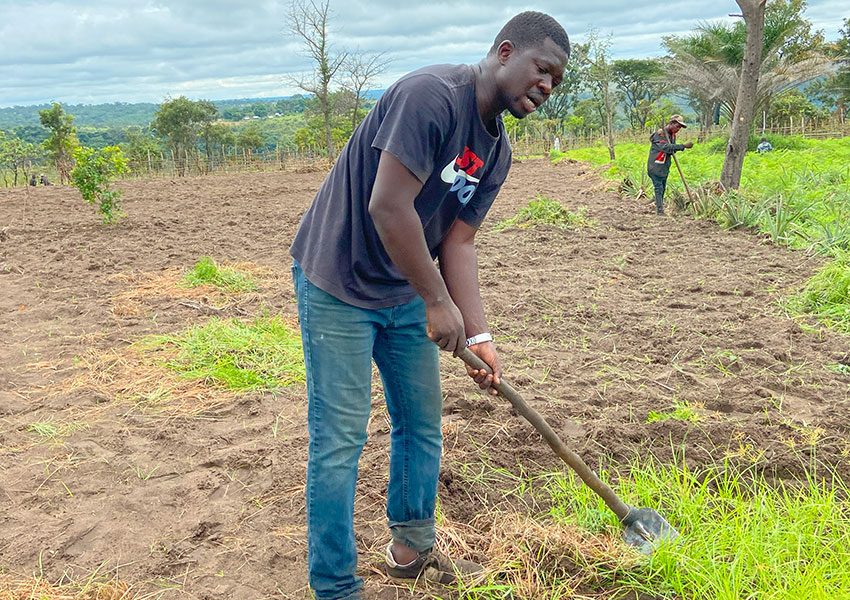
I was particularly moved by this situation when I arrived in Iniangi. Two years after my ordination as a priest, I was sent by my superior to work in this region. With my previous training in agriculture, I felt called to become an apostle of integral ecology. During my first months in Iniangi, I was shocked by the number of children’s funerals I celebrated. These deaths were caused, among other things, by malnutrition. Outraged by this situation, I decided to take action. My action was initially focused on prayer for this suffering people. Then, through my pastoral work, particularly my homilies, I took the initiative to invite the people of God to make a change.
Beyond mere words, I opted for a much more empirical approach, which took the form of a model farm. Covering an area of two hectares, this field welcomed both young people and adults, with a view to introducing them to good agricultural practices. After two years, I welcomed nearly 10 young people, who were trained in good agricultural techniques. In particular, these young people were trained in the use of green manure, which is used to protect and improve the soil. This mainly involved planting legumes (beans, cowpeas, and soybeans) as cover crops in combination with cassava crops. Legumes were chosen as cover crops because of their ability to enrich the soil with nitrogen and their important contribution to protein in the diet.
Adults were also involved in the various crop rotation schemes. By involving them in these tasks, we adopted a “learning by doing” approach. Without giving them any specific training, they learned the good agricultural practices we had chosen for our field by doing. Agroforestry, which involves intentionally integrating trees into fields, is one of the practices we have focused on. Our field is dotted with fruit trees and tree species that enrich the soil. This combination of crops and trees allows us to benefit from the soil without depleting it.
All in all, my work in this rural area goes far beyond simple agriculture. It is above all a mission of integral salvation that seeks to reconcile humans with their environment. In this approach, involving young people in sustainable agricultural practices is an effective way to reach a generation and initiate change. It is our hope that these ecological practices can really contribute to food security while preserving the environment. We also hope that those who are touched by this will spread the word to those around them.

Related Posts:
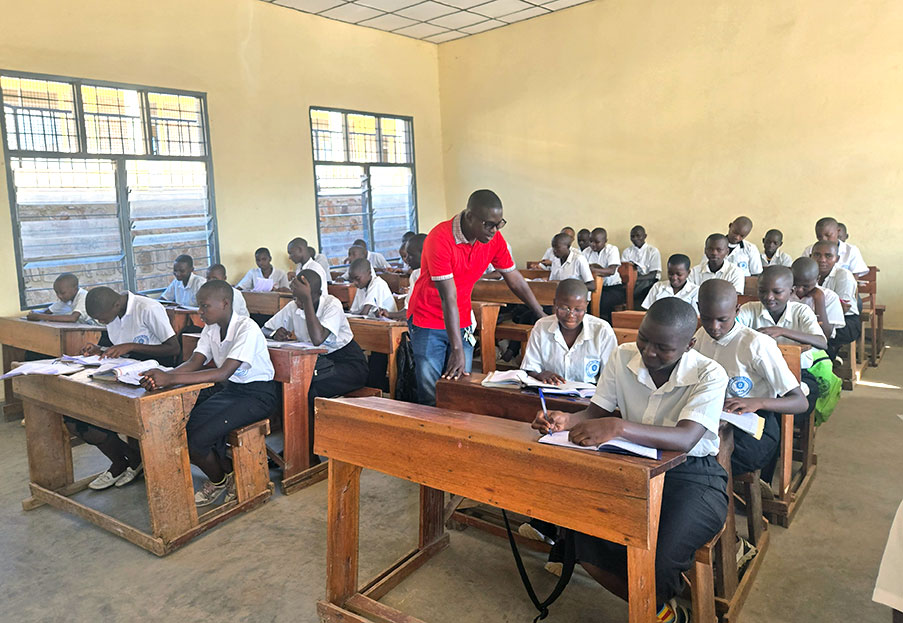
École Fondamentale Saint Louis de Gonzague was built to give every child space to be included, to live and learn alongside others, and to recognize their dignity as human beings. When the Jesuits founded the school in September 2004, in a region greatly affected by...
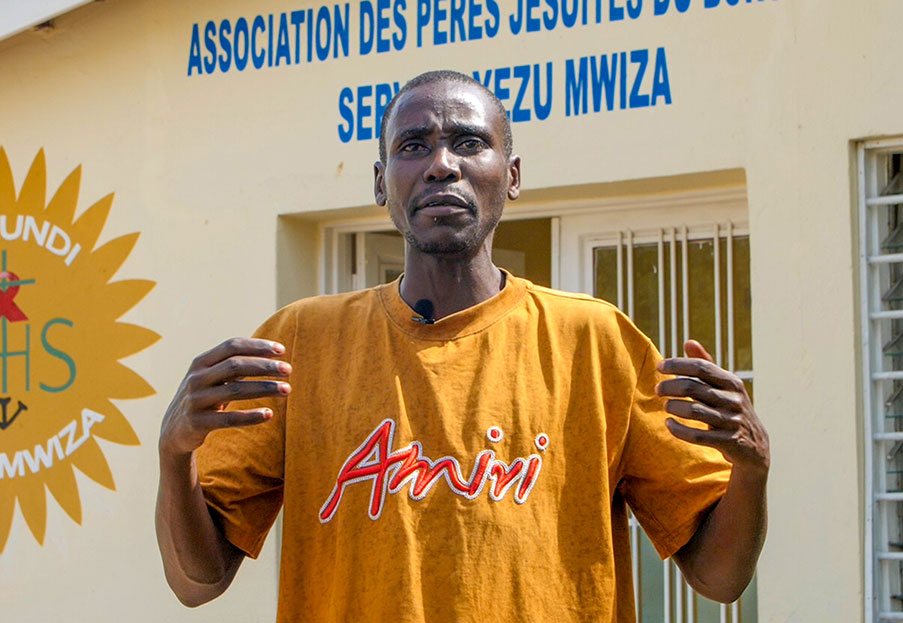
Service Yezu Mwiza (SYM) is a Christian, socio-medical organization dedicated to fighting HIV/AIDS, tuberculosis, and malaria, while promoting holistic healthcare and social justice. Founded in 2008, it operates as a prominent reference centre under the care of the Jesuits in Burundi...

Pope Francis raised climate change to global consciousness as the defining moral issue of our time. As a result, the Church has become a global voice urging political accountability and personal responsibility for healing the planet. Building on his legacy, Pope Leo vigorously calls for urgent climate action...
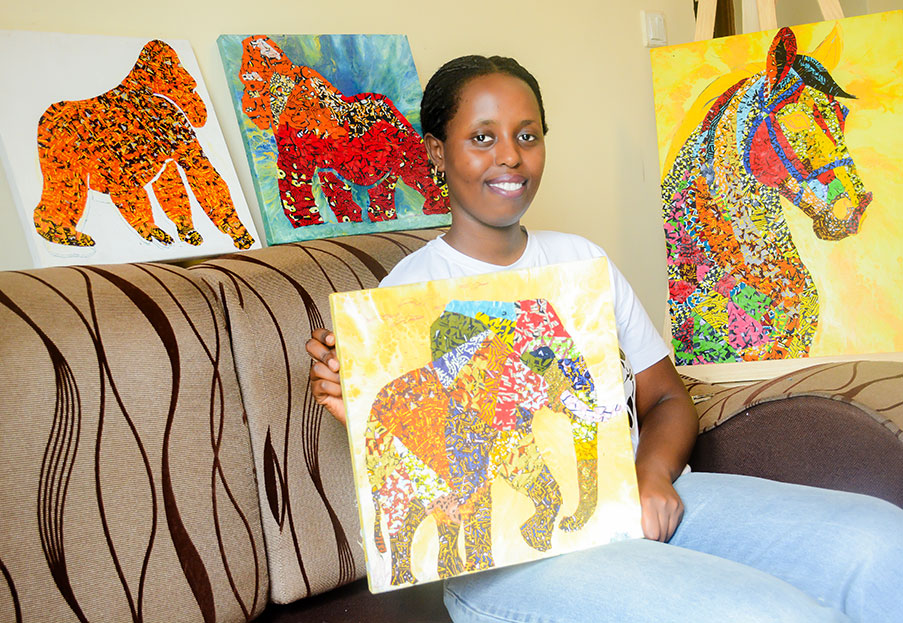
Rwanda’s youthful population holds great potential, yet nearly one in four young people are not in employment, education, or training, according to the 2025 Labour Force Survey. In response to this situation, the Jesuit Urumuri Centre (JUC), a social initiative of the Jesuit Rwanda-Burundi Province...

The annual meeting of Eco-Jesuit delegates in South Asia, held at Inigo Bhawan in Matigara, Darjeeling, became much more than a routine gathering. Set against the fragile ecology of the Eastern Himalayas, the meeting turned into a moment of discernment on the future...

The Social Justice and Ecology Secretariat (SJES) of the Society of Jesus has released its 2025 Annual Report, “The Promotion of Justice is Fueled by Hope”. The report details regional milestones at the conference level, the results of global advocacy, and its commitment to the mission of...